Workplace Noise Statistics 2026: Open Office Decibels, Concentration Loss, and Acoustic Distraction
Used by recruiters, executives, consultants, and more.
Workplace Noise Statistics 2026: Open Office Decibels, Concentration Loss, and Acoustic Distraction
Open offices routinely hit 60-65 decibels -- louder than a normal conversation. 69% of employees report dissatisfaction with noise at their primary workspace. And after every noise-driven interruption, it takes an average of 23 minutes and 15 seconds to regain deep focus.
The modern office was supposed to foster collaboration. Open floor plans, shared desks, and communal workspaces were designed to break down silos and encourage spontaneous interaction. But something went wrong along the way. The very design choices meant to connect us have created an acoustic environment that actively undermines our ability to think, concentrate, and produce meaningful work. From the persistent hum of HVAC systems to the unmistakable distraction of a colleague's speakerphone call three desks away, workplace noise has become one of the most pervasive -- and most underestimated -- threats to professional productivity. The cost is not just measured in lost minutes. It shows up in elevated stress hormones, degraded cognitive performance, higher error rates, and even increased employee turnover. Despite these consequences, only a fraction of employers have taken meaningful steps to address the problem.
In this post, we will explore 19 statistics that paint a detailed, data-driven picture of the workplace noise crisis. These numbers cover the real decibel levels in open offices, the measurable impact on concentration and cognitive performance, the physiological toll on employee health, and the staggering financial cost to businesses. Whether you are an employee searching for ways to protect your focus, a manager trying to understand why your team underperforms in the open plan, or a decision-maker weighing investments in acoustic solutions, these statistics provide the evidence you need.
Key Workplace Noise Statistics (2026)
- Workplace noise dissatisfies 69% of employees at their primary workspace, while only about 32% report being satisfied (Softdb).
- Open-plan offices routinely reach 60-65 decibels, well above the 40-55 dB range needed for focused work (Zenbooth).
- After a single noise-driven interruption, it takes an average of 23 minutes and 15 seconds to resume the interrupted task (Gloria Mark, UC Irvine, via Gallup).
- 99% of employees report that office noise impairs their concentration (Banbury and Berry, Ergonomics).
- Open-plan layouts reduce face-to-face interaction by roughly 70%, pushing workers toward email and instant messaging instead (Bernstein and Turban, Royal Society).
- An estimated 27 million U.S. workers are exposed to hazardous noise on the job every year (CDC/NIOSH).
- China's occupational noise-induced hearing-loss burden rose 109.73% between 1990 and 2021, according to February 2026 research (Huang et al.).
1. Open offices regularly reach 60-65 decibels -- well above the optimal range for focused work
Large open-plan offices consistently produce ambient noise levels between 60 and 70 decibels, and sometimes higher during peak activity. For reference, the optimal noise range for concentrated cognitive work sits between 40 and 55 decibels -- roughly equivalent to moderate rainfall or quiet background music. At 50 decibels, the brain can comfortably process external stimuli while maintaining focus on a primary task. At 65 decibels and above, cognitive load increases sharply as the auditory system begins competing with working memory for processing resources. This means the average open office exceeds the ideal threshold for focused work by a significant margin, creating an environment where deep concentration becomes a constant battle rather than a natural state. Note that OSHA's workplace noise limit of 85 decibels is designed to prevent hearing damage, not to protect cognitive performance -- a distinction that most workplace designers overlook entirely.
Source: Zenbooth -- Acceptable Noise Levels in the Workplace for Productivity
2. 69% of employees report dissatisfaction with noise at their primary workspace
Nearly seven in ten employees say noise levels in their office are a source of dissatisfaction -- making acoustic comfort one of the lowest-rated workplace attributes in modern surveys. Meanwhile, only about 32% of workers report being satisfied with office noise levels, and 77% express a clear preference for quiet environments when they need to focus. This is not a minor gripe about occasional disruption. It reflects a systemic failure of workplace design that affects the majority of the workforce every single day. When more than two-thirds of your employees are unhappy with a fundamental aspect of their environment, it is a problem that demands immediate and sustained attention.
Source: Softdb -- What 2025 Taught Us About the Modern Workplace: Acoustics, Design and Productivity
3. It takes 23 minutes and 15 seconds to regain deep focus after a single interruption
Research from Dr. Gloria Mark at the University of California, Irvine found that after any interruption -- including noise-driven ones -- workers take an average of 23 minutes and 15 seconds to fully return to their original task. The damage compounds quickly: a worker interrupted just four times in a morning loses nearly an hour and a half of productive time solely to recovery. Workers also do not return directly to the interrupted task. On average, they engage in two intervening tasks before circling back, which means each interruption creates a cascade of fragmented attention.
Source: Gloria Mark, UC Irvine -- Gallup Business Journal interview
4. 99% of employees report their concentration is impaired by office noise
In a landmark field study of 88 office workers across two sites, researchers found that virtually every single participant -- 99% -- reported that their concentration was negatively affected by various components of office noise. The worst offenders were telephones ringing at vacant desks and background conversations from colleagues. The near-unanimity of this finding underscores that noise-related concentration loss is not a sensitivity issue affecting a small minority. It is a universal workplace experience.
Source: Banbury and Berry -- Office Noise and Employee Concentration, Ergonomics Journal
5. Open offices reduce face-to-face interaction by approximately 70%
A Harvard Business School study by Ethan Bernstein and Stephen Turban tracked employees at two Fortune 500 companies before and after transitioning to open-plan offices using advanced wearable sensors and communication server data. Instead of the expected increase in collaboration, face-to-face interaction dropped by roughly 70%. Workers spent 72% less time in person-to-person conversation, while email volume rose by 56% and instant messaging increased by 67%. The noise and lack of privacy in open offices triggered a natural human withdrawal response -- people retreated to digital communication precisely because the physical environment was too exposed and too loud for comfortable conversation. This finding directly challenges the fundamental premise of open office design: rather than prompting increasingly vibrant face-to-face collaboration, open architecture appeared to trigger a deeply human instinct to socially withdraw from officemates and interact instead through screens.
6. Only 1% of employees can block out distractions and focus without extra effort
The Oxford Economics and Plantronics Noise Study found that just 1% of employees reported being able to block out distractions and concentrate at their desk without taking additional steps -- a dramatic decline from 20% in 2015. This means that in just three years, the percentage of workers who can naturally focus in an open office plummeted by 95%. The remaining 99% must actively fight their environment to achieve baseline concentration, whether through headphones, relocating to a different space, or simply accepting diminished performance.
7. 63% of employees lack quiet space for focused work
Nearly two-thirds of the workforce reports having no access to a quiet area where they can perform concentrated, uninterrupted work. Despite the well-documented need for focus time -- and despite the fact that 96% of executives acknowledge employee productivity as critical to their financial performance -- the majority of offices simply do not provide designated quiet zones. Meanwhile, only 6% of executives say they have equipped their office with noise-mitigating features. This reveals a staggering disconnect between the people who design workspaces and the people who have to work in them. Executives understand that productivity matters but have not connected the dots between acoustic environments and actual output. The gap between recognizing the importance of productivity (96%) and investing in acoustic solutions (6%) may be one of the most striking leadership blind spots in modern workplace management.
Source: Oxford Economics and Plantronics -- Noise Epidemic Study via GlobeNewsWire
8. Open-plan office noise elevates stress hormones even when workers do not feel stressed
A Cornell University study by Gary Evans and Dana Johnson exposed 40 experienced clerical workers to low-intensity open-office noise (including speech) for three hours. The results were revealing: workers in the noisy environment showed significantly elevated levels of urinary epinephrine (adrenaline) -- a hormone directly linked to the body's stress response and associated with increased risk of cardiovascular disease. The study also found behavioral aftereffects indicative of motivational deficits: workers who had been exposed to noise made fewer attempts at challenging puzzles compared to those who worked in quiet conditions. Perhaps most importantly, participants in the noisy environment were less likely to make ergonomic postural adjustments at their computer workstations -- a risk factor for musculoskeletal disorders. The most striking finding was that the workers themselves did not report feeling more stressed. Their bodies were mounting a physiological stress response that they were completely unaware of, suggesting that chronic office noise causes invisible, cumulative health damage that workers cannot self-report or self-correct.
Source: Evans and Johnson -- Stress and Open-Office Noise, Journal of Applied Psychology / Cornell Chronicle
9. Open-plan office noise increases negative mood by 25% and sweat response by 24%
Researchers measuring physiological and psychological responses to open-plan office noise found that even short exposure caused a 25% increase in negative mood and a 24% increase in phasic skin conductance response (a measure of the body's sweat response tied to stress and arousal). These are not marginal changes. A quarter increase in negative mood means workers are measurably unhappier, more irritable, and less resilient in dealing with challenges -- all from the ambient noise of a typical modern office. In a real workplace, where exposure lasts eight hours rather than the shorter durations used in laboratory settings, researchers expect the effects to be even more pronounced.
10. 47% of knowledge workers say office noise prevents them from focusing, and 63% struggle with concentration
Jabra's 2024 global survey of 2,000 knowledge workers across the United States, United Kingdom, Germany, and France found that nearly half (47%) are actively stressed by noise at the office preventing them from focusing. An even larger proportion -- 63% -- report that they struggle with concentration because of workplace noise levels. These are not historical figures from an outdated survey. This is the current state of knowledge work: the majority of professionals in major economies cannot concentrate properly in their own offices.
Source: Jabra -- Making the Workplace Sound Better 2024
11. Workplace distractions cost U.S. businesses an estimated $650 billion per year
The aggregate cost of workplace distractions -- with noise being a primary contributor -- reaches approximately $650 billion annually across U.S. businesses, according to estimates from the research firm Basex. This figure reflects the cumulative impact of interrupted work, extended task completion times, increased error rates, and the cognitive overhead of constantly switching between focus and distraction. For individual companies, this translates to substantial per-employee losses that far exceed the cost of implementing acoustic solutions or providing noise-mitigation tools. When you consider that the average knowledge worker loses 2.5 to 3 hours per day to various distractions, with noise consistently ranking among the top contributors, the math makes it clear that even modest improvements in acoustic conditions could reclaim billions in productive capacity.
Source: CFO.com / Basex Research
12. Reducing acoustic distractions can increase productivity by 30-50% on focus-intensive work
The flip side of the noise problem reveals an enormous opportunity. Studies demonstrate that when acoustic distractions are meaningfully reduced -- through sound masking, architectural changes, or personal noise-mitigation tools -- productivity on focus-intensive tasks increases by 30% to 50%. Acoustic interventions have also been linked to 20-30% improvements in focus and task accuracy compared to untreated spaces. These are not theoretical projections. They represent measured gains in controlled studies, suggesting that addressing workplace noise may be one of the highest-ROI investments an organization can make. The range is wide because the improvement depends on the type of work: highly complex cognitive tasks like writing, coding, and analysis see the largest gains, while more routine tasks show smaller but still meaningful improvements. For knowledge-intensive organizations where the bulk of value creation happens during focused individual work, the upper end of this range represents a transformational productivity shift.
Source: NBS -- Noise Distracts: How Acoustic Design Impacts Workplace Productivity
13. 70% of employees report being regularly disturbed by conversations and ambient noise
According to research cited in the Gensler Research Institute's Global Workplace Survey, seven in ten employees experience regular disruption from conversations and other ambient noises in open-plan offices. Workers in these environments also report that 69% of working alone requires a high level of concentration -- yet the very spaces designed for individual work actively undermine the focus those tasks demand. Employees consistently rank access to quiet zones and focus rooms as differentiating factors between the highest-performing workplaces and the lowest-performing ones.
Source: Gensler Research Institute -- Global Workplace Survey 2024
14. Employees in the noisiest offices are more likely to leave their jobs within six months
The connection between noise and employee retention is direct and measurable. Oxford Economics research found that workers in the noisiest office environments are significantly more likely to say they intend to leave their job within the next six months. Conditions have also grown meaningfully worse over time -- the Oxford Economics study noted a marked decline in employees' ability to cope with office noise between their first survey in 2015 and the follow-up in 2018, suggesting the problem is accelerating rather than stabilizing. Noise-driven turnover is particularly costly because it compounds: organizations lose not only the departing employee's productivity but also incur recruitment costs, onboarding time, and the institutional knowledge that walks out the door. For roles where the average cost of turnover ranges from 50% to 200% of annual salary, ignoring workplace noise becomes an expensive choice. In competitive talent markets, the quality of the physical work environment -- including its acoustic properties -- is increasingly a factor in whether top performers choose to stay or leave.
15. The EU estimates workplace noise costs 15.9 billion euros annually in lost productivity
The European Union has quantified the economic damage from workplace noise at 15.9 billion euros per year in lost earnings for companies, with total noise-related losses exceeding 40 billion euros annually when broader health and social costs are included. Separately, the World Health Organization has documented that environmental noise (including occupational exposure) contributes to 48,000 new cases of heart disease and 12,000 premature deaths every year in Europe alone. At least one million healthy life years (measured in DALYs -- disability-adjusted life years) are lost annually from noise exposure in the western part of Europe. The WHO breakdown attributes 903,000 DALYs to sleep disturbance, 61,000 to ischemic heart disease, 45,000 to cognitive impairment of children, and 22,000 to tinnitus. These are not abstract projections -- they represent real human suffering and measurable economic damage that extends far beyond the office walls into workers' homes, families, and long-term health outcomes.
Source: WHO Europe -- Burden of Disease from Environmental Noise
16. 1 in 10 employees retreat to the bathroom to escape office noise
Jabra's 2024 research uncovered that 10% of knowledge workers confess to hiding in the bathroom as a strategy to escape workplace noise. Another 37% say noise-cancelling headphones should be provided as standard office equipment, while an equal 37% believe employees should be allowed to work from home more frequently as a noise-avoidance measure. Nearly a third (32%) want their employer to designate specific areas for different types of activities, such as quiet zones for focus work and separate collaborative zones for group discussions. When a meaningful percentage of your workforce is fleeing to the restroom to find a moment of quiet, it signals a fundamental failure of the physical work environment -- one that no amount of collaboration rhetoric can paper over. The bathroom statistic may sound humorous, but it represents a genuine indictment of how poorly most offices serve the acoustic needs of the people who work in them.
Source: Jabra -- Office Buzz or Buzzkill via GlobeNewsWire
17. An estimated 27 million U.S. workers are exposed to hazardous noise on the job every year
The U.S. Centers for Disease Control and Prevention's National Institute for Occupational Safety and Health (NIOSH) estimates that approximately 27 million American workers are exposed to hazardous noise levels on the job each year, spanning far beyond the industrial and construction settings most people associate with occupational noise exposure. The consequences are measurable at the population level: NIOSH data show that roughly 1 in 9 people in the U.S. working population currently has some degree of hearing difficulty, and 1 in 13 have tinnitus -- a persistent ringing or buzzing that acoustic health researchers increasingly link to years of unmanaged noise exposure. While office noise levels rarely approach the intensity of a factory floor, the scale of NIOSH's hazardous-exposure estimate underscores that noise is a recognized, federally tracked occupational health issue, not merely a productivity inconvenience.
Source: CDC/NIOSH -- Noise and Hearing Loss Prevention
18. Lack of privacy predicts open-plan office dissatisfaction 25% more strongly than noise itself
A 2025 study published in the Journal of the Acoustical Society of America, led by researchers at the University of Sydney, RWTH Aachen University, and Turku University of Applied Sciences, surveyed 349 occupants across 28 open-plan offices to model what actually drives acoustic dissatisfaction. The researchers found that lack of privacy was 25% more predictive of overall acoustic dissatisfaction than noise disturbance itself, challenging the common assumption that decibel levels alone explain why open offices fail acoustically. Speech-based privacy metrics and psychoacoustic loudness outperformed simpler sound-level measurements at predicting which employees would report being unhappy with their acoustic environment. The finding suggests that even offices that manage to keep noise levels in check can still leave employees dissatisfied if they cannot have a private conversation or work without being overheard.
19. China's occupational noise-induced hearing loss burden rose 109.73% between 1990 and 2021
A February 2026 study published in the Chinese Journal of Industrial Hygiene and Occupational Diseases tracked the national disease burden of occupational noise-induced hearing loss (ONHL) in China from 1990 through 2021, using disability-adjusted life years (DALYs) as the measure of cumulative health impact. The researchers found that ONHL-related DALYs climbed from roughly 1.28 million to about 2.68 million person-years over that period -- an increase of 109.73%, with the burden rising faster among women (up 122.15%) than men (up 100.87%). Workers aged 50 to 74 accounted for 65.33% of the total burden, reflecting the cumulative, irreversible nature of noise-induced hearing damage. The study projects the burden will remain elevated through 2050 even as the age-standardized rate slowly declines, underscoring that occupational noise exposure inflicts damage that compounds over a career and is not easily reversed once accumulated.
The Noise Paradox: Why Open Offices Failed Their Core Promise
The data tells a story that would seem almost absurd if it were not so well-documented. Open offices were created to increase collaboration, yet Harvard research shows they reduce face-to-face interaction by 70%. They were designed to improve communication, yet 99% of workers in these environments report impaired concentration. They were meant to foster a sense of community, yet employees in the noisiest offices are more likely to quit within six months. The open office did not just fail to deliver on its promise -- it produced the exact opposite of what it was designed to achieve.
The root cause is a fundamental misunderstanding of how human cognition works. The brain cannot selectively ignore intelligible speech. When a colleague's phone conversation is audible, your auditory cortex will process it whether you want it to or not. This is not a matter of willpower or focus technique. It is a neurological reality that no amount of "getting used to it" can overcome. The near-universal 99% concentration impairment documented by Banbury and Berry is not an outlier or a worst-case scenario -- it reflects the measured cognitive cost of asking the human brain to do something it simply cannot do: ignore language.
What makes the situation worse is the recovery cost. With each noise-driven interruption requiring over 23 minutes to fully recover from, and with the average open-office worker facing dozens of such interruptions daily, the math becomes devastating. A worker interrupted six times in a typical morning does not lose just the minutes spent distracted. They lose the entire morning to the cascading effects of fractured attention, incomplete cognitive recovery, and the accumulated stress of fighting their environment. The Cornell study's finding that workers experience physiological stress responses they are not even aware of adds another dimension: the damage is happening whether people notice it or not.
The financial picture is equally sobering. U.S. businesses lose an estimated $650 billion a year to workplace distractions, European companies are hemorrhaging 15.9 billion euros annually in noise-related productivity losses, and CDC/NIOSH estimates that 27 million U.S. workers are exposed to hazardous noise on the job every year -- yet only 6% of executives report having implemented noise-mitigating features in their offices. This gap between the scale of the problem and the investment in solutions represents one of the largest untapped productivity opportunities in modern business. The research is clear: reducing acoustic distractions by even a moderate amount can yield 30-50% productivity improvements on focus work. Few other interventions offer a comparable return.
The evidence is overwhelming: workplace noise is not a minor inconvenience. It is a measurable, quantifiable crisis that costs billions in lost productivity, degrades employee health through invisible stress responses, drives turnover, and undermines the very collaboration it was supposed to enable. The professionals and organizations that take noise seriously -- by investing in acoustic solutions, providing the right tools, and rethinking how and where focused work happens -- will hold a significant competitive advantage in the years ahead.---
Ready to capture thoughts even in the noisiest environments?
Every statistic in this post points to the same uncomfortable truth: modern workplaces are loud, getting louder, and nobody is giving you a quiet corner anytime soon. But the noise does not just destroy your focus -- it destroys your ability to capture the ideas that emerge despite the chaos. When a critical insight strikes during a crowded team huddle, or when you need to document action items while colleagues are chatting three feet away, traditional note-taking becomes almost impossible. You cannot type effectively when your concentration is shattered every few minutes, and you certainly cannot pull out a notebook and write coherent notes while navigating the acoustic obstacle course of an open office. The irony is that noise-filled environments are often where the most important ideas surface -- during spontaneous hallway conversations, quick stand-ups, and collaborative brainstorms. But without a fast, frictionless way to capture those thoughts, they evaporate as quickly as they appear.
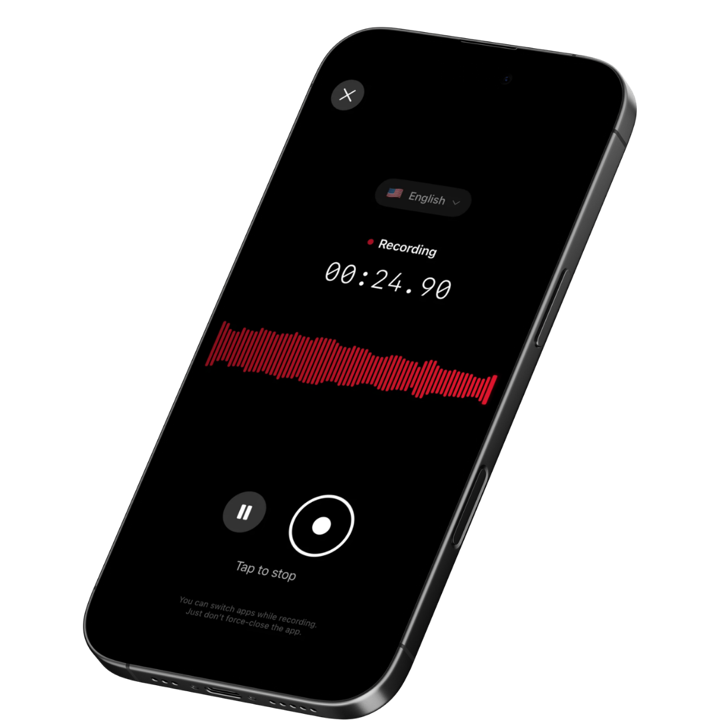
Voice capture offers a fundamentally different approach. Even in a noisy open office, you can whisper a quick voice note--and AI handles the rest. SpeakWise's AI transcription captures your words accurately, summarizes your thoughts, and sends them to Notion without you ever needing to find a quiet corner.
Download SpeakWise from the App Store and discover how one-tap recording, AI transcription, intelligent summaries, and Notion integration can help you capture information in any environment.
Join 10,000+ professionals who've discovered that you don't need silence to capture brilliant ideas--you just need the right tool.
Get SpeakWise Free →
4.9★ App Store Rating | iOS Optimized

🎯 4.9★ App Store Rating | 📱 Built for iOS
