Workplace Productivity Tools Statistics 2026
Used by recruiters, executives, consultants, and more.
Workplace Productivity Tools Statistics 2026
Companies use an average of 106 SaaS applications, yet workers lose up to 40% of their productive time to context switching between them. The average enterprise runs 1,000+ apps, and 79% of employees say their company has done nothing to reduce tool fatigue. Global SaaS spending will hit $300 billion in 2025, while context switching costs the U.S. economy $450 billion annually. These 16 statistics expose the productivity tool paradox.
Productivity tools were supposed to make work easier. Instead, the proliferation of software has created a new problem: tool overload. Workers toggle between dozens of apps daily, losing focus with every switch. The average focused work session has shrunk to 13 minutes. And while each individual tool delivers value in isolation, the cumulative effect of managing too many systems actively undermines the productivity these tools promise.
This post covers 16 statistics on workplace productivity tools in 2026. From SaaS spending and AI adoption to context switching costs and tool fatigue, these numbers reveal the gap between technology's promise and its reality.
1. Companies use an average of 106 SaaS applications
The typical organization now runs 106 different SaaS tools. This number has grown steadily over the past decade, driven by department-level purchasing, specialized solutions for every workflow, and the low friction of subscription-based software. The result is a tangled web of applications that employees must navigate daily. Most of these tools do not integrate seamlessly, creating data silos and forcing manual workflows between systems.
Source: BetterCloud - SaaS Statistics 2026
2. Context switching consumes up to 40% of productive time
The hidden tax of tool overload is context switching - the cognitive cost of shifting between tasks, apps, and contexts. Research shows that chronic multitasking and frequent context switching can consume up to 40% of a person's productive time. In an eight-hour workday, that is 3.2 hours lost to switching, not working. The cost is not just time - each switch degrades the quality of attention applied to the next task.
Source: Conclude.io - Context Switching Is Killing Your Productivity
3. Workers switch between apps an average of 33 times per day
The frequency of app switching quantifies the fragmentation problem. Workers toggle between tabs, apps, and platforms an average of 33 times per day. Seventeen percent switch more than 100 times daily. Each switch requires mental recalibration - recalling what you were doing, finding your place, and rebuilding focus. Multiplied across a workforce, these micro-interruptions represent a massive, invisible productivity drain.
Source: Lokalise - Too Many Tools, Too Little Time
4. The average enterprise uses over 1,000 different apps
While individual employees use a fraction of their company's tech stack, the enterprise as a whole runs over 1,000 different applications. Most of these do not integrate with each other. The lack of interoperability forces workers to manually transfer data between systems, copy-paste information, and maintain multiple accounts. This app sprawl creates both productivity waste and security vulnerabilities.
Source: Asana - Context Switching 2026
5. Global SaaS spending is expected to hit $300 billion in 2025
Organizations are spending more on software than ever before. Global SaaS expenditures are projected to reach $300 billion in 2025, growing at an 18.7% compound annual rate through 2030. This spending growth is outpacing productivity gains in most organizations. The implication: companies are investing heavily in tools but not capturing proportional returns. The gap between tool spending and productivity improvement is widening.
Source: Hostinger - SaaS Statistics 2026
6. 45% of workers say too many apps make them less productive
Nearly half of all workers directly attribute productivity loss to tool overload. A Qatalog and Cornell study found that 45% feel less productive due to app toggling, while 43% report that constant context switching is mentally exhausting. This is not abstract dissatisfaction - workers are identifying their tools as obstacles to getting work done. The tools designed to boost productivity are, in many cases, undermining it.
Source: Conclude.io - Context Switching Is Killing Your Productivity
7. Context switching costs the U.S. economy approximately $450 billion annually
The macroeconomic impact of context switching is staggering. Research estimates that lost productivity from app and task switching costs the American economy roughly $450 billion per year. This figure accounts for the cumulative effect of hundreds of millions of workers losing hours daily to tool switching. For a single company with 1,000 knowledge workers, context switching costs can exceed $4.5 million annually in lost output.
Source: Reclaim.ai - Context Switching Guide 2026
8. 79% of employees say their company has not reduced tool fatigue
Despite growing awareness of the problem, four out of five workers say their organization has taken no steps to consolidate platforms or reduce tool fatigue. Companies continue adding tools without removing old ones. IT teams focus on deployment, not optimization. The result is a tech stack that grows year after year while employees bear the cognitive cost of managing an ever-expanding set of applications.
Source: Lokalise - Too Many Tools, Too Little Time
9. Workers lose an average of 51 minutes per week to tool fatigue
Tool fatigue - the frustration and lost time from managing too many workplace applications - costs the average worker 51 minutes per week. Over a year, that adds up to 44 hours of lost time, more than a full workweek. For some workers, the impact is far worse: more than one in five lose 2+ hours per week, totaling over 100 hours or 2.5 workweeks per year. These are not hours spent on low-value tasks. They are hours completely wasted.
Source: Lokalise - Too Many Tools, Too Little Time
10. It takes 9.5 minutes to regain productive flow after switching apps
A joint study by Qatalog and Cornell found that workers need an average of 9.5 minutes to get back into a productive workflow after switching to a different digital application. Combined with the 33 daily app switches most workers experience, this recovery time can consume hours of each workday. The math is clear: 33 switches multiplied by even 5 minutes of partial recovery equals over 2.5 hours of degraded productivity daily.
Source: Conclude.io - Context Switching Is Killing Your Productivity
11. 80% of employees now use AI tools at work
AI tool adoption has surged from 53% to 80% of the workforce. However, optimization lags far behind adoption. Only 3% of employees spend the optimal amount of time (7-10% of total work hours) in AI tools. The largest segment - 57% - spends less than 1% of their time in AI tools, suggesting that most workers have access to AI but are not using it effectively. The gap between deployment and utilization represents a major missed opportunity.
Source: ActivTrak - 2026 State of the Workplace
12. 50% of businesses use 17 disconnected work technology solutions
Half of all organizations run an average of 17 different, disconnected work technology platforms. Only 4% have fully integrated their tech stack. This fragmentation forces 37% of organizations to employ 11 or more full-time employees just to collate, analyze, and report on operational data across systems. The cost of disconnection is not just individual productivity loss - it is organizational inefficiency at scale.
Source: Ronspot - 2026 Workplace Statistics and Benchmarks
13. 45% of workers feel overwhelmed by alerts, pings, and notifications
Nearly half of employees feel overwhelmed by the constant stream of notifications from their digital tools. Alerts from email, Slack, Teams, project management tools, and other platforms create a state of continuous partial attention. Each notification pulls focus, even when ignored. The psychological weight of unread notifications and pending alerts adds a background stress that reduces both productivity and wellbeing throughout the workday.
Source: Lokalise - Too Many Tools, Too Little Time
14. Heavy multitasking can lead to a 10-point IQ drop
A 2024 study found that heavy multitasking - the kind forced by constant app switching - can reduce cognitive performance by up to 10 IQ points. To put this in perspective, this cognitive decline is larger than the effect of missing a full night of sleep. Workers who constantly switch between tools are not just losing time. They are operating at a measurably lower cognitive level, making worse decisions and producing lower-quality work.
Source: NextPlane - Hidden Costs of Context Switching
15. AI-embedded SaaS products will reach 80% of enterprise applications by 2026
The tool landscape is about to get more complex, not less. Eighty percent of independent software vendors are expected to embed generative AI capabilities in their enterprise applications by 2026, up from less than 5% in 2024. While this could improve individual tool productivity, it also adds new features to learn, new interfaces to navigate, and new cognitive demands. Without intentional management, AI-embedded tools risk deepening rather than solving tool fatigue.
Source: Qrvey - AI in SaaS 2026
16. The average focused work session has shrunk to 13 minutes 7 seconds
ActivTrak's workplace data reveals that the average focused work session now lasts just 13 minutes and 7 seconds - down 9% from 2023. This shrinking attention window is a direct consequence of tool overload, notification fatigue, and meeting-heavy calendars. Deep work requires sustained focus of 45-90 minutes. When the average session barely exceeds 13 minutes, the type of concentrated thinking that produces breakthroughs has become nearly impossible for most workers.
Source: ActivTrak - 2026 State of the Workplace
The Tool Paradox: More Software, Less Focus
The data tells a story of diminishing returns. Organizations spend $300 billion on SaaS annually and run over 1,000 apps per enterprise. Yet workers lose 40% of their time to context switching, focused sessions last barely 13 minutes, and 45% of workers say their tools make them less productive. The productivity tool industry has created a productivity problem.
The root cause is fragmentation. Each tool solves one problem but creates new ones: another login, another interface, another notification channel, another place to check. The cognitive cost of managing the tool ecosystem now rivals the cognitive cost of the work itself. Workers spend nearly as much time navigating between tools as they spend using them.
The solution is not more tools. It is fewer, better-integrated ones. Organizations must audit their tech stacks, consolidate overlapping functionality, and prioritize tools that reduce context switching rather than adding to it. The companies that simplify their technology environment will reclaim the focused work time that complex environments destroy.
The most productive tool is the one that eliminates the need for three others.---
One tool to replace the noise
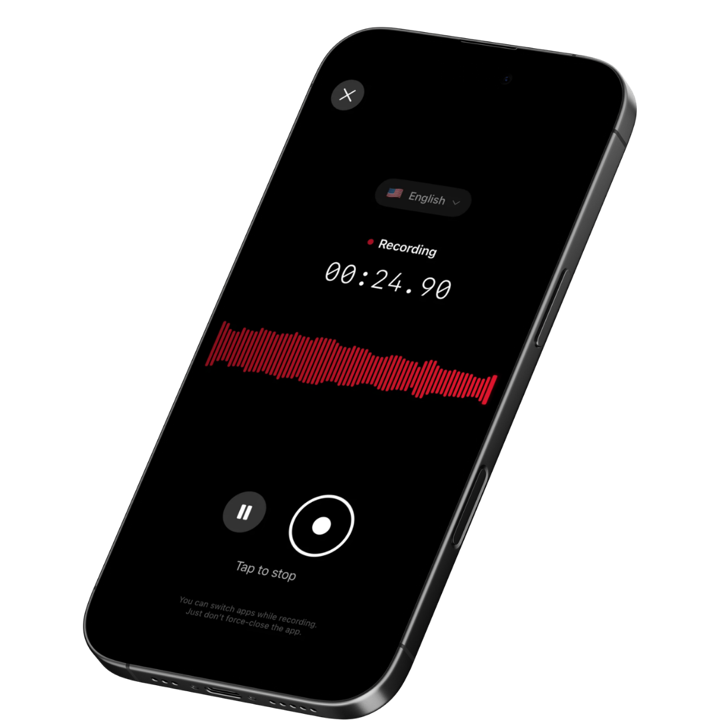
Every new app adds another tab, another login, another place to check. Speakwise takes the opposite approach. One tap to record. AI handles the transcription, summarization, and organization. No switching between apps to capture, type, format, and file. Just speak, and your thoughts are instantly searchable, organized text in Notion.
In a world where workers lose 40% of their time to context switching, the most powerful productivity tool is the one you barely have to think about using.
Download Speakwise from the App Store and replace multiple capture tools with one-tap voice recording, AI transcription in 100+ languages, smart summaries, and automatic Notion sync.
Join 10,000+ professionals who simplified their workflow by switching to voice.
Get Speakwise Free
4.9-star App Store Rating | iOS Optimized

🎯 4.9★ App Store Rating | 📱 Built for iOS
