Workplace Social Media Statistics 2026
Used by recruiters, executives, consultants, and more.
Workplace Social Media Statistics 2026
77% of employees admit to using social media during work hours. Businesses lose an estimated $650 billion annually to social media distractions, with the average worker spending 1.5 hours per day scrolling personal feeds. Yet social media also drives recruitment, employer branding, and collaboration. These 16 statistics paint a nuanced picture of how social platforms shape modern work.
Social media at work is no longer a fringe behavior. It is the default. From LinkedIn messages to Instagram scrolls during lunch, platforms have woven themselves into the fabric of the workday. The challenge for organizations is not whether employees use social media, but how to balance its benefits with its costs.
This post covers 16 data-backed statistics on workplace social media use in 2026. Whether you manage a team, run HR, or simply want to understand your own habits, these numbers offer a clear view of the trade-offs involved.
1. 77% of employees use social media during work hours
More than three-quarters of workers admit to browsing social media while on the clock. This figure has been rising steadily, up from 72% in 2022. The behavior spans all industries and seniority levels. Younger workers are the most active, but even senior executives check personal feeds during meetings and breaks. The key takeaway is that social media use at work is now a workplace norm, not an exception.
Source: Cropink - Social Media at Work Statistics 2026
2. Businesses lose an estimated $650 billion annually to social media distractions
The financial toll of social media scrolling at work is staggering. When multiplied across millions of workers, even small daily distractions add up. Lost focus, delayed task completion, and fragmented attention all contribute to this figure. For a company with 1,000 employees, this translates to roughly $6.5 million per year in lost productivity. The cost is not just about time spent on apps - it includes the recovery time needed to refocus after each interruption.
Source: FlashHub - How Does Social Media Affect Productivity
3. Workers spend an average of 1.5 hours per day on social media at work
A CareerBuilder survey found employees dedicate roughly 90 minutes of each workday to personal social media use. Over a five-day workweek, that totals 7.5 hours - nearly an entire workday lost. The most common platforms accessed during work hours are Facebook, Instagram, and TikTok. This figure rises for workers under 30, who report spending closer to two hours per day on personal social feeds.
Source: ElectroIQ - Social Media at Workplace Statistics
4. 96% of millennials and 95% of Gen Z use social media at work
Generational differences in workplace social media use are narrowing, but younger workers still lead. Nearly all millennials (96%) and Gen Z workers (95%) use social platforms during work hours. Even among Gen X workers, usage exceeds 80%. The generational shift means that as millennials and Gen Z dominate the workforce, social media policies will need to evolve from restriction to guidance.
Source: Jobera - Social Media at Work Statistics 2025
5. 92% of employers now use social media to find talent
Social media is not just a distraction - it is also the top recruitment channel. Nine out of ten employers use social platforms to source candidates, making it the single most-used recruiting strategy. LinkedIn dominates with 90% of recruiters using the platform, but TikTok is emerging fast: 46% of Gen Z has secured a job or internship through TikTok. Social recruiting has fundamentally changed how companies find and attract talent.
Source: Apollo Technical - Social Media Recruiting Statistics 2025
6. Social media use at work can increase employee engagement by 20%
Not all workplace social media use hurts productivity. Research shows that platforms like LinkedIn and internal social tools can boost engagement by up to 20%. Employees who connect with colleagues on social platforms report stronger workplace relationships and better team collaboration. The key variable is intent: professional and social networking enhances engagement, while passive scrolling drains it.
Source: Cropink - Social Media at Work Statistics 2026
7. 67% of employees use social media to stay updated on industry news
Two-thirds of workers say they browse social media during work hours specifically to keep up with industry trends and professional development. LinkedIn, Twitter/X, and industry-specific forums serve as real-time news feeds for many professionals. This blurs the line between personal use and professional development. For knowledge workers, social media is often a legitimate research tool, not just a distraction.
Source: Cropink - Social Media at Work Statistics 2026
8. 62% of job seekers check a company's social media before applying
Employer branding on social media directly influences hiring outcomes. Nearly two-thirds of job seekers review a company's social presence to assess culture, values, and reputation before submitting an application. Companies with strong social media employer branding see 28% lower turnover and a 50% reduction in cost-per-hire. This makes social media presence a strategic asset, not just a marketing channel.
Source: Vouch - Employer Brand Statistics 2026
9. 54% of businesses encourage employees to share branded content on social media
More than half of organizations actively promote employee advocacy on social platforms. Companies recognize that employees have more authentic reach than corporate accounts. Employee-shared content receives 8x more engagement than brand-shared content. This trend turns the social media "problem" on its head - workers scrolling social media are also potential brand ambassadors.
Source: Cropink - Social Media at Work Statistics 2026
10. 38% of employers have implemented strict social media policies
Despite the benefits, nearly four in ten companies have put formal restrictions on workplace social media use. These policies range from blocking certain sites on company networks to limiting personal device use during work hours. However, enforcement remains challenging. Most employees report finding workarounds, and overly strict policies can damage trust and employer branding.
Source: Cropink - Social Media at Work Statistics 2026
11. LinkedIn internal collaboration increased by 23%
LinkedIn reported a 23% increase in internal collaboration features used by organizations. Companies increasingly use LinkedIn not just for external recruiting but for internal knowledge sharing, employee development, and cross-team networking. This signals a shift from social media as a personal distraction to social media as a workplace infrastructure tool. The line between social and professional platforms continues to blur.
Source: Cropink - Social Media at Work Statistics 2026
12. 13% of total workplace productivity is lost to social media use
Research quantifies the productivity drain at 13% across the workforce. For an eight-hour workday, that is roughly one hour of lost productive output per employee. The losses come not just from time spent on platforms but from the cognitive cost of switching between work tasks and social feeds. Each switch requires mental recalibration, and the cumulative effect across a workday is substantial.
Source: TruLawsuit Info - Social Media Addiction Workplace Productivity
13. Over 53% of workers post selfies or social media updates during work hours
More than half of employees regularly create social media content at work - not just consume it. Another 41% do so occasionally. This content creation behavior requires even more attention and time than passive scrolling. Writing captions, selecting filters, and monitoring engagement all add up. It represents a shift from social media as a quick break to social media as a parallel activity running alongside work.
Source: Cropink - Social Media Distraction Statistics 2026
14. 82% of organizations use social media to recruit passive candidates
The vast majority of companies now leverage social platforms to reach candidates who are not actively job hunting. Passive candidates - those currently employed and not searching - make up roughly 70% of the global workforce. Social media is the primary channel for reaching them. LinkedIn InMail, targeted Facebook ads, and even Instagram stories are used to attract talent that traditional job boards cannot reach.
Source: Apollo Technical - Social Media Recruiting Statistics 2025
15. 92% of UK workers use social media while at work
The United Kingdom leads in workplace social media usage, with 92% of workers reporting they browse social platforms during work hours. Facebook is the most accessed platform (80% of workers), followed by LinkedIn (72%) and Instagram (63%). The UK numbers are notably higher than the global average, driven partly by longer commutes and higher smartphone penetration among workers.
Source: StandOut CV - Social Media at Work Statistics UK
16. 46% of Gen Z has landed a job through TikTok
TikTok has emerged as a legitimate hiring platform for younger workers. Nearly half of Gen Z respondents say they have secured a job or internship through the platform. TikTok now rivals LinkedIn among Gen Z job seekers, with companies like Chipotle, Target, and Shopify running recruitment campaigns on the platform. This trend challenges traditional assumptions about which social platforms matter for business.
Source: The Daily Hire - Social Media Recruiting Beyond LinkedIn
The Dual Nature of Social Media at Work
These statistics reveal a fundamental tension. Social media costs businesses hundreds of billions in lost productivity each year. At the same time, it drives recruitment, employer branding, employee engagement, and professional development. The numbers do not support a simple "ban it" approach.
The organizations that navigate this best will treat social media as a tool to be managed, not a problem to be eliminated. That means clear guidelines rather than blanket restrictions. It means investing in employer branding on the platforms employees already use. And it means acknowledging that some social media use at work is genuinely productive.
The trajectory is clear: social media and work are converging. As platforms add more professional features and work tools add more social features, the distinction between "work" and "social" will continue to dissolve. The winners will be organizations that harness this convergence rather than fight it.
The question is not whether your employees use social media at work. They do. The question is whether your organization has a strategy to make that use productive.---
Capture ideas faster than you can type a post
The irony of workplace social media is that some of the best professional insights happen in conversation - not in a feed. A quick chat with a colleague, a brainstorm in a meeting, or a thought during your commute. These moments are worth more than any social media post, but they vanish if you do not capture them.
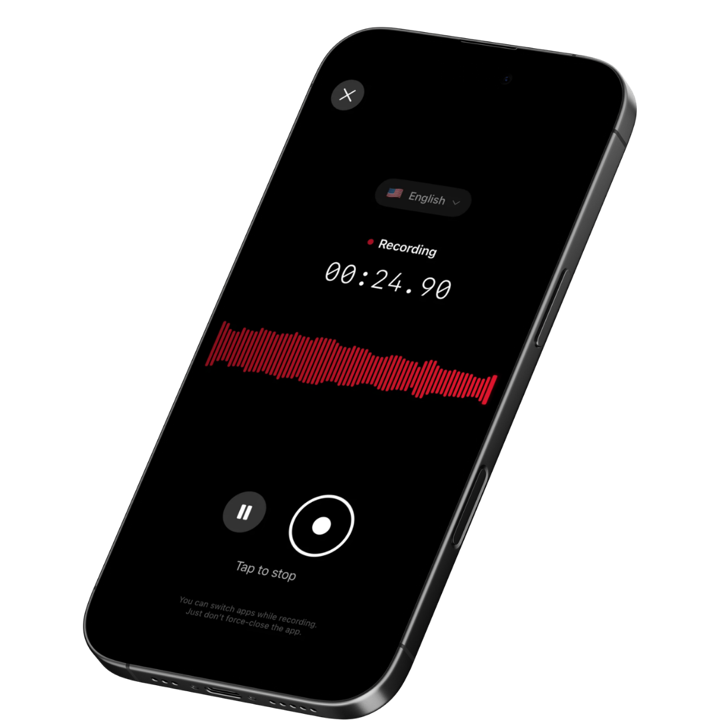
Voice notes let you record ideas, meeting takeaways, and action items in seconds. No app switching, no typing, no distraction. Just speak and move on.
Download Speakwise from the App Store and turn your spoken thoughts into searchable, organized text with AI transcription, smart summaries, and automatic Notion sync.
Join 10,000+ professionals who capture their best ideas before they get lost in the scroll.
Get Speakwise Free
4.9-star App Store Rating | iOS Optimized

🎯 4.9★ App Store Rating | 📱 Built for iOS
