Workplace Stress Statistics 2026: Chronic Pressure, Productivity Drain, and Health Costs


Used by recruiters, executives, consultants, and more.
Workplace Stress Statistics 2026: Chronic Pressure, Productivity Drain, and Health Costs
More than 83% of U.S. workers report experiencing work-related stress. One million Americans miss work every single day because of it. Globally, 12 billion working days vanish each year to untreated stress, depression, and anxiety-costing the world economy over $1 trillion in lost productivity. And yet, despite decades of awareness campaigns and wellness programs, the numbers keep climbing.
Workplace stress is no longer a fringe concern discussed in HR seminars and self-help books. It is the defining occupational health crisis of the twenty-first century-a silent epidemic that erodes productivity, dismantles employee engagement, accelerates turnover, and inflicts devastating consequences on physical and mental health. The data tells a story of a global workforce stretched to its breaking point, where chronic pressure has become so normalized that most workers simply accept it as part of the job.
What makes the current landscape especially alarming is the convergence of multiple stress accelerators. The always-on digital workplace has blurred the line between work and rest. Information overload has turned every notification into a micro-stressor. Economic uncertainty has made job security a constant source of anxiety. And the post-pandemic reorganization of work-remote, hybrid, in-office-has introduced new layers of ambiguity and communication friction that compound the problem further. The result is a workforce where stress is not an occasional spike but a chronic baseline condition.
In this post, we'll explore 17 statistics that quantify the true scope of workplace stress in 2026. These numbers span the full impact spectrum-from the raw prevalence of daily stress and burnout, to the billions of dollars in lost productivity and healthcare costs, to the physical toll that chronic work pressure exacts on the human body. Together, they form a comprehensive, data-driven portrait of a crisis that affects virtually every working professional on the planet.
Whether you're a manager trying to understand why your team is disengaged, an HR leader building a case for wellness investment, or a professional who simply feels the weight of modern work, these statistics provide the context-and the urgency-to take workplace stress seriously.
1. 83% of U.S. workers experience work-related stress
The overwhelming majority of the American workforce is not just occasionally stressed-they are chronically stressed by their jobs. According to a comprehensive analysis of workplace conditions, more than four out of five U.S. workers report experiencing work-related stress on a regular basis. This is not a niche problem affecting a vulnerable subset of employees. It is a near-universal condition that cuts across industries, seniority levels, and demographics. The most commonly cited sources of this stress include workload volume, interpersonal conflicts, work-life balance struggles, and job insecurity. When stress affects 83% of a population, it is no longer an individual health issue-it is a systemic failure of how work is structured, managed, and experienced.
Source: The American Institute of Stress
2. 40% of employees worldwide experienced significant stress the previous day
Gallup's State of the Global Workplace 2025 report found that four out of ten employees globally experienced stress "a lot" on the day before they were surveyed. In North America, the figure was even higher-50% of employees in the United States and Canada reported significant daily stress. These are not retrospective reflections about stress in general; this is stress experienced yesterday, right now, as a persistent feature of everyday working life. The consistency of this finding across years confirms that workplace stress is not improving-it is entrenching itself as the default state of the modern employee experience.
Source: Gallup - State of the Global Workplace 2025
3. Workplace stress costs U.S. employers over $300 billion annually
The financial toll of workplace stress is staggering. American businesses lose an estimated $300 billion every year to the combined effects of stress-related absenteeism, employee turnover, diminished productivity, workplace accidents, direct medical expenses, legal costs, and insurance claims. To put this in perspective, $300 billion is larger than the GDP of most countries and exceeds the combined annual revenue of some of America's largest corporations. It represents a massive transfer of value from productive economic activity to the consequences of preventable chronic stress. This figure does not even include indirect costs such as reduced innovation capacity, damaged client relationships, or the organizational knowledge that walks out the door when stressed employees quit. For every dollar a company fails to invest in stress reduction, it pays multiples in hidden costs downstream.
Source: The American Institute of Stress
4. 1 million Americans miss work every day due to workplace stress
Every single workday, approximately one million American workers do not show up to their jobs because of stress-related symptoms. That is not an annual figure or a cumulative total-it is a daily headcount of people whose stress has become so severe that they cannot function at work. Extrapolated across a year, this represents hundreds of millions of lost workdays, with cascading effects on teams, project timelines, and organizational output. The absence of one team member does not just eliminate that person's contribution-it creates additional stress for the colleagues who must absorb their workload, triggering a contagion effect where one person's stress-related absence becomes the catalyst for another's. The sheer scale of daily stress-related absenteeism reveals how deeply embedded this crisis has become in the fabric of American work culture.
Source: The American Institute of Stress
5. Global employee engagement fell to 21% in 2024, costing $438 billion in lost productivity
In one of the most consequential workplace findings in recent years, Gallup reported that global employee engagement dropped from 23% to 21% in 2024-a decline that matched the collapse seen during the 2020 COVID-19 pandemic lockdowns. This two-percentage-point slide may sound modest, but Gallup estimates it cost the world economy $438 billion in lost productivity in a single year. Stress is the primary driver of disengagement: when employees are chronically pressured, overwhelmed, and anxious, they mentally check out long before they physically leave. The implication is sobering-if the global workforce were fully engaged, it could add $9.6 trillion in productivity, equivalent to 9% of global GDP.
Source: Gallup - Global Engagement Falls for the Second Time Since 2009
6. 12 billion working days are lost annually to depression and anxiety worldwide
The World Health Organization estimates that depression and anxiety-both strongly linked to chronic workplace stress-cause the loss of 12 billion working days every single year across the global economy. This translates to approximately $1 trillion per year in lost productivity, a figure the WHO projects could balloon to $16 trillion by 2030 if left unaddressed. The WHO has also officially classified workplace burnout as an occupational phenomenon, signaling that the connection between work conditions and mental health deterioration is no longer debatable. It is a recognized medical and economic reality.
Source: World Health Organization - Mental Health at Work
7. Employees lose over 5 hours per week just thinking about their stressors
Stress does not only cause absenteeism-it causes "presenteeism," where employees are physically at work but mentally consumed by their anxieties. Research shows that the average stressed worker loses more than five productive hours every week to rumination, worry, and distraction caused by workplace stressors. Over a year, that adds up to more than 260 hours per employee-the equivalent of six and a half full work weeks spent not working, but worrying about work. In financial terms, presenteeism alone costs U.S. employers an estimated $150 billion annually in reduced productivity and lost efficiency. This hidden productivity drain does not show up on timesheets or absence reports, but it silently devastates output, creativity, and decision-making quality across entire organizations. The employee sitting at their desk staring at a screen while replaying a difficult conversation with their manager is, from a productivity standpoint, not actually at work at all.
Source: Apollo Technical - Statistics on Workplace Stress
8. 54% of U.S. workers say job insecurity significantly impacts their stress levels
The American Psychological Association's 2025 Work in America survey revealed that more than half of the American workforce identifies job insecurity as a major contributor to their stress. In an era of layoffs, restructuring, and AI-driven workforce disruption, the anxiety of not knowing whether your job will exist next quarter has become a pervasive psychological burden. This finding is particularly notable because job insecurity stress persists regardless of actual job performance-even high performers lose sleep and productivity to the fear that forces beyond their control could end their employment. The stress of uncertainty, it turns out, can be as debilitating as the stress of actual adversity.
Source: American Psychological Association - 2025 Work in America Survey
9. 46% of Gen Zs and 45% of millennials feel burned out due to work demands
Deloitte's Global Gen Z and Millennial Survey found that nearly half of the youngest generations in the workforce are already experiencing burnout-not from decades of accumulated wear, but from the intensity and demands of their current working environments. Among Gen Z workers, 40% report feeling stressed or anxious all or most of the time, and 42% say burnout is severe enough to impair their ability to perform at their best. These are workers in the earliest stages of their careers, and they are already running on empty. The long-term implications for workforce sustainability, talent retention, and organizational health are profound. If half of your emerging talent pipeline is burned out before they reach 30, the future of your organization is in jeopardy.
Source: Deloitte - Global Gen Z and Millennial Survey
10. 77% of workers say workplace stress affects their physical health
Workplace stress is not just a psychological problem-it manifests in the body. According to research compiled across multiple workplace health studies, 77% of employees report that stress at work directly impacts their physical wellbeing, citing chronic fatigue, headaches, muscle tension, digestive problems, and sleep disruption as recurring symptoms. The mind-body connection is well-established in medical literature: chronic psychological stress triggers sustained cortisol elevation, which over time increases risk for cardiovascular disease, metabolic disorders, immune system suppression, and chronic inflammation. When three-quarters of the workforce reports physical health consequences from job stress, we are looking at a public health crisis masquerading as a productivity problem.
Source: Wellhub - U.S. Work-Related Stress in 2025
11. Work-related stress costs the U.S. $190 billion in healthcare expenditures annually
Beyond the $300 billion in lost productivity, workplace stress generates an additional $190 billion per year in direct healthcare costs in the United States alone. Stress-related conditions-including anxiety disorders, depression, cardiovascular disease, musculoskeletal problems, and substance abuse-drive a massive volume of medical visits, prescriptions, hospitalizations, and long-term treatment. When combined with productivity losses, the total economic burden of workplace stress in the U.S. approaches half a trillion dollars annually. These are not abstract projections-they are real dollars flowing from corporate budgets and employee wallets into a healthcare system that is treating the symptoms of a fundamentally broken relationship between people and their work.
Source: UMass Lowell - Center for the Promotion of Health in the New England Workplace
12. 83% of workers lose sleep due to work-related stress
The intrusion of workplace stress into employees' non-working hours is perhaps its most insidious feature. Research shows that 83% of workers report losing sleep because of job-related stress, with 57% reporting they lose at least one hour of sleep on an average night. Hybrid workers are hit hardest, with 88% reporting stress-related sleep disruption compared to 73% of in-person workers and 71% of remote workers. The disparity for hybrid workers is especially telling-the ambiguity of constantly shifting between home and office environments, combined with the pressure to be equally available in both contexts, creates a unique form of boundary stress that follows employees into their bedrooms. Sleep loss creates a devastating feedback loop: stress causes poor sleep, which impairs cognitive function and emotional regulation, which makes the next workday more stressful, which causes worse sleep. Over weeks and months, this cycle erodes mental health, physical resilience, and the ability to perform meaningful work.
Source: HR Stacks - 2026 Workplace Stress Statistics Report
13. Burned-out employees are 3x more likely to actively seek a new job
The connection between workplace stress and employee turnover is not just correlational-it is causal and dramatic. Workers experiencing burnout are three times more likely to be actively job-searching compared to their non-burned-out peers. In 2025, 26.8% of employees who left their jobs cited a toxic or negative work environment as their primary reason, while burnout and stress ranked among the top three drivers of voluntary turnover across all demographics. The financial impact of stress-driven turnover is compounded by the cost of recruiting, onboarding, and training replacements-estimated at 50% to 200% of the departing employee's annual salary. Companies that ignore workplace stress are not just losing productivity-they are hemorrhaging their most valuable talent.
Source: iHire - Talent Retention Report 2025
14. Work-related stress increases coronary heart disease risk by 10-40%
A landmark meta-analysis of over 600,000 workers across 27 cohort studies in Europe, the United States, and Japan found that work stressors-including job strain and long working hours-are associated with a 10% to 40% elevated risk of coronary heart disease and stroke. The research identified multiple pathways through which workplace stress damages cardiovascular health: direct physiological effects from sustained cortisol and adrenaline release, and indirect behavioral pathways including increased smoking, physical inactivity, poor diet, and excessive alcohol consumption. When your job literally increases your risk of a heart attack, the urgency of addressing workplace stress transcends HR policy-it becomes a matter of life and death.
15. 80% of employees report "productivity anxiety" that further degrades their wellbeing
In a troubling paradox, the stress of needing to be productive has itself become a major source of unproductivity. A study reported by the American Institute of Stress found that 80% of employees experience "productivity anxiety"-a persistent, nagging fear that they are not doing enough, not working fast enough, or falling behind their peers. This anxiety does not motivate performance; it undermines it. Workers trapped in productivity anxiety spend their energy managing their fear rather than executing their work, leading to a cycle where the pressure to perform actually prevents performance. The irony is cruel: the more an organization emphasizes output, the more its employees may spiral into the anxiety that destroys it.
Source: The American Institute of Stress - 80% of Employees Report Productivity Anxiety
16. Information overload increases workplace stress levels by 28%
The modern knowledge worker is drowning in data, and the psychological toll is measurable. Research shows that when employees face a constant stream of messages, emails, notifications, and updates, their stress levels spike by 28%. Seventy-six percent of workers say information overload directly contributes to increased workplace stress, while 35% report it has a detrimental effect on their work performance. The average professional spends 28% of their workweek managing email alone, and 66% of Americans report stress specifically from overflowing inboxes. Workers with unrestricted access to email and messaging switched between windows 37 times per hour-compared to just 18 times for those with limited access-demonstrating how constant information flow fractures attention and amplifies cognitive strain. In a workplace where information arrives faster than any human can process it, the tools we use to communicate have themselves become a primary source of the stress they were supposed to reduce.
Source: LumApps - Managing Information Overload in the Digital Workplace
17. Every $1 invested in mental health treatment returns $4 in improved productivity
Amid the grim statistics, there is a powerful finding that points toward a solution. The World Health Organization's analysis shows that for every dollar invested in scaled-up treatment for common mental health conditions in the workplace, organizations see a return of four dollars in improved health and productivity. This 4:1 ROI is not theoretical-it is derived from systematic reviews of workplace mental health interventions across multiple countries and industries. Compare this to the typical 1.5:1 to 2:1 returns on conventional business investments, and the case becomes overwhelming. The implication is clear: addressing workplace stress is not just a moral imperative or a nice-to-have benefit-it is one of the highest-return investments an organization can make. The companies that recognize this are not just healthier places to work; they are more profitable, more competitive, and more resilient. In an era where 86% of employers are rethinking their approach to employee wellbeing, the organizations that move fastest will capture the greatest talent and productivity advantages.
Source: World Health Organization - Mental Health in the Workplace
The Stress Paradox: Why Working Harder Makes Everything Worse
The most counterintuitive finding embedded in these 17 statistics is what researchers have begun calling the stress-productivity paradox. The conventional workplace wisdom says that a certain amount of pressure is good for performance-that stress motivates action, sharpens focus, and drives results. The data, however, tells a radically different story. When 80% of employees are trapped in productivity anxiety, when stressed workers lose five hours per week to rumination, and when burned-out employees are three times more likely to leave, the math is clear: chronic stress does not create more output. It destroys it.
The paradox deepens when you examine how organizations respond to stress-related productivity drops. Facing disengaged teams and declining output, many leaders instinctively increase pressure-tighter deadlines, more meetings, additional reporting requirements, enhanced monitoring. Each of these responses adds cognitive load, communication friction, and surveillance anxiety to workers who are already overwhelmed. The result is a vicious cycle where the organizational response to stress generates more stress, which generates worse performance, which triggers more pressure, and so on until talented people simply leave.
This cycle is particularly devastating in knowledge work, where the most valuable output-creative problem-solving, strategic thinking, nuanced communication-is precisely the kind of cognitive work most vulnerable to stress impairment. A stressed brain defaults to reactive, surface-level processing. It loses the capacity for the deep, sustained attention that produces breakthrough ideas and careful analysis. When 83% of your workforce is stressed and 40% experienced significant stress just yesterday, you are not managing a high-performance team. You are managing a team whose best cognitive capabilities are chronically suppressed.
The path forward requires a fundamental inversion of the traditional approach. Instead of adding more pressure, the most effective organizations are finding ways to reduce cognitive load-streamlining communication, eliminating unnecessary meetings, simplifying documentation processes, and deploying tools that absorb complexity rather than create it. The $4 return on every $1 invested in mental health support confirms that the lever for better performance is not more pressure, but less friction. This is not an argument for lowering standards or accepting mediocrity. It is an argument for intelligent design-for building workflows, tools, and cultures that enable high performance without the chronic stress that ultimately undermines it. The companies that will thrive in the coming decade are not the ones that push their people hardest, but the ones that make the work itself less stressful to do.
The data is unambiguous: workplace stress is the single most expensive, most pervasive, and most destructive force in the modern economy. It costs trillions globally, devastates individual health, and systematically destroys the productivity it claims to fuel. The organizations and individuals that address it will not just feel better-they will perform better, retain talent longer, and build sustainable competitive advantages that stressed-out competitors simply cannot match.---
Ready to reduce the pressure without reducing the output?
A significant portion of workplace stress originates not from the work itself, but from the overhead surrounding the work-the relentless pressure to capture every detail, remember every action item, document every conversation, and keep up with an avalanche of information flowing through meetings, calls, and quick exchanges. When 76% of workers say information overload increases their stress and employees lose five hours per week just worrying about what they might be missing, it becomes clear that much of the modern stress epidemic is really a communication and documentation crisis in disguise. The fear of forgetting something important, the anxiety of incomplete notes, the cognitive burden of trying to listen and write simultaneously-these are not inherent features of knowledge work. They are problems created by inadequate tools.
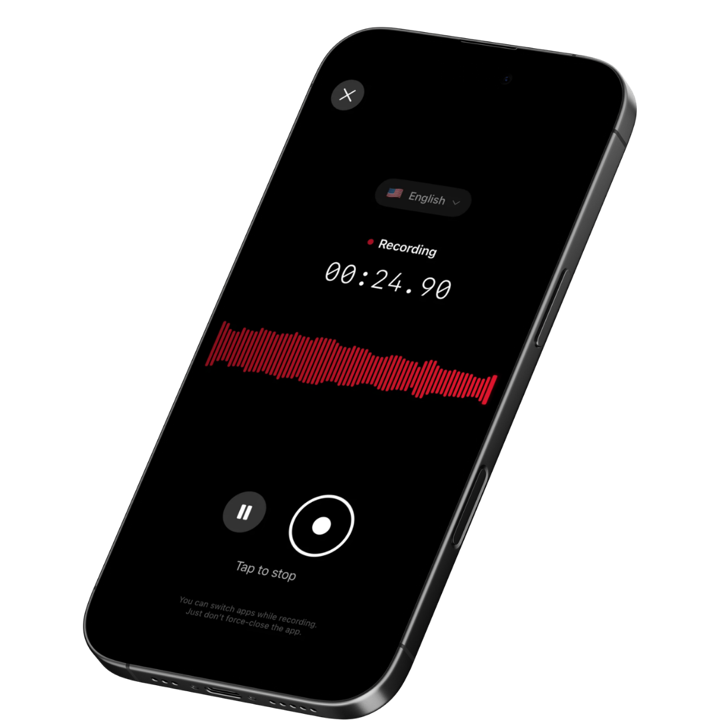
Voice capture offers a fundamentally different approach. Instead of stressing over missed details, forgotten action items, or the pressure to document everything in real time, you simply speak-and AI handles the rest. No frantic note-taking. No information anxiety. No stress-inducing app juggling.
Download SpeakWise from the App Store and discover how one-tap recording, AI transcription, intelligent summaries, and Notion integration can help you capture information calmly and completely-without the stress of trying to keep up.
Join 10,000+ professionals who've discovered that the best way to fight workplace stress isn't working harder-it's working smarter with tools that reduce cognitive load.
Get SpeakWise Free →
4.9★ App Store Rating | iOS Optimized

🎯 4.9★ App Store Rating | 📱 Built for iOS
