Workplace Surveillance Statistics 2026: Key Data
Used by recruiters, executives, consultants, and more.
Workplace Surveillance Statistics 2026: Key Data
74% of U.S. employers now use online tracking tools to monitor work activities. 75% of workers say surveillance decreases job satisfaction. 42% of monitored employees plan to leave within a year, compared to 23% of unmonitored peers. And 72% of employees say monitoring does not improve their productivity. These 16 statistics reveal the growing tension between employer oversight and employee trust in the modern workplace.
Workplace surveillance has escalated rapidly since the shift to remote and hybrid work. What began as basic time tracking has evolved into real-time screen monitoring, AI-powered productivity analytics, and biometric data collection. Employers argue that monitoring protects company data and ensures accountability. Employees counter that it erodes trust, increases stress, and fails to improve actual output.
This post covers 16 statistics that map the current state of workplace surveillance in 2026. From adoption rates and monitoring methods to employee resistance and regulatory responses, these numbers paint a comprehensive picture of how oversight is reshaping the employer-employee relationship.
1. 74% of U.S. employers now use online tracking tools to monitor work activities
Workplace monitoring has become the norm, not the exception. 74% of U.S. employers now use online tracking tools to monitor employee work activities. The monitoring methods are varied: 62% track web browsing logs, 59% use real-time screen tracking, and a growing number employ keystroke logging and application usage monitoring. This level of oversight would have been unthinkable a decade ago. The pandemic-driven shift to remote work accelerated adoption dramatically, and most organizations have not scaled back as workers returned to offices.
Source: ExpressVPN - Workplace Surveillance Trends in the U.S. 2025
2. 80% of companies monitor remote or hybrid workers
Remote and hybrid workers face even higher surveillance rates than their in-office counterparts. A study by MIT found that 80% of companies are already monitoring remote or hybrid workers. This represents a fundamental shift in the employer-employee trust dynamic. Remote workers traded commute time and office politics for productivity gains and flexibility. In return, many received digital surveillance that tracks their every mouse movement, website visit, and application switch throughout the workday.
Source: HRStacks - 2025 Employee Privacy Statistics
3. 71% of employees are digitally monitored, up nearly 30% from the previous year
The pace of surveillance expansion is accelerating. 71% of employees are now digitally monitored at work, up nearly 30% from the previous year according to Gartner estimates. This rapid increase suggests that organizations are deploying monitoring tools faster than employees can adapt or push back. The 30% year-over-year jump indicates that surveillance is being adopted not gradually but in a sudden wave, often without adequate employee communication or consent processes.
Source: Flowace - Top Employee Monitoring Statistics 2026
4. 75% of workers say surveillance decreases job satisfaction
The employee sentiment on monitoring is overwhelmingly negative. Three in four workers (75%) say workplace surveillance decreases their job satisfaction. This is not a minor morale issue. Job satisfaction directly correlates with engagement, productivity, retention, and discretionary effort. When monitoring undermines satisfaction for three-quarters of the workforce, the productivity gains that employers hope to achieve through surveillance may be offset by the engagement losses it creates.
Source: Apploye - Employee Monitoring Statistics 2026
5. 54% of employees would consider quitting if their employer increased surveillance
Surveillance is becoming a retention risk. 54% of employees say they would consider quitting if their employer increased monitoring. This is not hypothetical: 42% of monitored employees already plan to leave within a year, compared to just 23% of unmonitored peers. The 19-percentage-point turnover gap between monitored and unmonitored employees represents a significant cost. Replacing an employee costs 50-200% of their annual salary, making excessive monitoring an expensive proposition.
Source: Apploye - Employee Monitoring Statistics 2026
6. 72% of employees say monitoring does not improve their productivity
The core assumption behind workplace surveillance - that monitoring drives better performance - is not supported by employee experience. 72% of employees say monitoring has no positive impact on their productivity, and some report it actively decreases output. While 68% of employers believe monitoring improves work, the employees being monitored overwhelmingly disagree. This perception gap is one of the largest disconnects in contemporary workplace management.
Source: Hubstaff - Employee Monitoring Statistics 2025
7. 56% of monitored employees report stress and anxiety from surveillance
Workplace monitoring is taking a measurable psychological toll. 56% of monitored employees report stress and anxiety specifically attributable to surveillance, compared to 40% of unmonitored workers. The 16-percentage-point gap demonstrates that monitoring itself generates workplace stress. This stress is not productive. It does not motivate better performance. It consumes cognitive resources that could otherwise go toward actual work, creating a paradox where the tool designed to improve productivity instead undermines the mental conditions that enable it.
Source: ExpressVPN - Workplace Surveillance Trends in the U.S. 2025
8. 61% of U.S. companies use AI-powered analytics to measure employee productivity
AI has entered the surveillance toolkit. 61% of U.S. companies now use AI-powered analytics to measure employee productivity or behavior. These systems go beyond simple activity tracking to analyze patterns, predict disengagement, and score employee productivity using algorithms. The shift from tracking what employees do to algorithmically judging how productive they are raises new concerns about fairness, transparency, and the validity of AI productivity scores.
Source: High5Test - Employee Monitoring Statistics in the U.S. 2024-2025
9. 67% of U.S. employers collect biometric data from employees
Physical surveillance has expanded beyond cameras. 67% of U.S. employers collect biometric data, including fingerprints and facial recognition. Inside physical offices, 75% use monitoring methods like video surveillance (69%) and biometric access controls (58.3%). This level of physical and biometric data collection goes well beyond traditional security measures. Employees are now providing biological identifiers to their employers as a condition of daily work.
Source: High5Test - Employee Monitoring Statistics in the U.S. 2024-2025
10. 49% of monitored employees pretend to be online while doing non-work activities
Surveillance is generating its own form of resistance. 49% of monitored employees admit to pretending to be online while actually doing non-work activities. 31% use anti-surveillance software to avoid tracking, and 25% research hacks to fake online activity. These behaviors represent a new category of "work about work" - employees spending time and energy gaming monitoring systems rather than doing productive work. The irony is that surveillance intended to prevent time waste creates a new form of it.
Source: Apploye - Employee Monitoring Statistics 2026
11. 42% of monitored employees plan to leave within a year vs. 23% of unmonitored peers
The retention impact of monitoring is severe. 42% of monitored employees plan to leave their current employer within a year, compared to just 23% of unmonitored peers. This nearly doubled turnover intention means that companies investing in surveillance may be accelerating the very talent loss they are trying to prevent. High performers, who typically have the most employment options, are the most likely to leave when they feel distrusted. Monitoring may inadvertently create a negative selection effect.
Source: Hubstaff - Employee Monitoring Statistics 2025
12. Only 22% of employees know they are being monitored online
Transparency around monitoring remains poor. Only 22% of employees report knowing that they are being monitored online, and 44% are unaware of whether their employer uses biometric surveillance. This opacity undermines the stated goals of monitoring. If employees do not know they are being watched, monitoring cannot serve as a behavioral incentive. The lack of transparency also raises legal and ethical concerns, particularly as privacy regulations evolve across jurisdictions.
Source: ExpressVPN - Workplace Surveillance Trends in the U.S. 2025
13. The employee monitoring software market is projected to reach $1.47 billion by 2032
Despite employee pushback, the monitoring industry is growing. The employee monitoring software market is projected to reach $1.47 billion by 2032, growing at a healthy CAGR from its current base of $587 million in 2024. Other estimates project the market reaching $7.27 billion by 2029. These growth projections suggest that employer demand for surveillance tools will continue to increase, even as evidence mounts that monitoring damages trust, satisfaction, and retention.
Source: CurrentWare - Employee Monitoring Trends 2026
14. 86% of employee monitoring tools have real-time activity monitoring capabilities
Modern monitoring tools are comprehensive in their capabilities. 86% have real-time activity monitoring, 78% include screenshot capabilities, 40% offer chat monitoring, and 28% provide remote access to employee devices. These capabilities mean that employers can see what is on an employee's screen at any moment, capture periodic screenshots of their work, read their messages, and even access their devices remotely. The breadth of these tools far exceeds what most employees imagine when they hear "monitoring."
Source: WorkTime - Top 17 Employee Monitoring Software Industry Trends 2026
15. The EU AI Act (2026) classifies workplace AI as "high-risk" and bans emotion recognition
Regulation is beginning to catch up with surveillance technology. The EU AI Act, effective in 2026, classifies workplace AI as "high-risk," bans emotion recognition in employment contexts, mandates transparency and human oversight, and threatens penalties up to 35 million euros or 7% of global revenue. This regulatory framework signals a fundamental shift. For the first time, major legislation specifically addresses AI-powered workplace surveillance and places limits on what employers can do with monitoring technology.
Source: CurrentWare - Employee Monitoring Trends 2026
16. 68% of employers believe monitoring improves work, but 72% of employees disagree
The employer-employee perception gap on monitoring effectiveness is stark. 68% of employers think monitoring improves work output, while 72% of employees say it has no positive impact or actively decreases their productivity. This disconnect suggests that employers and employees are measuring different things. Employers may see more activity data and assume it equals productivity. Employees know that activity and output are not the same thing, and that being watched adds cognitive overhead that reduces their capacity for deep, creative work.
Source: Hubstaff - Employee Monitoring Statistics 2025
The Surveillance Paradox: More Monitoring, Less Trust, No Productivity Gain
These 16 statistics paint a troubling picture of workplace surveillance in 2026. Monitoring is nearly universal - 74% of employers use tracking tools, 80% monitor remote workers, and 61% deploy AI analytics. The technology exists to track every click, keystroke, and screen change. Yet the evidence consistently shows that monitoring fails to deliver its promised benefits.
72% of employees say monitoring does not improve productivity. 75% report decreased satisfaction. 56% experience stress and anxiety. 42% plan to leave. And 49% actively game the systems designed to measure them. The data suggests that surveillance creates a compliance theater where employees optimize for appearing productive rather than being productive.
The emerging regulatory response - particularly the EU AI Act - signals that the era of unchecked workplace surveillance may be ending. Organizations that build cultures of trust, clear expectations, and outcome-based evaluation are likely to outperform those that rely on monitoring. The data consistently shows that trusted employees stay longer, produce more, and engage more deeply with their work.
The most effective productivity strategy is not watching employees more closely. It is creating conditions where they want to do their best work - and trusting them to do it.---
Capture Productivity Through Better Communication, Not Surveillance
The data is clear: monitoring does not improve productivity, but better communication tools do. The real productivity challenge is not that employees are wasting time. It is that valuable insights, decisions, and action items from conversations are lost because no one captured them properly.
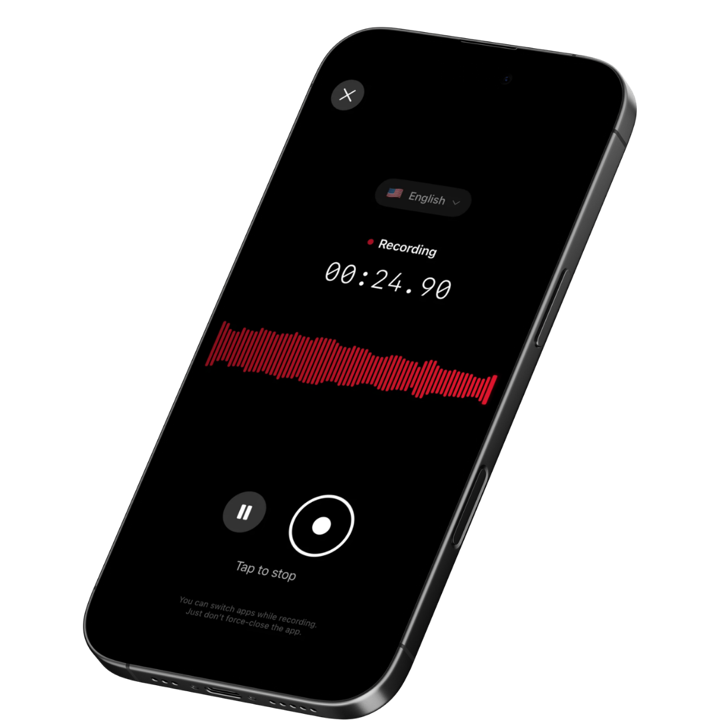
Voice capture offers a trust-based alternative to surveillance. Instead of monitoring what employees do all day, help them capture what matters. Record meetings, client calls, and brainstorming sessions with one tap. AI transcription delivers structured summaries, action items, and searchable records. Employees stay productive because they have the information they need, not because someone is watching.
Download Speakwise from the App Store and give your team a productivity tool that builds trust instead of eroding it - capture every important conversation with AI-powered voice notes.
Join 10,000+ professionals who boost productivity through better capture, not more surveillance.
Get Speakwise Free
4.9-star App Store Rating | iOS Optimized

🎯 4.9★ App Store Rating | 📱 Built for iOS
