Workplace Technology Overload Statistics 2026: Tool Sprawl, App Fatigue, and SaaS Saturation
Used by recruiters, executives, consultants, and more.
Workplace Technology Overload Statistics 2026: Tool Sprawl, App Fatigue, and SaaS Saturation
Workers toggle between apps 1,200 times per day. The average company deploys 101 different SaaS applications. Employees lose 44 hours per year to tool fatigue alone. And organizations waste an average of $21 million annually on software licenses nobody uses. Welcome to the age of workplace technology overload.
Every new workplace app arrives with a promise: better collaboration, faster communication, streamlined workflows. And individually, many of these tools deliver. But collectively, something has gone terribly wrong. The modern knowledge worker doesn't just use technology to do their job --- they spend a staggering portion of their day managing, navigating, and switching between the very tools that were supposed to make them more productive. The phenomenon has earned several names: tool sprawl, app fatigue, SaaS saturation, digital friction. Whatever you call it, the data paints an alarming picture.
The cost isn't just financial, though billions of dollars in wasted software licenses certainly grab executive attention. The deeper cost is cognitive. Every toggle between applications fractures concentration. Every redundant notification erodes focus. Every new dashboard to learn adds another layer of complexity to already overwhelmed workers. The result is a workforce that's busier than ever but accomplishing less of the deep, meaningful work that actually drives results.
In this post, we'll explore 20 statistics that reveal the true scope of workplace technology overload. From the sheer number of apps companies deploy, to the hidden cognitive toll of constant context switching, to the billions wasted on unused software, these numbers tell the story of a productivity crisis hiding in plain sight. Whether you're an individual contributor drowning in notifications, a manager watching your team burn out on "work about work," or a leader looking for data to drive tool consolidation, these statistics make the case for radical simplification.
Key Workplace Technology Overload Statistics (2026)
- Workplace technology overload costs organizations an average of $21 million a year in wasted, unused SaaS licenses (Zylo 2025 SaaS Management Index).
- Workers toggle between applications roughly 1,200 times per day, burning nearly 9% of their work time just reorienting after each switch (Harvard Business Review).
- The average company now runs 101 SaaS applications, crossing the triple-digit threshold for the first time (Okta Businesses at Work 2025).
- Knowledge workers spend 60% of their time on "work about work" instead of the skilled, strategic tasks they were hired to do (Asana Anatomy of Work Index).
- Employees face 275 interruptions a day --- roughly one every two minutes --- from meetings, emails, and chat messages (Microsoft Work Trend Index).
- AI-driven tool fragmentation now costs the Fortune 500 an estimated $161 billion a year, according to new 2026 research (Atlassian State of Teams 2026).
- 78% of IT leaders were hit with unexpected SaaS charges tied to AI features or consumption-based pricing in 2026 (Zylo 2026 SaaS Management Index).
1. The average company now uses 101 SaaS applications, crossing the triple-digit threshold for the first time
According to Okta's 2025 Businesses at Work report, the global average number of apps per company has surpassed 100 for the first time, reaching 101. This milestone arrived after years of stagnation --- from 2019 through 2023, the number hovered below 90. The recent 9% year-over-year surge signals that despite widespread talk of tool consolidation, organizations are actually accelerating their app adoption. Large enterprises with over 5,000 employees fare even worse, averaging 131 apps. For employees, this means more logins to remember, more interfaces to navigate, and more places where critical information might be hiding. Each additional app adds another layer of cognitive overhead that compounds across the entire organization.
Source: Okta Businesses at Work 2025
2. Workers toggle between applications roughly 1,200 times per day
A 2022 Harvard Business Review study tracked the digital behavior of workers across three Fortune 500 companies and found that the average person toggled between different applications and websites approximately 1,200 times each day. That relentless switching adds up to nearly four hours per week --- about 9% of total work time --- spent simply reorienting after each toggle. Extrapolated across a year, this represents roughly 200 hours per employee lost to nothing more than the mechanical act of clicking between windows and re-establishing context. This isn't productive multitasking. It's a silent tax on every worker's cognitive capacity, draining mental energy that could otherwise be directed toward creative problem-solving, strategic thinking, and meaningful output.
Source: Harvard Business Review
3. Employees lose an average of 44 hours per year to tool fatigue
A Cornell University and Lokalise workplace study, reported in Fast Company, found that workers lose an average of 51 minutes per week to tool fatigue --- the exhaustion and inefficiency that comes from juggling too many digital platforms, dealing with redundant notifications, and navigating between overlapping systems. Over the course of a year, that adds up to roughly 44 lost hours, or more than a full work week. For nearly a quarter of workers (22%), the problem is even worse: they lose more than two hours per week, translating to over 100 hours or 2.5 work weeks wasted annually. These aren't hours lost to difficult work --- they're hours lost to the friction of managing the tools themselves.
Source: Fast Company / Cornell University & Lokalise Study
4. 56% of workers say tool fatigue negatively impacts their work every single week
The scale of the problem extends well beyond lost time. More than half of all workers report that the sheer volume of digital tools they use has a negative effect on their weekly work experience. This includes not just the time spent switching between platforms, but the mental burden of remembering which tool contains which information, keeping up with notifications from multiple channels, and dealing with redundant workflows across overlapping systems. The most time-consuming culprits, according to workers, are email (47%), messaging platforms like Slack, Discord, and Teams (35%), video conferencing tools (22%), and calendar and scheduling apps (17%). When the majority of your workforce says their tools are hurting rather than helping, something fundamental needs to change.
Source: Fast Company / Cornell University & Lokalise Study
5. It takes 9.5 minutes to regain a productive workflow after switching to a different app
A joint study by Qatalog and Cornell University's Ellis Idea Lab found that it takes workers an average of 9.5 minutes to get back into a productive workflow after toggling to a different digital application. That might not sound dramatic on its own, but consider it in the context of workers who switch apps 30 or more times per day. The cumulative effect is devastating: 45% of workers in the study said context switching made them less productive, and 43% said the constant shifting between tasks caused outright fatigue. The study also found that workers spend roughly 59 minutes per day simply searching for information trapped across various tools.
Source: Qatalog & Cornell University (via Conclude)
6. Knowledge workers spend 60% of their time on "work about work"
Asana's Anatomy of Work Index, based on a survey of over 10,000 global employees, reveals that the average knowledge worker devotes 60% of their time to what Asana calls "work about work" --- activities like chasing updates, attending status meetings, searching for information, switching between apps, and managing shifting priorities. That leaves a mere 40% for the skilled, creative, strategic work these professionals were actually hired to do. Workers toggle between an average of 10 different apps 25 times per day, and this fragmentation is a leading driver of the work-about-work epidemic.
Source: Asana Anatomy of Work Index
7. Organizations waste an average of $21 million annually on unused SaaS licenses
Zylo's 2025 SaaS Management Index, analyzing data from over 40 million SaaS licenses and over $40 billion in SaaS spend under management, found that companies leave an average of $21 million per year on the table in wasted spend --- a 14.2% increase year-over-year, as SaaS spend per employee climbed to $4,830, up 21.9% year-over-year. Zylo's research has also long documented staggering redundancy: the average organization maintains 15 duplicate online training apps, 11 project management tools, and 10 team collaboration apps. Employees are paying the cognitive cost of navigating all these overlapping tools, while organizations pay the financial cost of licenses collecting dust.
Source: Zylo 2025 SaaS Management Index (duplicate app data: Zylo 2024 index)
8. 68% of workers toggle between apps up to 10 times per hour, and 31% lose their train of thought each time
RingCentral's global workplace survey of 2,000 knowledge workers found that more than two-thirds toggle between apps up to 10 times every hour, and nearly a third say each toggle causes them to lose their train of thought entirely. The productivity cost is enormous: 69% of workers waste up to an hour each day navigating between communication apps alone --- not all their apps, just communication apps --- amounting to 32 lost workdays per year. By 2023, updated research showed the problem had nearly doubled, with workers losing the equivalent of 62 working days per year to app-switching friction. That's three full months of productive time lost to the overhead of managing the tools.
Source: RingCentral Workplace Survey, RingCentral Communications @ Work Index 2023
9. Employees are interrupted every 2 minutes during core work hours --- 275 times per day
Microsoft's Work Trend Index research found that the average employee faces 275 interruptions per day from meetings, emails, and chat messages during core working hours. That works out to one interruption every two minutes. The interruption pipeline is staggering in volume: the average employee now receives 117 emails and 153 Teams messages daily, and communication activities consume 60% of user time. Half of all meetings occur during peak productivity hours (9-11 a.m. and 1-3 p.m.), leaving precious little room for the deep focus work that actually moves projects forward.
Source: Microsoft Work Trend Index
10. 48% of employees and 52% of leaders say their work feels "chaotic and fragmented"
The same Microsoft Work Trend Index revealed a striking consensus across organizational levels: nearly half of employees and more than half of leaders describe their work as chaotic and fragmented. This isn't a problem confined to junior staff struggling to keep up. Even the people setting strategy and directing teams feel overwhelmed by the fragmentation of modern work. After-hours activity is surging too, with chats outside standard 9-to-5 hours up 15% year over year, an average of 58 messages per user arriving before or after hours, and meetings starting after 8 p.m. up 16% driven by cross-time-zone collaboration. The tools designed to contain work within reasonable boundaries are instead allowing it to bleed into every waking hour.
Source: Microsoft Work Trend Index 2025
11. Employees spend 1.8 hours every day --- 9.3 hours per week --- searching and gathering information
McKinsey research found that the average knowledge worker spends nearly two hours each day simply searching for and gathering information scattered across tools, drives, inboxes, and chat threads. Over a week, that's 9.3 hours --- more than a full workday consumed by the hunt for information rather than the application of it. Across a year, that's approximately 480 hours, or 12 full work weeks, spent searching rather than producing. As McKinsey framed it, businesses are essentially hiring five employees but only getting four to show up for productive work; the fifth is perpetually lost in the labyrinth of fragmented workplace systems trying to find what they need. The problem is directly exacerbated by tool sprawl: the more places information can live, the longer it takes to find.
Source: McKinsey Global Institute
12. 55% of workers say multiple platforms in their workday serve the same purpose
More than half of employees surveyed in the Cornell/Lokalise study reported that the platforms they use daily overlap significantly in functionality. One tool for project management, another for task tracking, a third for team updates --- all doing essentially the same thing in slightly different ways. This aligns with Zylo's finding that the average organization maintains 15 duplicate online training apps, 11 project management tools, and 10 team collaboration apps. Yet despite this widely recognized redundancy, 79% of respondents said their company has taken no steps to consolidate tools or reduce tool fatigue. The inertia is staggering: organizations know there's a problem, employees are vocal about the problem, and yet the bloated tool stack persists because no single stakeholder owns the consolidation effort. Each department defends its preferred tools, and the organizational cost of redundancy becomes everyone's burden and nobody's responsibility.
Source: Fast Company / Cornell University & Lokalise Study
13. Global SaaS spending reached nearly $300 billion in 2025
Gartner forecast that businesses worldwide would spend approximately $300 billion on SaaS products in 2025, up from $250.8 billion in 2024. That's a 20% year-over-year increase in spending on cloud software. While SaaS adoption has driven genuine innovation and flexibility, Gartner also estimates that roughly 30% of this spend is "toxic" --- wasted on unused licenses, underutilized features, and redundant applications. That means approximately $90 billion in global SaaS spending is being poured into software that doesn't deliver value. For perspective, that $90 billion exceeds the entire GDP of many countries, all going to software that sits idle on company balance sheets while contributing nothing to actual work output.
Source: Gartner Cloud Spending Forecast
14. Information overload costs the global economy an estimated $1 trillion annually
Research from Rensselaer Polytechnic Institute puts the worldwide economic cost of information overload at approximately $1 trillion per year. This figure encompasses lost productivity, degraded decision-making, increased errors, and the downstream effects of workers who are too overwhelmed by incoming data to process it effectively. The cost doesn't come from a single dramatic failure --- it accumulates silently through hundreds of millions of workers who are each slightly less effective, slightly more distracted, and slightly more prone to mistakes because their cognitive resources are being consumed by tool management rather than meaningful work. When you multiply a 9% productivity loss across the entire global knowledge workforce, the trillion-dollar figure begins to look conservative.
Source: Rensselaer Polytechnic Institute (via LumApps)
15. It takes 23 minutes and 15 seconds to fully refocus after a significant interruption
While the Qatalog/Cornell study measured 9.5 minutes for app-switching recovery, separate research from the University of California, Irvine found that a full interruption --- a Slack message that pulls you into a conversation, a meeting that breaks your flow, a notification that demands immediate response --- takes an average of 23 minutes and 15 seconds to fully recover from. Researchers attribute this to "attention residue," a cognitive phenomenon where part of your mental bandwidth remains stuck on the previous task or interruption even after you've returned to your original work. The residue doesn't clear instantly; it lingers, degrading the quality of whatever you do next. In a workplace with 275 daily interruptions, the math is devastating --- and it explains why so many workers report feeling exhausted at the end of the day despite never having achieved a single period of sustained deep focus.
Source: University of California, Irvine Research
16. 17% of workers switch between tabs, apps, or platforms more than 100 times in a single workday
While the average worker switches apps 33 times per day, the problem is far worse for a significant minority. Nearly one in five workers reports switching between tabs, apps, or platforms more than 100 times in a single day. The daily tool stack for most workers is substantial: 55% use three to five platforms daily, while 31% are actively working across six to ten platforms every day. And 60% of workers report feeling pressure to respond to messages and notifications outside of working hours, extending the cognitive burden of tool management well beyond the traditional workday.
Source: Fast Company / Cornell University & Lokalise Study
17. Context switching costs employees five working weeks of productivity every year
The aggregate impact of workers constantly toggling between tools, tasks, and communication channels is staggering once you convert it into pure time lost. Studies converge on the same conclusion: employees lose the equivalent of five full working weeks every year to context switching. The damage compounds across the workforce: 45% of workers say context switching makes them less productive, 43% say it causes fatigue, and the average worker spends nearly 200 hours per year --- equivalent to 9% of their total work time --- simply switching between applications. For a company with 1,000 knowledge workers, this translates to roughly 200,000 hours of productive capacity evaporating annually --- the equivalent of nearly 100 full-time employees doing nothing but switching between windows all year long.
Source: Qatalog & Cornell University (via Conclude)
18. AI-driven tool fragmentation now costs the Fortune 500 $161 billion a year
Atlassian's State of Teams 2026 report, based on a double-blind survey of 12,035 global knowledge workers and 173 Fortune 1000 executives collected in January and February 2026, found that coordination has failed to keep pace with the rush to adopt AI tools, creating what Atlassian calls an "AI fragmentation tax" that costs the Fortune 500 an estimated $161 billion every year. The gap is stark: 85% of knowledge workers now use AI at work, but only 29% have actually embedded it into their day-to-day workflows. The rest are left toggling between yet another set of disconnected AI tools, each generating outputs that never quite sync with the rest of the stack --- adding a new layer to the same tool-sprawl problem that has been building for years.
Source: Atlassian State of Teams 2026
19. Workers now need almost 24 minutes to refocus after a digital disruption
Omnissa's State of Digital Workspace 2026 report, built from telemetry collected across millions of enterprise endpoints throughout 2025, found that employees need almost 24 minutes to refocus after a workflow disruption --- confirming that the attention-recovery problem documented by earlier academic research has only gotten worse as device and app fragmentation has grown. The same telemetry found that usage of AI assistant applications grew nearly 1,000% year-over-year, adding yet another category of tool for workers and IT teams to manage on top of an already bloated stack. Every additional disruption, whether from a notification, an app crash, or a context switch, now carries a heavier cognitive toll than it did when the original interruption-recovery research was conducted.
Source: Omnissa State of Digital Workspace 2026
20. IT leaders are blindsided by unexpected SaaS charges 78% of the time as AI pricing scrambles budgets
Zylo's 2026 SaaS Management Index, drawing on more than 40 million SaaS licenses and $75 billion in spend under management, found that 78% of IT leaders reported unexpected charges tied to AI features or consumption-based pricing models. The shift is being driven by a wave of AI-native tool adoption: spend on AI-native applications surged 108% year-over-year overall, and 393% among organizations with more than 10,000 employees. Compounding the problem, business units now control 81% of SaaS spend while IT directly manages just 15%, meaning most of this runaway spending is happening outside the visibility of the teams responsible for consolidating it. As a direct result, 61% of organizations were forced to cut other projects to absorb unplanned SaaS cost increases.
Source: Zylo 2026 SaaS Management Index
The Technology Paradox: When More Tools Mean Less Work
The statistics above reveal a paradox that has become the defining challenge of the modern workplace. Every tool in the average company's 101-app stack was adopted for a reason. Each one solved a real problem, filled a genuine gap, or promised a measurable improvement. And yet the cumulative effect of all these solutions has become a problem far larger than any individual tool was designed to solve.
The root cause is what researchers call "digital friction" --- the invisible resistance created when workers must constantly navigate between disconnected systems. Unlike physical friction, which you can see and feel, digital friction operates below the surface of awareness. Workers don't consciously register the cognitive cost of switching from their email to their project management tool to their chat platform to their document editor and back again. They just feel tired at 2 p.m. without understanding why. They just notice that the deep work they planned for the morning somehow never materialized. They just realize at the end of the week that they spent most of their time managing their tools instead of doing their actual work.
The financial dimension is equally troubling. With companies wasting an average of $21 million per year on unused software licenses, and global SaaS waste estimated at $90 billion annually, the case for consolidation is overwhelming on paper. But in practice, tool sprawl has remarkable inertia. Every redundant app has an internal champion who chose it. Every overlapping tool has a team that's built workflows around it. And as the data shows, 79% of companies have taken zero steps to consolidate, even though 55% of their own workers say the tools overlap. The organizational will to simplify consistently loses out to the path of least resistance: just add another app.
The human cost deserves equal attention. When 48% of employees and 52% of leaders describe their work as "chaotic and fragmented," the toll is not just professional --- it's personal. Tool overload doesn't clock out at 5 p.m. With 60% of workers feeling pressure to respond to pings outside working hours and after-hours messaging up 15% year over year, the cognitive burden of managing a bloated tool stack follows workers home. The boundary between "using tools for work" and "being used by tools" has blurred beyond recognition, contributing to the burnout epidemic that organizations are simultaneously spending billions to address.
Perhaps the most insidious aspect of technology overload is what it does to the quality of thinking. When workers are interrupted every two minutes, when they toggle 1,200 times per day, when they spend 60% of their time on work about work, what suffers is not just efficiency --- it's depth. The insights that come from sustained concentration, the creative leaps that require uninterrupted thought, the strategic connections that only emerge when you can hold multiple complex ideas in your mind simultaneously --- all of these are casualties of the fragmented, notification-saturated workday that technology overload creates. We have optimized for responsiveness at the expense of thoughtfulness, and the statistics suggest the trade-off has not been worth it.
The data tells an unmistakable story: the solution to workplace technology overload is not another tool. It's fewer tools, used better. The organizations and individuals who thrive in the coming years will be those who have the courage to subtract rather than add --- to consolidate, simplify, and reclaim the cognitive space that constant tool-switching has stolen.---
Ready to simplify your tool stack?
Every new app that enters your workflow arrives with the same pitch: "This will make you more productive." And maybe it does, in isolation. But the twentieth app doesn't exist in isolation. It exists alongside the other nineteen, each competing for your attention, each adding another login, another notification stream, another tab to toggle between. When you're losing 44 hours a year to tool fatigue, spending 9.3 hours a week hunting for information, and toggling 1,200 times per day just to keep up, the math is simple: the cumulative weight of these tools is crushing the very productivity they promised to enhance.
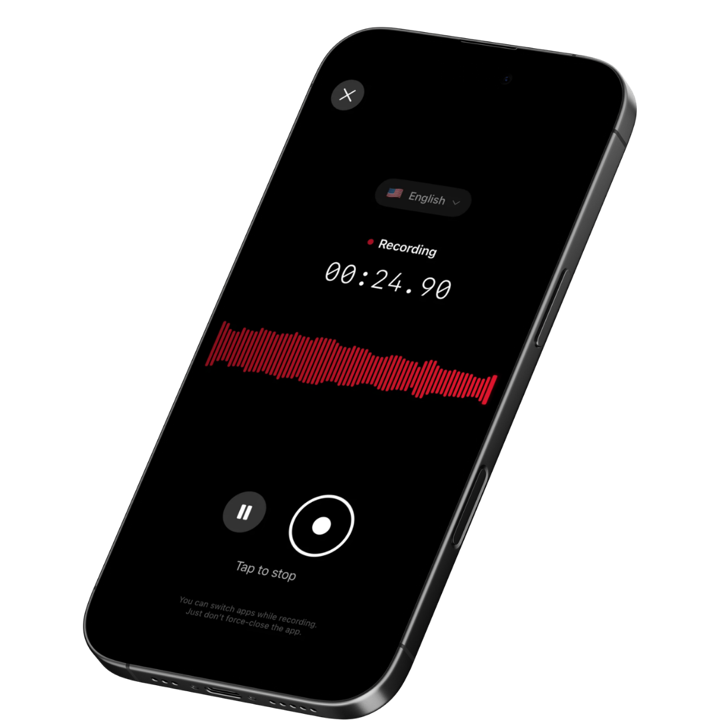
Voice capture offers a fundamentally different approach. Instead of adding another app to your workflow, SpeakWise replaces multiple tools with one simple action: speak. One tap captures your thought, AI transcribes and summarizes it, and Notion integration means it flows into your existing system. No new dashboard to learn. No new notification stream to manage.
Download SpeakWise from the App Store and discover how one-tap recording, AI transcription, intelligent summaries, and Notion integration can help you do more with fewer tools.
Join 10,000+ professionals who've discovered that the best way to fight tool overload isn't another tool---it's a simpler tool.
Get SpeakWise Free →
4.9★ App Store Rating | iOS Optimized

🎯 4.9★ App Store Rating | 📱 Built for iOS
