Workplace Transparency Statistics 2026


Used by recruiters, executives, consultants, and more.
Workplace Transparency Statistics 2026
Employees at highly transparent organizations are 59% less likely to leave. Only half of workers trust their top leadership. Workers with the highest trust in management are 63% more motivated than those with the lowest trust. By 2026, nearly half of U.S. workers fall under pay transparency laws. These 16 statistics reveal how transparency has become the foundation of trust, retention, and performance in the modern workplace.
Transparency is no longer a cultural aspiration. It is a business imperative backed by legislation, employee expectations, and measurable performance outcomes. As pay transparency laws expand, as Gen Z demands openness as a baseline, and as trust in leadership erodes across industries, organizations face a clear choice: become transparent or lose talent.
This post covers 16 statistics on workplace transparency in 2026. The data comes from PwC, Gallup, Deloitte, O.C. Tanner, and major workplace research organizations. Whether you are building a transparency strategy or evaluating your current culture, these numbers reveal what the data says about openness at work.
1. Employees at transparent organizations are 59% less likely to leave
Transparency is one of the strongest retention levers available. According to Payscale research, employees at highly transparent organizations are 59% less likely to leave than those at companies with low transparency. This retention advantage compounds over time. Lower turnover means preserved institutional knowledge, reduced recruitment costs, and stronger team cohesion. In a labor market where retention is the top priority for most organizations, transparency offers an outsized return on what is essentially a behavioral change rather than a budget item.
Source: Lattice - Pay Transparency Trends 2025
2. Only half of workers trust their top leadership
Trust in leadership remains alarmingly low. PwC's Global Workforce Hopes and Fears Survey 2025 found that only about half of workers say they trust their organization's top leadership. Even fewer say that senior leaders care about their wellbeing. This trust deficit has direct consequences for accountability, engagement, and voluntary effort. Workers who do not trust leadership are less likely to go beyond minimum requirements, less likely to share honest feedback, and more likely to leave when alternatives appear.
Source: PwC - Trust in Business Survey
3. Workers with high trust in management are 63% more motivated
Trust translates directly into motivation. Research shows that workers with the highest levels of trust in senior management are 63% more motivated than those with the lowest trust levels. Motivation is the engine of discretionary effort: the work people do beyond what is strictly required. When trust is high, workers invest emotional energy in their work. When trust is low, they conserve it. A 63% motivation gap creates enormous differences in output, innovation, and team performance.
Source: PwC - Trust in Business Survey
4. 86% of HR and business leaders see a direct link between transparency and trust
The connection between transparency and trust is not just intuitive. It is recognized by the people responsible for building organizational culture. 86% of HR and business leaders acknowledge a direct connection between transparency and employee trust. Despite this recognition, many organizations still default to information hoarding, need-to-know communication, and leadership opacity. The gap between knowing that transparency builds trust and actually practicing it remains one of the most persistent cultural challenges.
Source: O.C. Tanner - Global Culture Report 2026
5. 29% of employees lack clear, honest, or consistent communication from leaders
Nearly a third of the workforce reports a fundamental communication deficit. According to a 2025 Gallup survey, 29% of employees say they lack clear, honest, or consistent communication from their leaders. This gap is particularly damaging because it erodes the basic conditions for transparency. When workers cannot trust that leadership communication is honest, every message becomes suspect. Transparency requires not just more communication, but communication that is perceived as genuine and complete.
Source: Gallup - State of the Global Workplace 2025
6. 52% of employees who trust their employer cite transparency as the reason
Trust and transparency are inseparable. Among employees who report trusting their employer, 52% specifically cite transparency about company policies and practices as the reason for that trust. This finding makes transparency the single largest driver of employer trust in the workforce. The implication is straightforward: organizations that want to build trust should start with transparency. Not platitudes about trust, but concrete openness about policies, decisions, and the reasoning behind them.
Source: O.C. Tanner - Global Culture Report 2026
7. Nearly half of U.S. workers are covered by pay transparency laws in 2026
Pay transparency has moved from cultural trend to legal mandate. By early 2026, approximately half of the U.S. workforce works under some form of salary disclosure requirement, covering over 60 million workers across more than a dozen states. This regulatory expansion reflects the growing consensus that pay secrecy enables inequity and erodes trust. Organizations that have not yet adopted pay transparency will find themselves legally required to do so as the regulatory momentum continues.
Source: Morgan HR - Pay Transparency Laws 2026
8. 82% of U.S. organizations are communicating or planning to share pay ranges
Even beyond legal requirements, organizations are choosing transparency. 82% of responding organizations in the U.S. are either currently communicating, planning, or considering communicating individual pay ranges with employees. A similar 79% are doing the same with external candidates. This voluntary adoption suggests that organizations recognize pay transparency as a competitive advantage in hiring and retention, not just a compliance obligation.
Source: WorldatWork - Pay Transparency Report
9. 44% of Gen Z ranks pay transparency as their top job factor
Generational expectations are reshaping transparency norms. 44% of Gen Z respondents identified pay transparency and equity as their number-one job factor. This compares to just 20% of Baby Boomers who said the same. As Gen Z grows to represent a larger share of the workforce, organizations that maintain pay secrecy will face increasing difficulty attracting young talent. The generational shift makes transparency not just a current best practice but a future necessity.
Source: Factorial - Pay Transparency 2026
10. Organizations with transparent career frameworks retain employees 41% longer
Transparency about advancement opportunities drives retention. Research shows that organizations with transparent career frameworks retain employees 41% longer than those without structured pathways. When workers can see how to advance, what skills they need, and what timeline to expect, they invest in their current role rather than looking externally. Career opacity, by contrast, pushes ambitious employees to seek clarity through new employers.
Source: InFeedo - Career Pathing Transparency 2026
11. 90% of workers rank clear career paths as their top job priority
Career transparency is no longer a nice-to-have. 90% of workers now rank clear career paths as their top job priority, making it the most important factor in job satisfaction and retention. This statistic suggests that many organizations are losing talent not because of compensation, but because of ambiguity about the future. Workers want to know where they are going. When the path is invisible, they assume it does not exist and leave to find one.
Source: InFeedo - Career Pathing Transparency 2026
12. Transparent organizations achieve 21% higher profit margins
Transparency pays financial dividends. Companies with transparent career frameworks and open communication practices achieve 21% higher profit margins compared to less transparent peers. The mechanism is indirect but powerful: transparency drives retention, retention preserves institutional knowledge, institutional knowledge enables better execution, and better execution produces higher margins. The financial case for transparency is not speculative. It is measured and repeatable.
Source: InFeedo - Career Pathing Transparency 2026
13. Perceived fair experience improves retention by up to 27%
Transparency creates the perception of fairness, which is a powerful retention driver. Research published in Harvard Business Review based on Gartner data found that the perception of a fair employee experience improved retention by up to 27%. Fairness is not just about equal treatment. It is about understanding why decisions are made. When workers understand the logic behind compensation, promotion, and policy decisions, they perceive the system as fair even when outcomes are not perfectly equal.
Source: HR Morning - Pay Transparency Best Practices 2025
14. The EU Pay Transparency Directive requires compliance by 2026
Transparency is becoming a global legal standard. The European Union's Pay Transparency Directive requires employers to disclose pay information and address wage gaps, with member states required to integrate these requirements into national law by 2026. This affects multinational organizations that operate across European markets. Companies that build transparency into their global operations now will avoid the scramble of retroactive compliance that affects those who wait.
Source: Korn Ferry - Pay Transparency Workplace
15. Only 21% of employees globally are engaged at work
The engagement crisis is inextricably linked to the transparency deficit. Gallup reports that just 21% of global employees are engaged, and transparency gaps are a primary driver of disengagement. When workers feel excluded from information, unaware of company direction, and uncertain about their role in the bigger picture, engagement collapses. Transparency is not the only driver of engagement, but it is one of the most actionable. Organizations can begin improving transparency tomorrow without budget approval or system changes.
Source: Gallup - State of the Global Workplace 2025
16. Regular financial performance communication builds trust even with bad news
One of the most counterintuitive findings in transparency research is that honest communication about negative information builds more trust than selective sharing of positive information. When organizations regularly communicate about financial performance, market pressures, and cost drivers, employees understand the environment in which decisions are made. Even disappointing news feels less arbitrary when the context is clear. The takeaway: transparency is not about always having good news. It is about always being honest.
Source: Management Issues - Trust and Transparency 2026
Transparency Is the New Competitive Advantage
The statistics reveal a clear pattern: transparency drives trust, trust drives engagement, engagement drives performance, and performance drives profitability. The chain is direct and measurable. Organizations at the high end of transparency outperform their opaque counterparts on every metric that matters: retention (59% better), motivation (63% higher), profit margins (21% greater), and employee trust (52% cite transparency as the reason).
The generational shift makes this even more urgent. Gen Z workers expect transparency as a default. They will not accept the information asymmetry that older generations tolerated. As this cohort grows within the workforce, organizations that maintain opacity will find it increasingly difficult to attract and retain talent.
The path forward is not complicated, but it requires courage. Transparency means sharing information even when it is uncomfortable. It means admitting mistakes, explaining decisions, and opening compensation data. The organizations willing to take that step gain a compounding advantage over those that cling to secrecy.
In an era of low trust and high turnover, transparency is not just the right thing to do. It is the strategically superior thing to do.---
Build transparency into every conversation
Transparency starts with capturing what was actually said. When meeting decisions, commitments, and discussions are documented accurately, there is no room for conflicting interpretations or selective memory. A recorded conversation is a transparent one. Every participant can verify what was agreed, who committed to what, and what the reasoning was.
Voice recording creates an objective record that builds trust through accountability. When teams know conversations are captured and summarized by AI, communication becomes clearer and commitments become more intentional.
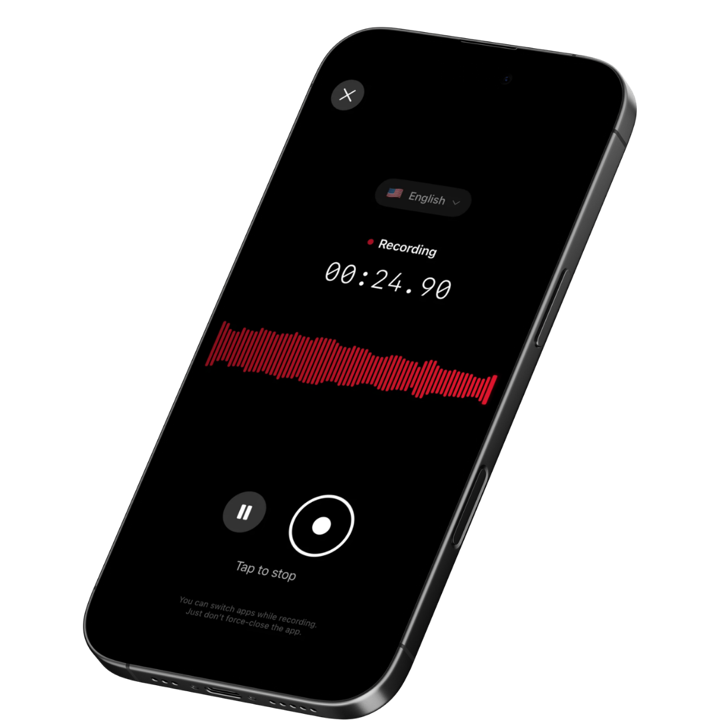
Download SpeakWise from the App Store and bring transparency to every meeting. AI-powered transcription, automatic summaries, and Notion integration create a searchable record of decisions and commitments that everyone can access.
Join 10,000+ professionals who use voice capture to build transparent, accountable team cultures.
Get SpeakWise Free
4.9-star App Store Rating | iOS Optimized

🎯 4.9★ App Store Rating | 📱 Built for iOS
