Workplace Trust Statistics 2026
Used by recruiters, executives, consultants, and more.
Workplace Trust Statistics 2026
78% of employees globally trust their employer, but only 19% of associates trust their CEO to tell them the truth. High-trust companies deliver 3.5x the stock market returns over 27 years and 8.5x greater revenue per employee. Yet fear of discrimination has surged to a record 63%, and 68% of respondents worry that business leaders purposely mislead people. These 19 statistics reveal both the power of workplace trust and the growing cracks in its foundation.
Trust is the invisible architecture of every organization. When it is present, people collaborate freely, take risks, and commit to outcomes beyond their job descriptions. When it erodes, everything slows down. Communication becomes guarded. Innovation stalls. Talented people leave. The economic research on trust is unambiguous: it is the single most powerful predictor of organizational performance.
This post covers 19 statistics on workplace trust levels, leadership credibility, business impact, and trust gaps across organizational hierarchies. Whether you lead a team, set culture strategy, or are evaluating your own workplace, these numbers quantify what trust creates and what its absence costs.
Key Workplace Trust Statistics (2026)
- Workplace trust in employers has climbed to 78% globally in 2026, the most trusted institution measured, 14 points ahead of business and 25 ahead of government (Edelman - 2026 Trust Barometer)
- Only 19% of associates trust their CEO to tell them the truth, compared with 52% of executives who say the same (Edelman - 2024 Trust Barometer Special Report: Trust at Work)
- High-trust companies deliver 3.5x higher cumulative stock market returns than the broader market over a 27-year period (Great Place to Work - High-Trust Culture Business Case)
- Revenue per employee at the highest-trust companies runs 8.5x the U.S. public-market average, $883,928 versus $104,030 (Great Place to Work - Trust Is the New Business Currency)
- 93% of executives agree that building and maintaining trust improves the bottom line (PwC - Trust in Business Survey)
- 42% of employees would rather switch departments than report to a manager whose values differ from their own (Edelman - 2026 Trust Barometer)
- 34% of employees say they would put less effort into helping a project leader succeed if that leader held different political beliefs (Edelman 2026 Trust Barometer, via Interfaith America)
1. 78% of employees globally trust their employer
The 2026 Edelman Trust Barometer found that 78% of employees surveyed globally say they trust "my employer" to do the right thing. This makes employers the most trusted institution measured, 14 points ahead of business at 64% and 25 points ahead of government at 53%. However, the high-level number masks significant variation within organizations. Trust levels differ dramatically between senior leaders and frontline workers, between long-tenured employees and recent hires, and between those who feel heard and those who do not. The 78% is a ceiling, not a floor. For many employees, the experience falls far below it.
Source: Edelman - 2026 Trust Barometer
2. Only 19% of associates trust their CEO to tell them the truth
Despite the overall trust figure, only 19% of associates trust their CEO as a truthful information source. This contrasts sharply with the 52% of executives who report trusting their CEO. The 33-point trust gap between the top and bottom of organizations is one of the most consequential findings in workplace research. Associates interact with their CEOs through company-wide communications, town halls, and policy decisions. When only one in five believes the CEO is telling the truth, every message is filtered through skepticism. Strategic alignment becomes nearly impossible.
Source: Edelman - 2024 Trust Barometer Special Report: Trust at Work
3. High-trust companies deliver 3.5x stock market returns over 27 years
Cumulative stock market returns are 3.5 times higher for companies on the Fortune 100 Best Companies to Work For list compared to the top 1,000 US companies by market cap over a 27-year period. This is not a marginal advantage. It is a transformational one. The outperformance comes from the compounding effects of trust: lower turnover reduces costs, higher engagement drives productivity, and stronger cultures attract better talent. These advantages accumulate over time, creating a widening gap between high-trust and low-trust organizations.
Source: Great Place to Work - High-Trust Culture Business Case
4. High-trust companies see 8.5x greater revenue per employee
Revenue per employee at the Fortune 100 Best Companies to Work For averages $883,928, compared to $104,030 per employee across the US public market average. That is an 8.5x difference. While some of this gap reflects industry mix, the magnitude points to something structural. High-trust environments enable employees to work more autonomously, collaborate more efficiently, and focus on value creation instead of self-protection. The revenue-per-employee metric captures total organizational effectiveness, making it one of the most meaningful measures of trust's business impact.
Source: Great Place to Work - Trust Is the New Business Currency
5. "My employer" trust dropped 3 points to 76% in 2025
Despite remaining the most trusted institution, employer trust fell 3 points to 76% in the 2025 Edelman Trust Barometer. This decline is significant because employer trust has been consistently high for years. The drop coincides with widespread layoffs, return-to-office mandates, and AI-driven organizational changes that employees perceive as threatening. Each broken promise, surprise policy change, or misaligned communication erodes the trust reservoir. Three points may seem small, but in a survey of over 33,000 respondents, it represents a meaningful and measurable shift.
Source: Edelman - 2025 Trust Barometer
6. 91% of executives trust their employer versus 70% of associates
The Edelman data reveals a dramatic trust hierarchy: 91% of executives report trusting their employers, while only 70% of associates do. This 21-point gap means the people making decisions about trust-building initiatives experience a fundamentally different workplace than the people those initiatives are supposed to serve. Executives receive more information, have more agency, and participate in decisions that affect them. Associates receive the outcomes of those decisions, often without context. The trust gap is not about attitudes. It is about access.
Source: Edelman - 2024 Trust Barometer Special Report: Trust at Work
7. 68% worry that business leaders purposely mislead people
Globally, 68% of respondents say they are worried that business leaders purposely mislead people, a 12-point increase from 2021. This erosion of leadership credibility has accelerated alongside high-profile corporate scandals, controversial layoff practices, and perceived misalignment between executive compensation and employee treatment. When more than two-thirds of people suspect intentional deception, the default for any corporate communication shifts from trust to skepticism. Leaders must now actively earn belief with every statement, because the presumption of good faith has evaporated.
Source: Edelman - 2025 Trust Barometer
8. Fear of discrimination surged 10 points to a record 63%
The 2025 Edelman Trust Barometer found that fear of experiencing discrimination surged 10 points to a record high of 63%. This fear spans the majority across all genders, ages, and income levels. Rising discrimination fears directly undermine workplace trust. Employees who fear being treated unfairly cannot fully trust their organizations, regardless of what leadership says. The 10-point surge in a single year suggests this is not a gradual trend but a response to specific political and cultural shifts that employees are experiencing in their workplaces.
Source: Edelman - 2025 Trust Barometer
9. 93% of executives agree that trust improves the bottom line
According to PwC, 93% of business executives agree that the ability to build and maintain trust improves the bottom line. This near-unanimous agreement suggests the business case for trust is settled at the leadership level. The gap is between recognition and action. Most organizations do not measure trust systematically, do not hold leaders accountable for trust outcomes, and do not invest in trust-building as they invest in other strategic priorities. The 93% agreement is meaningless without corresponding investment and measurement.
Source: PwC - Trust in Business Survey
10. High-trust companies have half the turnover of typical workplaces
Companies recognized by Great Place to Work report turnover rates that are half those of the typical US workplace. Given that replacing an employee costs 0.5x to 2x their annual salary, the retention advantage alone justifies investment in trust-building. Lower turnover also preserves institutional knowledge, reduces training costs, and maintains team cohesion. For organizations struggling with retention, the trust data suggests that culture investments yield more sustainable results than compensation increases, which competitors can easily match.
Source: Great Place to Work - High-Trust Culture Business Case
11. 46% of employees who trust their employer plan to stay five or more years
Approximately 46% of employees who trust their employers see themselves in their current roles for five years or longer. Among those who distrust their employers, only 29% plan to stay that long. This 17-point gap in retention intention translates directly into turnover costs, recruitment spending, and organizational stability. Five-year retention represents the deep institutional knowledge that drives competitive advantage. Employees who stay that long understand the business deeply, mentor newer colleagues, and carry organizational memory that cannot be documented.
Source: Visier - Top Reasons Employees Trust or Distrust Employers
12. 86% of executives think employee trust is high versus 67% of employees
PwC found that 86% of executives believe employee trust in their organization is high, while only 67% of employees agree. This 19-point perception gap means leaders are making decisions based on an inflated view of their organization's trust levels. The gap suggests executives are either not hearing the truth from their organizations or are interpreting silence as agreement. Closing this perception gap requires anonymous, regular measurement of trust at all levels. Leaders who rely on their own experience as a proxy for organizational sentiment will consistently overestimate trust.
Source: PwC - Trust in Business Survey
13. 80% of high-trust company employees adapt quickly to change
At high-trust companies, 80% of employees report adapting quickly to change and driving 5.5x more revenue growth. Trust reduces the friction of organizational change because employees give leadership the benefit of the doubt. They assume changes are made for good reasons and engage constructively with new directions. In low-trust environments, every change triggers resistance, rumor, and disengagement. The 5.5x revenue growth advantage for adaptable, high-trust organizations reflects the cumulative benefit of navigating market shifts faster than competitors.
Source: Great Place to Work - Trust Is the New Business Currency
14. Job seekers are 15x more likely to choose certified great workplaces
A 2023 market study found that job seekers are 15 times more likely to choose a company if they know it has been certified as a great place to work by its employees. This certification effect represents a massive talent acquisition advantage. In competitive labor markets, the ability to attract top candidates without premium compensation reduces hiring costs and improves candidate quality. The 15x multiplier means trust is not just a retention tool. It is a recruitment engine that compounds over time as a company's reputation grows.
Source: Great Place to Work - Our Model
15. Trust Index rating for US senior leadership sits at 65% favorable
The Trust Index rating among US employees evaluating their company's senior leadership came in at 65% favorable in 2025. This measures three dimensions: competence, integrity, and benevolence. A 65% favorability rating means that more than one-third of employees do not view their senior leaders favorably on trust measures. For organizations aiming to be high-trust workplaces, 65% represents significant room for improvement. The gap between 65% current state and the 90%+ ratings seen at top-performing companies defines the opportunity for most organizations.
Source: Qualtrics XM Institute - Customer and Employee Trust Indices 2025
16. High-trust workplaces see 2.8 to 3.2 points higher customer satisfaction
Organizations recognized as high-trust workplaces report customer satisfaction ratings 2.8 to 3.2 points higher than their industry peers. The employee-customer trust chain is well documented: trusted, engaged employees deliver better service, which drives customer satisfaction and loyalty. This external benefit of internal trust creates a virtuous cycle. Better customer outcomes lead to stronger business results, which enable more investment in employee experience, which further strengthens trust. The 2.8-3.2 point advantage may seem modest, but in customer satisfaction scoring, it represents a meaningful competitive edge.
Source: Great Place to Work - The Business Case for a High-Trust Culture (2016)
17. 42% of employees would rather switch departments than report to a manager with different values
The 2026 Edelman Trust Barometer found that 42% of employees say they would rather switch departments than report to a manager whose values differ from their own. This finding reflects what Edelman calls an "insular trust mindset": people are increasingly unwilling to extend trust across differences in values, background, or worldview, even inside their own workplace. For managers, the number is a warning. Value alignment is becoming as important to employees as competence or communication style, and a mismatch can now cost a team its best people before a single open conflict occurs. Rebuilding trust across differences, not just competence-based trust, is becoming a distinct leadership skill.
Source: Edelman - 2026 Trust Barometer
18. 34% of employees would put in less effort for a team leader with different political beliefs
According to the 2026 Edelman Trust Barometer, 34% of employees say that if their project team leader held different political beliefs than their own, they would put less effort into helping that leader succeed. This is a direct, quantifiable link between interpersonal trust and discretionary effort, the extra push employees give beyond their job description. When roughly a third of a workforce is willing to withhold effort over a leader's politics, project timelines, quality, and collaboration all absorb the cost. It reinforces why trust, not just alignment on strategy or KPIs, increasingly determines whether teams actually execute.
Source: Edelman 2026 Trust Barometer, via Interfaith America
19. 70% of people are unwilling or hesitant to trust someone who differs from them in values or background
Globally, seven in 10 respondents (70%) to the 2026 Edelman Trust Barometer report unwillingness or hesitance to trust someone with different values, approaches to social issues, backgrounds, or information sources. Edelman calls this an "insular trust mindset," and it now dominates every market the barometer studies. Workplaces are not exempt: colleagues, managers, and leaders increasingly default to skepticism rather than good faith when they encounter someone unlike themselves. Building trust across those differences, rather than avoiding them, is becoming one of the defining leadership challenges of 2026.
Source: Edelman - 2026 Trust Barometer
The Trust Paradox: Widely Valued, Unevenly Distributed
These statistics present a paradox. Nearly everyone agrees trust matters. 93% of executives say it improves the bottom line. High-trust companies deliver 3.5x stock returns and 8.5x revenue per employee. The evidence is overwhelming. Yet trust levels are declining, leadership credibility is eroding, and the gap between executive perceptions and employee reality continues to widen.
The core problem is distribution. Trust flows downhill in organizations. Executives, who have the most information and agency, report the highest trust. Associates, who receive decisions without context, report the lowest. The 91% to 70% trust gap between executives and associates is not a measurement error. It reflects a genuine difference in experience. Building trust requires closing this gap through transparency, communication, and shared context.
The trajectory is mixed. Employer trust dropped 3 points in 2025 before partially recovering to 78% in 2026, even as Edelman's broader 2026 findings describe a society growing more insular and less willing to trust anyone unlike itself. Fear of discrimination hit a record 63% in 2025. Skepticism about leadership intentions reached 68% in 2025. These trends suggest that the trust reservoir remains fragile even in the areas where it is recovering. The companies that invest in trust now, through transparent communication, consistent behavior, and genuine employee voice, will compound the advantages for decades. Those that take trust for granted will face the compounding costs of its erosion.
Trust is not a soft metric. It is the hardest predictor of organizational performance, and the data shows it is declining when organizations need it most.---
Build trust through transparency and follow-through
The statistics show that trust erodes when communication is inconsistent and follow-through breaks down. Every meeting where commitments are made and forgotten, every conversation where context is lost, every decision that is not documented chips away at organizational trust. The gap between what leaders say and what employees experience is often a gap between intention and execution.
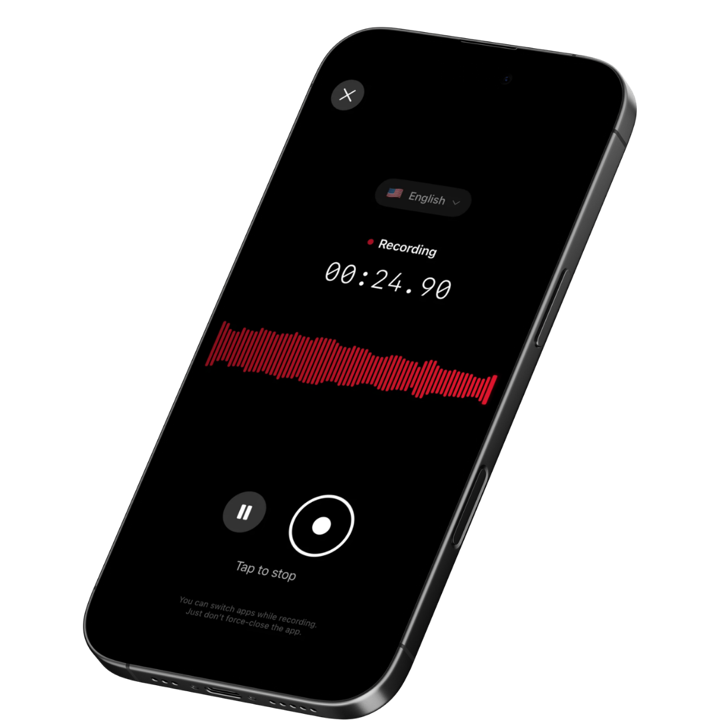
Speakwise helps close that gap. Record meetings and conversations with one tap. AI generates accurate transcripts, summaries, and action items automatically. When every commitment is documented and every conversation has a record, follow-through becomes the default. Transparency is not a leadership philosophy. It is a system. Speakwise provides the system.
Download Speakwise from the App Store and build trust by capturing every meeting, commitment, and decision in a searchable, shareable record.
Join 10,000+ professionals who use AI-powered voice notes to create the transparency that builds workplace trust.
Get Speakwise Free
4.9-star App Store Rating | iOS Optimized

🎯 4.9★ App Store Rating | 📱 Built for iOS
