Apple Notes vs Google Keep: Comparison (2026)
Used by recruiters, executives, consultants, and more.
Apple Notes vs Google Keep: Which Is Better in 2026?
Apple Notes is the stronger choice for iPhone and Mac users in 2026. It offers richer formatting, document scanning, folder organization, end-to-end encryption, and Apple Intelligence writing tools. Google Keep wins on cross-platform access, working seamlessly on Android, iOS, Windows, and web. If you live in the Apple ecosystem, Apple Notes gives you more power and privacy. If you switch between Apple and Android devices, Google Keep keeps everything in sync everywhere.
Both Apple Notes and Google Keep are free note-taking apps that come pre-installed on their respective platforms. They handle quick notes, lists, and reminders well. Choosing between them usually comes down to your device ecosystem and how you organize information. This comparison covers seven dimensions to help you decide.
Apple Notes vs Google Keep at a Glance
| Feature | Apple Notes | Google Keep |
|---|---|---|
| Best For | Apple ecosystem users | Cross-platform access |
| Platform | iPhone, iPad, Mac, Web | Android, iOS, Web, Chrome |
| Organization | Folders + Smart Folders | Labels + Color coding |
| AI Features | Apple Intelligence tools | Gemini integration |
| Document Scanning | Yes (built-in) | Limited |
| Encryption | End-to-end (optional) | At rest only |
| Pricing | Free | Free |
| Handwriting | Yes (Apple Pencil) | Yes (stylus support) |
| Rating | 4.0/5 App Store | 4.4/5 Play Store |
What Is Apple Notes?
Apple Notes is the built-in note-taking app on iPhone, iPad, and Mac. It has evolved from a simple text editor into a feature-rich tool with folders, smart folders, document scanning, Apple Pencil support, and Apple Intelligence writing tools. Notes sync instantly across all Apple devices via iCloud. The app supports rich formatting, tables, checklists, embedded images, and locked notes with Face ID or Touch ID protection. Apple Notes is used by hundreds of millions of Apple device owners as their default capture tool.
Apple Notes Key Features
- Smart Folders: Automatically collect notes based on tags, dates, attachments, or other criteria you define.
- Document Scanning: Scan physical documents using your iPhone camera and save them as searchable PDFs.
- Apple Intelligence: Summarize notes, rewrite text, compose drafts, and adjust tone using built-in AI writing tools.
- Locked Notes: Protect sensitive notes with Face ID, Touch ID, or password.
- Apple Pencil Support: Draw, sketch, and handwrite directly in notes on iPad with pressure sensitivity.
Apple Notes Pricing
- Free: All features included at no cost
- Requires iCloud for sync (5 GB free, 50 GB for $0.99/month, 200 GB for $2.99/month)
What Is Google Keep?
Google Keep is a lightweight note-taking app built for quick capture across any device. It works on Android, iOS, web browsers, and as a Chrome extension. Keep uses a visual card-based layout with color coding and labels instead of folders. The app integrates tightly with Google Workspace, letting you pin notes in Google Docs, pull reminders into Google Calendar, and search notes through Gmail. Google Keep serves millions of users who need a fast, simple way to jot down ideas and lists across platforms.
Google Keep Key Features
- Cross-Platform Sync: Access notes on Android, iPhone, any web browser, and Chrome extension with instant sync.
- Color Coding and Labels: Organize notes visually with background colors and flexible labels that allow overlapping categories.
- Google Workspace Integration: Pin notes to Google Docs, link reminders to Calendar, and search notes within Gmail.
- Voice Notes: Record audio that automatically transcribes to text using Google's speech recognition.
- Gemini AI: Use Gemini to help organize, summarize, and create notes with AI assistance.
Google Keep Pricing
- Free: All features included at no cost
- Uses Google account storage (15 GB free shared across Drive, Gmail, and Photos)
Head-to-Head Comparison
Organization and Structure
Apple Notes wins with deeper organization tools. It supports folders, subfolders, and smart folders that auto-collect notes based on criteria like tags, dates, or attachments. Google Keep uses a flat structure with labels and color-coded cards. Labels are flexible since one note can have multiple labels, but there is no hierarchy. For users with hundreds of notes, Apple Notes' folder system scales better.
Winner: Apple Notes - folders, subfolders, and smart folders provide deeper organization
Cross-Platform Access
Google Keep wins clearly on device compatibility. It works on Android, iOS, any web browser, and as a Chrome extension. Apple Notes is limited to Apple devices and iCloud.com on the web. The web experience for Apple Notes is functional but lacks some features available in the native apps. If you use both Android and Apple devices, Google Keep is the only option that works well everywhere.
Winner: Google Keep - works natively on every platform including Android and Chrome
Privacy and Security
Apple Notes offers stronger privacy protections. Individual notes can be locked with Face ID, Touch ID, or password, and locked notes use end-to-end encryption so even Apple cannot read them. Google Keep encrypts data at rest and in transit but does not offer end-to-end encryption or individual note locking. For sensitive information like passwords, financial notes, or personal journals, Apple Notes provides better protection.
Winner: Apple Notes - end-to-end encryption and Face ID note locking
AI Features
Both apps added AI capabilities in 2025-2026. Apple Intelligence in Notes can summarize content, rewrite text, compose drafts, and adjust writing tone. Google Keep integrates with Gemini for organizing and creating notes. Apple Intelligence works on-device for many tasks, preserving privacy. Google's Gemini features require cloud processing. Both are useful, but Apple Intelligence feels more deeply integrated into the Notes writing experience.
Winner: Apple Notes - deeper offline-friendly AI integration with Apple Intelligence
Document Scanning and Media
Apple Notes includes a powerful built-in document scanner that creates searchable PDFs from photos of physical documents. The scanning quality is excellent, with automatic edge detection and perspective correction. Google Keep handles photos and image-based notes but lacks a dedicated document scanner. Apple Notes also supports richer media embedding, including audio recordings, sketches, and file attachments.
Winner: Apple Notes - built-in document scanner and richer media support
Speed and Simplicity
Google Keep is faster for quick capture. Opening the app, typing a note, and closing it takes seconds. The card-based layout makes scanning through recent notes effortless. Apple Notes is fast too, but its richer feature set adds some interface complexity. For users who primarily need a quick-capture tool for shopping lists, reminders, and brief ideas, Keep's simplicity is an advantage.
Winner: Google Keep - faster for quick capture with a simpler interface
Search
Both apps offer strong search, but they approach it differently. Apple Notes can search text within images and scanned documents using on-device OCR. Google Keep leverages Google's search technology and can also find text in images. Google Keep's search feels slightly faster for basic keyword queries. Apple Notes' smart folder system reduces the need for frequent searching. Overall, both perform well for most users.
Winner: Tie - both offer strong search with OCR capabilities
Who Should Choose Apple Notes?
- You should choose Apple Notes if all your devices are Apple (iPhone, iPad, Mac)
- You should choose Apple Notes if you need to scan and store physical documents
- You should choose Apple Notes if privacy and end-to-end encryption matter to you
- You should choose Apple Notes if you want rich formatting with folders and smart folders
- You should choose Apple Notes if you use Apple Pencil for handwritten notes on iPad
Who Should Choose Google Keep?
- You should choose Google Keep if you use both Android and Apple devices
- You should choose Google Keep if you want quick, lightweight note capture
- You should choose Google Keep if your workflow relies on Google Workspace (Docs, Calendar, Gmail)
- You should choose Google Keep if you prefer visual organization with color-coded cards
- You should choose Google Keep if you need access from any web browser without installing an app
Speakwise gets your hours back.
- ✓Built for in-person meetings, interviews, and site visits.
- ✓Trusted by recruiters, consultants, agents, and field pros.
- ✓One tap to record. Notion-ready summary in minutes.

Frequently Asked Questions
Is Apple Notes better than Google Keep?
Apple Notes is better for users within the Apple ecosystem who want richer features, better organization, and stronger privacy. Google Keep is better for cross-platform users who need access from any device and prefer quick, simple note capture. If you use an iPhone and Mac exclusively, Apple Notes gives you more power. If you also use Android or Windows, Google Keep ensures your notes are always accessible.
Can I use Apple Notes and Google Keep together?
Yes, many people use both. A common approach is using Apple Notes for long-form notes, document scans, and private content, while using Google Keep for quick captures, shared lists, and Google Workspace integration. There is no direct sync between them, so you would manage different types of notes in each app.
Which is cheaper, Apple Notes or Google Keep?
Both are completely free. Apple Notes uses iCloud storage (5 GB free), and Google Keep uses Google account storage (15 GB free shared with Drive and Gmail). Google offers more free storage, but Apple's 50 GB plan costs just $0.99/month. Neither app requires a paid subscription for any features.
Is there a better alternative to both Apple Notes and Google Keep?
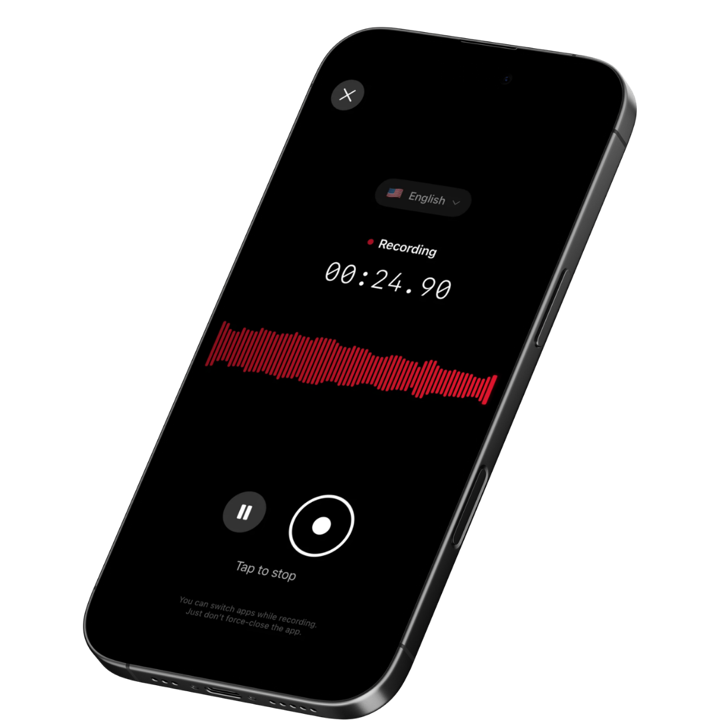
If you need to capture voice notes and meeting transcripts with AI summaries, Speakwise is worth considering. It records conversations on iPhone or AirPods, transcribes in 100+ languages with 95%+ accuracy, extracts action items, and syncs directly to Notion. At $59.99/year, it complements either Apple Notes or Google Keep as a dedicated voice capture tool.
Can I switch from Apple Notes to Google Keep or vice versa?
Switching is possible but manual. Neither app offers a direct export-to-import tool for the other. You can copy and paste notes individually, use third-party tools, or export Apple Notes as PDFs and save them in Google Keep. For large note libraries, the migration process can be time-consuming. Consider which ecosystem you plan to use long-term before committing.
Final Verdict: Apple Notes vs Google Keep
Apple Notes is the more capable app in 2026. It offers richer formatting, deeper organization with smart folders, better privacy, document scanning, and Apple Intelligence integration. For anyone fully in the Apple ecosystem, it is the clear winner.
Google Keep remains the best choice for cross-platform users. Its strength is universal access from any device, tight Google Workspace integration, and fast, lightweight capture. If you switch between Android and Apple or rely heavily on Google apps, Keep makes more sense.
For professionals who capture spoken content like meeting notes and voice memos, Speakwise adds AI transcription and summary capabilities that neither Apple Notes nor Google Keep can match.
Bottom line: Apple Notes wins on features and privacy. Google Keep wins on cross-platform access. Your device ecosystem should drive the decision.> If you need AI-powered voice notes that go beyond what Apple Notes or Google Keep offer, download Speakwise from the App Store and turn every conversation into searchable, actionable notes.
🎯 4.9★ App Store Rating | 📱 Built for iOS
