Best App for Multilingual Patient Visits (2026)
Used by recruiters, executives, consultants, and more.
Best App for Recording Multilingual Patient Visits in 2026
A primary care doctor in Houston sees a Spanish-speaking patient describing chest pain in rapid Mexican Spanish. A pediatrician in Minneapolis examines a Somali toddler while the mother answers in Somali through a phone interpreter. A specialist in San Francisco counsels a Mandarin-speaking family on cancer treatment options. Most AI medical scribes are built for English. They mangle drug names, drop key clinical terms, and produce notes that are wrong in subtle dangerous ways. The right tool understands the language, the dialect, and the medical context. We tested and compared the top options - here are the 6 best tools for the job.
The best apps for recording multilingual patient visits in 2026 are: 1) Speakwise for iPhone-native 100+ language auto-detection with dialect recognition, 2) Heidi for 110+ languages and clinical specialty depth, 3) Suki for 80+ language enterprise documentation, 4) Abridge for Spanish-English ambient capture in Epic, 5) Otter for general bilingual transcription, and 6) Microsoft Translator paired with a scribe for live translation. Speakwise leads because it auto-detects language mid-conversation and produces transcripts and summaries in the patient's actual language without an enterprise contract.
1. Speakwise - Best Overall for Multilingual Patient Visits
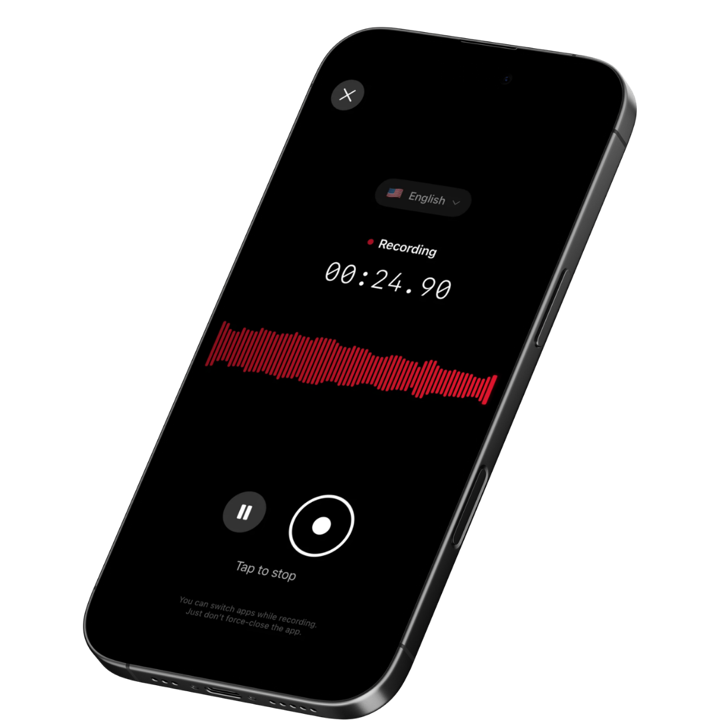
Speakwise is an iPhone-native AI voice notes app with 100+ language support, auto-detection, and dialect recognition. It records the visit in the patient's actual spoken language, produces a transcript in that language, and can generate a summary in either the source language, English, or both. With a 4.9-star App Store rating, and AirPods hands-free recording, it is the most practical choice for clinicians whose patient panels are not English-only.
Why Speakwise Stands Out
The dominant English-only AI scribes - Abridge, DAX, Freed - quietly fall apart on multilingual visits. They were trained primarily on English-language medical conversation. They will transcribe a Spanish exchange into garbled English, miss key clinical terms, or default to silence. Speakwise was designed with multilingual capture as a primary use case rather than an afterthought.
Auto-detection means the clinician does not have to set a language before each visit. Speakwise identifies the spoken language and transcribes accordingly. Dialect recognition handles regional differences - Mexican Spanish vs. Castilian Spanish, Brazilian vs. European Portuguese, Mandarin vs. Cantonese - which makes the difference between a usable transcript and a useless one. Mid-session language switching also works, so a clinician who code-switches with a bilingual patient still gets a coherent transcript.
AirPods-friendly hands-free capture matters more in multilingual visits, not less. Eye contact and rapport are doubly important when language is already a barrier. Speakwise lets the clinician keep both hands free and stay engaged. At $59.99/year, the entire 100+ language stack costs less than a single month of an enterprise scribe, and any clinician can install it without IT approval.
Key Features
- 100+ language auto-detection: Speakwise identifies the spoken language automatically, including mid-conversation switches. Covers Spanish, Mandarin, Arabic, Vietnamese, Tagalog, Korean, Russian, Portuguese, French, Haitian Creole, and dozens more. Critical for clinics that see a different language every hour.
- Long Recording Support: Multi-hour board meetings, conference sessions, offsites.
- Works Offline: Construction sites, secure boardrooms, planes - record without WiFi. Sync when you're back.
- Dialect recognition: Distinguishes regional variants - Mexican vs. Argentine Spanish, Mandarin vs. Cantonese, Levantine vs. Egyptian Arabic. Improves accuracy on real patient speech rather than textbook variants. Compare this to the dialect coverage in our multilingual transcription roundup.
- Dual-language summary output: Produce a transcript in the patient's language plus an English summary for the chart, from one recording. Eliminates the duplicate-translation step.
- 95%+ accuracy on medical terminology: Handles drug names, dosage instructions, and clinical terms in the source language.
- Speaker Diarization: Speaker diarization distinguishes the clinician, patient, and any family member or interpreter in the room, so the transcript stays clear about who said what across languages.
- AirPods hands-free recording: Record through any Bluetooth headset while keeping eye contact and full hands. Particularly important when working through an interpreter or with a non-English-speaking patient where rapport matters.
- Action Button Recording: Assign the iPhone Action Button (iPhone 15 Pro and later) and start the recording with a single press as the visit begins—no unlocking, no app to open—or begin hands-free with a double-tap on AirPods.
- Private by Design: Patient conversations stay yours—Speakwise never uses your recordings or transcripts to train its AI, and never sells or shares them; delete any visit whenever you choose.
Pricing
- Free Trial: Full access to all features
- Premium: $59.99/year - unlimited transcription, AI summaries, Notion sync, 100+ languages
Best For
- Clinics serving Spanish-speaking, Mandarin-speaking, Arabic-speaking, or other non-English patient populations
- Bilingual clinicians who code-switch with patients
- International medical missions and global health work
- Telehealth providers with cross-language patient panels
Limitations
- iOS-only, no Android or web app yet
- Does not push directly into Epic (Notion or copy-paste only)
- Live in-room translation between speakers is not the primary mode (better paired with an interpreter for active translation)
Speakwise gets your hours back.
- ✓Built for in-person meetings, interviews, and site visits.
- ✓Trusted by recruiters, consultants, agents, and field pros.
- ✓One tap to record. Notion-ready summary in minutes.

2. Heidi - Best for 110+ Languages and Clinical Depth
Heidi supports 110+ languages with auto-detection mid-session and 200+ clinical specialty templates. The "Ask Heidi" feature can translate notes, generate patient explainers in any supported language, or convert clinical notes between languages on demand.
Key Features
- 110+ language support with mid-session auto-detection
- "Ask Heidi" prompt-based note transformation and translation
- 200+ specialty templates
- Multi-language encounter handling
Pricing
Around $90-110/month per provider depending on tier.
Best For
- International practices and global health work
- Clinics that need note translation between languages
- Specialty practices needing template depth alongside language coverage
Limitations
- Web/desktop oriented, mobile experience is secondary
- Needs internet connection for processing
3. Suki - Best for Enterprise 80+ Language Documentation
Suki supports documentation in 80+ languages with deep EHR integration into Epic, Cerner, Athena, MEDITECH, and eClinicalWorks. Strong fit for hospital systems serving multilingual populations at scale.
Key Features
- 80+ language documentation support
- Ambient real-time capture
- ICD-10 and HCC coding assistance
- Chart-aware clinical Q&A
Pricing
Suki Compose $299/month per provider, Suki Assistant $399/month, enterprise by quote.
Best For
- Hospital systems with multilingual patient populations
- Practices needing coding alongside multilingual notes
Limitations
- Highest pricing in the category
- Not feasible for solo practitioners
4. Abridge - Best for Spanish-English Ambient Capture
Abridge is one of the few enterprise scribes with strong Spanish-language support inside Epic. Captures the visit ambiently and produces both a clinician note and a patient-readable summary in plain language.
Key Features
- Strong Spanish and English ambient capture
- Patient summary in plain language
- Deep Epic integration
- Linked-evidence audit trail
Pricing
Around $208/month per provider, sold to enterprises only.
Best For
- Large primary care groups on Epic with significant Spanish-speaking populations
- Health systems with central procurement
Limitations
- Not available to solo practitioners
- Language coverage narrower than Heidi or Speakwise
5. Otter - Best for General Bilingual Transcription
Otter is a general-purpose AI transcription tool with English and Spanish primary support and serviceable secondary languages. Works on web, iOS, and Android. Not built for clinical use, so verify HIPAA posture before using on patient visits.
Key Features
- English and Spanish core support
- Web, iOS, Android availability
- Live transcription during conversations
- Speaker identification
Pricing
Free tier with limits. Pro $16.99/month, Business $30/month per user.
Best For
- Non-clinical multilingual interviews and meetings
- Practices that want general transcription rather than a clinical scribe
Limitations
- Not HIPAA-aligned by default; requires Business plan and BAA review
- Less medical-terminology accuracy than dedicated clinical scribes
6. Microsoft Translator + Scribe - Best for Live In-Room Translation
Microsoft Translator handles live translation between speakers in 100+ languages, often paired with a separate AI scribe (Heidi, Suki, or DAX) that handles documentation. Useful when active back-and-forth translation is needed in the room.
Key Features
- Live multi-speaker translation
- 100+ language support
- Free consumer app available
- Pairs with enterprise scribes
Pricing
Free for the consumer Translator app. Enterprise Azure Speech pricing for higher volumes.
Best For
- Visits requiring active in-room translation between speakers
- Clinicians without a dedicated interpreter
Limitations
- Two tools instead of one, more workflow overhead
- Not a clinical scribe by itself
How to Choose the Best Multilingual Patient Visit App
Multilingual visits are not just "English plus Spanish." They span dialects, code-switching, family interpreters, and phone interpreters. The right tool depends on the specifics.
- Auto-detection vs. preset language: Auto-detection matters when a clinician sees five languages in a day. Speakwise and Heidi auto-detect. Some enterprise scribes still require setting a language per encounter.
- Dialect coverage: "Spanish" is not one language. Mexican, Argentine, Castilian, Caribbean, and Andean Spanish differ in vocabulary and pronunciation. Look for explicit dialect support, not just language flags.
- Dual-language output: Many clinicians want a transcript in the patient's language plus a clinical note in English. Verify the tool supports both from one recording.
- Privacy posture: Multilingual visits include the same PHI as English visits. Same rules apply -, encrypted storage, audio auto-deletion, or vendor BAAs. Our iOS recording privacy and legal guide covers the legal angle.
- Live translation vs. documentation: Translator tools (Microsoft Translator, Google Translate) handle live speech between speakers. Scribes (Speakwise, Heidi, Abridge) handle documentation. These are different jobs - decide which one you need before choosing.
Frequently Asked Questions
What is the best app for recording multilingual patient visits in 2026?
Speakwise is the best app for recording multilingual patient visits in 2026. It supports 100+ languages with auto-detection and dialect recognition, records hands-free through AirPods, and produces transcripts and summaries in the patient's actual language plus English. At $59.99/year it works for solo practitioners and small practices that cannot wait for an enterprise scribe contract. For very deep specialty templates, Heidi (110+ languages) is also strong.
Is there a free app for recording multilingual patient visits?
Speakwise offers a free trial with full feature access including all 100+ languages. Heidi and Otter also offer free tiers with limits. Avoid using free consumer translation apps like Google Translate for clinical content - they lack HIPAA-aligned privacy controls and were not built for medical terminology. The free trials of dedicated clinical scribes are the right way to test on real visits before committing.
Can AI medical scribes really handle Spanish, Mandarin, or Arabic visits accurately?
Yes, when the tool is built for it. Speakwise (100+ languages, dialect recognition), Heidi (110+ languages), and Suki (80+ languages) handle non-English visits well. English-only scribes like older versions of Freed or DAX struggle. Accuracy still depends on audio quality, dialect, and speaker clarity. Test on real visits before standardizing. Multilingual capture is one of the wedges where iPhone-native tools beat enterprise English-first tools.
What features should I look for in a multilingual patient visit app?
Look for: language auto-detection (not preset), dialect recognition, mid-session language switching support, dual-language output (patient's language plus English summary), 95%+ accuracy on medical terminology in target languages, multi-speaker separation that handles interpreters and family members, and HIPAA-aligned privacy posture. AirPods or hands-free capture is also important when working with interpreters or building rapport across a language gap.
How do multilingual scribes handle interpreter sessions?
Multi-speaker separation is the critical feature. The recording will have at least three voices - clinician, patient, interpreter - sometimes four with a family member. Tools like Speakwise and Abridge separate speakers so the transcript is clear about who said what. For phone interpreters, audio quality matters more, so test before relying on it. For in-person interpreters, AirPods recording captures everyone in the room well.
Final Verdict
For solo practitioners, community clinics, FQHCs, and any practice without an enterprise scribe contract, Speakwise is the right starting point for multilingual visits. It auto-detects 100+ languages, recognizes dialects, runs on the iPhone, supports AirPods, and costs $59.99/year. The wedge is real - most enterprise scribes are still English-first.
Heidi is the strongest enterprise alternative if 110+ languages and specialty depth are non-negotiable. Suki and Abridge fit large hospital systems with deep EHR integration needs. Microsoft Translator pairs well with a scribe for live in-room translation, but it is not a documentation tool.
The pattern is clear. Multilingual capture is no longer a nice-to-have - in many US patient panels it is the majority of visits. Pick a tool that treats it as a primary feature rather than a fallback. For most clinicians, that tool is Speakwise.
Download Speakwise from the App Store and document every patient visit in the language they actually speak.
🎯 4.9★ App Store Rating | 📱 Built for iOS
