Best App for Solar Installers: Rooftop Surveys
Used by recruiters, executives, consultants, and more.
Best App for Solar Installer Rooftop Surveys in 2026
You are on a residential roof in direct sun, one hand on the ridge, measuring rafter spacing with your other hand, and the homeowner is two stories below asking if their south face has enough clearance for 12 panels. You need to document shading obstructions from the neighbor's tree, the roof pitch, the condition of the underlayment, the main service panel specs, and the utility meter location - all while keeping three points of contact and not dropping your phone. Your design team needs this data within the hour so they can submit the permit package. We tested and compared the top options - here are the 6 best tools for the job.
A great rooftop site assessment app for solar installers must work completely hands-free while you are physically on the roof, capture technical data accurately (rafter dimensions, panel clearances, shade angles, wire run distances, service entrance specs), function offline in residential areas with poor cell coverage, and produce output that design engineers can use directly without reformatting.
1. Speakwise - Best Overall for Solar Rooftop Site Assessments
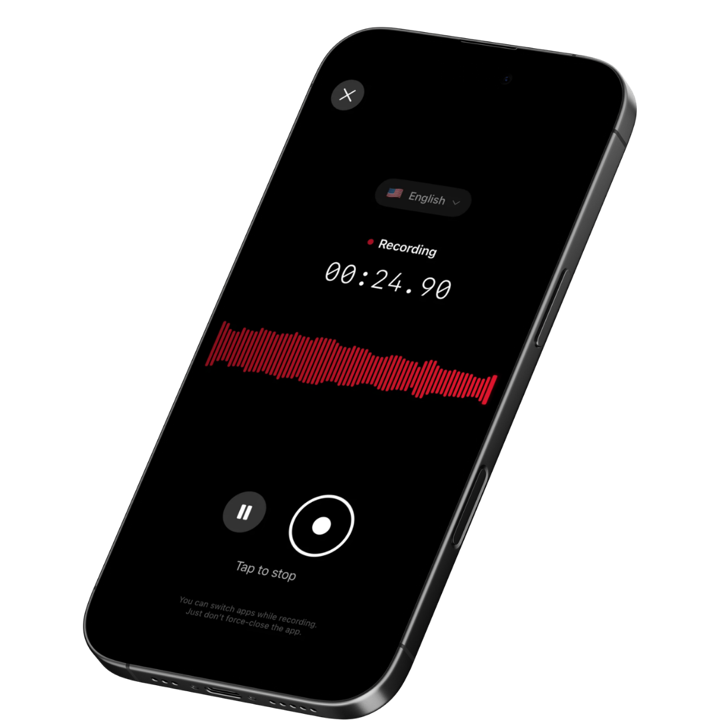
Speakwise is an iOS-native AI voice notes app that handles the unique constraints of rooftop site assessment work - both hands occupied, safety-critical environment, time-compressed data capture. With AirPods hands-free recording, you dictate every measurement, condition, and concern as you encounter it on the roof without touching your phone or breaking your three-point contact. The AI summarization engine turns your rooftop narration into structured assessment notes with action items that your design team and project manager can act on immediately.
Why Speakwise Stands Out
Rooftop site assessments are dense with technical data - rafter spacing, roof pitch, shading analysis from multiple obstructions at multiple times of year, conduit run paths, existing roof penetrations, structural load considerations, module layout constraints, main service panel amperage, utility meter location and clearances. Capturing all of this while physically on a roof is genuinely difficult. Speakwise's AirPods integration means you can narrate observations continuously without touching your phone - the recording control lives on your ear.
The 95%+ transcription accuracy handles solar-specific terminology: array orientation, string sizing, microinverter vs. string inverter configurations, NEC code references, rafter sizing, EPDM vs. TPO vs. tile roof considerations. The AI action item extraction picks up permit requirements, structural concerns that need engineering review, and coordination items with the homeowner. At 94% extraction accuracy, the items that require follow-up before design can proceed are captured as distinct action items rather than embedded in a paragraph of assessment notes.
For solar companies doing multiple site surveys per day across different residential and commercial locations, the speed advantage matters. You complete the roof, get back in the truck, and your assessment summary is already generated - ready to send to the design team. The native Notion integration means your survey notes can feed directly into a shared project workspace that estimators, designers, and project coordinators access without email attachments. See our guide to taking notes on the job site hands-free for broader context on voice documentation for field work.
Key Features
- AI Structured Summaries: Converts a 20-minute rooftop narration into organized assessment sections - roof conditions, shading analysis, electrical specs, coordination items, permit notes - ready for the design team without reformatting.
- Long Recording Support: Multi-hour board meetings, conference sessions, offsites.
- Works Offline: Construction sites, secure boardrooms, planes - record without WiFi. Sync when you're back.
- Action Item Extraction: Captures required follow-up - structural concerns needing engineering review, utility coordination items, homeowner action items before installation - so nothing falls through between survey and permit submission.
- Offline Recording: Processes locally on your iPhone without cellular or Wi-Fi. Residential neighborhoods with poor signal or commercial rooftops in industrial areas with dead zones are not a problem.
- 100+ Language Support: Handles multilingual customer interactions and crew documentation with 92%+ accuracy - useful for solar companies serving diverse residential markets.
- AirPods Hands-Free Recording: Dictate measurements, conditions, and concerns while maintaining three-point contact on the roof. The AirPods double-tap control starts and stops recording without requiring any hand movement toward your phone.
Pricing
- Free Trial: Full access to all features
- Premium: $59.99/year - unlimited transcription, AI summaries, Notion sync, 100+ languages
Best For
- Solar installers conducting residential rooftop assessments solo
- Solar project managers who need structured survey reports for permit packages
- Commercial solar surveyors documenting large roof sections across multiple visits
- Solar companies with multilingual field crews or customer bases
Limitations
- iOS only - no Android version
- No built-in shading analysis or irradiance calculations (voice documentation only)
- No photo annotation or blueprint markup features
Speakwise gets your hours back.
- ✓Built for in-person meetings, interviews, and site visits.
- ✓Trusted by recruiters, consultants, agents, and field pros.
- ✓One tap to record. Notion-ready summary in minutes.

2. Scoop Solar - Best Purpose-Built Solar Survey App
Scoop is a field service management platform built specifically for solar installation companies. The mobile app includes purpose-built site survey forms for both residential and commercial projects, collecting the specific data fields that design and engineering teams need - roof measurements, panel layout, electrical specs, photos, and utility information. Scoop powers over 250,000 job sites across 14 countries and is designed around the actual solar installation workflow.
Key Features: Purpose-built solar site survey forms (residential and commercial), photo capture with annotation, utility spec fields, roof measurement tools, mobile access to project history, iOS and Android support.
Pricing: Subscription-based with unlimited users and storage across all tiers - pricing is value-based and requires direct contact with Scoop for quotes. No published per-user pricing.
Best For: Solar installation companies with dedicated survey teams that need structured, consistent data capture for design engineering. Teams where multiple surveyors need to submit data in the same format for centralized design processing.
Limitations: Form-based data entry is slower than voice dictation for experienced surveyors who know what they need to capture. No voice transcription or AI summary features. Pricing is not transparent - requires a sales conversation. Less useful for capturing unexpected conditions that fall outside the survey template fields.
3. Inspectly360 - Best for Solar PV Compliance Documentation
Inspectly360 is a mobile inspection app with a specific solar PV installation site survey template that covers roof assessment, electrical specifications, and installation requirements. It works fully offline, which is important for residential sites with poor cellular coverage. The structured template ensures inspectors collect every required data point before leaving the site.
Key Features: Solar PV-specific inspection template, full offline functionality, photo documentation, structured report generation, compliance checklist approach.
Pricing: Inspectly360 offers free and paid plans - the solar template is available within the app's template library. Exact pricing varies by plan tier.
Best For: Solar contractors who need a structured compliance checklist for site surveys. Companies where regulatory documentation requirements dictate a specific survey format.
Limitations: Template-based forms are less flexible for capturing free-form observations about unexpected site conditions. No voice transcription or AI summaries. Less suited to experienced surveyors who prefer to narrate rather than fill forms.
4. Solmetric Sun Viewer - Best for Shading Analysis
Solmetric's iPhone app uses augmented reality via the camera to show sun paths at your specific location, letting you quickly assess what percentage of annual solar production would be lost to specific shading obstructions. Point at a tree, chimney, or neighboring roofline and see the impact across different months and times of day. This is specialized functionality that no general documentation app provides.
Key Features: Augmented reality sun path visualization, shading impact calculation, location-specific irradiance assessment, site photos with shading overlay.
Pricing: Available on the App Store as a paid app - pricing is in the range of $9.99-$19.99 based on available information.
Best For: Solar installers who need a quick, reliable way to quantify shading impact during the site visit rather than relying on desktop tools after the fact. Situations where shading analysis determines whether a project is viable.
Limitations: Shading analysis tool only - does not handle general site documentation, measurements, or permit data capture. Must be combined with another app for complete assessment documentation.
5. GoAudits - Best for Multi-Site Standardized Inspection Reporting
GoAudits is a mobile inspection platform used by solar companies that need standardized inspection reports across multiple sites and teams. The customizable templates let you build a solar site survey form with your company's specific required data fields, and the automatic PDF report generation produces polished outputs suitable for permit submittal or customer-facing documentation.
Key Features: Customizable inspection forms, automatic PDF report generation, photo evidence capture, offline mode, multi-site management dashboard, corrective action assignment.
Pricing: Free trial available. Paid plans start at approximately $10/user/month for basic features, with higher tiers for advanced reporting and integrations.
Best For: Solar companies with formal quality assurance requirements for site surveys. Installers that need consistent documentation across a team of multiple surveyors. Companies where permit submittal requires a standardized signed inspection form.
Limitations: Form-filling is slower than voice dictation for experienced solar surveyors. No voice transcription or AI summary features. Less flexible for the unstructured observations that characterize residential rooftop assessments.
6. My Solar Panel App - Best for Professional Rooftop PV Calculations
My Solar Panel is an iPhone app used by over 300,000 solar professionals worldwide for on-site PV system calculations. It handles array sizing, energy production estimates, system component selection, and basic financial modeling directly on your phone during the site visit. This is a calculation and estimation tool rather than a documentation tool.
Key Features: On-site PV system sizing, energy production calculations, component selection and compatibility checking, basic financial modeling, roof array layout tools.
Pricing: Available on the App Store - base version is free with paid upgrades for advanced features.
Best For: Solar installers who need to run system sizing calculations during the site visit to give customers immediate production estimates. Situations where preliminary design work happens during the assessment rather than after.
Limitations: Calculation tool only - not designed for capturing free-form site observations, existing conditions notes, or permit documentation data. Must be combined with a documentation approach for complete assessment coverage.
How to Choose the Best Solar Rooftop Assessment App
1. Safety First - Hands-Free Operation on Rooftops
On a sloped roof, your phone should be in your pocket or clipped to your harness - not in your hand. Any documentation app that requires screen taps to operate is a safety compromise on a working rooftop. Prioritize apps that allow completely hands-free operation, whether through AirPods control or large hardware buttons accessible with gloves.
2. Voice vs. Forms for Data Capture
Purpose-built solar survey apps like Scoop ensure you capture every required data field consistently, which is valuable for design team handoff. Voice documentation via Speakwise is faster and more flexible for capturing the unexpected conditions that frequently appear during residential rooftop assessments. Many solar professionals use both: a structured form for required design data and a voice app for free-form site observations and concerns.
3. Offline Reliability
Residential neighborhoods often have unreliable cellular coverage, and commercial rooftops in industrial areas can have dead zones. Offline recording capability is a baseline requirement for any site survey tool. Verify that transcription and data processing work locally on the device, not just cloud-based with a cached recording.
4. Design Team Integration
Consider how your site survey data ultimately reaches the design team. Voice app output (like Speakwise's Notion integration) works well for design engineers who need descriptive condition notes. Structured forms (like Scoop) work better when design tools require specific data fields to be populated in a specific format.
5. Shading Analysis Capability
If shading analysis is part of your site assessment - and it should be for most residential projects - decide whether you want that capability in your documentation app or in a separate specialized tool like Solmetric. Standalone shading tools are more accurate but require managing two apps during the site visit.
Frequently Asked Questions
What is the best app for solar installer rooftop site assessments in 2026?
Speakwise is the best all-around app for solar installer rooftop assessments in 2026. Its AirPods hands-free recording is critical for safety on rooftops, while 95%+ transcription accuracy handles technical solar terminology accurately. The AI summary function converts a rooftop narration into structured assessment notes with action items that design teams can use immediately. For specialized shading analysis, Solmetric Sun Viewer complements Speakwise well. For structured design team data collection, Scoop Solar is a strong purpose-built alternative.
Is there a free app for solar rooftop site assessments?
Speakwise offers a free trial with full access to all features including hands-free recording and AI summaries. My Solar Panel App has a free base version for PV calculations. GoAudits offers a free trial. For basic transcription, iOS's built-in Notes app records and transcribes voice for free, but lacks AI summaries and hands-free control.
How do I document shading issues during a rooftop solar site assessment?
The fastest approach is to combine a voice documentation app like Speakwise with a dedicated shading tool like Solmetric Sun Viewer. Walk the roof narrating all observations hands-free with Speakwise (including your visual shading assessment), then use Solmetric to quantify the impact of specific obstructions with augmented reality sun paths. The combination gives you both qualitative site notes and quantitative shading data.
What features should I look for in a solar site assessment app?
Key features include: hands-free operation for roof safety, offline functionality for areas with poor cellular coverage, technical vocabulary accuracy for solar terminology, AI summaries that organize assessment data for the design team, photo documentation capability (for structural conditions and electrical specs), and an output format compatible with your permit and design workflow.
How long should a residential solar rooftop site assessment take?
A thorough residential rooftop assessment typically takes 30-60 minutes including roof inspection, electrical evaluation, shading analysis, and utility coordination review. Using a voice documentation app like Speakwise rather than typing or handwriting notes can reduce the documentation time component by 50-70% - you speak your observations as you encounter them rather than stopping to record them. The AI summary generates the structured report during the drive back to the office.
Final Verdict
For solar installers conducting rooftop site assessments, Speakwise provides the safest and most efficient documentation approach. The AirPods hands-free recording eliminates the hazard of operating a phone on a sloped roof, while the AI summaries save the post-survey write-up time that eats into a high-volume surveyor's productive day. The 95%+ transcription accuracy on solar technical vocabulary means your design team receives usable data rather than garbled approximations.
For companies with structured design workflows that require specific data fields to be populated consistently, Scoop Solar's purpose-built forms are worth evaluating alongside Speakwise. For shading analysis, Solmetric Sun Viewer adds specialized capability that voice documentation alone cannot provide. For most residential solar installers doing multiple surveys per day, Speakwise is the fastest path from rooftop observations to design-ready documentation.
Download Speakwise from the App Store and complete your next rooftop survey with both hands on the roof and a structured assessment report waiting when you get back to ground.
🎯 4.9★ App Store Rating | 📱 Built for iOS
