Morning Productivity Statistics 2026: Key Data
Used by recruiters, executives, consultants, and more.
Morning Productivity Statistics 2026: Key Data
52% of workers achieve peak performance between 8 and 11 AM. Yet 50% of all meetings are scheduled during these exact hours, and employees face an interruption every 2 minutes during core work time. The most productive moment of the average workday is 10:26 AM - precisely when message activity also surges. These 16 statistics reveal how morning productivity is both the greatest asset and the most squandered resource in the modern workplace.
Morning hours carry outsized importance for knowledge workers. Cognitive science, circadian biology, and workplace data all point to the same conclusion: the first few hours of the workday are when the brain does its best deep thinking. Yet organizations routinely schedule meetings, check-ins, and collaborative sessions during this window, fragmenting the most valuable work time.
This post presents 16 statistics on morning productivity, peak performance windows, and the forces that compete for your best hours. The data applies to managers protecting team focus time, individuals optimizing their schedules, and leaders rethinking when work gets done.
1. 52% of workers achieve peak performance between 8 and 11 AM
A Zety survey found that 52% of workers report their peak productivity occurs between 8 and 11 AM. This aligns with circadian rhythm research showing that cortisol levels peak in the morning, enhancing alertness, focus, and cognitive processing speed. For the majority of the workforce, the morning window is when the hardest, most creative work should happen. Protecting these hours is not a preference - it is a biological imperative.
Source: Zety - Morning Hours Drive Productivity Survey
2. The most productive moment of the workday is 10:26 AM
Research has pinpointed 10:26 AM as the most productive minute of the average workday. This is when cognitive function, energy, and focus converge at their daily maximum for most workers. The data suggests that high-value tasks - strategic thinking, complex problem-solving, creative work - should be front-loaded into the late morning window. By afternoon, cognitive resources have already begun their natural decline.
Source: Work.Life - Peak Productivity: When Do You Work Best?
3. 50% of all meetings are scheduled during peak cognitive hours
Half of all meetings take place between 9-11 AM and 1-3 PM, precisely when circadian rhythms suggest people are most capable of deep, complex work. This scheduling pattern effectively eliminates the two highest-value productivity windows in the workday. Organizations that allow unrestricted meeting scheduling during peak hours are systematically converting their most productive time into their least productive format.
Source: Microsoft Work Trend Index 2025
4. Employees face an interruption every 2 minutes during core work hours
Microsoft's analysis of trillions of productivity signals reveals that during core work hours, employees face an interruption - from meetings, emails, or notifications - every 2 minutes. Over a full day, that totals 275 interruptions. By 11 AM, real-time messages, scheduled meetings, and constant app switching converge to make sustained focus nearly impossible. The morning is productive in theory but fragmented in practice.
Source: Microsoft Work Trend Index 2025
5. It takes 23 minutes and 15 seconds to regain deep focus after an interruption
Research by Gloria Mark at the University of California, Irvine found that workers need an average of 23 minutes and 15 seconds to fully regain deep focus after being interrupted - even briefly. In a morning with two 30-minute meetings separated by a 45-minute gap, the "free" time is largely consumed by context-switching overhead. These recovery costs transform short interruptions into major productivity losses.
Source: ActivTrak - How Interruptions Affect Productivity
6. Only 15% of workers hit peak productivity after 2 PM
Just 15% of workers report that their peak productivity falls after 2 PM. For the remaining 85%, the afternoon represents a period of declining cognitive performance. This has profound implications for scheduling: any task requiring deep concentration or creative thinking should be completed before the post-lunch dip. The afternoon is better suited for routine tasks, administrative work, and collaborative check-ins.
Source: Knowledge Enthusiast - Optimize Your Day
7. 31% of workers are most productive outside the standard morning window
While mornings dominate overall, 31% of workers perform best outside the typical 8-11 AM window. Another 19% finish their best work before most offices even open. These variations reflect different chronotypes - the biological predisposition toward morning or evening activity. One-size-fits-all schedules ignore this diversity and force a significant portion of the workforce to work against their natural rhythms.
Source: Knowledge Enthusiast - Optimize Your Day
8. Remote workers get 22.75 hours of deep focus per week vs. 18.6 for in-office
Remote workers achieve 22.75 hours of deep focus time per week compared to just 18.6 hours for those working primarily in-office. That gap translates to roughly 62 additional hours of focused work per year. The advantage stems from fewer interruptions, no commute fatigue, and greater control over the morning schedule. Remote workers can protect their peak hours in ways that open-office employees often cannot.
Source: Speakwise - Knowledge Worker Productivity Statistics
9. Workers spend 103 hours per year in meetings they consider unnecessary
The average knowledge worker spends 103 hours per year - nearly three full workweeks - in meetings deemed unnecessary. When many of these meetings fall during morning peak hours, the productivity cost multiplies. Beyond the meeting time itself, workers spend an additional 127 hours annually regaining focus after meeting interruptions. The total lost time represents a serious drag on morning output.
Source: Asana - Time Management Statistics
10. 40% of the population are "Bears" who peak between 11 AM and 6 PM
Chronotype research identifies four biological categories. Bears, making up 40% of the population, are most productive between 11 AM and 6 PM. Wolves (30%) peak in the evening. Lions (15%) are the true early risers, productive from dawn until noon. Dolphins (15%) have irregular patterns. Understanding your chronotype helps optimize when to schedule demanding work rather than defaulting to arbitrary start times.
Source: MyPerfectResume - Night Owls vs. Early Birds
11. 88% of workers would sacrifice something to work according to their chronotype
The desire for schedule alignment is nearly universal. 88% of people say they are willing to make sacrifices to work according to their natural chronotype. This willingness reflects the real performance cost of chronotype misalignment. When evening types are forced into early-morning schedules, or morning types are stuck in late meetings, both productivity and wellbeing suffer measurably.
Source: MyPerfectResume - Night Owls vs. Early Birds
12. Starting one hour earlier is linked to 23% lower depression risk
Research shows that shifting wake time one hour earlier is associated with a 23% lower rate of depression. Morning people also report higher levels of happiness, according to a University of Toronto study. While the causal mechanism is debated, the correlation between morning activity and mental health is consistent across multiple large-scale studies. Optimizing morning routines may have benefits beyond productivity.
Source: Inc. - The Scientific Reason Why Being a Morning Person Makes You Successful
13. Early risers procrastinate less than night owls
A study published in The Journal of General Psychology found that early risers tend to procrastinate less than those with later alarm clocks. Harvard biologist Christoph Randler confirmed that morning-oriented people are more proactive and more likely to anticipate problems before they escalate. These traits translate directly into workplace effectiveness, particularly for roles requiring initiative and self-direction.
Source: Inc. - The Scientific Reason Why Being a Morning Person Makes You Successful
14. 86% of workers say accommodating diverse sleep preferences improves satisfaction
86% of survey respondents said accommodating different wake and sleep preferences is crucial when setting work schedules. Tailoring schedules to suit natural rhythms can significantly enhance both satisfaction and productivity. Organizations that offer flexible start times - rather than rigid 9 AM mandates - capture the best output from every chronotype rather than optimizing for only one.
Source: MyPerfectResume - Night Owls vs. Early Birds
15. Workers spend 352 hours per year talking about work instead of doing it
Beyond meetings, workers spend 352 hours annually on work-about-work - discussing tasks, searching for information, and coordinating with colleagues. Much of this overhead falls during morning hours, further eroding peak productivity time. Combined with 209 hours of duplicated work and 127 hours of refocusing time, the total overhead exceeds 688 hours per year - more than 17 full workweeks.
Source: Runn - Time Management Statistics
16. Companies using AI notetakers report 80% less post-meeting admin time
Organizations that adopt AI-powered meeting tools report an 80% reduction in post-meeting administrative time. This reclaimed time is particularly valuable when meetings fall during morning hours. Instead of spending peak cognitive time transcribing notes and distributing action items, workers can redirect that energy toward deep work. The technology exists to protect morning productivity - adoption is the bottleneck.
Source: Flowtrace - State of Meetings Report 2025
The Morning Productivity Crisis: Best Hours, Worst Protection
The statistics tell a consistent story. Morning hours are when most workers do their best thinking, yet those same hours face the heaviest assault from meetings, messages, and interruptions. The result is a workforce that peaks at 10:26 AM but rarely gets to use that peak for meaningful work.
The biological evidence is clear. Circadian rhythms, cortisol patterns, and chronotype research all point to morning as the optimal window for complex cognitive tasks. Yet organizational behavior runs counter to individual biology. Meetings colonize the morning, notifications fragment focus, and the 23-minute recovery cost turns small interruptions into large productivity holes.
The solution requires intentional scheduling. Block morning hours for deep work. Push meetings to the afternoon. Respect chronotype differences with flexible start times. The data shows that protecting peak hours is one of the highest-leverage changes an organization can make.
The morning is not just the start of the workday. It is the engine of the entire workday - and right now, most organizations are flooding that engine.---
Protect your mornings by capturing meetings faster
When morning meetings are unavoidable, the next best strategy is minimizing their aftermath. Post-meeting admin - writing summaries, distributing notes, tracking action items - drains the remaining peak hours. Voice recording and AI transcription eliminate this overhead entirely.
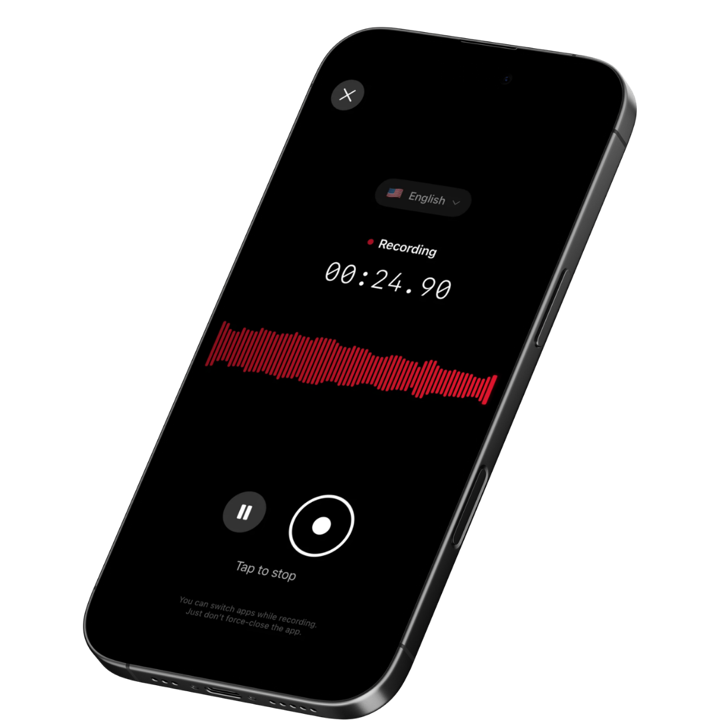
Record the meeting, get an instant summary, and move straight into deep work. No manual notes, no follow-up emails eating into your best hours.
Download SpeakWise from the App Store and reclaim your morning productivity. One-tap recording, AI-powered summaries, and automatic action item extraction mean your meetings are captured without sacrificing your focus time.
Join 10,000+ professionals who protect their mornings by letting AI handle the meeting aftermath.
Get SpeakWise Free
4.9-star App Store Rating | iOS Optimized

🎯 4.9★ App Store Rating | 📱 Built for iOS
