Obsidian vs Roam Research: Honest Comparison (2026)


Used by recruiters, executives, consultants, and more.
Obsidian vs Roam Research: Which Is Better in 2026?
Obsidian is the better choice for most knowledge workers in 2026. It is free for personal use, stores notes locally as plain Markdown files, runs lightning fast, and supports 1,800+ community plugins. Roam Research pioneered networked note-taking but costs $15/month with no free tier, stores data in the cloud, and has fallen behind on features and performance. Choose Roam only if its block-level referencing and real-time collaboration are essential to your workflow.
Both Obsidian and Roam Research are tools for building personal knowledge management systems with linked notes. They popularized bidirectional linking and graph-based thinking. Today, they serve different user profiles. Obsidian is local-first and extensible. Roam is cloud-first and opinionated. This comparison covers seven dimensions that matter.
Obsidian vs Roam Research at a Glance
| Feature | Obsidian | Roam Research |
|---|---|---|
| Best For | Local-first knowledge bases | Networked research workflows |
| Platform | Mac, Windows, Linux, iOS, Android | Web (no native mobile app) |
| Data Storage | Local Markdown files | Cloud-based graph database |
| Collaboration | Limited | Real-time graph sharing |
| AI Features | Community plugins | No native AI |
| Offline Access | Full offline | Offline mode with sync |
| Pricing From | Free (all features) | $15/month (no free tier) |
| G2 Rating | 4.2/5 | 4.4/5 |
What Is Obsidian?
Obsidian is a Markdown-based knowledge management app that stores all notes as plain-text files on your local device. It introduced bidirectional linking and graph view to mainstream note-taking, letting you build a web of interconnected ideas. Obsidian runs locally, which means it is fast, works offline, and gives you complete ownership of your data. With 1,800+ community plugins, you can extend it into a task manager, journal, flashcard system, or almost anything else. Obsidian is free for personal use, with optional paid add-ons for sync and publishing.
Obsidian Key Features
- Local Markdown Storage: Notes saved as.md files on your device. No cloud dependency. Open them in any text editor.
- Bidirectional Linking: Create [[wikilinks]] between notes. See all backlinks and unlinked mentions for any page.
- Graph View: Interactive visual map of your entire knowledge base showing connections between notes.
- 1,800+ Plugins: Community plugins add Kanban boards, calendars, spaced repetition, citation managers, and AI integrations.
- Canvas: Infinite visual workspace for arranging notes, images, and connections spatially.
Obsidian Pricing
- Personal: Free for all features, no limits
- Sync: $4/month (annual) or $5/month - end-to-end encrypted sync across devices
- Publish: $10/month - turn notes into a published website
What Is Roam Research?
Roam Research is a cloud-based note-taking tool built on a graph database that pioneered the concept of networked thought with bidirectional linking. It organizes information through daily notes and block-level references, where individual paragraphs can be linked and embedded across multiple pages. Roam is designed for nonlinear thinking and research, making it popular among academics and researchers. It supports real-time collaboration on shared graphs. At $15/month with no free tier, Roam is a premium tool targeting serious knowledge workers.
Roam Research Key Features
- Block-Level References: Link and embed individual paragraphs across multiple pages, not just entire notes.
- Daily Notes: Automatic daily page that serves as an inbox for thoughts, linked to other notes automatically.
- Graph Database: Notes function as nodes and links as edges, enabling complex queries and relationship mapping.
- Real-Time Collaboration: Share graphs with team members and work together on shared knowledge bases simultaneously.
- Query Language: Built-in query system to filter and find blocks matching specific criteria across your graph.
Roam Research Pricing
- Pro: $15/month or $165/year - full access to all features
- Believer: $500 for 5 years - locked-in access with early supporter pricing
- Enterprise: Custom pricing with team features
- Free Trial: 30 days, no credit card required
Head-to-Head Comparison
Pricing and Accessibility
Obsidian wins on pricing. It is completely free for personal use with all features included. Sync costs $4/month annually if you want cross-device access. Roam Research costs $15/month with no free tier whatsoever. That is $180/year for Roam versus $0-48/year for Obsidian with Sync. The price difference is substantial, especially considering Obsidian's broader feature set. For most users, paying for Roam is hard to justify in 2026.
Winner: Obsidian - free versus $15/month, with more features included
Data Ownership and Privacy
Obsidian wins on data control. Notes are plain Markdown files stored on your local device. You can open them in any text editor, back them up however you choose, and never worry about a service shutting down. Roam stores data in a cloud graph database. If Roam goes offline or changes terms, accessing your data becomes complicated. For anyone who values long-term data ownership and privacy, Obsidian's local-first approach is fundamentally more secure.
Winner: Obsidian - local Markdown files provide complete data ownership and portability
Performance and Speed
Obsidian is significantly faster. Because it reads local files, search results appear instantly and page navigation is snappy even with thousands of notes. Users consistently report that Roam becomes slow with large datasets. The cloud-based architecture introduces latency that Obsidian avoids entirely. For power users building large knowledge bases over years, Obsidian's performance advantage compounds.
Winner: Obsidian - local processing makes it consistently faster than cloud-based Roam
Linked Thinking and References
Roam has a slight edge on linked thinking at the block level. Its block-level referencing lets you link and embed individual paragraphs across pages. This granularity is more refined than Obsidian's page-level linking. Roam's daily notes and query language also support a unique workflow for capturing and connecting ideas. Obsidian supports bidirectional links and block references through plugins, but Roam's native implementation is more polished for this specific use case.
Winner: Roam Research - block-level referencing and query language are more refined natively
Platform Support
Obsidian is available on Mac, Windows, Linux, iOS, and Android with dedicated native apps on each platform. Roam Research is primarily a web application with no native mobile app. Accessing Roam on a phone means using a browser, which offers a subpar experience for note-taking on the go. For users who need to capture and review notes across all devices, Obsidian's native apps provide a much better experience.
Winner: Obsidian - native apps on all platforms versus Roam's web-only access
Extensibility and Customization
Obsidian dominates on extensibility. Its ecosystem of 1,800+ community plugins adds functionality that Roam cannot match. Custom CSS themes let you redesign the entire interface. You can build a system that combines note-taking, task management, journaling, spaced repetition, and more. Roam supports some extensions through its API and custom CSS, but the ecosystem is much smaller. For users who want to build a deeply personalized system, Obsidian is the clear choice.
Winner: Obsidian - 1,800+ plugins versus Roam's limited extension ecosystem
Who Should Choose Obsidian?
- You should choose Obsidian if data privacy and local storage are non-negotiable
- You should choose Obsidian if you want a powerful PKM tool without paying a subscription
- You should choose Obsidian if you need native mobile apps for note-taking on the go
- You should choose Obsidian if performance speed matters and your knowledge base is large
- You should choose Obsidian if you want deep customization through plugins and themes
Who Should Choose Roam Research?
- You should choose Roam Research if block-level referencing is essential to your research workflow
- You should choose Roam Research if you need real-time collaboration on shared knowledge graphs
- You should choose Roam Research if you prefer a structured daily notes workflow with automatic linking
- You should choose Roam Research if you rely on Roam's query language for complex information retrieval
Speakwise gets your hours back.
- ✓Built for in-person meetings, interviews, and site visits.
- ✓Trusted by recruiters, consultants, agents, and field pros.
- ✓One tap to record. Notion-ready summary in minutes.

Frequently Asked Questions
Is Obsidian better than Roam Research?
For most users, yes. Obsidian is free, faster, available on all platforms with native apps, and extensible through 1,800+ plugins. It stores data locally for complete privacy and ownership. Roam Research costs $15/month, has no mobile app, and has slower performance on large databases. Roam's advantage is block-level referencing and real-time collaboration, but these features serve a narrow set of workflows. Most knowledge workers will get more value from Obsidian.
Can I migrate from Roam Research to Obsidian?
Yes. Roam exports data in JSON and Markdown formats. Multiple community tools and plugins exist to import Roam graphs into Obsidian while preserving links and structure. The migration process is well-documented by the Obsidian community. Many users have made the switch successfully, especially after Obsidian added features that closed the gap with Roam.
Which is cheaper, Obsidian or Roam Research?
Obsidian is dramatically cheaper. The full app is free. Even with Sync at $4/month (annual), total cost is $48/year. Roam costs $15/month or $165/year with no free tier. The cheapest Roam option (Believer at $500/5 years = $100/year) is still double the cost of Obsidian with Sync. For budget-conscious users, Obsidian is the clear winner.
Is there a better alternative to both Obsidian and Roam Research?
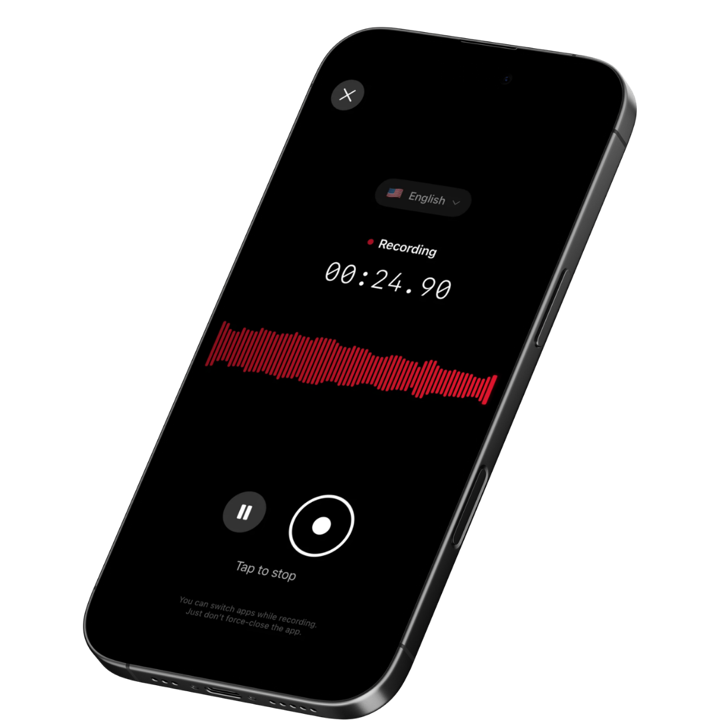
For capturing spoken ideas and meeting notes, Speakwise complements both tools. Neither Obsidian nor Roam records and transcribes audio natively. Speakwise is a mobile-first iOS app that records in-person conversations via iPhone or AirPods with 95%+ transcription accuracy in 100+ languages. It includes AI summaries, secure storage with standard encryption, never trains AI on your recordings, and offers native Notion integration at $59.99/year. It bridges the gap between spoken conversations and your knowledge base.
Does Roam Research have a mobile app?
No. As of 2026, Roam Research does not have a native mobile app for iOS or Android. You can access Roam through a mobile browser, but the experience is not optimized for phone screens. Obsidian has dedicated native apps for both iOS and Android that provide full functionality on mobile. This is a significant limitation for users who capture notes on the go.
Final Verdict: Obsidian vs Roam Research
Obsidian is the better PKM tool for most users in 2026. It is free, fast, private, and extensible. Native apps on every platform, local Markdown storage, and 1,800+ plugins create a system that adapts to any workflow. Obsidian has largely absorbed the best ideas Roam pioneered while adding capabilities Roam never built.
Roam Research remains valuable for a specific niche. If block-level referencing, real-time graph collaboration, and the daily notes workflow are central to your research process, Roam's native implementation of those features is still strong. But at $15/month with no mobile app and slower performance, it is hard to recommend over Obsidian for the general knowledge worker.
For capturing spoken knowledge, Speakwise complements either tool with iOS-native recording, AI transcription, and Notion sync at $59.99/year.
Bottom line: Obsidian wins on price, performance, privacy, and platform support. Roam wins on block-level referencing. Speakwise adds voice capture to any PKM workflow.> If you want to capture ideas and meeting notes with your voice, download Speakwise from the App Store and record thoughts with one tap for AI transcription and instant summaries.
🎯 4.9★ App Store Rating | 📱 Built for iOS
