Digital Workplace Statistics 2026


Used by recruiters, executives, consultants, and more.
Digital Workplace Statistics 2026
Global spending on digital transformation will reach $3.4 trillion in 2026. More than 82% of enterprises now use at least one digital workplace platform. Digital workplace solutions can increase productivity by up to 30%. Yet 95% of generative AI pilots fail, mostly from lack of employee adoption. These 16 statistics reveal the massive investment, real gains, and persistent challenges defining the digital workplace in 2026.
The digital workplace is no longer a department or a tool. It is the operating environment for most knowledge work. From collaboration platforms to AI assistants, from project management tools to digital whiteboards, the technology stack that surrounds every employee has expanded dramatically. The investment is enormous. The potential is proven. But the execution gap between deploying digital tools and achieving digital productivity remains the central challenge.
This post covers 16 statistics that define the state of the digital workplace in 2026. These numbers span market growth, enterprise adoption, employee experience, productivity outcomes, and the emerging technologies reshaping how work gets done.
1. Digital transformation spending will reach $3.4 trillion in 2026
The investment in digital workplaces continues to accelerate. Global spending on digital transformation technologies and services is expected to reach $3.4 trillion in 2026, up from $2.92 trillion in 2025. This spending spans cloud infrastructure, collaboration tools, AI systems, automation platforms, and the integration layers that connect them. The scale of investment reflects both the strategic importance organizations place on digital capabilities and the ongoing challenge of modernizing legacy systems.
Source: Cflow - 40+ Digital Transformation Statistics You Need to Know in 2026
2. 82% of global enterprises use at least one digital workplace platform
Digital workplace platforms have reached mainstream adoption. Research shows that more than 82% of global enterprises now use at least one digital workplace platform. These platforms range from comprehensive suites like Microsoft 365 and Google Workspace to specialized tools for project management, communication, and knowledge sharing. The 18% that have not adopted any digital workplace platform are increasingly constrained in their ability to support hybrid work, attract talent, and operate efficiently.
Source: Scoop Market.us - Digital Workplace Statistics and Facts 2025
3. 67% of organizations deploy 3 or more collaboration tools
Most organizations do not rely on a single collaboration solution. Research shows that approximately 67% of organizations deploy three or more collaboration tools to support hybrid work models. While this provides flexibility and redundancy, it also creates fragmentation. Employees must learn, navigate, and switch between multiple platforms daily. The challenge is finding the right balance between offering enough tools to meet diverse needs and avoiding the SaaS overload that fragments productivity.
Source: Scoop Market.us - Digital Workplace Statistics and Facts 2025
4. Digital workplace solutions increase productivity by up to 30%
The productivity potential of digital tools is significant. Research shows that the implementation of digital workplace solutions can increase productivity by up to 30% and reduce operational costs by up to 25%. These gains come from streamlined communication, automated workflows, faster information retrieval, and the elimination of manual processes that previously consumed employee time. However, these gains are achievable only when tools are well-integrated and employees are properly trained.
Source: Scoop Market.us - Digital Workplace Statistics and Facts 2025
5. The digital workplace market will surge to $154.6 billion by 2031
The market for digital workplace solutions is growing rapidly. Projections show the global digital workplace market will surge from $48.38 billion in 2025 to $154.64 billion by 2031, reflecting a compound annual growth rate of 21.37%. This growth is driven by hybrid work demands, AI integration, and the need for platforms that unify communication, collaboration, and knowledge management in a single environment.
Source: Globe Newswire - Digital Workplace Market Report 2026
6. 60% of organizations will adopt Employee Experience Platforms by 2026
The focus is shifting from tools to experiences. Research projects that by 2026, 60% of organizations will adopt Employee Experience Platforms (EXPs) as their core digital workplace layer. EXPs integrate multiple workplace functions - communication, HR, IT support, learning, and collaboration - into a unified interface designed around the employee journey rather than around individual tools. This shift reflects growing recognition that employee experience drives productivity and retention.
Source: eXo Platform - 12 Digital Workplace Trends for 2026
7. 71% of organizations regularly use generative AI in at least one business function
Generative AI has moved from experimentation into regular business use. McKinsey's 2025 State of AI report shows that 71% of organizations report regular use of generative AI in at least one business function. The most common applications include content creation, customer service, data analysis, and internal knowledge management. Generative AI is rapidly becoming a standard component of the digital workplace rather than a specialized tool for technical teams.
Source: McKinsey - The State of AI in 2025
8. 95% of generative AI pilots fail, mostly from lack of adoption
The implementation reality is sobering. MIT reports that 95% of generative AI pilots fail before delivering return on investment. The primary cause is not technology failure but employee non-adoption. Organizations deploy AI tools without investing in training, workflow integration, or change management. The result is expensive technology that sits unused while the organization claims to be "AI-enabled." Successful digital workplace transformation requires equal investment in technology and adoption.
Source: eXo Platform - 12 Digital Workplace Trends for 2026
9. Companies with the best employee experience see 2.4x higher revenue growth
Digital workplace quality directly impacts business outcomes. Research shows that companies scoring highest on employee experience achieve 2.4 times higher revenue growth and 3.5 times higher employee retention than low-EX companies. The digital workplace is a core component of employee experience. When tools are intuitive, integrated, and aligned with how people actually work, the business benefits are measurable and significant.
Source: Ivanti - 2025 Digital Employee Experience Report
10. 50% of digital workplace leaders have established a DEX strategy
Digital Employee Experience (DEX) is maturing as a discipline. Research projects that by 2026, 50% of digital workplace leaders will have established a DEX strategy and tool, up from 30% in 2024. DEX focuses on measuring and improving how employees interact with workplace technology. It moves beyond simple tool deployment to understanding friction points, measuring satisfaction, and continuously optimizing the digital work environment.
Source: Gable - Digital Employee Experience: The Complete 2026 Guide
11. 83% of companies now track skills data as a core talent metric
The digital workplace is reshaping talent management. LinkedIn's 2025 Workforce Report revealed that 83% of companies now track skills data as a core talent metric. Digital platforms enable skills-based matching, learning recommendations, and internal mobility in ways that were impossible with manual processes. The shift from role-based to skills-based talent management is one of the most significant digital workplace transformations underway.
Source: Trinetix - Modern Workplace Trends in 2026
12. 30% of enterprises will implement VR platforms by 2026
The digital workplace is expanding beyond screens. Research projects that by 2026, 30% of enterprises will implement VR platforms for virtual meetings and immersive training experiences. While VR adoption has been slower than initial projections, it is gaining traction in specific use cases: onboarding, technical training, collaborative design, and virtual events. The metaverse may not have replaced the office, but VR is finding its niche in the digital workplace toolkit.
Source: Splashtop - Top 8 Emerging Digital Workplace Trends for 2026
13. 70% of the global workforce will operate remotely at least part-time
The digital workplace exists to serve a workforce that is no longer centralized. Gartner estimates that by the end of 2025, nearly 70% of the global workforce will operate remotely at least a few days a month. This widespread distribution makes digital workplace tools not just useful but essential. Organizations cannot function with a predominantly remote workforce unless their digital infrastructure supports collaboration, communication, and knowledge-sharing across time and distance.
Source: Cflow - 40+ Digital Transformation Statistics You Need to Know in 2026
14. Over 45% of Fortune 500 companies are planning digital workplace upgrades by 2026
Major enterprises are doubling down on digital infrastructure. Research shows that over 45% of Fortune 500 companies are planning digital workplace upgrades by 2026. These upgrades focus on AI integration, platform consolidation, enhanced security, and improved employee experience. The investment level signals that leading organizations view their digital workplace as a competitive differentiator rather than a cost center.
Source: Scoop Market.us - Digital Workplace Statistics and Facts 2025
15. Companies report a 36% reduction in IT support requests post-DEX implementation
Better digital experiences reduce support burden. Research shows that companies implementing DEX solutions report a 36% reduction in IT support requests. When digital tools work well, employees spend less time troubleshooting and more time working. This reduction in support tickets also frees IT teams to focus on strategic initiatives rather than reactive firefighting, creating a virtuous cycle of improvement.
Source: Ivanti - 2025 Digital Employee Experience Report
16. Job automation will eliminate 29% of roles while creating 13% new opportunities
The digital workplace is reshaping the labor market itself. Research projects that automation will eliminate 29% of current roles while creating 13% in entirely new job categories. The net reduction underscores the importance of reskilling and upskilling programs integrated into digital workplace platforms. The organizations that thrive will be those that use their digital infrastructure not just for current work but for preparing their workforce for future work.
Source: ProofHub - Workplace Trends Shaping the Future: 2026 and Beyond
The Digital Paradox: More Technology, More Complexity
The digital workplace has delivered extraordinary capabilities. Teams collaborate across continents in real time. Information is theoretically accessible from anywhere. AI can draft, analyze, and summarize at speeds humans cannot match. Yet the daily experience of many knowledge workers is one of overwhelming complexity: too many tools, too many notifications, too many platforms, and too little time for the focused work that creates actual value.
The next phase of digital workplace evolution must address this paradox. The focus should shift from adding capabilities to reducing friction. From deploying more tools to integrating existing ones. From measuring technology adoption to measuring employee experience and productivity outcomes.
The organizations leading this shift understand that the best digital workplace is not the one with the most features. It is the one that gets out of the way and lets people do their best work with minimal overhead.
The most advanced digital workplace is not the most complex. It is the one that makes work feel simple.---
Simplify your digital workplace with voice
The digital workplace creates a constant documentation burden. Every meeting needs notes. Every decision needs a record. Every action item needs tracking. When these tasks require navigating multiple tools and typing extensive summaries, they add to the complexity that makes digital work exhausting.
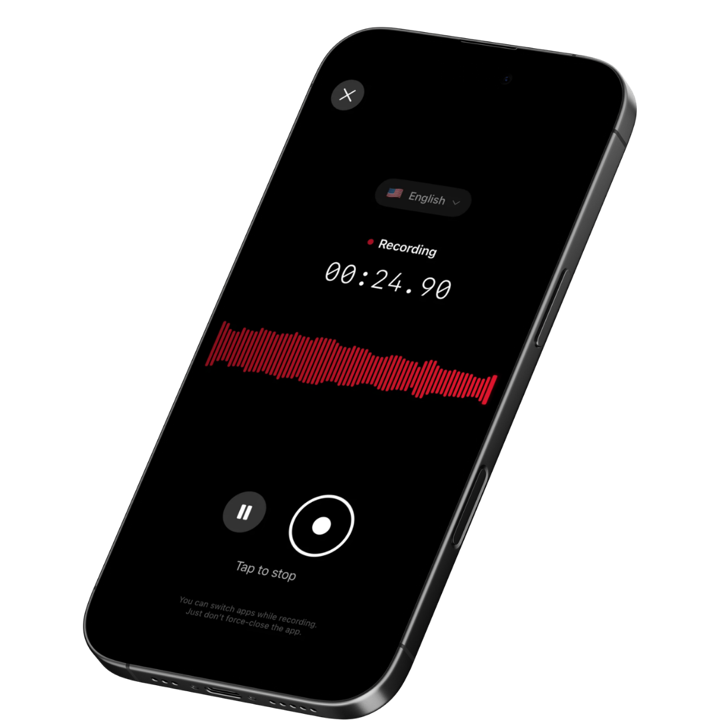
Voice capture simplifies the documentation layer of your digital workplace. Record any conversation with one tap. Let AI generate the transcript, summary, and action items. Sync everything to Notion where your team already works. The digital workplace becomes less about managing tools and more about doing work.
Download SpeakWise from the App Store and add the simplest, most powerful tool to your digital workplace - one-tap voice capture with AI transcription, instant summaries, and automatic Notion integration.
Join 10,000+ professionals who have simplified their digital workplace by replacing manual documentation with intelligent voice capture.
Get SpeakWise Free
4.9-star App Store Rating | iOS Optimized

🎯 4.9★ App Store Rating | 📱 Built for iOS
