Email Response Time Statistics 2026
Used by recruiters, executives, consultants, and more.
Email Response Time Statistics 2026
The average email response time across 1,000 companies is 12 hours and 10 minutes. Yet 88% of customers expect a reply within 60 minutes, and companies that respond within 5 minutes are 21 times more likely to qualify a lead. Workers spend up to 28% of their workweek managing email while receiving 121 messages daily. These 15 statistics reveal the growing gap between email expectations and reality in 2026.
Email remains the backbone of business communication. Despite the rise of Slack, Teams, and other messaging platforms, most external communication and a significant share of internal communication still flows through the inbox. The problem is that expectations have outpaced capacity.
This post examines 15 statistics about email response times, benchmarks, and productivity costs in 2026. Whether you run a sales team chasing leads, a support team serving customers, or simply manage a professional inbox, these numbers will reshape how you think about the time between receiving a message and sending a reply.
1. Average email response time across companies is 12 hours and 10 minutes
A study of 1,000 companies found that the average email response time is 12 hours and 10 minutes. This benchmark includes all types of business emails, from customer inquiries to internal requests. While some companies respond within minutes, others take days, and the long tail of slow responders pulls the average up dramatically. For businesses competing on customer experience, this number represents a significant risk.
Source: timetoreply - Average Email Response Time
2. 88% of customers expect a reply within 60 minutes
Customer expectations are far ahead of business reality. 88% of customers expect to receive a response to their email within one hour. Compare this to the 12-hour average, and the disconnect becomes clear. Every hour beyond that 60-minute window increases the probability of customer frustration, lost trust, and ultimately lost business. Speed is no longer a differentiator. It is a baseline expectation.
Source: Superhuman - Email Response Time Statistics
3. Companies responding within 5 minutes are 21x more likely to qualify leads
Speed creates compounding advantages in sales. Companies that respond to customer inquiries within 5 minutes are 21 times more likely to qualify a lead than those that wait 30 minutes. The data is unambiguous: the first company to respond wins a disproportionate share of the business. In a world where buyers are researching multiple options simultaneously, a five-minute response time can be the difference between winning and losing a deal.
Source: Superhuman - Email Response Time Statistics
4. 50% of professionals respond to work emails within two hours
Half of all professionals manage to reply to work emails within a two-hour window. This places them well ahead of the 12-hour company average. However, it also means the other 50% take longer, often much longer. The distribution is highly skewed, with fast responders handling email as near-real-time communication and slow responders treating it as asynchronous. This mismatch creates friction within teams.
Source: Sales So - Email Response Time Statistics
5. The average office worker receives 121 emails per day
Volume is the enemy of response time. The typical office worker receives approximately 121 business emails per day while sending around 40. At this volume, even spending two minutes per email would consume over four hours of the workday. The sheer number of messages forces workers into a constant triage mode where they prioritize urgency over importance, inevitably letting some messages slip through the cracks.
Source: cloudHQ - Workplace Email Statistics 2025
6. Knowledge workers spend 28% of their workweek on email
A McKinsey analysis found that knowledge workers dedicate up to 28% of their workweek to reading, writing, and managing email. That translates to roughly 11 hours per week or more than two full hours every day. This time is not just about responding. It includes sorting, filing, searching for old messages, and switching context between email and other tasks. Email management has become a job within the job.
Source: cloudHQ - Workplace Email Statistics 2025
7. 60% of customers define "immediate" as 10 minutes or less
When customers say they want an "immediate" response, they mean it literally. 60% of customers define immediate as 10 minutes or less. This expectation applies across industries, from retail to professional services. Organizations that take hours to respond are not just slow by customer standards. They are failing to meet the basic definition of responsiveness that most customers hold.
Source: Superhuman - Email Response Time Statistics
8. Average email response time in retail is 17 hours
Industry benchmarks vary widely. The average email response time in retail sits at 17 hours, well above the general average. Top-performing retailers, however, respond in under 2 hours. This 15-hour gap between average and top performers represents a massive competitive opportunity. In retail, where customers can easily switch to a competitor, slow email responses translate directly into lost revenue.
Source: Email Analytics - Customer Service Email Response Time Standards
9. 70% of professionals cite email as their top workplace stress source
Email is not just a productivity drain. It is a stress multiplier. 70% of professionals identify email as their number one source of workplace stress. The constant flow of messages, the pressure to respond quickly, the anxiety of an overflowing inbox, and the fear of missing something important all combine to make email one of the most psychologically taxing aspects of modern work.
Source: Readless - Email Overload Statistics
10. 42% of professionals describe their inbox as "out of control"
Nearly half of all professionals feel they have lost control of their email. 42% describe their inbox as "out of control," suggesting that the volume of incoming messages has exceeded their capacity to manage them effectively. When workers feel overwhelmed by email, response quality drops alongside response time. Messages get shorter, less thoughtful, and more likely to create follow-up confusion.
Source: Readless - Email Overload Statistics
11. Email overload can decrease worker productivity by up to 40%
The productivity cost of email extends far beyond the time spent reading and writing messages. Research shows that email overload can reduce worker productivity by up to 40%. This figure accounts for the constant context switching between email and focused work, the cognitive load of managing a full inbox, and the time lost to email-generated interruptions throughout the day.
Source: cloudHQ - Workplace Email Statistics 2025
12. The heaviest email users spend 8.8 hours per week in their inbox
The top 25% of email users spend 8.8 hours per week managing their inbox. That is equivalent to an entire workday every week dedicated solely to email. For these heavy users, email is not a communication tool. It is a second job that runs in parallel with their actual responsibilities. Reducing email processing time by even 20% for this group would recover nearly two hours of productive time per week.
Source: cloudHQ - Workplace Email Statistics 2025
13. E-commerce teams should aim for 1-2 hour response times
Industry benchmarks set clear targets for email response times. E-commerce teams should aim for 1 to 2 hours. SaaS companies target 2 to 4 hours. Financial services aim for 4 hours. Healthcare organizations target 4 to 8 business hours. These benchmarks reflect customer expectations within each industry. Teams that consistently miss their benchmark lose customers to competitors who meet it.
Source: Email Analytics - Customer Service Email Response Time Standards
14. 35% of people spend between 2 and 5 hours daily on email
While 35% of professionals report spending less than an hour on email each day, another 35% say they spend between two and five hours reading and writing emails. This bimodal distribution reflects fundamentally different email cultures across organizations and roles. For the high-volume group, email dominates the workday and leaves limited time for deep, focused work.
Source: Get Inbox Zero - Time Spent on Email
15. Global email volume will reach 392.5 billion messages daily by 2026
The email problem is getting larger, not smaller. Global email volume reached 376.4 billion messages per day in 2025 and is projected to grow to 392.5 billion daily by 2026. That is a 4% increase in one year across 4.59 billion email users worldwide. Despite predictions of email's decline, the volume continues to climb. Solutions that reduce the burden of email management will only become more valuable.
Source: cloudHQ - Email Statistics Report 2025-2030
The Response Gap: Speed Expectations Meet Volume Reality
The central tension in these statistics is the collision between rising expectations and rising volume. Customers want faster responses. Employees receive more emails. The math does not work. You cannot respond to 121 emails per day within 60 minutes while also doing the work those emails reference.
This mismatch creates a productivity trap. Workers spend their days reacting to the inbox instead of proactively driving results. The faster they try to respond, the more time email consumes. The more time email consumes, the less time remains for the work that actually generates value.
The solution is not working harder on email. It is reducing the need for email in the first place. Every conversation that gets captured, summarized, and shared without an email thread is one less message in someone's inbox. Every decision documented in real time is one fewer "Can you recap what we discussed?" follow-up. The future belongs to teams that communicate once and capture permanently.
When 88% of customers expect a reply within an hour but the average takes 12, the answer is not faster typing. It is fewer emails.---
Reduce your inbox by capturing conversations at the source
Many of the emails cluttering your inbox exist because a conversation happened and no one documented it. "Can you send me a summary of what we discussed?" "What were the action items from the meeting?" "I missed the call - what did the client say?" Each of these emails represents a failure to capture information the first time.
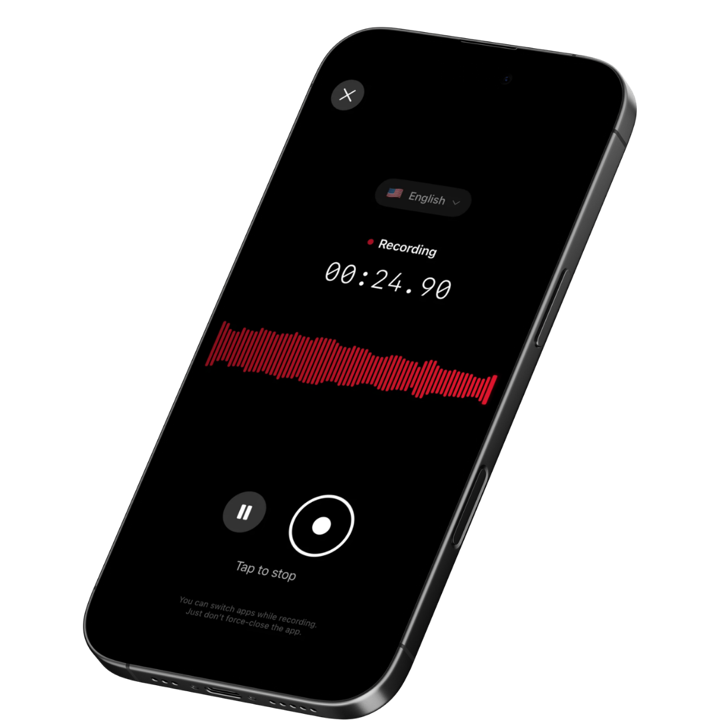
Voice capture eliminates this entire category of email. Record the conversation, get an AI-generated transcript and summary, and share it instantly. No follow-up email needed. No recap required. No misremembered details.
Download Speakwise from the App Store and replace follow-up emails with instant AI summaries, accurate transcripts in 100+ languages, and automatic action item extraction.
Join 10,000+ professionals who cut email volume by capturing conversations the moment they happen.
Get Speakwise Free
4.9-star App Store Rating | iOS Optimized

🎯 4.9★ App Store Rating | 📱 Built for iOS
