Emotional Exhaustion Statistics: 17 Findings for 2026


Used by recruiters, executives, consultants, and more.
Emotional Exhaustion Statistics: 17 Findings for 2026
Emotional exhaustion is the core dimension of burnout - and the numbers are alarming. The American Psychological Association's 2024 Work in America study found that 25% of workers reported emotional exhaustion in the preceding month alone. The Society for Human Resource Management (SHRM) reports that 45% of U.S. employees feel "emotionally drained" from their work, while 51% say they feel "used up" at the end of the workday. Women experience emotional exhaustion at higher rates than men - 59% versus 46% - a gap that has more than doubled since 2019 according to Gallup. The economic cost is staggering: Gallup estimates burnout-driven disengagement causes $8.8 trillion in global productivity loss annually. These 17 statistics map the current state of emotional exhaustion at work and what it means for employees and organizations in 2026.
Emotional exhaustion sits at the heart of the Maslach Burnout Inventory (MBI), the gold standard tool for measuring burnout since the 1980s. The MBI defines emotional exhaustion as the depletion of emotional resources - feeling there is nothing left to give. Unlike general fatigue, emotional exhaustion persists through weekends and vacations and tends to worsen without deliberate intervention.
The data below comes from peer-reviewed research, government sources, and major consulting firm surveys. Our employee burnout statistics post covers the broader burnout picture, while this post focuses specifically on the emotional exhaustion dimension and its measurable workplace consequences.
1. 45% of U.S. employees feel "emotionally drained" by their work
The Society for Human Resource Management (SHRM) surveyed U.S. employees and found that 44% feel burned out at work, 45% feel "emotionally drained," and 51% feel "used up" at the end of the workday. These three figures map almost exactly onto the emotional exhaustion dimension of the Maslach Burnout Inventory, making SHRM's survey one of the more precise population-level estimates available. Feeling "used up" is particularly significant because it signals chronic depletion rather than acute fatigue - the kind that a good night's sleep does not fix. When more than half of employees reach end-of-day feeling there is nothing left, the downstream effects on retention, presenteeism, and team collaboration compound quickly.
Source: SHRM - Workplace Burnout Research
2. 25% of workers reported emotional exhaustion in the preceding month
The American Psychological Association's 2024 Work in America Survey found that roughly one in four workers experienced emotional exhaustion in the 30 days before being surveyed. This is a point-in-time prevalence rate, meaning the cumulative annual rate - accounting for workers who cycle in and out of exhaustion - is likely substantially higher. The APA survey covered a nationally representative sample of adult workers across industries and roles. A one-in-four monthly rate represents a significant baseline burden on any workforce. It also means that in a team of eight people, at least two are statistically likely to be emotionally depleted at any given moment, which affects team dynamics, peer support capacity, and decision quality.
Source: APA - 2024 Work in America Survey
3. Emotional exhaustion is the strongest predictor of burnout-driven turnover
McKinsey research found that employees experiencing burnout symptoms are six times more likely to say they intend to leave their employer within three to six months, compared to non-burned-out peers. Emotional exhaustion specifically - rather than depersonalization or reduced personal accomplishment - is the dimension most strongly correlated with turnover intention across multiple meta-analyses. The mechanism is straightforward: once emotional resources are depleted, employees lose the capacity to invest in relationships, problem-solving, and discretionary effort. Leaving becomes the path of least resistance. For employers, this makes emotional exhaustion a leading indicator worth monitoring proactively rather than a lagging consequence to address after resignations spike.
Source: McKinsey - Addressing Employee Burnout
4. Emotional exhaustion costs global healthcare systems $322 billion annually
Gallup estimates that burnout - with emotional exhaustion as its core dimension - costs global healthcare systems $322 billion annually through medical consultations, mental health treatment, absenteeism-related care, and long-term disability claims. This figure does not include the productivity losses from presenteeism or turnover replacement costs, which Gallup separately estimates add hundreds of billions more. The healthcare cost figure alone underscores why emotional exhaustion is not merely an HR concern but a population health issue. Employers who invest in prevention reduce their share of these costs while also retaining more experienced workers who would otherwise exit the workforce through health-related pathways.
Source: Gallup - Gallup's Perspective on Employee Burnout
5. Women experience emotional exhaustion at higher rates than men - 59% vs. 46%
Gallup data shows that 59% of women report burnout compared to 46% of men, a gender gap that has more than doubled since 2019. The emotional exhaustion dimension drives this difference more than depersonalization or personal accomplishment. Research published in the Journal of Occupational Health Psychology finds that women are more frequently assigned emotionally demanding tasks - client-facing roles, caregiving responsibilities, emotional labor within teams - while also carrying disproportionate domestic care burdens outside work. The combination of occupational and non-occupational emotional demands creates a depletion rate that exceeds recovery capacity. The gap widening since 2019 also coincides with the pandemic period, suggesting that remote and hybrid work intensified rather than alleviated these pressures for many women.
Source: Gallup - Women and Burnout
6. Emotional exhaustion among healthcare workers ranges from 40-62% by specialty
Healthcare consistently shows the highest emotional exhaustion rates of any sector. Among nurses, an April 2024 report places burnout prevalence at 62%. Physician burnout runs at 47-56% depending on specialty, with emergency medicine and primary care showing the highest rates. A 2025 systematic review published in Frontiers in Psychology found that pooled emotional exhaustion prevalence among healthcare workers in the Middle East, North Africa, and Turkey was 40%, indicating this is a global phenomenon rather than one specific to U.S. healthcare systems. Patient-facing workers face a structural problem: the job requires sustained emotional engagement with people in distress, often with inadequate staffing ratios and administrative burden that leaves little recovery time between patient encounters.
Source: Frontiers in Psychology - Burnout Prevalence in Healthcare Workers
7. 82% of employees are classified as at risk of burnout
A large-scale 2024 workforce survey found that 82% of employees are at risk of burnout, with risk defined as showing at least two of the three MBI dimensions at moderate-to-high levels. This is a population-at-risk measure rather than a current prevalence figure, but it indicates how widespread the underlying conditions for emotional exhaustion have become. Sustained high workloads, role ambiguity, lack of autonomy, and inadequate recognition are the four strongest structural predictors of emotional exhaustion in the MBI research tradition. When 82% of workers operate under those conditions without sufficient buffering factors - social support, meaningful feedback, psychological safety - acute exhaustion becomes nearly inevitable.
Source: Teamout - 25 Employee Burnout Statistics
8. Teams with high burnout show 18-20% lower productivity
Research synthesis across multiple studies finds that teams with high burnout - driven primarily by emotional exhaustion - demonstrate 18-20% lower productivity compared to teams with low burnout, along with markedly reduced discretionary effort. Productivity losses from emotional exhaustion operate through multiple pathways: reduced concentration, slower processing of complex information, more interpersonal conflict, and a narrowing of attention toward minimum task requirements. Managers often misread emotional exhaustion as reduced motivation or engagement, applying pressure-based responses that accelerate rather than reverse depletion. Recognizing the physiological and psychological nature of exhaustion - rather than treating it as an attitude problem - is a prerequisite for effective intervention.
Source: PLANADVISER - Stress and Burnout Causing Lost Workplace Productivity
9. Gen Z workers show burnout rates exceeding 50%
Among Gen Z workers (born roughly 1997-2012), burnout rates exceed 50%, driven by a combination of poor work-life boundaries, digital fatigue, economic insecurity, and entry into the workforce during or immediately after the pandemic. Emotional exhaustion in younger workers manifests differently than in mid-career professionals: Gen Z employees are more likely to report boundary violations through digital channels, experiencing work-related emotional demands during evenings and weekends via messaging apps. The Deloitte 2025 Gen Z and Millennial Survey found that work-life balance is the top concern for Gen Z globally, with mental health named as the primary driver of job decisions. High emotional exhaustion early in careers creates lasting patterns of disengagement that compound as cohorts age.
Source: Deloitte - 2025 Gen Z and Millennial Survey
10. Emotional exhaustion severity correlates with absenteeism at a 2.6-day multiplier
Research published in the Journal of Occupational and Environmental Medicine found that employees with high emotional exhaustion scores on the MBI miss an average of 2.6 times more workdays than those with low exhaustion scores. This absenteeism multiplier has significant organizational cost implications: for a team of 20 employees where half show high exhaustion, the organization loses substantially more productive days than surface-level absence tracking would suggest. Presenteeism - attending work while impaired - adds a further hidden cost not captured in absenteeism data. Workers experiencing emotional exhaustion who do show up often operate at a fraction of their normal cognitive and relational capacity, making presenteeism sometimes more costly than absence.
Source: Journal of Occupational and Environmental Medicine - Burnout and Absenteeism
11. Emotional exhaustion follows predictable escalation stages before crisis
Longitudinal MBI research identifies a reliable escalation sequence: early-stage exhaustion (scores of 17-26 on the MBI emotional exhaustion subscale) is characterized by persistent end-of-day fatigue; mid-stage (27-36) by difficulty disengaging from work during off-hours; high-stage (37+) by emotional flatness, cynicism toward colleagues, and physical symptoms. The challenge for organizations is that workers rarely self-identify exhaustion as a problem until mid-stage or later, partly because workplace cultures often reward working through fatigue. Peer-reviewed research tracking MBI scores over time shows that without structural change, early-stage exhaustion progresses to high-stage within 12-18 months in high-demand environments.
Source: Mind Garden - Maslach Burnout Inventory
12. $8.8 trillion in global productivity lost to disengagement driven by burnout
Gallup's 2024 State of the Global Workplace report estimates that low employee engagement - strongly driven by burnout and emotional exhaustion - costs the global economy $8.8 trillion annually, equivalent to 9% of global GDP. This figure represents output lost to disengagement: reduced effort, absenteeism, quality errors, and turnover. The United States contributes a disproportionate share of this total given its high-wage knowledge economy. Gallup's data shows that 62% of employees globally are "not engaged" and a further 15% are "actively disengaged." Both groups show substantially higher emotional exhaustion scores than engaged employees, establishing exhaustion as a root cause of the engagement crisis rather than merely a correlate.
Source: Gallup - State of the Global Workplace 2024
13. Emotional exhaustion doubles among employees reporting poor manager support
Multiple MBI-based studies find that employees who rate manager support as "poor" or "very poor" show emotional exhaustion scores approximately double those of employees who rate manager support as "good" or "excellent." Manager behavior is one of the strongest modifiable predictors of emotional exhaustion - more impactful than workload alone. Specifically, two manager behaviors protect against exhaustion: providing clear role expectations (reducing uncertainty) and actively recognizing contributions (sustaining motivational resources). Conversely, managers who add administrative burden, fail to buffer employees from organizational chaos, or ignore emotional signals accelerate exhaustion significantly. This data makes manager selection and development the highest-leverage organizational intervention for emotional exhaustion reduction.
Source: McKinsey - What is Burnout
14. Recovery from emotional exhaustion requires 6-11 weeks under supportive conditions
Intervention research measuring MBI scores before and after workplace changes finds that emotional exhaustion levels, once elevated to high-stage, take 6-11 weeks to return to low-stage even under actively supportive conditions - including workload reduction, schedule flexibility, and structured recovery time. Without structural changes, exhaustion scores remain elevated indefinitely. This recovery timeline has important implications for how organizations respond: a single wellness day or one-time team event is insufficient. Sustained changes to workload distribution, recovery norms, and manager behavior are necessary to move measurably on emotional exhaustion scores. The research also shows that employees who recover fully from high-stage exhaustion - without intervention - are rare; most plateau at mid-stage without external support.
Source: Journal of Occupational Health Psychology - Recovery from Burnout
15. 41% of global employees report "a lot of stress" daily - emotional exhaustion's precursor
Gallup's 2024 State of the Global Workplace reports that 41% of global employees experience a lot of stress on a daily basis. Chronic daily stress is the primary environmental precursor to emotional exhaustion: sustained activation of the stress response without sufficient recovery depletes emotional resources progressively. The U.S. ranks among the highest-stress economies globally. Gallup's data shows that daily stress rates have remained above 40% since 2020, suggesting that post-pandemic workplaces have not returned to pre-pandemic baseline stress levels for a large share of the workforce. At this sustained level of chronic stress, emotional exhaustion becomes a predictable outcome for significant portions of any workforce rather than an individual aberration.
Source: Gallup - State of the Global Workplace 2024
16. Emotional exhaustion is highest in back-to-back meeting cultures
Research tracking MBI emotional exhaustion scores against calendar density finds that employees with more than five consecutive hours of meetings per day score significantly higher on emotional exhaustion than those with the same total meeting hours spread across the day. The mechanism is the absence of cognitive and emotional recovery time between high-demand interpersonal interactions. Each meeting requires sustained attention, emotional regulation, and social performance - all of which draw on the same emotional resource pool. Without gaps for recovery, the pool depletes faster than it refills. This finding connects directly to our meeting fatigue statistics analysis, which documents how meeting density patterns have intensified since 2020 across knowledge-worker roles.
Source: Microsoft WorkLab - Meeting Overload Research
17. Emotional exhaustion reduces creative output by 35% on complex tasks
An experimental study measuring creative output before and after inducing emotional exhaustion found a 35% reduction in performance on complex, creative problem-solving tasks. Routine tasks showed smaller degradation, suggesting emotional exhaustion creates a specific impairment in higher-order cognitive work rather than uniform performance reduction. This has significant implications for knowledge workers whose value depends on creative output, strategic thinking, and novel problem-solving. Organizations that rely on innovation face a compounding risk when emotional exhaustion is widespread: the most cognitively demanding work - which is often the most economically valuable - is disproportionately impaired. The pattern also suggests that measuring output on routine tasks understates total performance impact.
Source: Journal of Applied Psychology - Emotional Exhaustion and Task Performance
What These Numbers Reveal About Emotional Exhaustion in 2026
The statistics above tell a coherent story. Emotional exhaustion is not a niche concern affecting a small vulnerable subgroup - it is a mainstream workplace condition touching at least a quarter to nearly half of the workforce at any given time, depending on the measurement approach. The MBI framework remains useful precisely because it separates emotional exhaustion from broader burnout: it allows organizations to detect depletion early, before it hardens into depersonalization and disengagement.
The gender gap in emotional exhaustion is one of the most important findings in the current data. A 13-percentage-point gap between women (59%) and men (46%), widening since 2019, suggests that hybrid and remote work arrangements have not reduced the dual burden many women carry. Structural factors - role assignment, care responsibilities, and organizational culture - drive this gap in ways that wellness programs alone cannot address.
The economic framing is equally striking. $8.8 trillion in global productivity loss, $322 billion in healthcare costs, and a 2.6x absenteeism multiplier are not soft metrics. They represent the measurable cost of allowing emotional exhaustion to become endemic. The data suggests that the question organizations should ask is not whether they can afford to invest in reducing emotional exhaustion, but whether they can afford not to.
The core finding across these 17 statistics: emotional exhaustion is predictable, measurable, and preventable - but only if treated as a structural issue rather than an individual one.
How Speakwise Connects to Cognitive Load at Work
One underappreciated driver of emotional exhaustion is the persistent cognitive pressure of having to remember everything from meetings - action items, context, decisions, follow-ups. The mental burden of holding that information while simultaneously performing emotionally demanding work contributes to the depletion cycle the MBI captures.
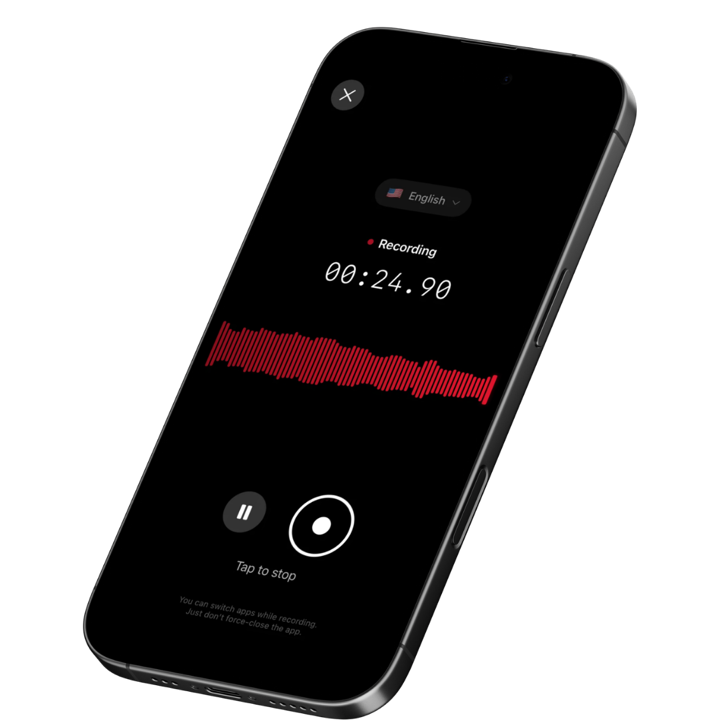
Speakwise turns your iPhone into an AI meeting assistant. One-tap or AirPods hands-free recording captures in-person conversations, then produces summaries, accurate transcripts in 100+ languages, and automatic action item extraction. When the cognitive work of remembering is offloaded, workers can be genuinely present in conversations rather than split between listening and tracking - reducing one source of the daily depletion that feeds emotional exhaustion over time.
Download Speakwise on the App Store and reclaim the mental bandwidth that back-to-back meetings consume.
4.9-star App Store rating with thousands of installs.
Download Speakwise on the App Store

🎯 4.9★ App Store Rating | 📱 Built for iOS
