Wearable Technology Statistics 2026: Market and Adoption
TL;DR
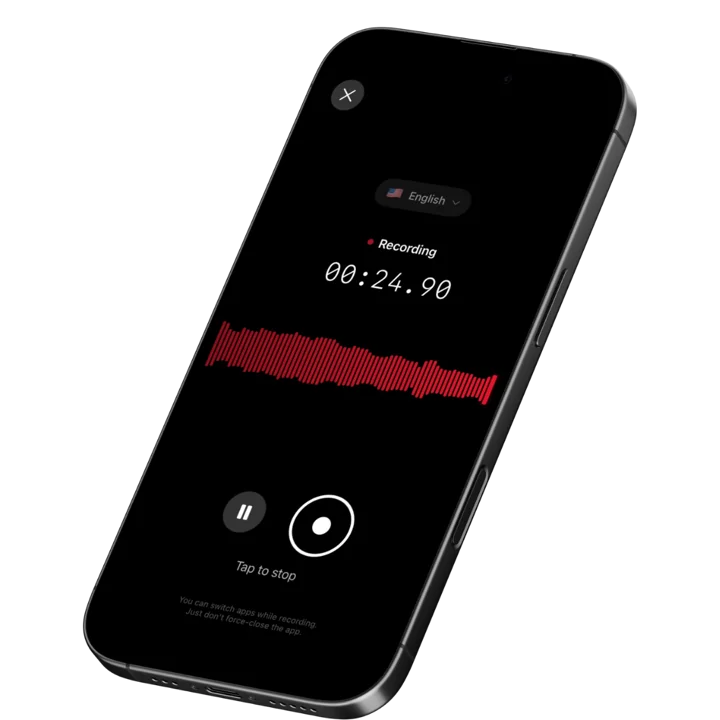
Wearable technology statistics show the global market shipped 538 million units in 2024 (IDC). Counterpoint Research forecasts over $1 trillion in cumulative revenue by 2032. Speakwise's Apple Watch app starts a recording from your wrist and syncs it to iPhone, with a 7-day free trial.


Used by recruiters, executives, consultants, and more.
Wearable Technology Statistics 2026: Market and Adoption
Wearable technology statistics cover smartwatches, fitness trackers, hearables, smart rings, and smart glasses, each growing at its own pace. Smartwatches and fitness trackers look closer to mature, while some newer categories are still expanding fast. This post covers 11 statistics on the wearable market and how people actually use these devices, each tied to a named source and year.
Key Wearable Technology Statistics (2026)
- Wearable technology statistics show the global market shipped 538 million units in 2024, up 6.1% year over year, though growth was expected to slow to 3.9% in 2025 (IDC, 2024).
- The global wearables market is forecast to generate more than $1 trillion in cumulative revenue between 2026 and 2032 (Counterpoint Research via 9to5Mac, 2026).
- 29% of US consumers personally own a smartwatch, holding steady since 2022, while fitness-tracker ownership fell to 22% (Deloitte 2023 Connected Consumer Survey, 2023).
- Global smartwatch shipments grew 4% year over year in Q1 2026, with average selling prices up 6% on stronger sensors and health features (Counterpoint Research, 2026).
- 69% of smartwatch and fitness-tracker owners say the devices have improved their fitness, and 64% say they improved their overall health (Deloitte 2023 Connected Consumer Survey, 2023).
- 48% of smartwatch and fitness-tracker owners are concerned about data security, even as adoption holds steady (Deloitte 2023 Connected Consumer Survey, 2023).
- India's wearables market declined 4.0% year over year to 114.2 million units in 2025, with smartwatch shipments specifically falling 17.6% (IDC, 2026).
1. The global wearables market shipped 538 million units in 2024
IDC's Worldwide Quarterly Wearable Device Tracker counted 538 million wearable device shipments across all categories in 2024, a 6.1% increase over 2023. IDC expected that growth to slow to 3.9% in 2025, pointing to the US, India, smartwatches, and hearables approaching saturation in their most mature markets. That slowdown does not mean the category is shrinking. It means the easy growth phase, where almost anyone buying their first smartwatch counted as new demand, is giving way to a replacement-driven market.
Source: IDC, "IDC Forecasts Continued Growth for Wearables"
2. Wearables are forecast to generate over $1 trillion in revenue by 2032
Counterpoint Research projects the global consumer wearables market will generate more than $1 trillion in cumulative revenue between 2026 and 2032. That total is expected to split roughly into hearables at about $360 billion, smartwatches at about $304 billion, and smart eyewear at about $168 billion, with the remainder spread across other device categories. Smart eyewear's inclusion in that forecast reflects how much the category has broadened beyond watches and earbuds in just a few years.
Source: Counterpoint Research, reported by 9to5Mac
3. Smartwatch ownership in the US has plateaued at 29%
Deloitte's 2023 Connectivity and Mobile Trends Survey, which polled 2,018 US consumers, found that 29% personally own a smartwatch, essentially unchanged from the year before. Fitness-tracker ownership actually fell 7 points to 22%, and connected exercise equipment ownership fell 8 points to 13%. That pattern suggests smartwatches are absorbing demand that used to go to single-purpose fitness trackers, rather than the overall wearables category expanding to new buyers.
Source: Deloitte 2023 Connectivity & Mobile Trends Survey
4. Global smartwatch shipments grew 4% in Q1 2026 on rising prices
Counterpoint Research recorded 4% year-over-year growth in global smartwatch shipments for the first quarter of 2026, with China expanding 15% year over year. Average selling prices rose 6% year over year, which Counterpoint attributed to more advanced sensors and health-monitoring features pulling buyers toward pricier models. The firm projects the smartwatch industry will grow at a 3% compound annual rate through 2030.
Source: Counterpoint Research, "Global Smartwatch Shipments Maintain Growth Momentum in Q1 2026"
5. Wrist-worn device shipments grew 10.5% in early 2025
IDC recorded 45.6 million combined smartwatch and wristband shipments in the first quarter of 2025, up 10.5% year over year. The smartwatch-only portion of that was 34.8 million units, up a smaller 4.8%, meaning cheaper wristbands and fitness bands grew faster than full smartwatches that quarter. That is a useful reminder that "wearables" and "smartwatches" are not the same market, even though headlines often use the terms interchangeably.
Source: IDC, "Global Wrist-Worn Device Shipments Grew 10.5% in Q1 2025"
6. Full-year 2025 smartwatch shipments grew 4%, reversing a 2024 decline
Counterpoint Research reported that global smartwatch shipments grew 4% for the full year 2025 after a decline in 2024, with the $200 to $400 price band up 48% in shipments while sub-$200 shipments fell 9%. Cellular-enabled smartwatch shipments grew 6%, outpacing the overall market. That shift toward pricier, cellular-connected watches lines up with the average-selling-price increase noted in Q1 2026.
Source: Counterpoint Research, "Global Smartwatch Shipments Swing to Growth in 2025 Led by China"
7. 69% of wearable owners say the devices improved their fitness
Nearly 7 in 10 smartwatch and fitness-tracker owners told Deloitte their device made a real difference to their fitness, and 64% said it improved their overall health. More than half, 55%, said they had shared health data from the device with a medical provider, whether through an app, an in-person visit, text, or email. That last figure shows wearables have moved from a novelty into something people actually bring into healthcare conversations.
Source: Deloitte 2023 Connectivity & Mobile Trends Survey
8. Data security worries nearly half of wearable owners
Even with strong satisfaction numbers, 48% of smartwatch and fitness-tracker owners told Deloitte they are concerned about the security of their data. Interestingly, 64% of Gen Z wearable users said their device makes them feel more connected to other people, through competitions, challenges, or leaderboards, showing the social side of wearables matters most to younger users even as privacy concerns run high across the board.
Source: Deloitte 2023 Connectivity & Mobile Trends Survey
9. India's wearables market shrank 4% in 2025 while prices rose
Not every region is growing. IDC found India's wearables market declined 4.0% year over year to 114.2 million units in 2025, with smartwatch shipments specifically falling 17.6% to 28.9 million units. Average selling prices in India's smartwatch segment rose 11.7% to about $26.50, and offline retail grew to 40.7% of volume while online sales fell. India remains one of the largest wearables markets in the world, so this pullback is a meaningful counterpoint to global growth headlines.
Source: IDC, "India's Wearables Market Declines 4.0%"
10. Buyers now care more about performance metrics than clinical ones
Deloitte's research found that wearable owners' top motivations have shifted over time, moving from clinical metrics like heart health, calories, and blood oxygen toward performance and fitness metrics like steps, speed, and distance. That shift suggests wearables are being used more for everyday activity tracking and less as a standalone health-monitoring gadget, at least as the primary reason people buy one.
Source: Deloitte 2023 Connectivity & Mobile Trends Survey
11. The market leader's own wearables revenue still fell in fiscal 2025
Apple, the top smartwatch vendor by shipment share, reported that its Wearables, Home and Accessories segment, which includes the Watch, AirPods, and accessories, brought in $35.69 billion in fiscal 2025, down 3.6% from fiscal 2024. That was Apple's third consecutive year of decline in this blended segment, even as unit shipment share held at 23%. Rising unit shipments and falling blended revenue can both be true, and our Apple Watch statistics breaks down exactly why.
Source: Apple Inc. SEC Form 8-K, Q4 FY2025
What the Wearable Technology Numbers Add Up To
The wearable technology market in 2026 is not one story, it is several running at once. Unit shipments keep growing globally, average prices are rising as buyers choose more capable devices, and long-range revenue forecasts point toward a trillion-dollar category by 2032. At the same time, ownership in a mature market like the US has plateaued around 29%, and a major market like India actually shrank in 2025.
For people who already own a wearable, the technology is clearly earning its place. Most owners say it improved their fitness and health, and more than half have shared data from it with a doctor. The device has moved from a gadget you show off to a tool you rely on, even while nearly half of owners remain uneasy about what happens to their data.
The next phase of growth looks less like convincing new people to strap on a smartwatch, and more like finding new things an existing wearable can do throughout the day, from notification triage to hands-free capture with a voice recording app on the wrist.
Wearable technology statistics for 2026 show a maturing market: still growing in units and dollars, but increasingly about doing more with the device people already wear, not just selling more of them.
Where Speakwise Fits Into the Wearables Trend
As wearables add more everyday tasks, one of the most useful is capturing a voice note or a quick recording without pulling out a phone. That is what the Speakwise Apple Watch companion app is built for. Tap once on your wrist to start recording, and it syncs automatically to your iPhone, where Speakwise transcribes it, adds an AI summary, and labels who said what.
Download Speakwise from the App Store and turn recordings from your wrist into a transcript and summary on your iPhone.
Speakwise is free to download with a free trial, then a Pro subscription through the App Store.

🎯 4.9★ App Store Rating | 📱 Built for iOS
