Working Memory Statistics: 18 Workplace Findings
Used by recruiters, executives, consultants, and more.
Working Memory Statistics: 18 Workplace Findings for 2026
George Miller's 1956 landmark paper established that humans can hold roughly 7 items in immediate memory - later research by Nelson Cowan in 2001 narrowed that figure to just 4 meaningful chunks. In a meeting-heavy, notification-saturated work environment, that ceiling is routinely breached: employees face up to 275 interruptions per day, spend fewer than 47 seconds on a task before self-interrupting, and lose up to 40% of productive time to mental switching costs. Working memory is the cognitive bottleneck no productivity system can bypass. These 18 statistics map the scale of the problem and show what consistently overloading that small mental workspace costs individuals and organizations.
The brain's working memory system is not a limitless buffer. It is a small, active workspace that holds information just long enough to use it. When that workspace overflows, information is lost, errors rise, and quality of work falls. For anyone who spends their day in meetings, managing email, or juggling parallel projects, the numbers below are directly relevant.
This post covers the core research on working memory capacity, the workplace conditions that strain it most, and the downstream effects on output. The 18 findings span cognitive psychology fundamentals through applied organizational data.
1. Miller's "Magic Number" Set Working Memory Capacity at 7 Items
George Miller's 1956 paper in Psychological Review, "The Magical Number Seven, Plus or Minus Two," established that humans can reliably hold 5 to 9 discrete items in immediate memory. The paper became one of the most cited in the history of psychology, and the phrase "magic number seven" entered popular culture as shorthand for a hard cognitive ceiling. Miller himself used the number rhetorically rather than as a precise constant, but the insight it captured - that short-term retention is sharply bounded - transformed how researchers, educators, and designers think about information load. In workplace terms, the finding means that meeting agendas with 12 items, training slides packed with bullet points, and rapid-fire Slack threads all ask more than working memory can cleanly process.
Source: Miller, G. A. - The Magical Number Seven, Plus or Minus Two, Psychological Review
2. Cowan's 2001 Research Revised the True Limit to About 4 Chunks
Nelson Cowan's 2001 paper "The Magical Number 4 in Short-Term Memory" proposed a more conservative and more precisely measured limit: roughly 3 to 5 meaningful chunks, with the modal estimate settling at 4. Cowan distinguished chunks (organized units of information) from raw items, noting that Miller's higher number reflected chunking strategies rather than raw capacity. Subsequent mathematical models of problem-solving and cognition independently converged on the same figure. This matters in practice because each item a professional must hold in mind during a meeting or while reviewing a document consumes roughly one of those four slots. A conversation covering five distinct topics in quick succession is almost guaranteed to leave something unretained without external support.
Source: Cowan, N. - The Magical Mystery Four: How is Working Memory Capacity Limited, and Why? - PMC
3. Working Memory Capacity Correlates with Fluid Intelligence at r = 0.5 to 0.7
Research consistently finds that individual differences in working memory capacity predict fluid intelligence at correlation coefficients ranging from 0.5 to 0.7. In one study pooling healthy adults and clinical populations, working memory capacity correlated at r = 0.56 with full-scale IQ scores. This makes working memory one of the strongest single cognitive predictors of professional performance on complex tasks. It also means that anything straining working memory - back-to-back meetings, constant notifications, context switching - temporarily degrades the very cognitive resource most tied to high-level thinking. The implication for knowledge workers is direct: protecting working memory from overload is not a preference issue, it is a performance issue.
Source: The relationship between working memory capacity and broad measures of cognitive ability - PMC
4. Employees Face Up to 275 Interruptions Per Day During Core Work Hours
Research cited in organizational productivity literature finds that employees experience a ping from meetings, emails, or chat messages roughly every two minutes during core work hours, adding up to approximately 275 interruptions across a full workday. Each interruption forces working memory to partially clear its current contents and load new information. When the interruption resolves, reconstruction of the prior mental context is rarely complete. The result is a continuous cycle of partial loading and partial clearing that keeps cognitive capacity perpetually occupied below its optimal level. For our attention span breakdown, the relationship between interruption frequency and sustained focus loss is similarly stark.
Source: Clockify - Workplace Productivity Statistics 2025
5. Knowledge Workers Self-Interrupt Every 47 Seconds on Average
Research from MIT's Attention Lab found that employees spend fewer than 47 seconds on a task before self-interrupting - checking a phone, switching a browser tab, or glancing at a notification. This is not purely external pressure: working memory itself plays a role. When a current task produces cognitive friction (insufficient context, unclear next step, or competing priority), the path of least resistance is to shift attention elsewhere. Self-interruption creates the same reconstruction burden as external interruptions, without even the social justification of a colleague's question. The 47-second average means that sustained, uninterrupted focus on a single thread is the exception rather than the rule in most knowledge-worker environments.
Source: IOSM - Attention is Today's Productivity Gap
6. The Ebbinghaus Forgetting Curve Shows 50% of Information Lost Within One Hour
Hermann Ebbinghaus's forgetting curve, validated in subsequent research, shows that without reinforcement, humans forget approximately 50% of new information within one hour of exposure, and up to 70% within 24 hours. In meeting contexts, this means that even when a working memory system successfully processes the information presented, it rapidly decays unless captured externally. A meeting participant who leaves without notes and does not review key points by end of day will retain roughly 30% of the content by the next morning. For organizations that run frequent back-to-back meetings, cumulative decay of decision context and assigned tasks is substantial.
Source: Whatfix - Ebbinghaus's Forgetting Curve: How to Overcome It
7. Working Memory Predicts Academic and Professional Outcomes Better Than IQ at Age 5
A longitudinal study tracked children and found that verbal working memory measured at age 5 was a stronger predictor of later learning success than IQ measured at the same age. In professional contexts, the implication is that working memory capacity - though not fixed - is a meaningful and measurable individual difference that shapes how effectively people process complex problems, remember instructions, and maintain context across interruptions. Organizations that design information environments (meeting structures, document formats, communication norms) without accounting for working memory limits effectively build workflows that underperform relative to their talent.
Source: Cogn-IQ - Working Memory in Psychometrics
8. Baddeley's Model Identifies Three Distinct Working Memory Subsystems
Alan Baddeley and Graham Hitch's 1974 model established that working memory is not a single store but a multi-component system: the central executive (attention and coordination), the phonological loop (verbal and auditory information), and the visuospatial sketchpad (spatial and visual data). A fourth component, the episodic buffer, was added later. This architecture explains why simultaneous demands across modalities are especially costly: listening to a verbal briefing while reading a document draws on overlapping phonological resources, doubling the load on a single subsystem. Meeting designs that layer spoken explanation over dense slide decks routinely create exactly this bottleneck.
Source: Cogn-IQ - Working Memory and Intelligence: Why It's the Cognitive Bottleneck
9. Gallup Reports $9 Trillion in Global Productivity Lost to Disengagement and Distraction
The 2024 Gallup State of the Global Workplace report estimated that employee disengagement and distraction cost the global economy approximately $9 trillion in annual productivity. While the figure encompasses motivational factors beyond working memory, cognitive overload - the inability to process and retain what is needed to do work well - is a primary driver of disengagement. Workers whose mental capacity is constantly saturated cannot engage meaningfully with their tasks, making sustained attention and working memory capacity organizational assets as much as individual ones.
Source: Clockify - Workplace Productivity Statistics 2025
10. UCSF Research Shows Older Adults Fail to Disengage From Interruptions After Multitasking
A study from the University of California, San Francisco, found a critical age-related difference in working memory recovery: younger adults successfully re-established connection with their memory-maintenance brain network after an interruption and disengaged from the interrupting stimulus, while older adults failed both to disengage from the interruption and to reestablish the neural network associated with the disrupted memory. This means the already-constrained working memory of older workers is disproportionately vulnerable to the interruption culture of modern offices. As workforces age globally, meeting cadence and notification practices impose an increasing cognitive tax on a large and growing segment of the workforce.
Source: UC San Francisco - UCSF Study on Multitasking Reveals Switching Glitch in Aging Brain
11. Knowledge Workers Hit Cognitive Peak for Only 2 to 4 Hours Per Day
Research on sustained cognitive performance suggests that most knowledge workers can maintain peak working memory performance for just 2 to 4 hours per day. Outside those windows, the central executive function degrades, making it harder to hold multiple task threads simultaneously, suppress irrelevant information, and switch efficiently between subtasks. Scheduling cognitively demanding work - analysis, writing, strategic decisions - outside peak hours compounds the strain because the underlying resource is already depleted. Organizations that fill the entire workday with meetings effectively consume peak cognitive hours for coordination tasks rather than output-generating work.
Source: Memtime - Knowledge Worker Productivity Stats
12. Remote Workers Achieve 22.75 Hours of Deep Focus Weekly Versus 18.6 Hours for Office Workers
Data on focus-time patterns shows that remote workers average 22.75 hours of deep, uninterrupted cognitive engagement per week, compared to 18.6 hours for primarily in-office workers. The gap - roughly 62 additional focused hours per year - reflects the working memory benefit of controlling one's environment and reducing ambient interruption. Open-plan offices and shared physical spaces continuously load the phonological loop and visuospatial sketchpad with background stimuli that compete with active task processing. The remote work advantage is partially a working memory advantage: fewer competing inputs leave more capacity for the task at hand.
Source: Memtime - Knowledge Worker Productivity Stats
13. Heavy Multitasking Produces a Temporary IQ Drop of Up to 10 Points
Research cited in cognitive psychology literature found that heavy multitasking - the sustained attempt to process multiple information streams simultaneously - produces a temporary reduction in measured IQ of up to 10 points, a decrement larger than the effect of losing a full night of sleep. The mechanism is working memory saturation: when the central executive must manage multiple competing task threads, its capacity for holding and manipulating information falls well below its single-task ceiling. In meeting-heavy schedules, where professionals are expected to listen, respond, take notes, and monitor a chat thread simultaneously, this temporary performance floor is reached routinely.
Source: IOSM - Attention is Today's Productivity Gap
14. 37% of Error Rate Increase Linked to Continuous Partial Attention Conditions
Research at MIT's Attention Lab found that continuous partial attention - the state of maintaining partial awareness of multiple information streams rather than deep focus on one - raised error rates by 37% and reduced working memory accuracy by 20%. Continuous partial attention is distinct from multitasking: it is the perpetual monitoring mode most knowledge workers operate in throughout the workday, scanning inboxes, watching for Slack pings, and half-following background conversations. The working memory cost accumulates gradually rather than in discrete spikes, making it harder to notice and correct. Our cognitive load statistics examine similar patterns across different cognitive demand types.
Source: IOSM - Attention is Today's Productivity Gap
15. ActivTrak 2026 Data: Average Focused Session Lasted 13 Minutes 7 Seconds
The 2026 ActivTrak State of the Workplace report found that the average focused work session lasted 13 minutes and 7 seconds, down 9% from 2023. This figure represents the average uninterrupted window available to working memory before an external event resets the cognitive context. For tasks requiring multiple steps held simultaneously in working memory - writing a detailed memo, solving a multi-variable problem, drafting a client proposal - 13 minutes is rarely sufficient to complete even a single quality pass. The decline from 2023 suggests that conditions for sustained cognitive work are deteriorating rather than improving across most workplaces.
Source: ActivTrak - 2026 State of the Workplace Report
16. Cognitive Peak Working Memory Falls Sharply With Age Beginning in Mid-50s
A 2026 study in the Quarterly Journal of Experimental Psychology tracking different working memory measures across adult age groups found that different components decline at different rates, with some measures plateauing in mid-life before declining. Earlier research established that working memory capacity begins a measurable decline in the mid-50s, with the central executive (the most strategically important component for complex knowledge work) showing earlier degradation than storage subsystems. For organizations whose workforce skews older, the business case for reducing unnecessary cognitive load - simplifying meeting formats, eliminating redundant information streams, providing structured summaries - is both a productivity and an equity argument.
17. Asana Reports 60% of Work Time Spent on "Work About Work"
Asana's State of Work Innovation research found that 60% of knowledge workers' time goes to coordination activities - status updates, searching for information, switching between applications, attending meetings, and managing communications - rather than skilled, focused output. Each coordination task imposes a working memory switching cost: the context of the primary task must be partially or fully cleared to load the context of the coordination activity. Cumulatively, spending 60% of the workday in this mode means that the working memory system is functioning primarily as a router for coordination rather than as a processor for complex knowledge work.
Source: Asana - Multitasking: Why It Fails at Work
18. Note-Taking Externalizes Working Memory, Recovering Lost Capacity for Active Processing
Research on the cognitive function of note-taking finds that written capture of information effectively externalizes working memory: by offloading information to paper or a digital record, the brain frees working memory slots for active processing rather than passive retention. In meeting contexts where verbal information arrives faster than it can be consolidated, this transfer is especially valuable. The alternative - attempting to simultaneously listen, process, and retain without external capture - divides the phonological loop between storage and comprehension functions, degrading both. The benefit is most pronounced for complex, multi-point discussions where the number of items to retain quickly exceeds the 4-chunk ceiling.
Source: Whatfix - Ebbinghaus's Forgetting Curve: How to Overcome It
What These Numbers Tell Us About Working Memory at Work
The statistics above point to a consistent structural problem: modern work environments are designed as if working memory were unlimited, when the research shows its usable capacity is roughly 4 meaningful chunks at a time. The combination of dense meeting schedules, persistent notifications, open-plan offices, and the expectation of rapid multi-channel responsiveness creates conditions that saturate this small workspace continuously. The result is not laziness or poor focus - it is a predictable output of cognitive architecture colliding with an environment that was not designed around it.
The productivity loss compounds across the workforce. When an organization of 500 professionals each operates with 37% higher error rates due to continuous partial attention, and each loses 40% of productive time to switching costs, the aggregate cost runs into millions of dollars annually. The cognitive research and the financial data are measuring the same phenomenon from different angles.
The trajectory suggests the problem will worsen without deliberate countermeasures. Average focused session duration fell 9% between 2023 and 2026. Interruption frequency has risen with the proliferation of collaboration tools. Meeting hours per employee continue to grow. Organizations that take working memory limits seriously - by reducing unnecessary cognitive switching, creating protected focus periods, and externalizing information through structured capture - will hold a meaningful performance advantage over those that do not.
The research is unambiguous: working memory is a finite, strainable resource, and most workplaces treat it as though it were not.
Reduce the Working Memory Load That Meetings Create
Every meeting places working memory demands on participants: names, context, decisions, action items, and follow-up threads all compete for the same 4-chunk workspace. When working memory overflows, information falls out, and the post-meeting follow-up either never happens or happens with incomplete context.
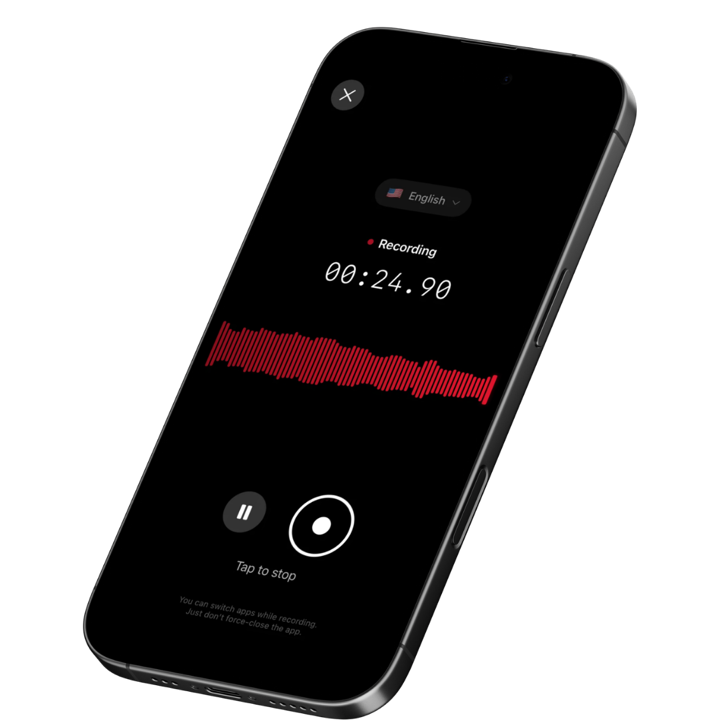
Speakwise turns your iPhone into an AI meeting assistant. One-tap or AirPods hands-free recording captures in-person conversations, then produces summaries, accurate transcripts in 100+ languages, and automatic action item extraction. Instead of holding seven things in mind simultaneously, you hold one: the conversation itself. The written record handles retention.
For anyone who manages a heavy meeting load - consultants, coaches, sales professionals, product managers, lawyers - offloading the memory work to an AI layer is the most direct way to stop working memory from becoming the bottleneck.
Download Speakwise on the App Store and recover the cognitive capacity that meeting-heavy days routinely consume.
Speakwise holds a 4.9-star App Store rating with thousands of installs.
Download Speakwise on the App Store

🎯 4.9★ App Store Rating | 📱 Built for iOS
