Communication Breakdown Statistics 2026
Used by recruiters, executives, consultants, and more.
Communication Breakdown Statistics 2026
U.S. companies collectively lose $1.2 trillion annually due to miscommunication and collaboration failures. 86% of employees blame poor communication for workplace failures. Workers spend up to 17 hours per week sorting out misunderstandings, while 44% say poor communication is the main reason projects fail. These 16 statistics reveal the true scale and cost of workplace communication breakdowns in 2026.
Communication is the operating system of every organization. When it breaks down, everything downstream suffers: projects stall, teams fracture, decisions get made without the right context, and talented people leave. The data shows this is not a soft problem. It is a trillion-dollar problem.
This post presents 16 statistics that quantify how communication breakdowns affect productivity, morale, and revenue across industries. If you manage a team, lead a company, or simply want to understand why so many workdays feel inefficient despite everyone's best efforts, these numbers tell the story.
1. U.S. companies lose $1.2 trillion annually due to miscommunication
The collective cost of workplace miscommunication in the United States reached $1.2 trillion per year. This figure accounts for wasted time, failed projects, duplicated work, and lost opportunities that result from unclear, incomplete, or missing communication across organizations. To put it in perspective, this exceeds the GDP of most countries. Poor communication is not just a workplace annoyance. It is one of the largest hidden drains on the U.S. economy.
Source: Talaera - The $1.2 Trillion Cost of Miscommunication
2. Poor communication costs businesses $9,284 per employee per year
At the individual level, miscommunication costs companies $9,284 per employee annually. For a company with 1,000 employees, that adds up to $9.3 million per year lost to misunderstandings, unclear instructions, and information gaps. The range varies from $3,640 to $37,440 per employee depending on salary level, with senior employees representing the highest cost of communication failure.
Source: Pumble - Workplace Communication Statistics 2026
3. 86% of employees blame poor communication for workplace failures
An overwhelming majority of employees point to ineffective communication as the root cause of workplace failures. 86% of employees and executives cite poor communication and lack of collaboration as the primary reasons for project setbacks and organizational dysfunction. This statistic is remarkable because it cuts across roles and seniority levels. Everyone sees the same problem.
Source: Chanty - Workplace Communication Statistics
4. Workers spend up to 17 hours per week sorting out miscommunication
Employees spend up to 17 hours per week dealing with the fallout of miscommunication. That is more than two full workdays every week spent clarifying, correcting, and resolving misunderstandings rather than doing productive work. Over a year, this translates to more than 850 hours per employee - the equivalent of 21 working weeks lost to communication failure.
Source: Pumble - Workplace Communication Statistics 2026
5. 44% of employees say poor communication causes project failures
Nearly half of all employees identify poor organizational communication as the main reason projects fail. Not budget shortfalls, not technical challenges, not timeline pressure. Communication. Projects derail when team members operate on different assumptions, when decisions are not communicated to those who need them, and when critical context gets lost between conversations.
Source: Notta - Workplace Communication Statistics 2025
6. 63% of employees cite wasted time as the worst consequence of poor communication
When asked about the worst effects of communication breakdown, 63% of employees point to wasted time. This includes time spent duplicating work because of unclear direction, waiting on information that was never properly conveyed, and redoing tasks that were misunderstood the first time. Time is the one resource that cannot be recovered, and poor communication is consuming it at an alarming rate.
Source: Pumble - Workplace Communication Statistics 2026
7. 51% of workers say poor communication increases their stress levels
More than half of all workers report that communication failures directly increase their workplace stress. The connection is intuitive but the scale is significant. When employees cannot get the information they need, when instructions are ambiguous, or when important updates arrive too late, the resulting uncertainty creates anxiety that compounds throughout the workday. Chronic communication stress contributes directly to burnout and turnover.
Source: Pumble - Workplace Communication Statistics 2026
8. 43% of employees experience burnout due to communication issues
Communication breakdowns are not just frustrating. They are exhausting. 43% of employees report experiencing burnout, fatigue, or mental exhaustion specifically caused by communication issues. This is separate from workload-driven burnout. People are burning out not from too much work, but from too much friction in how work gets communicated, coordinated, and clarified.
Source: Pumble - Workplace Communication Statistics 2026
9. 53% of communicators say inter-departmental communication is their biggest challenge
More than half of communication professionals identify cross-departmental communication as the greatest challenge they face in 2026. When teams operate in silos, information gets trapped within departments. Decisions made in one group affect another group that was never informed. The result is duplicated effort, conflicting priorities, and the constant feeling that the left hand does not know what the right hand is doing.
Source: Pumble - Workplace Communication Statistics 2026
10. 22% of workers have considered quitting due to miscommunication
Miscommunication does not just waste time. It drives people away. 22% of employees say that communication failures have led them to consider finding a new job. When workers feel consistently out of the loop, unclear about expectations, or unable to get answers to basic questions, they start looking for environments where communication works. For companies, every preventable resignation is an expensive consequence of a fixable problem.
Source: Notta - Workplace Communication Statistics 2025
11. The average office worker receives 117 emails per day
Email remains the primary communication channel for most workplaces. The average office worker receives approximately 117 emails per day and sends about 31. This volume creates an environment where important information gets buried, context is lost in thread chains, and workers spend hours triaging their inbox instead of doing meaningful work. Email overload is both a symptom and a cause of communication breakdown.
Source: Pumble - Workplace Communication Statistics 2026
12. 73% of AI users say the technology helps avoid miscommunication
On the solution side, 73% of employees who use AI tools report that these technologies help them avoid miscommunication. AI-powered transcription, summarization, and translation tools reduce the gap between what was said and what was understood. This statistic suggests that technology is finally catching up to the communication problem, offering tools that can bridge gaps in real time rather than after the damage is done.
Source: Pumble - Workplace Communication Statistics 2026
13. Companies with effective communication see 4.5x higher employee retention
Organizations with strong internal communication practices retain employees at 4.5 times the rate of companies with poor communication. This multiplier effect makes sense when you consider what good communication provides: clarity about expectations, visibility into decisions, a sense of being valued and informed, and reduced daily frustration. Communication is not a perk. It is a retention strategy.
Source: Kapable - Leadership Communication Statistics
14. 29% of employees say they lack clear, honest communication from leaders
Nearly a third of employees report that their leaders fail to provide clear and honest communication. This gap between leadership and frontline workers creates a trust deficit that ripples through the entire organization. When employees do not trust the information they receive, they fill the void with assumptions, rumors, and worst-case interpretations. Leadership communication clarity is foundational to organizational health.
Source: Staffbase - Employee Communication Impact Study 2025
15. Businesses with 100+ employees lose $450,000 yearly to miscommunication
For mid-sized companies with at least 100 employees, the annual cost of miscommunication reaches approximately $450,000. This figure captures both direct costs like wasted labor hours and indirect costs like lower morale, higher turnover, and missed business opportunities. For many companies this size, improving communication would deliver a better ROI than almost any other operational investment.
Source: High5 Test - Communication in the Workplace Statistics
16. 52% of employees do not know how to use AI tools effectively for communication
While AI shows promise for solving communication challenges, 52% of employees admit they do not know how to use AI tools effectively. This skills gap means that many organizations have access to solutions but lack the training to deploy them. The technology is available. The adoption is lagging. Closing this gap represents one of the most actionable opportunities for improving workplace communication in 2026.
Source: Pumble - Workplace Communication Statistics 2026
The Trillion-Dollar Silence: Why Communication Still Fails
These statistics expose a paradox. We have more communication tools than ever, yet communication quality has not improved. The average worker juggles email, Slack, Teams, Zoom, project management platforms, and text messages. Each tool adds a new channel. None of them guarantee that the right information reaches the right person at the right time.
The root issue is not a lack of talking. It is a lack of clarity. Decisions get discussed in meetings but never documented. Action items are assigned verbally but never confirmed in writing. Context is shared in real-time conversations that disappear the moment the meeting ends. The information exists. It just does not persist.
For organizations, the path forward requires treating communication as infrastructure, not culture. Just as companies invest in IT systems and physical workspaces, they need to invest in systems that capture, organize, and distribute the conversations that drive their business forward.
$1.2 trillion in annual losses proves that hoping for better communication is not a strategy. Building systems that make communication stick is the only reliable solution.---
Stop losing critical information in conversations
Most workplace communication breakdowns happen not because people fail to communicate, but because conversations disappear. A decision gets made in a meeting. Context gets shared on a call. Instructions get given in person. Then no one writes it down, and the information vanishes. Days later, someone asks, "Wait, what did we decide?" and the cycle starts over.
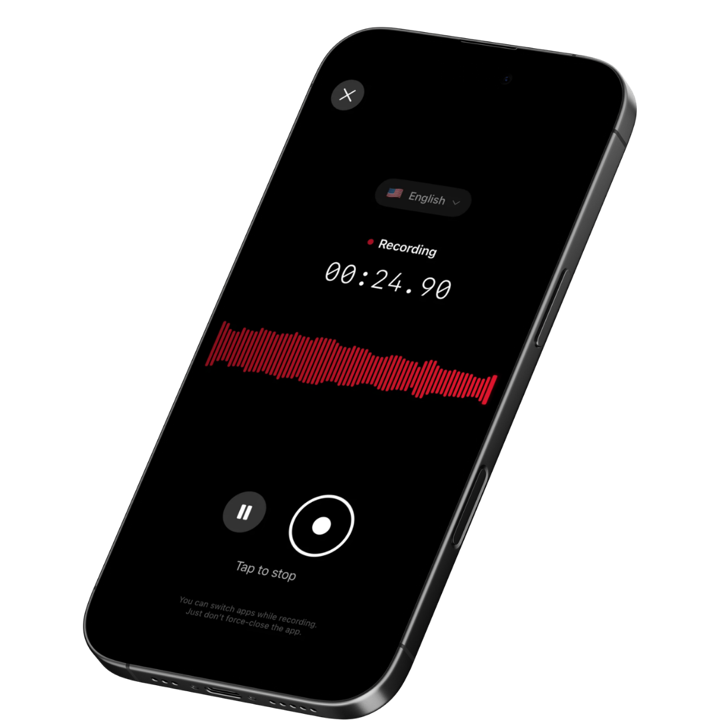
Voice capture solves this at the source. Record conversations with one tap, and let AI produce the transcript, summary, and action items automatically. No more lost context. No more conflicting recollections. No more 17 hours per week spent sorting out what was already said.
Download Speakwise from the App Store and turn every conversation into a clear, searchable record with AI transcription, automatic summaries, and one-click Notion sync.
Join 10,000+ professionals who have eliminated communication breakdowns by capturing what matters in real time.
Get Speakwise Free
4.9-star App Store Rating | iOS Optimized

🎯 4.9★ App Store Rating | 📱 Built for iOS
