Workplace Empathy Statistics 2026


Used by recruiters, executives, consultants, and more.
Workplace Empathy Statistics 2026
Unempathetic organizations risk $180 billion annually in attrition costs. Employees at these workplaces are 3x more likely to view their environment as toxic and 1.5x more likely to quit within six months. Meanwhile, 86% of workers say empathetic leadership generates loyalty, and companies with highly empathetic leaders see innovation rates jump from 13% to 61%. These 16 statistics reveal why empathy is the most undervalued business strategy.
Empathy at work is no longer a soft skill reserved for HR conversations. A decade of research - including Businessolver's 10-year longitudinal study of 26,000+ CEOs, HR professionals, and employees - has established empathy as a measurable driver of retention, productivity, and financial performance. Yet a persistent gap exists between what leaders think they deliver and what employees actually experience.
This post covers 16 statistics on workplace empathy in 2026. Whether you lead a team, design culture programs, or want to understand why your workplace feels the way it does, these numbers provide the evidence.
1. Unempathetic organizations risk $180 billion annually in attrition costs
Businessolver's 2025 State of Workplace Empathy report found that 27% of employees perceive their organization as unempathetic. These workers are 1.5x more likely to change jobs within six months. Scaled across the U.S. workforce, this attrition risk totals $180 billion per year. The cost includes recruiting, onboarding, training replacements, and lost institutional knowledge. Empathy is not a perk - it is a retention strategy with a nine-figure price tag.
Source: Businessolver - Empathy Could Save U.S. Companies $180 Billion
2. Employees at unempathetic workplaces are 3x more likely to call them toxic
The link between empathy and workplace toxicity is direct. Businessolver's research shows that employees at organizations they perceive as unempathetic report toxicity at three times the rate of those at empathetic companies. They also report 1.3x more mental health issues. Toxicity drives absenteeism, presenteeism, and turnover - all of which compound the financial cost of ignoring empathy in organizational culture.
Source: Businessolver - 2025 State of Workplace Empathy Report
3. 88% of workers say empathetic leadership increases efficiency
The EY Consulting study on workplace empathy found that employees overwhelmingly connect empathetic management with better business outcomes. Eighty-eight percent say it increases efficiency. Similar majorities cite improved creativity (87%), job satisfaction (87%), and idea sharing (86%). These are not aspirational numbers - they reflect how employees experience empathetic versus non-empathetic leadership in real work settings.
Source: EY - Employees Overwhelmingly Expect Empathy in the Workplace
4. 86% say empathetic leadership generates employee loyalty
Nearly nine out of ten workers in the EY survey report that empathetic leadership directly drives their loyalty to their employer. In a labor market where retention is a top priority, this number carries significant weight. Loyalty reduces turnover costs, improves team stability, and preserves organizational knowledge. Leaders who demonstrate genuine understanding of their employees' experiences build durable competitive advantages.
Source: PRNewswire - EY Consulting Survey on Empathetic Leadership
5. 61% of employees with empathetic leaders report being innovative
Catalyst's research found a dramatic innovation gap tied to leader empathy. Among employees with highly empathetic senior leaders, 61% reported being innovative at work. Among those with less empathetic leaders, only 13% said the same. This 48-percentage-point gap suggests that empathy does not just make people feel better - it creates the psychological safety needed for creative risk-taking and idea generation.
Source: Catalyst - Empathic Leaders Drive Employee Engagement and Innovation
6. 76% of employees with empathetic leaders report being engaged
Engagement and leader empathy are tightly correlated. Catalyst found that 76% of employees with highly empathetic senior leaders feel engaged, compared to just 32% among those with less empathetic leaders. This 44-point engagement gap mirrors Gallup's finding that 70% of engagement depends on the manager. The implication: training leaders in empathy may be one of the highest-leverage engagement interventions available.
Source: Catalyst - The Power of Empathy in Times of Crisis
7. 52% of employees believe their company's empathy efforts are dishonest
The empathy authenticity gap is widening. More than half of employees (52%) believe their organization's attempts at empathy are performative, up from 46% in 2021. Meanwhile, 47% report a lack of follow-through on company promises, compared to 42% two years prior. This skepticism erodes trust and makes genuine empathy efforts harder to implement. Workers can distinguish between empathy as a talking point and empathy as a practice.
Source: EY - Employees Overwhelmingly Expect Empathy in the Workplace
8. 92% of CEOs rate HR as empathetic, but only 68% of HR agrees
A 24-point perception gap exists between how CEOs view their HR teams and how HR professionals view themselves. Businessolver's 2025 report attributes this divide partly to return-to-office mandates, which HR often must enforce despite disagreeing with them. This disconnect illustrates a broader pattern: leaders consistently overestimate the empathy they deliver. The gap between leadership perception and employee reality is one of the biggest obstacles to building empathetic cultures.
Source: Businessolver - State of Workplace Empathy 2025
9. 85% of workers say empathetic leadership increases productivity
The productivity case for empathy is supported by strong employee consensus. EY's survey found that 85% of employees report higher productivity under empathetic leaders. The mechanism is straightforward: when workers feel understood and supported, they spend less mental energy on self-protection, office politics, and anxiety. That freed-up cognitive capacity goes directly toward the work itself. Empathy reduces friction in human systems.
Source: PRNewswire - EY Consulting Survey on Empathetic Leadership
10. 79% of workers agree empathetic leadership decreases turnover
Nearly eight in ten employees connect empathetic leadership directly to lower employee turnover. This aligns with the $180 billion attrition risk identified by Businessolver. When employees feel their leaders understand their challenges, they stay longer. The retention benefit compounds over time: experienced employees are more productive, mentor new hires more effectively, and maintain stronger client relationships.
Source: PRNewswire - EY Consulting Survey on Empathetic Leadership
11. 90% of U.S. workers say empathetic leadership leads to higher job satisfaction
Job satisfaction and empathetic leadership are nearly universally linked in employees' minds. Nine out of ten American workers draw this connection. High job satisfaction reduces absenteeism, lowers healthcare costs, and improves customer-facing interactions. For service-oriented industries, the link between employee satisfaction and customer satisfaction makes empathetic leadership a revenue driver, not just a morale booster.
Source: PRNewswire - EY Consulting Survey on Empathetic Leadership
12. Women from marginalized groups with empathetic leaders experience less burnout
Catalyst's research found that empathetic leadership disproportionately benefits employees from historically marginalized backgrounds. Women of color with empathetic senior leaders report significantly lower burnout rates. In a workforce increasingly focused on diversity and inclusion, empathy serves as a practical tool for creating equitable experiences. It is not a replacement for structural change, but it is a necessary complement.
Source: Catalyst - The Power of Empathy in Times of Crisis
13. 83% of workers say empathy increases company revenue
The business case extends to the top line. EY's research shows that 83% of employees believe empathetic leadership contributes to higher revenue. While this is a perception metric, it aligns with Gallup data showing that highly engaged teams - which correlate with empathetic leadership - achieve 23% higher profitability. Empathy creates the conditions for engagement, which drives the financial performance.
Source: EY - Employees Overwhelmingly Expect Empathy in the Workplace
14. 87% of workers say empathetic leadership boosts creativity
Creativity requires psychological safety - the confidence to propose ideas that might fail. EY's survey found that 87% of employees link empathetic leadership to increased creativity. When leaders demonstrate understanding and compassion, employees feel safe taking risks. In knowledge-economy organizations where innovation drives growth, this creative dividend makes empathy training one of the most efficient investments available.
Source: EY - Employees Overwhelmingly Expect Empathy in the Workplace
15. 84% of employers plan to expand bereavement support in 2026
Empathy's 2026 Workplace Benefits Report, conducted in partnership with Censuswide, found that 84% of employers plan to expand bereavement-related support this year. Meanwhile, 95% of employees say bereavement benefits are valuable. This specific data point illustrates a broader trend: organizations are moving beyond generic wellness programs toward targeted support for life events that require genuine empathy and flexibility.
Source: Empathy - 2026 Workplace Benefits Report
16. Empathetic organizations see practical empathy drive 5x stronger culture outcomes
O.C. Tanner's 2024 Global Culture Report found that organizations practicing "practical empathy" - empathy expressed through specific actions and policies rather than words alone - see culture outcomes five times stronger than organizations relying on stated empathy without follow-through. This confirms what employees already suspect: actions matter more than intentions. Empathy must be embedded in processes, not just proclaimed in values statements.
Source: O.C. Tanner - 2024 Global Culture Report: Practical Empathy
The $180 Billion Empathy Gap
Ten years of Businessolver data, combined with research from EY, Catalyst, and Gallup, tell a remarkably consistent story. Empathetic leadership drives every outcome organizations care about: retention, engagement, innovation, productivity, and revenue. The evidence is no longer debatable.
Yet the authenticity gap is growing. More than half of employees see their company's empathy efforts as performative. The gap between CEO perception and employee reality remains wide. This suggests that many organizations understand the business case for empathy but struggle to implement it authentically.
The path forward requires structural change, not just leadership training. Empathy must be embedded in policies, feedback systems, workload management, and daily interactions. When 27% of employees call their workplace unempathetic and that perception costs $180 billion, the opportunity for organizations that get this right is enormous.
Empathy is not a soft skill. It is a $180 billion business strategy that most organizations are leaving on the table.---
Lead with empathy by listening first
Empathetic leadership starts with listening. Not just in formal one-on-ones, but in the everyday moments where people share what matters to them. The challenge is that most workdays leave no room for these conversations. Meetings are packed. Emails pile up. The human connection gets lost in the operational noise.
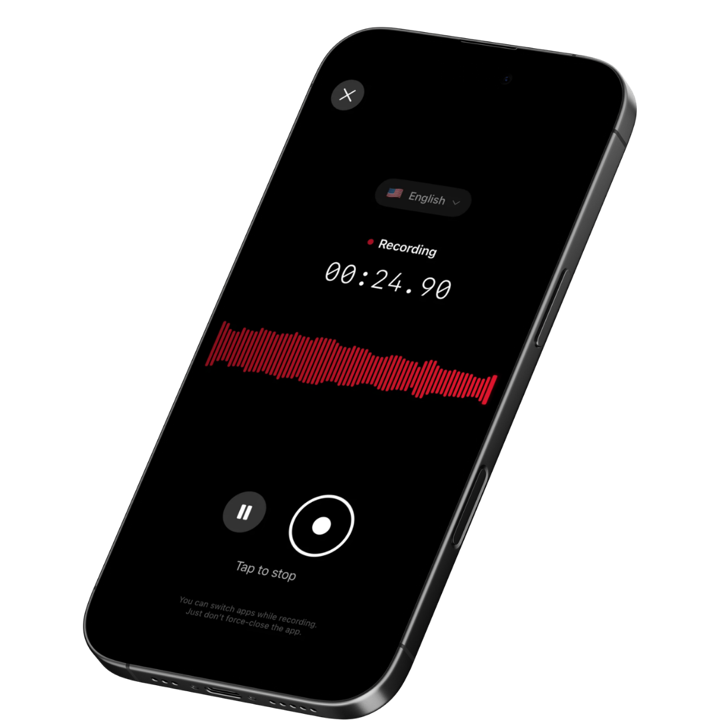
Voice notes create space for reflection. A manager can record a quick update that acknowledges a team member's challenge. An employee can share feedback without scheduling a meeting. Speaking is more personal than typing - tone carries empathy that text cannot.
Download Speakwise from the App Store and bring empathy back to communication with voice-first notes, AI transcription, and seamless Notion sync.
Join 10,000+ professionals who lead with their voice, not just their keyboards.
Get Speakwise Free
4.9-star App Store Rating | iOS Optimized

🎯 4.9★ App Store Rating | 📱 Built for iOS
