Analysis Paralysis Statistics: 18 Reasons Decisions Stall


Used by recruiters, executives, consultants, and more.
Analysis Paralysis Statistics: 18 Reasons Decisions Stall
Analysis paralysis - the state in which too much information or too many options prevents any decision from being made - is one of the most costly and least-measured forms of organizational dysfunction. A global McKinsey survey found that only 20% of respondents felt their organizations excelled at decision-making, and 61% admitted that the majority of their decision-making time was used ineffectively. The economic consequences are concrete: McKinsey estimates that a typical Fortune 500 company wastes approximately 530,000 employee days - equivalent to $250 million in labor costs - every year on slow or ineffective decision processes. The landmark jam study showed that reducing options from 24 to 6 increased purchase conversion tenfold. And 72% of business leaders report that the sheer volume of available data has prevented them from making any decision at all.
Analysis paralysis is not a personality flaw or a cultural quirk. It is a predictable response to specific environmental conditions: too many options, too much information, too little clarity about decision criteria, and cognitive resources already depleted by the effort of processing everything that came before. Psychologist Barry Schwartz's Paradox of Choice, first published in 2004, established the theoretical framework. Decades of subsequent research has confirmed the mechanism across consumer behavior, organizational decision-making, medical treatment choice, and financial planning.
This post covers 18 statistics on analysis paralysis - from the neurological basis of choice overload to the organizational cost of decision delay - drawing on peer-reviewed research, major consulting firm surveys, and behavioral economics studies.
1. Offering 24 jam flavors produced a 3% purchase rate - offering 6 produced 30%
The jam study, conducted by psychologists Sheena Iyengar and Mark Lepper at a gourmet food market, is the most cited demonstration of choice overload in consumer behavior research. A tasting booth displaying 24 different jam varieties attracted more initial attention than a booth displaying 6 varieties - but only 3% of visitors to the large display went on to make a purchase, compared to 30% of visitors to the smaller display. The tenfold difference in conversion despite similar initial interest confirms that choice abundance impairs decision completion rather than improving it. Iyengar and Lepper replicated the effect in subsequent studies including chocolate box selection and retirement savings plan enrollment, confirming it is not a jam-specific phenomenon.
Source: Columbia Business School - When Choice is Demotivating
2. McKinsey found only 20% of organizations excel at decision-making - 61% waste most of their decision time
A global McKinsey survey on organizational decision-making found that only 20% of respondents described their organizations as truly excellent decision-makers, while 61% admitted that the majority of their decision-making time was used ineffectively. Managers reported spending approximately 37% of their time making decisions, yet over half of that time was described as wasted - consumed by unnecessary deliberation, redundant approvals, unclear ownership, and the gathering of additional data that never changed the eventual outcome. Analysis paralysis, in organizational terms, is often not the failure of any individual decision-maker but a systemic property of processes that escalate decisions, multiply stakeholders, and reward caution over speed.
Source: McKinsey - Untangling your organization's decision making
3. Fortune 500 companies waste 530,000 employee days per year on poor decision processes
McKinsey's analysis of decision-making in large organizations estimated that a typical Fortune 500 company loses approximately 530,000 employee days annually - translating to roughly $250 million in labor costs - on slow, ineffective, or paralyzed decision processes. This figure encompasses decisions that required multiple rounds of escalation, decisions delayed pending additional information that was never acted upon, and decisions never made at all due to inability to reach consensus or clarity. The cost is invisible in standard financial reporting because it is buried in labor hours rather than isolated as a line item. Organizations that measure decision velocity alongside decision quality consistently find that faster decision processes also produce higher quality outcomes.
Source: McKinsey - Decision Making in Organizations
4. 72% of business leaders say data volume has prevented them from making decisions
A major business intelligence survey found that while 97% of business leaders say they want data to help them make better and faster decisions, 72% admitted that the sheer volume of available data has at some point prevented them from making any decision at all. More strikingly, 91% of business leaders believe the growing number of data sources has limited their organization's success. This is the organizational manifestation of analysis paralysis: more data was supposed to reduce uncertainty, but beyond a certain threshold it amplifies uncertainty by surfacing contradictory signals, expanding the range of plausible interpretations, and multiplying the number of factors that could potentially inform each decision.
Source: ILRO Lee - The Hidden Cost of Analysis Paralysis
5. Maximizers - who seek the best possible option - report lower satisfaction than satisficers
Barry Schwartz's Paradox of Choice research identified two decision-making personality types: maximizers, who insist on finding the optimal option across all available alternatives, and satisficers, who choose the first option that meets their core requirements. Counterintuitively, maximizers make objectively better choices by conventional metrics but report significantly lower satisfaction with those choices. Maximizers spend more time deliberating, experience more regret after deciding, and second-guess their choices more frequently. In professional settings, maximizing tendencies - the desire to gather all available information before committing - are one of the primary individual-level drivers of analysis paralysis, even when the decision involved is not high-stakes.
Source: The Decision Lab - The Paradox of Choice
6. A six-month product launch delay can reduce lifetime revenue by up to 33%
McKinsey research on the business cost of decision delay found that a six-month delay in launching a new product reduces its total lifetime revenue by up to 33%. This figure illustrates why organizational analysis paralysis carries compounding costs that dwarf the cost of making an imperfect decision quickly. In competitive markets, the value of speed is asymmetric: the cost of a wrong decision is bounded by the cost of correction, while the cost of delay is unbounded - competitors advance, windows close, and market conditions shift. The research consistently shows that organizations that make faster decisions also tend to have higher decision quality, because speed forces clarity about decision criteria rather than endless option expansion.
Source: McKinsey - The Business Value of Design
7. 35,000 daily decisions create fertile ground for analysis paralysis and decision fatigue
Research on decision frequency estimates that the average person makes approximately 35,000 decisions per day, ranging from micro-choices (what to focus on next, which message to reply to first) to complex professional judgments. Each decision consumes a finite amount of cognitive resource - the prefrontal cortex does not distinguish between small and large decisions in terms of metabolic demand. By the time a knowledge worker reaches the high-stakes decisions of their afternoon, they have already made thousands of smaller decisions that have depleted the same cognitive reserves needed for deliberate, high-quality judgment. Analysis paralysis in the afternoon or late in a long project is often decision fatigue wearing the mask of due diligence.
Source: The Decision Lab - Choice Overload Bias
8. Decision fatigue causes individuals to prefer "no change" - defaulting to the status quo
Research on decision fatigue, synthesized in a conceptual analysis published in PMC, found that fatigued decision-makers systematically prefer status quo options - whatever the default is - over alternatives that require active choice and evaluation. This behavioral signature helps explain why cognitively depleted teams often fail to make decisions not because they disagree, but because the cognitive cost of evaluating alternatives exceeds their remaining capacity. The result looks like consensus or deliberation when it is actually depletion. Organizations that schedule their most complex decisions at the end of long days or at the end of meeting-heavy agendas will systematically produce more conservative, lower-quality, and less-considered decisions than those that protect cognitive capacity for high-stakes choices.
Source: PMC - Decision Fatigue: A Conceptual Analysis
9. 43% of employees report that information overload directly delays important decisions
A survey of knowledge workers found that 43% say information overload directly contributes to delays in important decisions, and respondents describe feeling unable to identify the right data from the available flood. This is analysis paralysis at the team and organizational level: not the absence of information, but the presence of too much unfiltered information to reach a clear conclusion from. Our decision fatigue statistics show that the cognitive cost of sorting relevant from irrelevant inputs compounds with decision frequency, making high-information environments particularly prone to decision stalling later in the day and later in complex projects.
Source: Coveo - How AI Can Mitigate Information Overload in the Workplace
10. Over 73% of Fortune 500 companies use less than 10% of their available data for decisions
Research on data utilization in large organizations found that over 73% of Fortune 500 companies use less than 10% of their available data when making business decisions. The implication is paradoxical: organizations are collecting and storing vastly more data than they can meaningfully use, and the gap between available data and usable data is itself a source of cognitive overload. Decision-makers who know that more data exists but have not reviewed it feel the pull of incompleteness - the sense that the right answer is somewhere in the unprocessed remainder. This feeling drives additional data gathering and review cycles that delay decisions without improving them.
Source: Analytics Week - The Paradox of Choice in Data Analytics
11. Analysis paralysis produces a four-phase psychological process leading to decisional shutdown
Research on the phenomenology of decision paralysis, including studies published in the Risk journal at MDPI, identified a four-phase process through which analysis paralysis develops: decisional nonchalance (initial engagement with the decision without urgency), decisional hesitation (recognition of complexity and competing options), partial disengagement (withdrawal from active deliberation while maintaining involvement), and full decisional paralysis (inability to progress toward a choice). This progression is not instantaneous - it develops over time as the accumulation of new information, stakeholder concerns, and anticipated regret exceeds the decision-maker's capacity to integrate everything into a workable conclusion.
Source: MDPI Risk - Negative Emotions and Decision-Making Paralysis Among Individual Investors
12. Choice overload effects are strongest under time pressure and high-stakes conditions
A meta-analysis by Scheibehenne and colleagues examining choice overload effects across multiple studies found that choice overload - the reduction in decision quality and commitment produced by excessive options - is strongest under specific conditions: unfamiliarity with options, time pressure, high-stakes decisions, and unclear preferences. These conditions describe the majority of complex professional decisions. A manager choosing between three vendors with comparable specifications, under a deadline, without a clear prior preference, in a domain they are not expert in, faces exactly the conditions that produce maximum choice overload. The practical implication: reducing the option set is not a compromise - it is an evidence-based strategy for improving decision quality.
Source: The Decision Lab - Choice Overload Bias
13. Fear of regret is a primary driver of decision avoidance - more than uncertainty itself
Behavioral economics research on decision avoidance consistently finds that anticipated regret - the imagined experience of having chosen the wrong option - is a stronger driver of decision paralysis than uncertainty about which option is best. Decision-makers who can clearly rank options but fear future regret over the unchosen alternative will still defer or avoid the decision. This mechanism explains why providing more information often does not resolve analysis paralysis: more information may clarify which option is better but simultaneously makes the unchosen alternatives more salient, increasing the anticipated regret from not choosing them. The solution to regret-driven paralysis is not more data but clearer decision criteria that bound what counts as a good outcome.
Source: PsychHub - Decision Anxiety: When Fear of Regret Freezes You
14. Judicial decision quality drops from 65% favorable to near 0% as cognitive resources deplete
A widely cited 2011 study published in PNAS examined 1,112 parole board decisions by Israeli judges across 50 decision sessions. The percentage of favorable (parole-granting) rulings dropped from approximately 65% at the start of each session to near zero by session's end, then recovered to 65% after each food and rest break. While subsequent analyses have raised methodological questions about the causal interpretation, the study remains important evidence that decision quality is affected by the timing and cognitive resource state of the decision-maker. Whether the driver is blood glucose, cognitive fatigue, or session-length-correlated case selection, the practical implication is clear: high-stakes decisions made under conditions of cognitive depletion are structurally different from the same decisions made under conditions of restored capacity.
Source: PNAS - Extraneous factors in judicial decisions
15. Organizations making faster decisions also have higher decision quality and better financial results
McKinsey's research on organizational decision velocity found that companies that make faster decisions also tend to produce higher quality decisions and show better financial outcomes. This counterintuitive finding - that speed and quality improve together - reflects a fundamental feature of analysis paralysis: the additional time spent in extended deliberation rarely produces better decisions because the additional analysis often generates more options and considerations rather than more clarity. Organizations with clear decision criteria, defined ownership, and time-bounded deliberation processes avoid the option expansion that slows decisions without improving them. Speed is not a compromise of rigor; in most organizational decision contexts, it is a precondition for it.
Source: McKinsey - Decision Making in the Age of Urgency
16. Four out of five workers experience "productivity anxiety" - the feeling there is always more to do
A Workhuman survey of 1,000 full-time employees found that 80% experience productivity anxiety - the persistent belief that more should be done, more data gathered, more preparation completed. This is the internal experience associated with analysis paralysis: the inability to reach a point of sufficient readiness to commit. Productivity anxiety drives the same behavioral pattern as analysis paralysis: more preparation, more review, more checking - and less decisive action. The survey also found that this anxiety was associated with lower reported job satisfaction, higher stress, and lower confidence in the quality of completed work, suggesting that the anxiety loop is self-reinforcing rather than self-correcting.
Source: Workhuman - Productivity Anxiety Research
17. Decision-fatigued individuals are more avoidant and less willing to plan
Research on decision fatigue, including experimental studies summarized in the PMC conceptual analysis, found that decision-fatigued individuals show two distinct behavioral signatures: increased avoidance (deferring or refusing to make decisions) and reduced willingness to plan. Planning requires exactly the cognitive resources that decision fatigue depletes - working memory, future-orientation, and the sustained prefrontal engagement needed to model outcomes. When planning capacity diminishes, the information available for future decisions is not organized or prioritized, creating a vicious cycle: fatigue reduces planning, poor planning produces more options and more uncertainty, and more options and more uncertainty intensify the paralysis.
Source: PMC - Decision Fatigue: A Conceptual Analysis
18. Clear external capture of meeting decisions reduces post-meeting analysis paralysis
Research on cognitive offloading and decision follow-through confirms that externalizing decisions - moving them from working memory to reliable external records immediately after they are made - reduces the ambiguity that generates post-meeting second-guessing and re-deliberation. Our note-taking productivity statistics document that when decisions and rationale are not captured reliably after meetings, teams frequently re-open closed decisions, re-debate agreed points, and cycle through options that were already evaluated and set aside. This is organizational analysis paralysis at the meeting level: the cost of not capturing decisions is paid in the repeated deliberation of those same decisions in subsequent meetings.
Source: ScienceDirect - Cognitive offloading is value-based decision making
What These Numbers Tell Us
The statistics on analysis paralysis reveal a problem with two distinct layers that are often conflated. At the individual level, analysis paralysis is a cognitive phenomenon: choice overload exceeds working memory capacity, anticipated regret activates avoidance responses, and decision fatigue depletes the prefrontal resources needed to evaluate trade-offs. At the organizational level, analysis paralysis is a structural phenomenon: unclear decision ownership multiplies stakeholders, poor information filtering multiplies inputs, and the absence of time boundaries multiplies deliberation cycles.
Both layers are costly, but the organizational layer is larger and more tractable. McKinsey's estimate of 530,000 wasted employee days per year in a single Fortune 500 company is not primarily a story about individual decision-makers lacking courage or clarity. It is a story about processes that escalate decisions beyond the appropriate level, structures that distribute accountability without concentrating authority, and cultures that reward caution over speed without measuring the cost of delay.
The research also reveals a counterintuitive prescription: reducing the number of available options and the volume of considered data tends to improve both decision speed and decision quality. The manager who limits a vendor shortlist to three candidates, the product team that sets a 48-hour decision window, and the meeting facilitator who closes each agenda item with a named owner are all applying the same principle - bounded deliberation produces clearer decisions than unbounded analysis.
Analysis paralysis is not a failure of intelligence or diligence - it is the predictable outcome of processes that expand options and information without providing the clarity needed to act on them.
How Speakwise Reduces Decision Ambiguity After Meetings
One of the most persistent sources of organizational analysis paralysis is meeting output that is never reliably captured. When decisions are made in conversation but not recorded, every participant leaves the meeting with a slightly different memory of what was decided - and the discrepancies surface later as re-opened debates, conflicting actions, and repeated deliberation of closed questions.
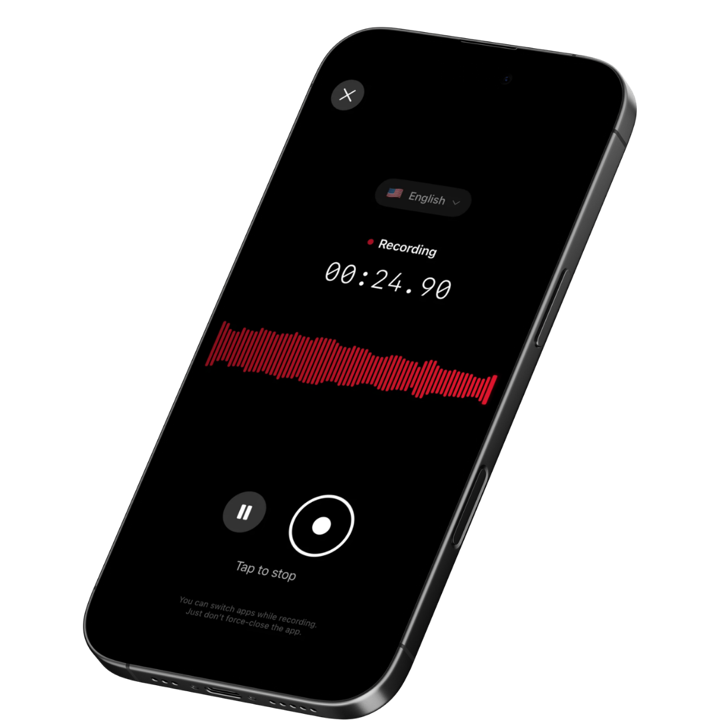
Speakwise turns your iPhone into an AI meeting assistant. One-tap or AirPods hands-free recording captures in-person conversations, then produces summaries, accurate transcripts in 100+ languages, and automatic action item extraction. When every meeting produces a structured record of decisions made and owners assigned, the ambiguity that triggers post-meeting analysis paralysis disappears. Native Notion sync ensures the record lives where the work happens, not in a separate notes app that gets checked inconsistently.
Download Speakwise on the App Store and close the gap between decisions made and decisions remembered.
Speakwise holds a 4.9-star App Store rating with thousands of installs.
Download Speakwise on the App Store

🎯 4.9★ App Store Rating | 📱 Built for iOS
