Data Overload Statistics 2026


Used by recruiters, executives, consultants, and more.
Data Overload Statistics 2026
80% of global workers experience information overload, the world creates over 403 million terabytes of data every day, and information overload costs the U.S. economy up to $1 trillion annually. Workers receive 275 interruptions per day, spend 3.6 hours daily searching for information, and 76% report that overload causes daily stress. These 16 statistics reveal why data overload has become the defining productivity crisis of the digital workplace.
The digital workplace promised efficiency. It delivered volume. Every tool, platform, and notification was designed to keep workers informed. Together, they created an environment where the average professional is buried under more data, messages, and alerts than any human can meaningfully process.
This post covers 16 statistics that quantify the data overload problem in 2026. From the raw volume of daily data creation to the cognitive, financial, and health impacts on workers, these numbers show that information overload is not just an annoyance. It is a systemic crisis that undermines everything organizations invest in.
1. 80% of workers experience information overload
Information overload is not a niche complaint. It is a majority experience. 80% of global workers report experiencing information overload, driven by constant information flow, too many apps to check daily, and the expectation that they remain reachable at all times. This figure has climbed from 60% in 2020, showing that the problem is accelerating rather than stabilizing. For four out of five workers, the volume of information they receive actively impairs their ability to do their jobs.
Source: OpenText - Unlock the Information Advantage
2. The world creates 403 million terabytes of data every day
The raw volume of data being generated is almost incomprehensible. People create over 403 million terabytes of data globally every single day. Total data volume is expected to reach 181 zettabytes by the end of 2025. To put this in perspective, a single zettabyte equals one billion terabytes. The data being created each day far exceeds humanity's ability to process, organize, or even acknowledge it. This is the flood against which every worker is swimming.
Source: OpenText - Unlock the Information Advantage
3. Information overload costs the U.S. economy up to $1 trillion annually
The economic toll of data overload is staggering. Economists estimate that information overload costs the U.S. economy up to $1 trillion each year in lower productivity and reduced innovation. This trillion-dollar figure captures the time wasted processing irrelevant information, the decisions delayed by analysis paralysis, the innovation lost to cognitive fatigue, and the talent burned out by relentless digital noise.
Source: LumApps - Managing Information Overload
4. Workers receive an average of 275 interruptions per day
The modern worker faces a constant barrage of digital pings. Each individual in a company receives an average of one notification ping every two minutes, which translates to approximately 275 interruptions per day. These interruptions come from email, Slack, Teams, project management tools, calendar alerts, and phone notifications. Each one breaks concentration. At 275 daily interruptions, sustained focus becomes nearly impossible for most professionals.
Source: theEMPLOYEEapp - Information Overloading in the Digital Age
5. Workers spend 3.6 hours daily searching for information
Nearly half the workday is consumed by the search for relevant information. Workers spend an average of 3.6 hours daily sifting through data and documents to find the information needed to do their jobs. That is 18 hours per week, or roughly 45% of a 40-hour workweek, spent not working but searching for the inputs needed to work. The irony is sharp: the more data an organization produces, the harder it becomes to find the data that matters.
Source: LumApps - Managing Information Overload
6. 76% of the global workforce says overload causes daily stress and anxiety
Data overload is a health issue, not just a productivity issue. 76% of the global workforce claims that information overload causes daily stress and anxiety. The constant pressure to stay on top of messages, updates, and notifications creates a chronic low-grade stress that does not end when the workday does. Over time, this stress contributes to burnout, disengagement, and physical health problems that extend well beyond the office.
Source: theEMPLOYEEapp - Information Overloading in the Digital Age
7. 27% of workers access 11 or more tools and apps daily
The tool sprawl contributing to data overload is measurable. More than a quarter (27%) of workers say they must access eleven or more accounts, resources, tools, and apps on a daily basis. Each additional tool adds its own stream of notifications, updates, and information to process. When workers must monitor eleven different platforms just to do their job, information overload is not a risk. It is a certainty.
Source: OpenText - Unlock the Information Advantage
8. Context switching between digital platforms reduces productivity by up to 40%
The productivity cost of bouncing between data sources is severe. Research shows that constant task-switching between digital platforms can reduce productivity by up to 40% and increase mental fatigue. This 40% productivity penalty means that for every hour spent switching between apps and tools, only 36 minutes of productive output is generated. The remaining 24 minutes are lost to cognitive overhead - loading context, reorienting attention, and recovering focus.
Source: Coveo - The Risks of Information Overload
9. 60% of people experience high stress and burnout from digital communication fatigue
Digital communication channels are a primary source of overload. 60% of people experience high stress and burnout specifically from online communication fatigue. This is not general work stress. It is stress directly caused by the volume and velocity of digital communication. Email, chat, video calls, and notifications create a continuous demand for attention that many workers cannot sustain without experiencing mental and emotional exhaustion.
Source: Brosix - Digital Communication Overload Statistics
10. Knowledge workers spend 88% of their workweek communicating
The proportion of work time consumed by communication has reached extreme levels. Knowledge workers report spending 88% of their workweek communicating across multiple channels. That leaves just 12% of the workweek for focused, uninterrupted work. When nearly nine out of ten working hours go to processing and producing information rather than acting on it, the data overload problem becomes clear: workers are drowning in communication while starving for productive time.
Source: Brosix - Digital Communication Overload Statistics
11. 65% of professionals feel mentally drained from managing multiple channels
The cognitive toll of channel management is significant. 65% of professionals report feeling mentally drained from managing multiple information channels simultaneously. This fatigue is not from the work itself. It is from the overhead of monitoring, triaging, and responding to information across multiple platforms. The mental energy consumed by managing channels is mental energy not available for creative thinking, strategic planning, or deep problem-solving.
Source: Brosix - Digital Communication Overload Statistics
12. Decision times increase 25-40% when 5+ dashboards update within an hour
Data overload directly impairs decision-making. Research shows that decision times rise by 25-40% when five or more dashboards update within 60 minutes. When decision-makers receive too many data inputs simultaneously, they struggle to identify what matters, weigh competing signals, and commit to a course of action. More data does not always mean better decisions. Past a threshold, it means slower ones.
Source: Garadesud - The Psychology of Information Overload
13. 42% of executives report experiencing daily cognitive overload
The data overload problem reaches every level of the organization, including the top. 42% of executives report experiencing daily cognitive overload. These are the people responsible for the most consequential decisions in their organizations, and nearly half of them are making those decisions while cognitively overtaxed. When leaders operate in a state of overload, strategic thinking suffers and reactive decision-making increases.
Source: Brosix - Digital Communication Overload Statistics
14. Human working memory is limited to approximately 7 plus or minus 2 units
The data overload crisis has a neurological basis. Human working memory is limited to approximately seven (plus or minus two) units of information at any given time. Information overload occurs when the amount of information exceeds this cognitive capacity. The modern workplace routinely demands that workers hold far more than nine items in active memory simultaneously - multiple conversations, competing priorities, and streams of notifications all competing for a fixed cognitive resource.
Source: PMC - Dealing with Information Overload: A Comprehensive Review
15. Managing multiple channels drains $900 billion annually from the U.S. economy
The aggregate economic cost of channel management is enormous. Managing multiple communication channels drains $900 billion annually from the U.S. economy through reduced innovation and productivity. This figure represents the lost potential of a workforce that spends its cognitive capacity managing information flows rather than creating value. The cost is largely invisible because it shows up as slower work, not as a line item on any budget.
Source: Brosix - Digital Communication Overload Statistics
16. 35% of U.S. workers say overload hurts their work performance
The performance impact is self-reported and significant. 35% of U.S. workers say information overload has a detrimental effect on their work performance, and 30% attribute a decline in overall job satisfaction to overload. These are not marginal complaints. When over a third of the workforce says data overload directly hurts their output, it represents a systemic failure that no productivity tool or time management technique can solve on its own.
Source: LumApps - Managing Information Overload
The Information Paradox: More Data, Less Clarity
The statistics reveal a workplace trapped in an information paradox. Organizations invest in data, analytics, dashboards, and communication platforms because information drives better decisions. But the volume has crossed a threshold where more information produces less clarity, not more. When workers spend 3.6 hours daily searching for data and 88% of the workweek communicating, the system is not functioning. It is consuming itself.
The root cause is not too much information. It is too many unfiltered sources. Every tool, platform, and notification stream adds to the cognitive load without helping workers prioritize what actually matters. The solution is not more data. It is better data curation - systems that filter, summarize, and surface the right information at the right time.
The organizations that will thrive in 2026 are not the ones that generate the most data. They are the ones that build the best systems for extracting signal from noise. That requires a fundamental shift from "more information is always better" to "the right information at the right time is everything."
In a world creating 403 million terabytes per day, the competitive advantage does not belong to those who collect the most data. It belongs to those who can find the right insight, at the right moment, without drowning in everything else.---
Cut through the noise with voice capture and AI summaries
The data overload problem is, at its core, a capture and organization problem. Most information overload comes from trying to process everything manually - reading every message, attending every meeting, monitoring every channel. The result is a workday spent triaging instead of thinking.
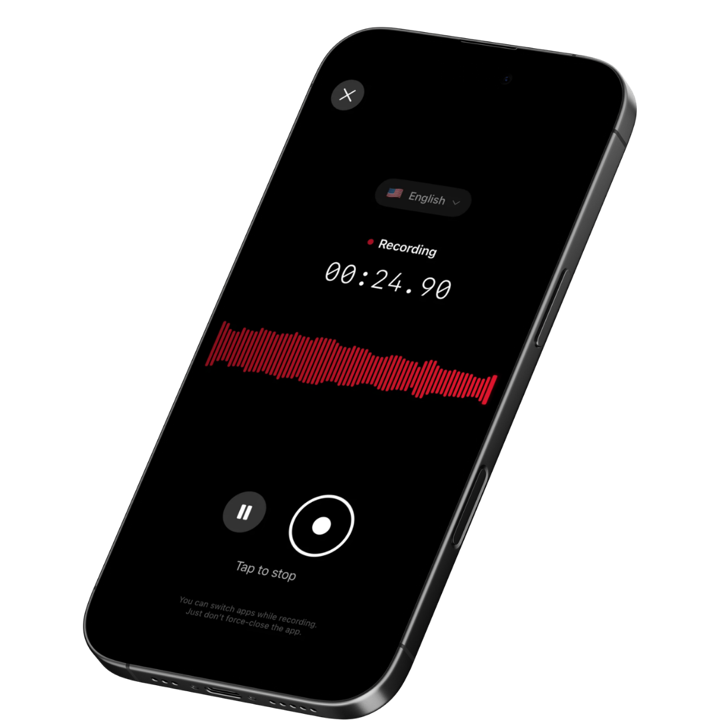
Voice capture offers a different approach. Instead of typing notes, monitoring chat, and managing documents across platforms, you speak your thoughts and let AI organize them. SpeakWise records your voice, transcribes it with 95%+ accuracy, and generates AI summaries that extract only what matters. Everything syncs to Notion - one organized, searchable place instead of eleven different apps.
Download SpeakWise from the App Store and replace information overload with organized, AI-curated knowledge that puts signal over noise.
Join 10,000+ professionals who use SpeakWise to capture what matters, ignore what does not, and keep their best thinking organized.
Get SpeakWise Free
4.9-star App Store Rating | iOS Optimized

🎯 4.9★ App Store Rating | 📱 Built for iOS
