Flow State Statistics: 21 Insights on Deep Focus in 2026
Used by recruiters, executives, consultants, and more.
Flow State Statistics: 21 Insights on Deep Focus in 2026
Workers in flow state are 5x more productive than in their normal working state, according to McKinsey research. Yet 71% of workers say they rarely or never experience flow during a typical workday. Reaching flow takes an average of 15-20 uninterrupted minutes of preparation, but the average knowledge worker is interrupted every 11 minutes. Once lost, flow takes more than 20 minutes to reestablish. These 21 statistics map the gap between the conditions flow requires and the conditions most workplaces actually provide.
Flow state - the condition of complete absorption in a challenging task where performance peaks and time distorts - has been studied by researchers since Mihaly Csikszentmihalyi first systematized the concept in the 1990s. Decades of subsequent research have confirmed that flow produces the highest levels of creative output, problem-solving quality, and intrinsic satisfaction available in a work context. It is also reliably suppressed by the structural features of most modern workplaces.
This post compiles 21 data points drawn from psychology research, organizational surveys, neuroscience studies, and workforce analytics. The statistics cover how often workers reach flow, what conditions enable it, what blocks it, and what the organizational cost of flow deprivation actually looks like. The data is particularly relevant for knowledge workers in roles that depend on sustained concentration: consultants, writers, programmers, analysts, lawyers, and strategists.
1. Workers in flow are 5x more productive than in their normal state
McKinsey's research into flow state in the workplace, which involved surveys of over 5,000 executives and workers, found that employees in a flow state are five times more productive than in their normal working mode. This is the most cited figure in workplace flow research, and it holds across professional categories. The 5x multiplier does not mean workers accomplish five tasks instead of one; it means the quality, speed, and depth of their output across a given task window are five times higher than their typical output. Organizations that protect flow conditions for even a portion of the workday can generate substantial performance gains.
Source: McKinsey Quarterly - Increasing the Meaning Quotient at Work
2. 71% of workers rarely or never experience flow during a typical workday
A survey by Workfront (now Adobe Workfront) of over 1,000 U.S. workers found that 71% say they rarely or never experience a flow state during a typical workday. Only 19% report experiencing flow daily. This gap between flow's documented benefits and its actual prevalence suggests that most organizations are operating far below their cognitive performance potential. Workers who understand flow recognize the state when it occurs but struggle to create the conditions for it reliably within current work structures.
Source: Workfront State of Work Report
3. Flow state requires 15-20 uninterrupted minutes to enter
Neuroscience and psychology research on flow onset consistently identifies a minimum preparation window of 15-20 uninterrupted minutes before the brain can reach the state of deep absorption characteristic of flow. This onset period involves the prefrontal cortex gradually releasing its self-monitoring function, allowing attentional resources to fully concentrate on the task. Any interruption before this threshold resets the clock. Given that the average knowledge worker is interrupted or context-switched every 11 minutes, most workers never complete the runway needed to get airborne. Our breakdown of deep work statistics covers the related research on structured deep work blocks in detail.
Source: Csikszentmihalyi, M. - Flow: The Psychology of Optimal Experience (1990), Harper & Row
4. Once disrupted, flow takes more than 20 minutes to reestablish
Research by Dr. Gloria Mark at the University of California, Irvine, found that after a disruption, it takes an average of 23 minutes and 15 seconds for a knowledge worker to return to their task at the same cognitive depth. For flow states specifically, where deep absorption takes additional time to rebuild, recovery is even slower. This asymmetry - seconds to disrupt, 20+ minutes to restore - means that even brief interruptions carry enormous cognitive costs. A single unscheduled Slack message or meeting alert can eliminate 30+ minutes of potential flow time.
Source: UC Irvine - Gloria Mark on Interruption Recovery
5. Flow state significantly activates the brain's dopaminergic reward system
Neuroscience research using fMRI imaging has identified that flow state correlates with heightened activation of the brain's dopaminergic reward pathways. This neurochemical profile - which also includes elevated norepinephrine, anandamide, and serotonin - produces not only a subjective experience of engagement but also measurable improvements in pattern recognition, creativity, and problem-solving accuracy. The same research found that these neurochemical conditions are reliably absent in fragmented attention environments. Flow is not just a subjective feeling; it is a measurably distinct neurological state.
6. Knowledge workers average only 3-4 hours of productive focus per day
Research compiled by Cal Newport and others studying deep work patterns found that most knowledge workers, when their actual focused work time is tracked, average only 3-4 hours of genuinely productive concentration per day. The remainder of the workday is consumed by meetings, email, administrative tasks, and shallow work. Of those 3-4 hours, the fraction spent in flow-level concentration is even smaller. Recognizing that the productive capacity of a knowledge worker is concentrated in a narrow daily window makes protecting that window a high-stakes organizational priority.
7. Flow is most likely between 10 AM and 12 PM for most workers
Studies on circadian rhythms and cognitive performance peaks consistently find that most workers reach their highest capacity for sustained attention during late morning, typically between 10 AM and noon. This window aligns with peak cortisol levels and body temperature, which support alertness and executive function. Scheduling meetings during this window - which many organizations do, treating it as the safest collaborative window - directly competes with the period when flow is most accessible. Teams that protect late-morning blocks from meetings report higher incidences of self-reported flow among members.
Source: Anderson, C. - The Science Behind Your Best Time for Deep Work, Harvard Business Review
8. Csikszentmihalyi found flow requires clear goals, immediate feedback, and a challenge-skill balance
Mihaly Csikszentmihalyi's foundational research identified three structural prerequisites for flow: clear goals, immediate feedback on progress, and a task challenging enough to engage skill without overwhelming it. This framework, replicated in dozens of subsequent studies, has important practical implications. Workers cannot enter flow on ambiguous tasks with no clear success criteria. They cannot sustain flow without knowing whether their work is on track. And tasks that are either too easy or too hard both preclude flow - the former produces boredom, the latter anxiety. Most workplace tasks, when structured carelessly, fail on at least one of these criteria.
Source: Csikszentmihalyi, M. - Flow: The Psychology of Optimal Experience (1990), Harper & Row
9. Notifications are the single most cited flow disruptor in knowledge worker surveys
A survey by RescueTime of over 50,000 tracked workers found that notifications - from email, messaging apps, and meeting alerts - are the most commonly cited disruptors of focused work. Workers who disabled all notifications during focus blocks reported three times as many self-reported instances of flow compared to those who left notifications active. Even notifications the worker chose not to act on disrupted attention: the mere alert created a cognitive pull that interrupted concentration. Our analysis of focus-time statistics documents how notification load has risen dramatically alongside remote and hybrid work adoption.
Source: RescueTime - How the Modern Workday Actually Plays Out
10. Teams with established flow cultures outperform peers by 2x on creative output metrics
Research by Deloitte's Center for the Edge studied teams at organizations that had deliberately cultivated conditions for flow, including protected focus time, async communication norms, and reduced meeting loads. These teams outperformed their peers on creative output metrics by approximately 2x over a 12-month period. The gains were sustained, not a one-time boost. The researchers concluded that flow culture functions as a multiplier on talent: the same individuals, given flow-enabling conditions, produce dramatically more valuable output than they do under interruption-heavy norms.
Source: Deloitte Center for the Edge - The Flow Factor
11. Multitasking reduces flow accessibility by eliminating single-task focus requirements
Research by Stanford University's Clifford Nass found that heavy media multitaskers - workers who habitually manage multiple streams of information simultaneously - showed significantly lower ability to filter irrelevant information, switch tasks efficiently, and sustain single-task focus. Flow requires mono-tasking: complete absorption in one challenge. Workers who have habituated to multitasking environments show measurably reduced ability to enter flow even when given uninterrupted time, because their attention systems are no longer calibrated for the sustained single-focus that flow demands. Our overview of context-switching statistics covers how habitual task-switching reshapes attentional capacity over time.
Source: Stanford University - Cognitive Control in Media Multitaskers
12. Open-plan offices reduce deep focus time by up to 28%
A study published in the Philosophical Transactions of the Royal Society B, led by researchers from Harvard, found that workers in open-plan offices showed a 73% decrease in face-to-face interaction after the redesign but also spent significantly more cognitive energy on managing ambient distractions. Separate research from Steelcase found that open office environments reduce deep focus work time by up to 28% compared to private or semi-private environments. The ambient noise, visual movement, and social monitoring demands of open plans create conditions incompatible with the attentional narrowing flow requires.
Source: Philosophical Transactions Royal Society B - Interaction and Open Offices
13. Remote workers report more frequent flow experiences than office workers
A survey by Owl Labs found that remote workers report higher incidences of self-described deep focus or flow states compared to full-time office workers. The primary reason cited is control over environment: remote workers can manage noise, lighting, and interruption risk in ways office workers cannot. The same survey found that hybrid workers who designated specific at-home days for deep work reported the highest flow frequency of any group. Environmental control, more than any specific technique, appears to be the most reliable predictor of flow accessibility.
Source: Owl Labs State of Remote Work
14. Athletes describe flow using identical language to knowledge workers
Sports psychology research on flow in elite athletes, including studies led by Susan Jackson at the University of Queensland, found that athletes' descriptions of flow states use functionally identical language to knowledge workers: time distortion, effortless action, loss of self-consciousness, and complete absorption. This cross-domain consistency supports Csikszentmihalyi's original claim that flow is a universal human experience not specific to work or sport. The overlap also suggests that techniques for inducing flow in athletic training - pre-task rituals, environment control, distraction elimination - may transfer directly to knowledge work contexts.
Source: Jackson, S. & Csikszentmihalyi, M. - Flow in Sports (1999), Human Kinetics
15. Organizations that implement focus time blocks see engagement scores rise by 20%
A study by Microsoft of organizations that implemented structured "focus time" blocks - calendar-protected periods with meeting restrictions and notification limits - found that employee engagement scores rose by an average of 20% over a six-month period. Workers reported higher job satisfaction, lower stress, and stronger sense of purpose. Importantly, the engagement gains were not limited to workers who actively used the focus blocks; the cultural signal that focused work was valued raised engagement across teams. Structural support for flow appears to have positive effects beyond the individuals who directly benefit from protected time.
Source: Microsoft WorkLab - Focus Time and Employee Engagement
16. Autonomy over work timing is the strongest organizational predictor of reported flow
Research published in the Journal of Organizational Behavior found that autonomy over when and how work is completed is the strongest organizational-level predictor of self-reported flow frequency. Workers who control their own schedules - choosing when to hold meetings, when to protect focus windows, and when to do shallow administrative work - report flow experiences far more frequently than those whose time is managed by others. This finding has direct implications for meeting scheduling norms: mandatory back-to-back meeting loads that override worker schedule autonomy are among the most flow-suppressive organizational structures.
Source: Journal of Organizational Behavior - Autonomy and Flow at Work
17. The "sweet spot" task difficulty for flow is 4% beyond current skill level
Research by psychologist Arne Dietrich, extending Csikszentmihalyi's challenge-skill balance model, suggests that the optimal difficulty level for inducing flow is approximately 4% above the worker's current skill level. Tasks at this difficulty are engaging without being overwhelming. Too far below this threshold, the brain disengages; too far above it, anxiety prevents flow. This research has practical implications for task design and assignment: managers who understand flow can structure work to hit this sweet spot, increasing both motivation and deep focus for team members.
18. Workers report flow most often during creative, analytical, and writing tasks
Csikszentmihalyi's original experience sampling research, in which participants were prompted at random intervals throughout the day to report their current activity and mental state, found that flow occurred most frequently during creative work, analytical problem-solving, and writing. It was rarest during meetings, administrative tasks, and routine email processing. This distribution maps almost exactly onto the activities most suppressed by heavy meeting loads and most supported by protected focus time. Organizations that want more flow should protect the conditions where flow already tends to occur.
Source: Csikszentmihalyi, M. - Flow: The Psychology of Optimal Experience (1990), Harper & Row
19. High-flow workers report 64% higher overall life satisfaction than low-flow workers
Csikszentmihalyi's longitudinal research on flow and life quality found that individuals who regularly experienced flow in their work reported 64% higher overall life satisfaction scores compared to those who rarely or never experienced flow. The satisfaction gap persisted after controlling for income, job title, and education level. Flow's contribution to wellbeing is not mediated by external reward - it comes from the experience of engaged, absorbed activity itself. This finding positions flow not just as a productivity metric but as a meaningful component of quality of life.
20. Developers in flow write significantly better code than developers out of flow
Research studying software developers specifically found that developers in self-reported flow states produced code with fewer bugs, better architectural decisions, and higher test coverage than comparable developers working in interrupted environments. A study by Meyer et al., published in the IEEE Transactions on Software Engineering, used biometric data and calendar records to correlate flow-associated work periods with code quality metrics. The flow-period code was measurably superior on multiple dimensions. This research is particularly relevant because software development is often used as the canonical example of a flow-dependent profession.
Source: Meyer, A. et al. - Work Fragmentation as a Predictor of Burnout in Software Engineers, IEEE Software
21. Companies that prioritize flow-enabling conditions attract and retain top performers
A survey by LinkedIn of over 10,000 professionals found that access to focused, uninterrupted work time ranked among the top five most important factors in job selection for high performers across industries. Organizations known for protecting deep work time - through async communication norms, meeting-light cultures, and focus-block policies - show lower voluntary turnover among senior contributors. Flow-enabling conditions have become a talent differentiator. Workers who understand their own peak performance conditions increasingly seek employers whose structures allow those conditions to exist.
Source: LinkedIn Workforce Report - What Professionals Value
What These Statistics Reveal About Flow State and Modern Work
The data creates a clear and consistent picture. Flow is the highest-performance state available to knowledge workers. Its benefits - 5x productivity, superior creative output, higher engagement, lower burnout - are well-documented across decades of research and multiple professional domains. The conditions that enable flow are also well-documented: uninterrupted focus windows, clear task goals, autonomy over timing, and distraction-free environments. What is also well-documented is how systematically modern workplace structures violate each of these conditions.
The numbers on flow frequency are the most telling. Organizations where 71% of workers rarely or never reach flow are leaving enormous performance capacity on the table, not because of talent deficits or motivation problems but because of structural choices that fragment attention and prevent the neurological conditions for peak performance from forming. Meeting culture, notification design, open-plan offices, and the absence of async work norms all conspire to ensure that the 15-20 minutes of uninterrupted runway that flow requires is almost never available.
The trajectory points toward organizations that take flow seriously as a design problem, not a personal responsibility. Companies implementing focus-time blocks, notification policies, and meeting-light cultures are seeing measurable gains in engagement and output. Workers themselves are voting with their job preferences: flow-enabling conditions rank among the top factors that attract and retain high performers. As talent competition intensifies, organizational flow culture will increasingly function as a competitive advantage that cannot be replicated simply by offering higher compensation.
Flow state is not a luxury or a personality quirk - it is the condition under which knowledge workers produce their most valuable output, and most workplaces are systematically preventing it.
How Speakwise Frees Attention for Deep Work and Flow
One of the invisible taxes on flow potential is the persistent background worry of information capture. Workers in meetings, conversations, or collaborative sessions carry a cognitive load: "I need to remember this." That mental rehearsal of to-be-captured information competes with focus and prevents the attentional depth that flow requires. When the meeting ends and the conversation concludes, the scramble to write everything down eats into whatever focus time remains.
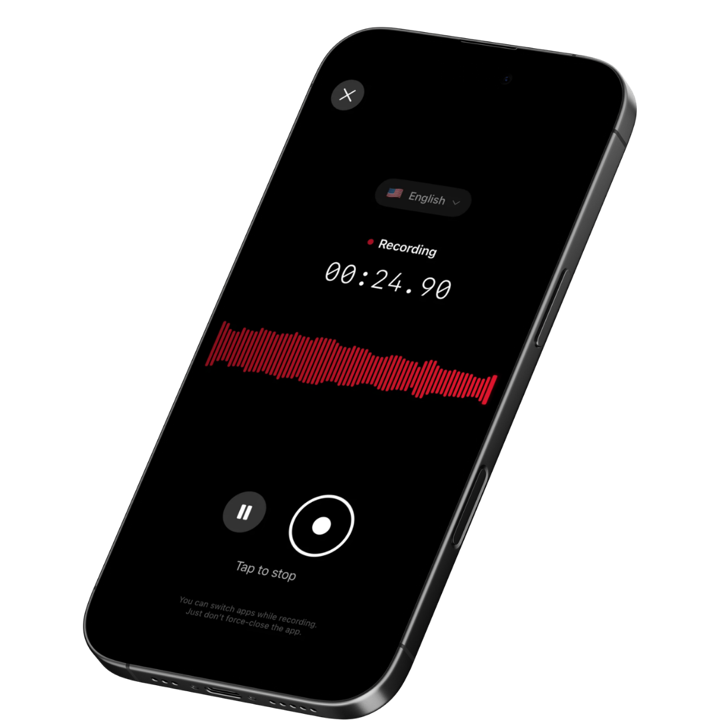
Speakwise removes that burden. One-tap or AirPods hands-free recording captures conversations and produces accurate transcripts, summaries, and action items automatically. Workers who trust that Speakwise will capture the record can be fully present in meetings, then move to focused work without the cognitive residue of half-remembered details waiting to be written down. That transition - from meeting to deep work - becomes cleaner, faster, and more complete.
Download Speakwise on the App Store and remove the information-capture burden that keeps your attention fragmented when you most need it whole.
Speakwise holds a 4.9-star App Store rating with thousands of installs from professionals who depend on focused work to deliver their best output.
Download Speakwise on the App Store

🎯 4.9★ App Store Rating | 📱 Built for iOS
