No-Meeting Days Statistics 2026: Results and Data
TL;DR
No-meeting days statistics for 2026 show productivity ratings rise when companies add them. A 2022 survey of 76 companies found employees rated productivity 71% higher after two no-meeting days a week (MIT Sloan Management Review). This post collects 15 statistics on no-meeting days. Speakwise records and summarizes meetings so people who skip one still get the decisions.


Used by recruiters, executives, consultants, and more.
No-Meeting Days Statistics 2026: Results and Data
No meeting days statistics show what happens when a company bans meetings on one or more days a week. A 2022 survey of 76 companies in MIT Sloan Management Review found that employees rated productivity 71% higher and job satisfaction 52% higher after two no-meeting days a week, and that three days a week arguably worked best overall. When Shopify canceled recurring meetings with more than two people and started No Meetings Wednesdays in 2023, its COO said 85% of employees were following the policy a month later. A separate one-week experiment at Atlassian, reported in a 2023 one-pager, cut meeting time by 13% and raised focus by 32% for the 59 employees who took part. Many workers say they want this kind of change: in a 2020 Owl Labs survey, 80% of full-time US workers said they want one meeting-free day a week, and in a 2021 survey by FischTank PR, a public relations firm, almost 90% of office professionals said they would benefit from a day with no scheduled calls at all.
Meetings kept growing for years before companies started cutting them back. During the pandemic, the average meeting got 20% shorter, but workers attended 13.5% more of them, according to a 2022 Harvard Business Review study. People also search for this topic as meeting free days or no meeting Wednesday, after the specific day many companies pick.
This post collects 15 statistics on no-meeting days: what happens to productivity, stress, cooperation and satisfaction when a company bans meetings on set days, how many workers want the policy, and how real companies run it, including which day they pick and what they do instead of meeting. It is for any manager or team deciding whether a meeting-free day is worth trying.
Key No-Meeting Days Statistics (2026)
- No-meeting days came with employee ratings of productivity 71% higher and job satisfaction 52% higher at companies that picked two a week, a 2022 survey of 76 companies found (MIT Sloan Management Review, getAbstract).
- Researchers said the best results were arguably at three no-meeting days a week, and getAbstract's summary of the study also reports a 55% rise in cooperation ratings (MIT Sloan Management Review, getAbstract).
- Shopify's COO said 85% of employees were following its No Meetings Wednesdays policy a month after the 2023 calendar purge (OPB).
- A one-week calendar experiment at Atlassian, in a one-pager published in December 2023, cut meeting time by 13% and raised focus by 32% for the 59 employees who took part (Atlassian Team Anywhere Lab).
- 80% of full-time US workers said in 2020 that they want one meeting-free day a week, and in a 2021 survey by FischTank PR, a public relations firm, almost 90% of office professionals said they would benefit from a day with no calls at all (Owl Labs, FischTank PR).
- 58% of full-time US workers said in a July 2024 Owl Labs survey that they block their calendars to protect time from meetings (Owl Labs).
- Tuesday is the busiest day for meetings, followed by Thursday and then Wednesday, in Fellow's 2024 data on more than 30,000 organizations (Fellow).
1. Employees rated productivity 71% higher after two no-meeting days a week
71% is how much higher employees rated productivity after companies introduced two no-meeting days a week, according to a 2022 survey of 76 companies published in MIT Sloan Management Review. Job satisfaction rose by 52% at the same companies. getAbstract's summary of the study also reports a 55% rise in cooperation ratings, without saying for how many no-meeting days.
The researchers, Ben Laker, Vijay Pereira, Pawan Budhwar and Ashish Malik, worked with each company's HR director, compared employee stress levels before and after the change, and used pulse surveys to track productivity, collaboration and engagement. Two no-meeting days a week also cut the companies' total meeting load by about 40%.
That is a large drop in meetings paired with higher employee ratings of productivity, not lower. The ratings come from employee surveys, so they show how people felt, not measured output. For any team worried that fewer meetings means less gets done, this is a sign that employees did not feel that way.
Source: MIT Sloan Management Review: The Surprising Impact of Meeting-Free Days and getAbstract: The Surprising Impact of Meeting-Free Days
2. Researchers studied 76 companies trying one to five no-meeting days a week
76 companies took part in the 2022 study behind the productivity numbers above. Each had more than 1,000 employees and operations in more than 50 countries, and each had introduced between one and five no-meeting days a week in the past year, banning even one-on-one meetings on those days.
The companies did not all pick the same number of days. Nearly half, 47%, chose two no-meeting days a week. Another 35% went further and picked three days. 11% picked four days, and the remaining 7% eliminated meetings entirely.
Most companies, in other words, stopped well short of banning meetings altogether, and settled on two or three days a week as the practical choice. That split matters for any company copying the idea: there is no single standard number, but two or three days is where most of these 76 large companies landed.
Source: MIT Sloan Management Review: The Surprising Impact of Meeting-Free Days
3. Three no-meeting days a week arguably worked best, researchers said
Three no-meeting days a week arguably produced the best results among the companies studied, the MIT Sloan Management Review researchers wrote, even though two-day and four-day policies also showed gains. getAbstract's summary also reports a 55% rise in cooperation ratings, alongside the productivity and satisfaction ratings described above.
The benefits did not require a big policy to show up, either. When a company introduced just one no-meeting day a week, autonomy, communication, engagement and satisfaction all improved, which in turn lowered micromanagement and stress and let productivity rise, the researchers found.
The pattern suggests a company does not need to go all the way to see a change. Companies that introduced just one no-meeting day also reported gains.
Source: MIT Sloan Management Review: The Surprising Impact of Meeting-Free Days and getAbstract: The Surprising Impact of Meeting-Free Days
4. Meetings got 20% shorter but 13.5% more frequent during the pandemic
20% is how much shorter the average meeting became during the pandemic, even as the number of meetings each worker attended rose by 13.5%, according to a 2022 Harvard Business Review article by Benjamin Laker, Vijay Pereira, Ashish Malik and Lebene Soga. The article reports both changes but does not say why they happened.
The result was a calendar packed with short calls instead of a few long ones, which left little room for a real block of focus time between meetings.
Short meetings added up to more meetings per worker, which is the backdrop for no-meeting days.
Source: Harvard Business Review: Dear Manager, You're Holding Too Many Meetings
5. Shopify's COO said 85% of employees followed No Meetings Wednesdays
85% is the share of Shopify employees who complied with the company's new No Meetings Wednesdays policy, according to COO Kaz Nejatian, after Shopify canceled recurring meetings with more than two people in January 2023. The change affected about 10,000 employees, all of them remote.
In the two months that followed, Shopify's own data showed meeting time per employee fell by 33% compared with the same period in 2022, and the company projected the saved time would lead to a 25% increase in completed projects by the end of the year. Employees were told to wait two weeks before adding anything back to their calendars, and to be selective about what they brought back.
Shopify's own numbers on meetings eliminated and hours saved go deeper in our meeting statistics roundup.
Source: OPB: Shopify Deleted 322,000 Hours of Meetings and WorkLife: How to Create a 25% Productivity Hike
6. A 2023 one-week calendar experiment cut Atlassian's meeting time by 13%
13% is how much less time 59 Atlassian employees spent in meetings during a one-week calendar redesign experiment run by the company's Team Anywhere Lab, according to a one-pager Atlassian published in December 2023. Participants were asked to cap meetings at no more than 30% of their week, leaving 10% to 20% for open collaboration, 30% to 40% for focus time, and no more than 20% for responding to messages.
Participants reported 32% better focus. The group that also tracked its progress every day reported a 31% larger boost in progress on its top priorities than the group that only redesigned its calendar.
The experiment shows that people can test a cap on meeting time without waiting for a company-wide mandate. A one-week trial with clear limits on meeting time was enough to move the numbers. Unlike the company-wide changes described elsewhere in this post, this was a fast, small-scale test built around a calendar template any manager could copy.
Source: Atlassian Team Anywhere Lab: Calendar Redesign Experiment
7. Most Atlassian participants made more progress on their priorities than usual
67% of individual contributors and 71% of managers in the Atlassian calendar experiment said they made more progress on their top priorities than in a typical week. Participants also declined 17% more meeting invites than they normally would, and blocked off 49% more time for specific types of work.
The habit of declining more meetings continued even after the one-week experiment ended, which suggests the change was not just a short burst of novelty.
Once people saw what a lighter meeting load let them finish, they kept protecting that time on their own, without being told to. That is a sign the shift can outlast the experiment that started it. Managers reported slightly more benefit than individual contributors, which fits the idea that people with the most meetings to decline have the most time to gain back.
Source: Atlassian Team Anywhere Lab: Calendar Redesign Experiment
8. 80% of full-time US workers wanted one meeting-free day a week in 2020
80% of full-time workers said they would like one day a week without any meetings, according to Owl Labs' fourth annual State of Remote Work survey, run with Global Workplace Analytics in 2020. The survey covered 2,025 full-time workers in the United States.
The desire for a meeting-free day showed up well before most companies acted on it. Shopify's purge came three years later, in 2023. Owl Labs' own calendar-blocking numbers from 2024, covered below, show that many workers protect their time on their own.
Workers, in short, asked for this before most companies delivered it. The demand was already there; the company policies came later. The survey ran in the first full year of remote work, right as video call fatigue became a common complaint, which likely raised interest in a day with no calls at all.
Source: Owl Labs: State of Remote Work 2020 and NoJitter: Meeting-Free Days Ahead
9. 70% of workers say there should be a video-call-free day each week
70% of respondents agreed that there should be a day each week without video meetings, in the same 2020 Owl Labs and Global Workplace Analytics survey that found 80% want a day without any meetings.
Video calls carry a cost that audio or in-person meetings do not: the pressure to stay visible on camera for an entire meeting. That cost may be why some workers single out video calls even when they already want a broader meeting-free day.
The two numbers are close: 80% want a day with no meetings at all and 70% want a day with no video meetings. Both show workers want a break from calls.
Source: Owl Labs: State of Remote Work 2020 and NoJitter: Meeting-Free Days Ahead
10. 58% of full-time US workers said in 2024 that they block their calendars to protect time from meetings
58% of full-time workers in the United States said they block time on their calendars to protect it from meetings, according to Owl Labs' 2024 State of Hybrid Work report. The survey covered 2,000 full-time US workers in July 2024, and found 26% block their calendars often and 32% sometimes.
Calendar blocking is a lighter, individual version of a no-meeting day: instead of a company-wide policy, one person protects a block of time on their own calendar.
Calendar blocking shows the same instinct as a company-wide no-meeting day: protecting time from meetings works, whether a company sets the rule or a person sets it alone.
Source: Owl Labs: State of Hybrid Work 2024 and Silicon.co.uk: Owl Labs State of Hybrid Work Report
11. Workers with caregiving duties calendar block more, Owl Labs found
In its 2024 report, Owl Labs found that workers with caregiving responsibilities calendar block more than workers without them. Owl Labs shows the split as shares of all calendar blockers (67% caregivers and 33% non-caregivers), so we do not quote a rate for each group.
Caregivers face a harder scheduling problem than most workers do. School pickups, appointments and family needs do not move for a meeting the way a work task sometimes can.
The gap suggests that people with caregiving duties may be more likely to protect time on their own, even without a company-wide no-meeting policy. A formal policy would spread that same protection to workers who do not feel able to block their own calendar without one, not just to parents and other caregivers.
Source: Owl Labs: State of Hybrid Work 2024 and Silicon.co.uk: Owl Labs State of Hybrid Work Report
12. In a 2021 PR firm survey, almost 90% of office professionals said they would benefit from a meeting-free day
Almost 90% of office professionals said they would benefit from one day without any scheduled calls or meetings, according to a 2021 survey by FischTank PR, a public relations firm, of 685 people in traditional office roles. The sample included FischTank's own team and the general public. The same survey found 44% of workers already had 2 to 3 meetings a day, and 20% had 4 to 6.
FischTank's own founder ran a trial of meeting-less Wednesdays at his firm and reported that colleagues appreciated the time to focus and felt less stressed on the meeting-free day.
The result lines up with the larger studies above: workers say they want a break from meetings. That gap between wanting fewer meetings and actually getting fewer of them shows up across several surveys in this post, which is part of why some companies stopped asking and simply set a policy instead.
Source: CommPRO: Survey: 90% of Americans Want Less Meetings at Work to Enhance Productivity
13. In 2009, nearly half of senior executives said banning meetings one day a week would help
45% of senior executives said employees would be more productive if their company banned meetings one day a week, according to a 2009 OfficeTeam survey of 150 senior executives at the 1,000 largest US companies. Another 46% said it would make no difference, and only 7% thought it would hurt productivity.
The survey is older than the other studies in this post, but it shows the idea is not new.
Executives were already open to banning a day of meetings more than a decade before Shopify and Atlassian tried it. The data existed long before most companies acted on it. The response was not unanimous: a combined 7% thought a ban would hurt productivity, which shows the idea had skeptics even among executives who ran their own meetings.
Source: Channel Insider: Study: Meetings Are a Waste of Time
14. In 2009, executives estimated that 28% of meetings were unnecessary
28% is the average share of meetings that senior executives called a waste of time in the 2009 OfficeTeam survey described above. OfficeTeam is a staffing company, and the survey is now 17 years old, so executives might answer differently today. Even so, it shows that even senior executives said many meetings were unnecessary. Our meeting fatigue statistics roundup covers the burnout side of the same problem in more depth.
Source: Channel Insider: Study: Meetings Are a Waste of Time
15. Tuesday, Thursday and Wednesday are the busiest meeting days
Tuesday is the most popular day for meetings, followed by Thursday, then Wednesday, according to Fellow's 2024 State of Meetings report, built from data on more than 30,000 organizations.
Fellow's data does not say which day companies pick for a no-meeting policy. Wednesday is the third busiest day for meetings, so a Wednesday ban would cost less rescheduling than a Tuesday ban.
Shopify picked Wednesday for its No Meetings Wednesdays policy. Asana has had company-wide No Meeting Wednesdays since at least 2013, according to its own page, pointing to Paul Graham's difference between a maker's schedule, which needs long blocks of time, and a manager's schedule, which is built around meetings (Asana). FischTank's internal trial, described above, also picked a Wednesday. None of these companies published a controlled study on the choice of day itself, so the pattern looks more like a shared habit than a proven rule.
Source: Fellow: State of Meetings 2024
What No-Meeting Day Data Shows, and Where It Breaks Down
The two studies in this post that measured results both found gains. In the MIT Sloan Management Review survey, employees rated productivity, autonomy and satisfaction higher and stress lower after their companies added no-meeting days, with gains reported at just one day a week and the researchers saying the best results were arguably at three days. In Atlassian's one-week test, participants reported more focus and more progress on their top priorities, though that test did not compare different numbers of no-meeting days.
The companies in this post made different choices about the number of days and about what replaces a canceled meeting. Shopify leaned on async updates and a two-week cooling-off period before anyone could add meetings back. Atlassian's own guidance asked people to timebox focus time and open collaboration instead of filling the gap with more calls. Shopify's purge targeted recurring meetings with more than two people, not every meeting, and Asana allows exceptions such as a job candidate who can only interview on a Wednesday.
None of this requires waiting for a company-wide mandate. Atlassian's experiment ran with 59 people for one week and still moved the numbers. A team or a single manager can test a lighter version first: cap meetings at a set share of the week, pick the day with the fewest meetings on your own calendar, and see what changes before asking the rest of the company to follow. For the stress side of heavy meeting schedules specifically, our back-to-back meetings statistics roundup goes deeper on what happens between calls that never stop.
In the one large study here, employees rated productivity higher and stress lower after companies added no-meeting days. It had no control group, so it does not prove the days caused the change, and the open question is how many days to try and what replaces the time.
The Meetings That Survive a No-Meeting Day Still Need Good Notes
Cutting meetings down to two or three days a week does not get rid of meetings completely, and the ones that remain carry more weight. Fewer meetings means fewer chances to catch everyone up in person, so the notes from each one matter more, not less.
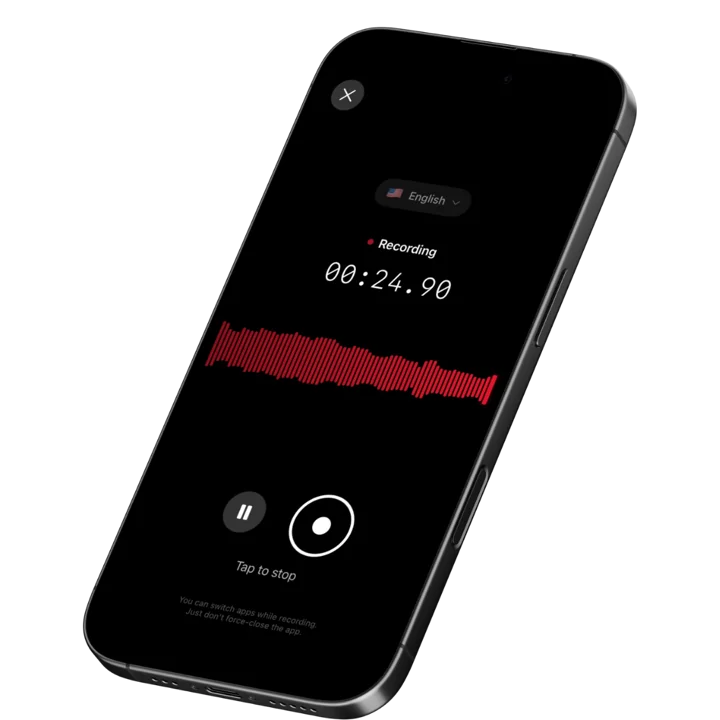
Speakwise is an iPhone app that records in-person conversations, meetings, lectures and interviews with one tap, and turns them into a transcript and an AI summary with action items. On a no-meeting day, a person who cannot attend still gets the decisions: a share link opens the summary, transcript and action items in a browser, so they do not have to sit in a meeting just to find out what happened.
Speakwise works offline, records up to 5 hours in one recording, and reaches 95%+ accuracy in optimal audio conditions and 92%+ in noisy rooms with several speakers. It supports 100+ languages with automatic detection, and syncs recordings to a Notion database automatically. Speakwise users report saving about 73% of their post-meeting follow-up time (Speakwise user surveys).
Start with a 7-day free trial ($0.00). After that, Speakwise costs from $69.99 per year, which is about $5.83 a month, billed yearly. Prices shown are for the US and can differ by country.Download Speakwise from the App Store and let the people who skip a meeting still get the decisions.
Try Speakwise free for 7 days
Available on the App Store | iOS Optimized

🎯 4.9★ App Store Rating | 📱 Built for iOS
