Back-to-Back Meetings Statistics: 22 Findings for 2026
Used by recruiters, executives, consultants, and more.
Back-to-Back Meetings Statistics: 22 Findings for 2026
Back-to-back meetings drain focus in ways that isolated meetings do not. Microsoft's neuroscience research shows that cortisol accumulates across sequential meetings, reaching its highest levels by the fourth consecutive call. 67% of workers say they have no buffer time between meetings to process or decompress. Employees in back-to-back schedules report 2.5x more mental exhaustion than those with breaks built in. And the average knowledge worker now loses 31 hours of productive time per month to unproductive or stacked meetings. These 22 statistics reveal why consecutive meeting blocks are one of the most damaging structures in modern work schedules.
The problem is not meetings in isolation. A single focused meeting with a clear agenda can accelerate decisions and surface critical information. The damage occurs when those meetings stack without breathing room. Each call leaves behind cognitive residue that impairs the next one, and the next. Stress chemicals build. Concentration narrows. By mid-afternoon, workers operating on back-to-back schedules are making worse decisions, absorbing less information, and exhausting their teams.
Researchers studying workplace productivity increasingly treat no-break meeting schedules as a distinct hazard, separate from general meeting overload. This post compiles 22 statistics on the specific cost of stacked meetings, recovery time deficits, and the productivity consequences that ripple outward. The data spans neuroscience labs, large-scale workforce surveys, and organizational studies, covering consultants, managers, knowledge workers, and executives alike.
1. Cortisol rises steadily across consecutive meetings with no breaks
Microsoft's Human Factors Lab conducted EEG studies comparing workers who took short breaks between meetings against those who did not. In the no-break group, beta waves associated with stress accumulated across consecutive meetings, reaching peak levels by the fourth call. In the break group, stress levels reset to near-baseline before each meeting. The study found that without breaks, the brain treats each meeting not as a fresh event but as a continuation of an ongoing stressor. This physiological response helps explain why back-to-back schedules feel exhausting in ways that long individual meetings do not.
Source: Microsoft Human Factors Lab - Research on Hybrid Work
2. 67% of workers have no recovery time between meetings
More than two-thirds of employees say they regularly have zero buffer time between meetings. A survey by Reclaim.ai of over 1,000 knowledge workers found that 67% report moving directly from one meeting into the next with no transition period. This lack of recovery time prevents the brain from consolidating information from the previous meeting before new information arrives. Workers in this pattern are less able to apply what they just discussed, less able to prepare for what comes next, and more likely to carry unresolved stress from one call into another.
Source: Reclaim.ai State of Workplace Productivity Report
3. Workers lose an average of 31 hours per month to unproductive meetings
A Doodle survey of 19 million meetings found that professionals lose 31 hours per month to meetings they consider unproductive. When those meetings stack consecutively, the loss compounds: not only are the meeting hours unproductive, but the hours immediately after are also compromised due to cognitive depletion. Back-to-back scheduling converts what might be recoverable meeting time into a compounding drain on the entire workday. At 31 hours monthly, that is nearly a full workweek per month lost before factoring in the recovery deficit created by consecutive scheduling.
Source: Doodle State of Meetings Report
4. Focus requires 23 minutes to restore after an interruption
Research from the University of California, Irvine, led by Dr. Gloria Mark, found that it takes an average of 23 minutes and 15 seconds for a person to return to a task after an interruption. Meetings, especially back-to-back ones, function as serial interruptions. Workers who finish a meeting chain at noon and attempt to start deep work face a recovery window that extends well into the afternoon. Organizations that schedule stacked morning meetings effectively eliminate productive afternoons for many employees. The 23-minute recovery figure is now one of the most cited numbers in workplace productivity research.
Source: University of California, Irvine - Gloria Mark Research on Interruptions
5. 2.5x more mental exhaustion reported by workers in back-to-back schedules
A study published in the Journal of Applied Psychology examined differences in subjective mental exhaustion between workers with blocked meeting schedules and those with breaks built between calls. Workers in consecutive meeting schedules reported mental exhaustion levels 2.5 times higher than the break group by end of day. Importantly, total meeting time was held constant between groups. The exhaustion differential was driven entirely by schedule structure, not meeting volume. This finding confirms that the stacking pattern itself is the primary driver of fatigue, independent of how many meetings workers attend.
Source: Journal of Applied Psychology - Meeting Design and Cognitive Load
6. Microsoft found that a 10-minute break between meetings resets brain stress to baseline
In the same EEG study that identified cortisol accumulation in no-break meeting groups, Microsoft's researchers tested whether short breaks could interrupt the stress spiral. A 10-minute meditation or transition break between meetings was sufficient to return brain stress indicators to near-baseline before the next call began. This suggests the problem of back-to-back meetings is structurally solvable without reducing meeting count. Building a 10-minute buffer into calendar scheduling norms would, according to the data, eliminate most of the neurological cost of consecutive meetings.
Source: Microsoft WorkLab - The Science of Taking Breaks
7. 38% of meetings have no agenda, making recovery between them harder
When meetings lack agendas, attendees cannot mentally prepare before or decompress effectively after. Doodle's State of Meetings report found that 38% of meetings have no defined agenda. In back-to-back contexts, agenda-free meetings are especially damaging: workers cannot orient themselves before the next call begins, cannot determine what notes to carry forward, and cannot quickly identify what follow-up actions the previous call generated. Our analysis of meeting fatigue statistics found that agenda-free meetings are cited as one of the top contributors to the end-of-day exhaustion knowledge workers report.
Source: Doodle State of Meetings Report
8. Senior employees spend up to 85% of their time in meetings
Research published in Harvard Business Review found that senior executives spend up to 85% of their working time in meetings. For this group, back-to-back scheduling is not an occasional inconvenience but the default state of the workday. The same research found that executives who examined their meeting schedules were often shocked by what they found: very few of their meetings directly contributed to the organization's top priorities. When 85% of senior leader time is in meetings, a back-to-back structure leaves no room for strategic thinking or deep work between calls.
Source: Harvard Business Review - Reclaim Your Meeting, Manage Your Time
9. Workers in heavy-meeting weeks produce 36% less output than those with protected time
Atlassian's research, which surveyed over 5,000 knowledge workers, found that those experiencing the highest meeting loads reported producing 36% less output compared to weeks when they had protected focus time. This output gap is not fully explained by the meeting hours themselves: it reflects the cascading depletion that back-to-back meeting structures create. When every meeting bleeds into the next, and there is no recovery time for reflection or deep work, execution capacity collapses. The 36% figure represents both what is lost during meetings and what cannot be regained afterward.
Source: Atlassian - Reworking Work Report
10. 45% of executives say meetings prevent them from completing their most important work
A survey by Korn Ferry of over 1,000 executives across industries found that 45% say meetings prevent them from doing their most important work. For this group, the back-to-back pattern is especially costly because the work displaced is typically high-judgment, high-leverage work that cannot be delegated or deferred indefinitely. When meeting stacks consume the morning and afternoon, the executive's primary contribution to the organization gets pushed to evenings or weekends, driving burnout and reducing decision quality. The organizational cost is multiplied because these are the people whose judgment matters most.
Source: Korn Ferry - Meetings Are the Enemy of Work
11. Average meeting length has increased by 12% since 2020
Data from Microsoft's analysis of Microsoft 365 activity across tens of thousands of organizations found that the average meeting length increased by 12% between 2020 and 2022. As individual meetings lengthen, back-to-back schedules become more compressive. Longer meetings leave less cognitive margin for the meeting that follows. Even workers who attempt to build transitions between calls find that 60-minute calls have largely replaced 45-minute ones, shrinking the gaps on already compressed calendars.
Source: Microsoft Work Trend Index 2022
12. Meeting load increased 252% between 2020 and 2022 for the average Teams user
Microsoft's Work Trend Index found that the average Teams user saw a 252% increase in weekly meeting load between February 2020 and February 2022. This surge created conditions in which back-to-back scheduling shifted from an exceptional occurrence to a structural norm. Workers who once had meeting-free mornings or afternoons found those blocks replaced by calls. The infrastructure of back-to-back scheduling became embedded in calendar culture before organizations had time to establish norms around recovery time or meeting-free blocks.
Source: Microsoft Work Trend Index 2022
13. Video meetings generate higher fatigue loads than in-person meetings of equal length
Stanford University's Virtual Human Interaction Lab, led by Professor Jeremy Bailenson, identified four factors unique to video calls that generate additional cognitive and physical strain absent from in-person meetings. These include unnatural eye contact demands, reduced mobility, continuous self-monitoring via on-screen reflection, and a narrowed field of view that limits the brain's ambient environment signals. When video calls stack back-to-back, each factor compounds across sessions. The research found that fatigue from video meetings escalates nonlinearly in consecutive sessions.
Source: Stanford VHIL - Nonverbal Overload and Zoom Fatigue
14. Only 17% of organizations have formal policies limiting back-to-back meetings
A global workplace survey by Gartner found that only 17% of organizations had implemented any formal policy to limit consecutive meeting scheduling. The remaining 83% left back-to-back calendar management entirely to individual choice. In practice, this means the social pressure of accepting all meeting invites overrides individual preference for recovery time. Without organizational policy, back-to-back scheduling persists as the default even when workers recognize its cost. Policy-level intervention is measurably more effective than relying on individual behavior change.
Source: Gartner HR Research - Meeting Fatigue and Hybrid Work
15. Workers take fewer risks and generate fewer creative ideas in stacked meeting days
Research from Harvard Business School found that creative output declines on days with high meeting loads, particularly when meetings are scheduled consecutively. The mechanism is well-established: creative thinking requires a relaxed attentional state that sequential high-demand meetings suppress. Workers on back-to-back schedules are more likely to default to familiar solutions and existing patterns. The suppression of creative risk-taking in meeting-heavy environments has organizational consequences that extend far beyond the immediate productivity loss.
Source: Harvard Business Review - Collaborative Overload
16. 57% of workers say they can't prepare adequately for meetings due to back-to-back scheduling
A Doodle survey found that 57% of employees say they frequently attend meetings they were unable to properly prepare for. Back-to-back scheduling is the primary driver: when one meeting ends as another begins, there is no time to review agendas, refresh context, or set intentions. Unprepared attendees consume meeting time getting oriented rather than contributing, reducing overall meeting effectiveness. The preparation deficit created by stacked schedules multiplies the inefficiency of each individual meeting.
Source: Doodle State of Meetings Report
17. Interruption-heavy workdays reduce IQ by an estimated 10 points temporarily
Research cited by Dr. Glenn Wilson of the University of London found that constant interruptions, including meeting chains that prevent sustained concentration, can temporarily reduce effective IQ by approximately 10 points. This figure, while approximate, suggests that the cognitive impairment from disrupted focus is quantifiable and meaningful. Workers operating in back-to-back meeting structures are making decisions, writing communications, and solving problems with measurably reduced cognitive resources. The implication for knowledge workers, whose primary output is judgment and analysis, is significant.
Source: University of London / Dr. Glenn Wilson Research on Distraction
18. 71% of meetings are considered unproductive by attendees
Atlassian's global survey of knowledge workers found that 71% of meeting time is considered unproductive by participants. When unproductive meetings stack consecutively, they create a compounding problem: not only does each meeting fail to deliver value, but the accumulated fatigue from the sequence degrades every meeting that follows. Our breakdown of time-spent-in-meetings statistics found that workers consistently identify back-to-back scheduling as the feature of meeting culture they most want to change.
Source: Atlassian - You Waste a Lot of Time at Work
19. Employees who have two or more consecutive hours of uninterrupted time report higher job satisfaction
A Gallup study on workplace experience found that employees who regularly experience at least two consecutive hours of uninterrupted focus time per day report significantly higher job satisfaction, lower burnout rates, and stronger intent to stay with their employer. The inverse is equally telling: workers who cannot access two consecutive uninterrupted hours - the norm under aggressive back-to-back scheduling - report the lowest satisfaction and highest turnover intent. Protecting uninterrupted time is not a perk; it is a retention and performance lever.
Source: Gallup - State of the American Workplace
20. The average knowledge worker is interrupted or pulled into meetings every 11 minutes
Research by Dr. Gloria Mark at the University of California, Irvine, found that the average knowledge worker experiences an interruption or meeting pull every 11 minutes during a typical workday. Given the 23-minute recovery window required to restore deep focus, this cadence means that most knowledge workers never achieve sustained concentration on any given day. Back-to-back meeting schedules formalize and intensify this fragmentation by replacing sporadic interruptions with guaranteed consecutive blocks of attention switching.
Source: UC Irvine - Gloria Mark Interruption Research
21. Workers estimate that 30% of meetings they attend could have been an email
A Doodle survey of over 6,500 professionals found that workers estimate approximately 30% of the meetings they attend could have been replaced by a written update, decision document, or recorded message. In back-to-back contexts, these unnecessary meetings carry especially high costs because they occupy recovery time that could have been used to decompress from the preceding call. Eliminating even a fraction of unnecessary meetings from consecutive schedules would produce disproportionate benefits, since each removed meeting restores both its own time and the recovery window that follows.
Source: Doodle - The State of Meetings 2019
22. Organizations with meeting-free blocks see productivity rise by up to 35%
A study by Asana found that teams implementing structured no-meeting blocks of at least two hours on multiple days per week reported productivity gains of up to 35% compared to teams without protected focus time. The gain reflects two mechanisms: direct deep-work time added to the week, and the reduced fatigue load on meeting-containing days because consecutive meeting chains are broken. Organizations that have restructured calendars to eliminate back-to-back meetings report the gains persist beyond the first few weeks, suggesting structural changes hold where individual willpower does not.
Source: Asana Anatomy of Work Index
What These Statistics Reveal About Back-to-Back Meeting Culture
The data does not suggest that meetings are inherently harmful. It suggests that the structure of back-to-back scheduling creates a category of harm distinct from meetings themselves. Stress accumulates sequentially. Cognition degrades across sessions. Recovery time, which the brain requires to consolidate information and reset attention, disappears entirely. The result is that workers spend more hours in meetings while extracting less value from each one.
The neuroscience evidence is particularly striking. Microsoft's EEG research did not find that meetings caused stress. It found that consecutive meetings without breaks caused stress to compound in ways that isolated meetings did not. A 10-minute break was sufficient to interrupt this cycle. This means the productivity and wellbeing cost of back-to-back scheduling is largely structural and largely preventable. The barrier is cultural, not physiological.
Organizations face a compounding problem that individual employees cannot solve alone. Workers know they need recovery time. But the social pressure to accept all meeting invites, the absence of organizational policy protecting transition windows, and the 252% surge in meeting volume since 2020 have made back-to-back scheduling the ambient default. The 17% of organizations that have implemented formal policies limiting consecutive meetings represent an early signal that cultural norms can be changed. The 83% that have not yet acted represent an enormous unrealized opportunity to recover productivity, reduce burnout, and improve the quality of every meeting in the stack.
The cost of back-to-back meetings is not just the meeting hours themselves - it is every hour of compromised thinking, degraded decision-making, and lost recovery time that follows.
How Speakwise Helps Workers Reclaim Cognitive Bandwidth From Meeting Stacks
One of the most persistent costs of back-to-back meetings is the note-taking burden. Workers who juggle continuous meetings often spend the minutes between calls frantically jotting down action items, follow-up questions, and key decisions from the session that just ended. This note-taking work competes directly with the recovery time the brain needs to reset before the next call.
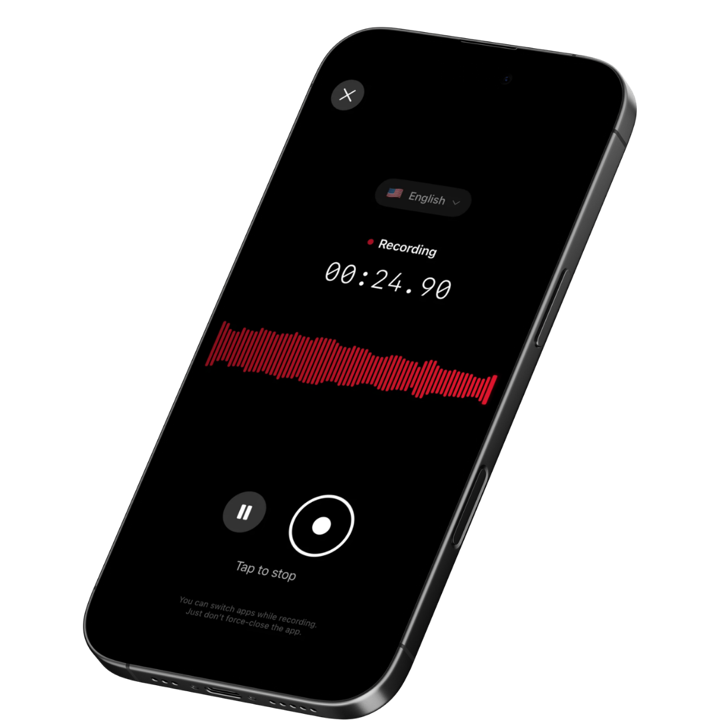
Speakwise removes that pressure entirely. One-tap recording captures in-person conversations and calls, then produces accurate transcripts in 100+ languages, automatic summaries, and extracted action items - without the worker having to write anything down. Rather than spending the gap between meetings on note consolidation, you can take the 10-minute break that Microsoft's research identifies as sufficient to reset cognitive stress to baseline. The meeting record is waiting for you when you're ready to review it.
Download Speakwise on the App Store and stop letting note-taking compete with the recovery time your brain needs between calls.
Speakwise holds a 4.9-star App Store rating with thousands of installs from consultants, managers, and professionals managing demanding meeting schedules.
Download Speakwise on the App Store

🎯 4.9★ App Store Rating | 📱 Built for iOS
