Voice Search Statistics 2027: Usage and Adoption
TL;DR
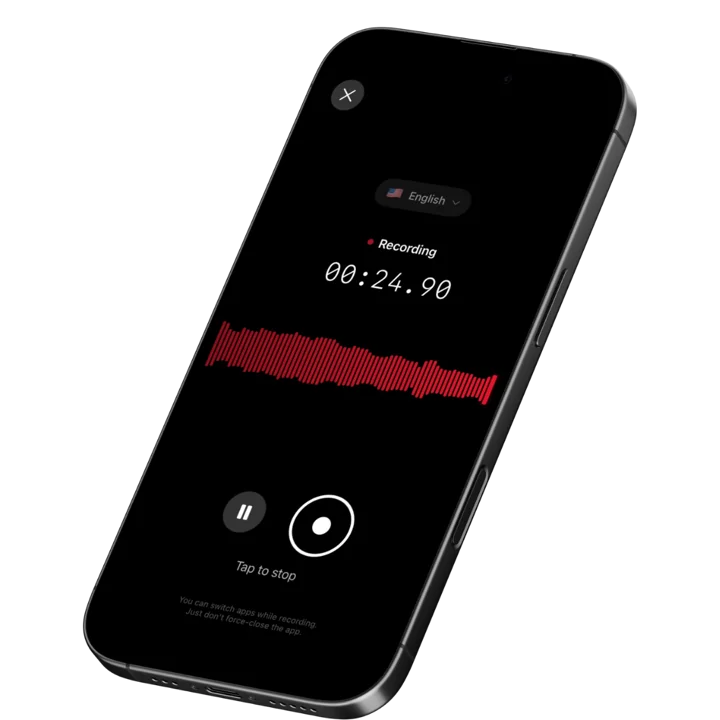
Voice search statistics for 2027 show real but uneven growth. In a 2024 survey, 81% of US adults said they use a voice assistant in daily life (Voices). Speakwise turns meetings into a transcript and AI summary on iPhone, free to try for 7 days.

Used by recruiters, executives, consultants, and more.
Voice Search Statistics 2027: Usage and Adoption
Once the exaggerated numbers get stripped out, voice search statistics for 2026 tell a calmer story than the hype suggests. Alexa, Siri and Google Assistant each have a loyal following, and smart speaker ownership had its biggest jump since 2021. One of the most repeated claims about voice search, a 2020 deadline that never happened, traces back to a misquoted 2014 forecast. This post sorts the numbers from the myth.
Key Voice Search Statistics (2027)
- Voice search statistics for 2026 show 81% of US adults using a voice assistant in 2024, led by Alexa at 56%, ahead of Siri at 49% and Google Assistant at 42% (Voices: 2024 Voice Assistant Report, 2024).
- Smart speaker ownership among Americans 12 and up reached 39% in 2026, its biggest single-year gain since 2021 (Edison Research, The Infinite Dial 2026, 2026).
- 46% of US adults use a digital voice assistant, and 42% use one through a smartphone (Pew Research Center, 2017).
- 32% of global consumers used a voice assistant in the past week, and voice assistant users are 33% more likely than the average consumer to have made an online purchase in the past week (GWI Voice Search Report, 2025).
- Monthly use of Google Assistant among Americans grew 46% between 2020 and 2024, ahead of Siri's 40% growth and Alexa's 26% (GWI).
- The famous "50% of searches will be voice by 2020" claim was never made by comScore. It traces to a 2014 Fast Company prediction by Baidu's Andrew Ng about images and speech combined. comScore says it never published the number, but the claim is often credited to comScore anyway.
- 75% of smart speaker owners say they use their smart speaker at least daily, up from 2018 (Adobe, State of Voice 2019, 2019).
1. In 2024, 81% of US adults used a voice assistant
Voices, a voice marketplace company, hired the research firm Momentive to survey 1,072 Americans ages 18 and up in February 2024. The survey found that 81% of them used a voice assistant in daily life. Alexa was the most used, at 56%, ahead of Siri at 49% and Google Assistant at 42% (people could pick more than one assistant). It is a company survey, not an independent study. Other surveys that ask different questions find lower shares, so treat 81% as the top of the range.
Source: Voices: 2024 Voice Assistant Report
2. Smart speaker ownership among Americans 12 and up jumped to 39% in 2026
Edison Research's Infinite Dial 2026 survey found that 39% of Americans age 12 and up now own a smart speaker, a 4-point increase in a single year and the largest annual jump since 2021. Smart speakers are a different device category from smartphone-based voice assistants like Siri or Google Assistant, but ownership growth here is one of the clearest signals that voice interaction keeps finding new households.
Source: Edison Research, The Infinite Dial 2026
3. In 2017, 42% of US adults used a voice assistant on their smartphone
Pew Research Center found that 46% of US adults used a digital voice assistant overall, with 42% doing so through a smartphone specifically, 14% through a computer or tablet, and 8% through a standalone speaker like an Amazon Echo. The survey is from 2017, so treat it as a baseline, not a current number.
Source: Pew Research Center
4. Nearly a third of consumers worldwide used a voice assistant in the past week
GWI's Voice Search Report found that 32% of global consumers used a voice assistant within the past week, with 21% using it weekly to find information and 20% weekly to complete an action like playing music or placing an order. The same report found voice assistant users are 33% more likely than the average consumer to have made an online purchase in the past week, and that 34% of millennials use voice assistants weekly.
Source: GWI, "Voice Search Report"
5. From 2020 to 2024, Google Assistant use grew faster than Siri or Alexa in the US
Between 2020 and 2024, monthly usage of Google Assistant in the US grew 46%, according to GWI, ahead of Siri's 40% growth and Alexa's 26% growth over the same period. All three platforms grew, which matters more than the exact ranking. Voice assistants are not a fad that peaked years ago. US monthly use of all three kept climbing from 2020 to 2024.
Source: GWI Voice Search Report
6. The "50% of searches will be voice by 2020" claim is not real
This is one of the most repeated voice search statistics online, and it was never a comScore number. It traces back to a 2014 Fast Company interview where Andrew Ng, then Baidu's chief scientist, said that within five years, "at least 50% of all searches are going to be either through images or speech," a combined prediction about Baidu's search traffic in China, not one about voice alone. comScore says it never published this number, but the claim is often credited to comScore anyway, and many marketing blogs have repeated it since.
Source: Fast Company: Inside Baidu's Plan To Beat Google By Taking Search Out Of The Text Era and Brodie Clark: STOP Using Comscore's 2020 Voice Search Statistic (It Never Existed!)
7. A 2016 claim about voice search is real, but a decade old
Not every widely quoted number is fake. Google CEO Sundar Pichai really did say, at Google I/O in May 2016, that 20% of queries on Google's mobile app on Android in the US were voice queries. That statement is genuine and sourced. The problem is that we found no newer figure from Google, so the 20% figure describes 2016, not 2026. Treat any claim using this number as current with real skepticism.
Source: Sundar Pichai, Google I/O 2016 keynote transcript
8. In 2019, most smart speaker owners used them daily, Adobe says
An Adobe survey of 1,000 US consumers, published in February 2019, found that 75% of smart speaker owners used their smart speaker at least daily, up from 71% in August 2018. It is a company survey, not an independent study, but it points the same direction as the other growth numbers on this page: once people own a smart speaker, daily use becomes the norm rather than the exception.
Source: Adobe: State of Voice 2019
9. In 2018, music and weather were the most common smart speaker uses
An Adobe Analytics survey of more than 1,000 US consumers, published in September 2018, found that music topped the list of smart speaker requests at 70%, followed by weather at 64%, fun or trivia questions at 53%, general web search at 47%, news at 46%, and directions at 34%. Search, the use case most people associate with "voice search," was already less common than music or weather, at 47% against 70% and 64%, and Adobe's 2019 follow-up survey found music was still the top request, now cited by 74% of smart speaker owners.
Source: Advanced Television, reporting a 2018 Adobe Analytics survey and Adobe: State of Voice 2019
10. About 1 in 3 people with a visual impairment or a physical disability use a voice assistant weekly
GWI's research found that about 1 in 3 consumers with a visual impairment use a voice assistant weekly, and so do 32% of people with a physical disability, about the same as the 32% of all consumers who used one in the past week. For people who face barriers with screens, keyboards or touch, GWI says voice technology can offer independence.
Source: GWI Voice Search Report
11. In 2025, voice assistant users were 51% more likely to order delivery than other shoppers
A 2025 GWI report found that voice assistant users are 51% more likely than the average consumer to have ordered a meal through a delivery app in the past week. The same report found that more than half of voice assistant users had made an online purchase in the past week, and that 66% said they prefer shopping online to shopping in a store.
Source: GWI Voice Search Report
12. In 2025, 33% of millennials used Alexa in the past month, more than Gen Z
A 2025 GWI report found that people's favorite voice assistant brand differs by generation. 33% of millennials said they had used Alexa in the past month, more than any other brand. Gen Z leans toward Siri instead, which GWI links to closer ties to the Apple ecosystem.
Source: GWI Voice Search Report
13. In 2017, 61% of US non-users said voice assistants just did not interest them
Pew Research Center asked the US adults in its 2017 survey who did not use a voice assistant why not. 61% of these non-users said they were simply not interested, 28% said none of their devices had the feature, 27% cited privacy concerns, and 18% said voice assistants seemed too complicated to use.
Source: Pew Research Center
14. In 2019, 42% said voice control mattered when buying a speaker, 37% for a car
Adobe's own survey of 1,000 US consumers, published in February 2019, found that 42% of respondents said voice control was an important feature when buying a music speaker, and 37% said the same for a car. 18% of respondents already owned a car with a voice assistant built in, and 44% of that group used it at least daily.
Source: Adobe: State of Voice 2019
15. In 2018, 36% used voice to make a call, and 30% to shop, Adobe found
The same 2018 Adobe Analytics survey found newer smart speaker habits taking hold alongside music and weather. 36% of consumers said they used voice to make a call, 31% for smart home commands, 30% for shopping or ordering items, 17% for food delivery or takeout, and 16% for researching flights or hotels.
Source: Advanced Television, reporting a 2018 Adobe Analytics survey
Separating Real Voice Search Growth From Recycled Myths
The honest story in these voice search statistics is one of uneven, unglamorous growth, not the overnight revolution some headlines promised a decade ago. 81% of US adults already used a voice assistant in 2024, US smart speaker ownership just had its best year since 2021, and US monthly use of Google Assistant, Siri and Alexa all grew from 2020 to 2024.
What did not happen is the dramatic tipping point predicted by the "50% of searches will be voice" myth. That number was never real, and confusing it with genuine data like Pichai's 2016 figure or GWI's 2025 survey leads to bad decisions about where voice actually fits into a product or a marketing plan.
The practical lesson is that voice is becoming one input method among several, used heavily for music, weather, and quick information, and by many people with disabilities, rather than replacing typed search outright. That fits our voice technology statistics roundup, which says voice is not replacing screens or keyboards. For more on smartwatches, see our smartwatch statistics.
Real voice search statistics point to uneven but real growth, with US use of Google Assistant, Siri and Alexa all rising from 2020 to 2024, not the single dramatic tipping point that recycled myths keep promising.
Where Speakwise Fits Into Voice-First Workflows
Voice assistants like Siri are built for short commands and quick questions. They are not designed to capture a full conversation, meeting, or set of notes. That is where a dedicated voice-to-text app comes in. On Apple Watch, Speakwise lets you start and stop recordings from your wrist, and they sync to your iPhone, where they are transcribed and summarized with speaker labels and action items. Speaker identification is not included in every plan. When you start your free trial, pick the plan that includes it.
Start with a 7-day free trial ($0.00). After that, Speakwise costs from $69.99 per year, which is about $5.83 a month, billed yearly. Prices shown are for the US and can differ by country.Download Speakwise from the App Store and turn spoken conversations into transcripts and summaries, not just quick voice commands.
Try Speakwise free for 7 days
Available on the App Store | iOS Optimized

🎯 4.9★ App Store Rating | 📱 Built for iOS
