Workplace Perfectionism Statistics: 17 Insights
TL;DR
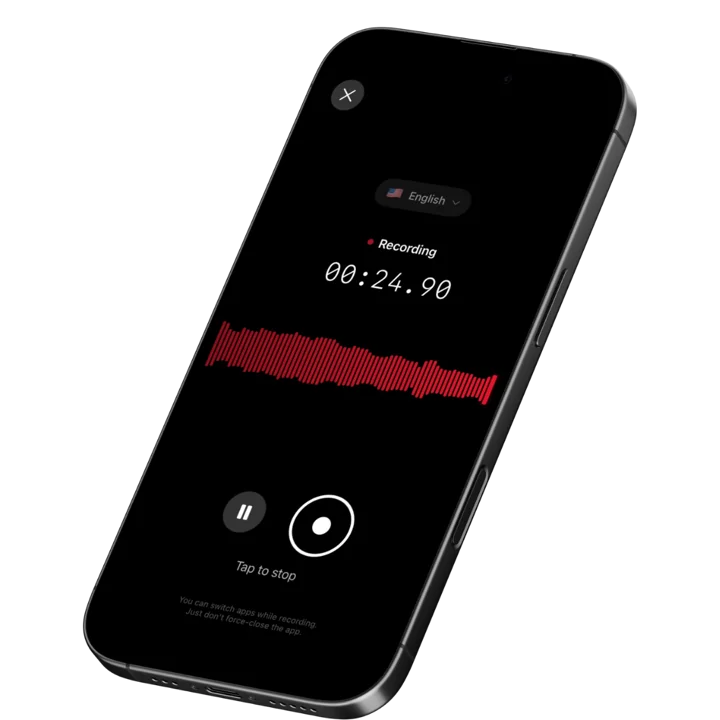
Workplace perfectionism statistics show perfectionism up 33% since 1989 (APA). Eight in ten employees report productivity anxiety, the feeling of never doing enough. Speakwise writes the meeting summary and action items on iPhone, so nothing is left to perfect afterward, with a 7-day free trial.


Used by recruiters, executives, consultants, and more.
Workplace Perfectionism Statistics: 17 Insights for 2026
Workplace perfectionism statistics show a split between adaptive perfectionism, which sets ambitious goals, and maladaptive perfectionism, which ties self-worth to flawless results and reacts badly to any failure. The maladaptive kind is the one rising at work, and it tracks closely with burnout and procrastination rather than better output. This post walks through 17 research-backed numbers on how common it is, what it costs, and what helps.
1. Socially Prescribed Perfectionism Increased 33% From 1989 to 2016
A cross-temporal meta-analysis published in Psychological Bulletin examined 164 samples with 41,641 American, Canadian, and British college students who completed the Multidimensional Perfectionism Scale between 1989 and 2016. The study found that all three dimensions of perfectionism increased linearly over 27 years: self-oriented, other-oriented, and socially prescribed perfectionism. The largest gain was in socially prescribed perfectionism - the belief that others hold extremely high, often impossible, standards for you - which rose by approximately 33%. This form of perfectionism has the strongest links to anxiety, depression, and burnout because the perceived standards are externally imposed and therefore feel uncontrollable. The trend line has not shown signs of reversing.
2. Perfectionistic Concerns Show Medium-to-Large Positive Associations With Burnout
A 2016 meta-analysis in Personality and Social Psychology Review examined 43 studies with 9,838 participants and 663 effect sizes to assess the relationship between perfectionism dimensions and burnout. The study found that perfectionistic concerns - characterized by excessive worry about mistakes, doubt about actions, and concern over others' expectations - displayed medium-to-large positive relationships with overall burnout and its individual symptoms of emotional exhaustion, depersonalization, and reduced personal accomplishment. By contrast, perfectionistic strivings (high personal standards pursued for intrinsic reasons) showed small or non-significant relationships with burnout when studied independently. In workplace contexts, the maladaptive dimension amplifies burnout risk significantly.
Source: Multidimensional Perfectionism and Burnout: A Meta-Analysis - Sage Journals
3. 80% of Employees Report Productivity Anxiety Linked to Perfectionism Pressures
A study reported by the American Institute of Stress found that 80% of employees experience productivity anxiety - a persistent sense that there is always more they should be doing, that their output is never quite sufficient. Productivity anxiety is operationally indistinguishable from socially prescribed perfectionism: the belief that external standards require constant, exhausting output. Workers experiencing productivity anxiety reported lower well-being scores across all measured dimensions. The prevalence means organizations cannot treat perfectionism-driven distress as a fringe issue; it describes the majority of their workforce's internal experience.
Source: American Institute of Stress - 80% Of Employees Report Productivity Anxiety And Lower Well-Being
4. 52% of Employees Reported Feeling Burned Out in 2024
Global burnout tracking found that 52% of employees said they felt burned out in 2024, with a further 82% classified as being at risk of burnout. Burnout is not synonymous with perfectionism, but perfectionist concerns - the fear-laden, self-critical strain - are among the most consistent predictors of burnout onset. The meta-analytic evidence linking perfectionistic concerns to burnout, combined with rising perfectionism prevalence, helps explain why burnout rates remain stubbornly high despite organizational wellness investments. Treating burnout without addressing the perfectionistic cognitive patterns driving overwork and self-criticism leaves the core mechanism intact.
Source: Meditopia for Work - Employee Burnout Statistics 2026
5. Maladaptive Perfectionism Explains 44% of Variance in Academic Procrastination
Research on the perfectionism-procrastination relationship found that maladaptive perfectionism (high perfectionism concerns, fear of failure, harsh self-evaluation) explains approximately 44% of the variance in procrastination behavior. The mechanism is an approach-avoidance conflict: the perfectionist wants to do the task flawlessly but fears that any attempt will fall short, so delay becomes a psychological buffer against potential failure. In the workplace, this manifests as indefinitely polished drafts, decisions deferred beyond their optimal window, and projects that stall at the 90% mark while the perfectionist iterates on details. Our workplace mental health statistics cover the broader psychological cost of these avoidance patterns.
Source: PMC - Procrastination, Perfectionism, and Other Work-Related Mental Problems: A Scoping Review
6. Perfectionism Raises Perceived Stress, With Stress Accounting for 39% of Procrastination
A separate research thread found that perceived stress independently predicts 39% of procrastination behavior, and that perfectionism elevates stress perception significantly. The pathway from perfectionism to procrastination therefore has two routes: the direct fear-of-failure link and the indirect stress-elevation link. Highly perfectionistic employees caught in this loop face mounting tasks (because delayed work accumulates), rising stress (because the pile grows), and increasing avoidance (because starting feels increasingly threatening). The result is a behavioral pattern that looks like disorganization from the outside but is, neurologically, a stress-driven shutdown of approach motivation.
Source: PMC - Multidimensional Models of Perfectionism and Procrastination: Seeking Determinants of Both
7. Perfectionistic Strivings Correlate Positively With Hours Worked, Not With Output Quality
Research published in the 2025 meta-analysis in the Journal of Occupational and Organizational Psychology found that both perfectionistic strivings and perfectionistic concerns are positively correlated with the number of hours worked. However, only perfectionistic strivings - the adaptive, goal-focused dimension - showed a positive relationship with actual work performance. Perfectionistic concerns were not positively associated with output quality despite correlating with higher time investment. This finding quantifies a painful dynamic: the most anxious, self-critical perfectionists work longer hours but do not produce better work. The excess hours are absorbed by rumination, revision cycles, and avoidance-driven displacement activities.
8. Women Face a "Perfection Bias" - Higher Standards Required to Be Seen as Competent
A 2025 study in the European Journal of Social Psychology developed and validated a "Perfection Bias" scale measuring the workplace expectation that women must meet higher standards than men to be perceived as equally competent. Women's awareness of being targets of perfection bias was negatively associated with their well-being scores. Qualitative data from the study included testimony from women in senior roles describing needing to outperform male peers to achieve equivalent recognition. This externally imposed standard functions as institutionalized socially prescribed perfectionism - the same dimension showing the steepest rise in the cross-temporal meta-analysis - and affects half the professional workforce.
9. 45% of Workers Say They Work More Hours Than They Want To
A 2024 survey found that more than two in five workers (45%) reported working more hours per week than they want or need to. Overwork at this scale is consistent with perfectionism-driven behavior: the compulsion to check once more, revise the deck one more time, or respond to one more message before logging off. The cultural framing of overwork as commitment and identity ("hustle culture") amplifies the perfectionistic impulse by attaching social rewards to demonstrating exhaustion. Workers in this pattern do not experience overwork as a choice; the perfectionistic drive frames stopping as a moral failure.
Source: American Institute of Stress - 80% Of Employees Report Productivity Anxiety And Lower Well-Being
10. Female Burnout Rates Run 13 Points Higher Than Male Rates (59% vs 46%)
Burnout data disaggregated by gender finds that 59% of women report burnout compared to 46% of men, a 13-percentage-point gap that correlates with the documented gender disparity in socially prescribed perfectionism exposure. Women subject to both internal perfectionism tendencies and externally imposed higher standards face a compounded burden. The gap is larger for workers under age 50, suggesting that the combination of career-building pressures, domestic responsibility loads, and the perfection bias effect creates a particularly concentrated burnout risk for women in their primary working decades.
Source: Meditopia for Work - Employee Burnout Statistics 2026
11. Mid-Level Employees Report the Highest Burnout at 54%
Within organizational hierarchies, burnout peaks at the mid-level: managers and senior individual contributors report 54% burnout rates, higher than both junior employees and senior leadership. This pattern fits with perfectionism research: mid-level workers face accountability upward (meeting leadership expectations) and downward (managing team output), creating a socially prescribed perfectionism pressure from multiple directions simultaneously. They often lack the authority to redesign their workloads but carry sufficient responsibility to feel acutely the gap between actual and expected performance. Our imposter syndrome statistics document a closely related phenomenon at the same career stage.
Source: Meditopia for Work - Employee Burnout Statistics 2026
12. Fear of Failure Mediates the Link Between Perfectionism and Procrastination
A 2024 study in the Journal of Psychoeducational Assessment confirmed that fear of failure mediates the relationship between perfectionism and procrastination, with maladaptive perfectionism traits showing the strongest indirect effects through fear. The "procrastinating perfectionist" pattern describes a person who sets very high standards, fears that any output will fall short, and therefore delays beginning or completing work rather than risk confirmation of inadequacy. In professional settings, this creates a distinctive pattern: high standards expressed as verbal commitment, low completion rates expressed as behavioral avoidance, and high distress expressed as anxiety about the growing gap between the two.
Source: Sage Journals - Failure Sensitivity in Perfectionism and Procrastination, 2024
13. Self-Oriented Perfectionism in Academics Negatively Predicts Research Productivity
Research examining perfectionism in university faculty found that self-oriented perfectionism was negatively related to the number of publications, first-authored publications, citations, and journal impact ratings. This finding is counterintuitive but consistent with the broader literature: the high standards characteristic of perfectionism produce excessive revision and self-censorship rather than more frequent completion and submission. The academic context is particularly revealing because output quality and quantity are both objectively measurable. Perfectionism, in this data, reduces the quantity of completed work without producing compensating quality gains.
Source: PMC - Procrastination, Perfectionism, and Other Work-Related Mental Problems: A Scoping Review
14. Burnout Costs Employers $3,400 Per $10,000 in Salary Due to Turnover and Productivity Loss
Financial modeling of burnout costs finds that burned-out employees cost employers approximately $3,400 out of every $10,000 in salary through a combination of turnover costs and productivity shortfalls. Given the well-documented link between maladaptive perfectionism and burnout, and that 82% of employees are at some level of burnout risk, the economic case for addressing perfectionism at the organizational level is substantial. Interventions targeting perfectionism-driven overwork - such as realistic goal-setting frameworks, explicit psychological safety signals, and workload calibration - protect the salary investment in people who would otherwise burn out and leave.
Source: Spill - 64 workplace burnout statistics you need to know for 2024
15. Perfectionistic Concerns Have Moderate-to-Large Effects on Clinical Anxiety and Depression
Meta-analytic reviews have established that perfectionistic concerns carry moderate-to-large effect sizes in predicting clinical anxiety, depression, OCD, and anorexia. The clinical threshold matters for organizations because subclinical perfectionism anxiety - below the threshold of diagnosis but disruptive to performance - is even more prevalent. Employees managing perfectionism-driven anxiety at work are less likely to raise problems early (for fear of appearing incompetent), less likely to attempt innovative approaches (for fear of visible failure), and more likely to stay silent in meetings where their contribution would add value. The cost to organizational decision-making is diffuse but real.
16. 25-30% of Adolescents Are Negatively Impacted by Perfectionism
Research by Flett and colleagues estimated that 25 to 30% of adolescents are negatively affected by perfectionism, meaning their striving for flawlessness and fear of failure impairs rather than enhances their functioning. These individuals are entering the workforce over the coming decade. Combined with the rising trend in socially prescribed perfectionism documented by the Curran and Hill meta-analysis, this cohort of young workers will carry perfectionism as a more prevalent and more culturally reinforced trait than their predecessors. Organizations that treat perfectionism as an individual issue will face structural workforce challenges they did not anticipate.
Source: OxJournal - Striving to be the Best: The prevalence of perfectionism in young people
17. Realistic Goal-Setting Interventions Reduce Perfectionism-Driven Burnout Risk
The 2025 meta-analysis on perfectionism and work performance concluded with a specific organizational recommendation: to reduce perfectionism-driven burnout risk, organizations should develop interventions that support healthy work-life balance and set clear, realistic goals to help manage employee performance expectations. Goal calibration directly addresses the mechanism of maladaptive perfectionism: when organizational goals are explicitly realistic and achievable, the gap between expected and perceived adequate performance narrows, reducing the self-critical loop that drives overwork and avoidance. Companies using OKR or similar structured goal-setting frameworks are, in effect, providing a structural counterweight to individual perfectionism.
What These Numbers Reveal About Perfectionism at Work
The statistics trace a coherent and troubling pattern. Perfectionism prevalence is rising, the most damaging form (socially prescribed perfectionism) is rising fastest, and the workplace conditions that feed it - performance monitoring, public output visibility, competitive norms, layoff anxiety - are not abating. Burnout rates are high and disproportionately concentrated in the demographic groups (mid-level employees, women, younger workers) facing the greatest perfectionism pressure. The productivity paradox is sharp: perfectionism-driven workers put in more hours and produce comparable or worse output than their less perfectionistic peers.
The procrastination link clarifies why perfectionism does not reliably produce excellence. Fear of falling short blocks starting and completion, meaning much of the perfectionist's effort goes into worry, revision, and avoidance rather than into the work itself. Organizations that reward "always on" behavior and measure visible effort over actual outcome reinforce this pattern, inadvertently selecting for the most burnout-prone behavioral profile.
The forward picture is not encouraging without deliberate change. The next cohort of workers carries higher perfectionism scores than any prior generation on record. Without interventions at the organizational level - realistic goal-setting, explicit psychological safety, and leaders who model acceptable imperfection - perfectionism-driven productivity loss and burnout will continue to compound.
Perfectionism is not a high-performance trait masquerading as a problem; the data shows it is a risk factor consistently linked to burnout, procrastination, and output that costs far more than it delivers.
Free Up Attention for Higher-Leverage Thinking
One practical dimension of managing perfectionism at work is reducing the cognitive housekeeping load that leaves workers feeling perpetually behind. When every meeting generates action items that must be held in memory and manually transcribed, the gap between "what I captured" and "what I should have captured" becomes a perfectionism trigger.
Speakwise turns your iPhone into an AI meeting assistant. One-tap or AirPods hands-free recording captures in-person conversations, then produces summaries, accurate transcripts in 100+ languages, and automatic action item extraction. For anyone whose perfectionism tendencies spike around the fear of missing something important, having a complete, searchable record of every conversation removes that particular source of anxiety cleanly.
Consultants, coaches, lawyers, and product managers who run high-stakes conversations find that having an objective written record reduces the internal pressure to be perfect in the moment - because the record can always be reviewed.
Download Speakwise on the App Store and free your attention from the job of remembering everything so you can focus on contributing.
Speakwise holds a 4.9-star App Store rating with thousands of installs.
Download Speakwise on the App Store

🎯 4.9★ App Store Rating | 📱 Built for iOS
