Workplace Rumination Statistics: 17 Findings for 2026
Used by recruiters, executives, consultants, and more.
Workplace Rumination Statistics: 17 Findings for 2026
Workplace rumination - the involuntary replaying of work concerns, conversations, and conflicts during non-work hours - affects up to 70% of workers at some point, according to occupational health research. It is not the same as productive problem-solving: affective rumination specifically refers to repetitive, emotionally charged thought loops about work that persist without resolution. A study of 939 workers found that high ruminators are five times more likely to report cognitive failures than low ruminators. Employees lose over five work hours per week thinking about work stressors, with sleep quality among the first casualties - a 2024 American Academy of Sleep Medicine survey found that 74% of Americans report disrupted sleep due to stress. These 17 statistics document the scale, mechanisms, and consequences of workplace rumination as a distinct occupational health challenge in 2026.
Rumination sits at the intersection of workplace anxiety and workplace conflict. Unlike productive reflection, affective rumination does not generate actionable insight - it maintains emotional activation and cognitive load without resolution. Researchers distinguish it from "problem-solving pondering," which is goal-directed and time-limited. The distinction matters for interventions: strategies targeting general work stress often miss the specific loop-closing and detachment deficits that drive rumination.
The data below spans peer-reviewed occupational psychology research, sleep science, and behavioral economics studies. For the broader context on workplace anxiety, see our workplace anxiety statistics analysis. For the relationship between cognitive load and work quality, our cognitive load statistics post covers the foundational research.
1. Up to 70% of workers ruminate about work issues at some point
Occupational health research estimates that up to 70% of workers experience work-related rumination at one time or another, making it one of the most prevalent yet under-recognized workplace health concerns. This figure covers any form of perseverative thinking about work - from mild replay of a difficult conversation to chronic preoccupation with organizational conflicts. The breadth of prevalence reflects how common the triggers are: interpersonal conflict, performance feedback, deadline pressure, and role ambiguity all reliably activate ruminative thinking in working populations. The 70% estimate likely understates lifetime prevalence, as it captures current or recent experience rather than cumulative experience across a career.
Source: Work-Related Rumination and Its Effect on Employee Performance
2. High ruminators are 5 times more likely to report cognitive failures
A study of 939 workers found that those reporting high work-related rumination were five times more likely to report cognitive failures compared to low ruminators, with additional specific deficits: high ruminators showed 4.8 times greater likelihood of lapses in attention, 3.4 times more difficulty focusing attention, and 4.3 times greater absent-mindedness. These cognitive failure rates have direct operational consequences. Cognitive failures at work include missed deadlines, errors in documents, forgetting tasks or instructions, and interpersonal missteps. At 5x the baseline rate, high-ruminating employees represent a significant concentration of preventable quality and safety risk. The mechanism is attentional: rumination occupies working memory capacity that would otherwise be available for task-focused processing.
Source: PMC - Is Work-Related Rumination Associated with Deficits in Executive Functioning?
3. Affective rumination is the strongest predictor of work fatigue
In a study comparing three dimensions of work-related rumination - affective rumination, problem-solving pondering, and psychological detachment - affective rumination emerged as the strongest single predictor of increased work fatigue, outperforming workload and schedule demands as predictors. Affective rumination refers to emotionally charged replay of negative work events: a critical comment from a manager, a difficult client interaction, a team conflict. The emotional charge is what distinguishes it from neutral problem-solving. Each episode of affective rumination reactivates the physiological stress response as if the original event were recurring, which cumulatively drains the emotional and physical resources needed for recovery. This is why high ruminators often feel more exhausted on Monday mornings than they did when they left on Friday.
Source: Burnout, work-related daily negative affect and rumination - Schaufeli
4. Work-related worry causes measurably worse sleep - earlier wake times by RR 2.44
A study of schoolteachers using actigraphy and sleep diaries found that work-related worry at bedtime was associated with a relative risk of 2.44 for early wake-up times (before 6:30 a.m.) and a relative risk of 1.67 for affective rumination. Early wake-up driven by work thoughts - a form of maintenance insomnia - is particularly damaging because it cuts short the restorative late-sleep stages. Sleep debt accumulates across the week, impairing the cognitive recovery that would otherwise buffer against further rumination. The actigraphy methodology is important: objective sleep measurement confirmed that self-reported sleep disruption from work thoughts corresponded to measurable changes in sleep architecture, ruling out recall bias as an explanation.
Source: ScienceDirect - Work-related rumination and worry at bedtime and sleep indicators in teachers
5. 74% of Americans report stress disrupting their sleep
A May 2024 American Academy of Sleep Medicine survey found that nearly three-quarters of Americans (74%) report experiencing disrupted sleep due to stress, and over two-thirds (68%) report losing sleep specifically due to anxiety. Workplace stress and work-related rumination are among the most commonly cited contributors in such surveys. The AASM survey is notable for its sample size and recency - it represents current prevalence rather than pre-pandemic baseline estimates. Sleep disruption and rumination form a reinforcing cycle: poor sleep increases negative affect and reduces cognitive flexibility, making ruminative thought loops harder to interrupt the following day. Breaking the cycle typically requires addressing both sleep quality and the cognitive patterns driving nighttime work-related thought.
Source: AASM - Stress, Anxiety, Depression and Sleep Survey 2024
6. Workers lose over 5 hours per week to work-related stressor thoughts
Research estimates that employees lose more than five work hours per week due to time spent thinking about work stressors rather than performing productive work. This figure captures the cognitive intrusion of rumination during working hours - distinct from the after-hours rumination that disrupts sleep and recovery. Five hours per week represents more than 12% of a standard 40-hour work schedule. Across a team of 10, that is 50 hours of weekly output lost to internal preoccupation. The stressor categories driving this in-work rumination include interpersonal conflicts with colleagues or managers, performance anxiety about upcoming evaluations, and unresolved ambiguity about role expectations or organizational decisions.
Source: Select Software Reviews - Workplace Stress Statistics
7. Workplace telepressure predicts affective rumination beyond workaholism
A study of 524 full-time U.S. workers published in Occupational Health Science found that workplace telepressure - the urge to respond immediately to electronic work communications - predicted higher affective rumination and lower psychological detachment beyond the effects of workaholism alone. This finding is significant because it isolates a specific modern work condition as a rumination driver. The constant availability implied by smartphones and messaging apps creates a persistent psychological readiness state that mirrors the mental load of rumination: the mind stays in "work mode" because disengagement could mean missing a critical message. Telepressure has grown substantially since 2020 as asynchronous communication tools became the primary channel for workplace collaboration.
Source: Springer - Workplace Telepressure and Work Rumination
8. Rumination burdens working memory updating - a measurable cognitive cost
A 2022 study published in Attention, Perception, and Psychophysics demonstrated experimentally that rumination impairs the updating function of working memory - the ability to add and remove information from active processing - by obscuring the boundary between relevant and irrelevant information. Participants in a ruminative mindset showed significantly worse performance on standard working memory updating tasks compared to controls. This finding has practical implications: ruminating employees struggle with tasks that require holding multiple pieces of information simultaneously, comparing options, or tracking complex project dependencies. Knowledge work relies heavily on working memory updating, making rumination a performance risk concentrated precisely in high-value tasks.
Source: PMC - Rumination burdens the updating of working memory
9. Affective rumination declines with age but is moderated by gender
A study published in Work: A Journal of Prevention, Assessment & Rehabilitation (2023) found that affective rumination significantly declines in workers aged 46 and older, but that this age-related decline is moderated by gender. Male workers showed lower work-related rumination across the entire age range, while the age-related decline was more pronounced and later-onset for female workers. The gender pattern mirrors what is known about emotional exhaustion - women carry heavier occupational and domestic emotional loads throughout mid-career, which appears to sustain rumination at elevated levels during the years when male colleagues experience natural decline. For organizations, this suggests that age-based assumptions about wellbeing risks may systematically underestimate the burden on women in mid-career.
Source: SAGE Journals - Work-related rumination declines with age but is moderated by gender
10. Psychological detachment from work is a core recovery mechanism
Research by Sonnentag and colleagues, synthesized in a comprehensive 2022 Annual Reviews paper, establishes psychological detachment - mentally disengaging from job-related matters during non-work time - as the most consistently supported predictor of recovery from work demands. Employees who achieve psychological detachment during evenings and weekends show lower fatigue, higher vigor the following day, and lower chronic burnout scores over time. Rumination is the primary antagonist of detachment: workers who ruminate maintain cognitive and emotional engagement with work during off-hours, defeating the recovery function of non-work time. The research also shows that detachment can be trained: structured boundary-setting practices and mindfulness-based interventions reliably improve detachment scores.
Source: Annual Reviews - Recovery from Work: Advancing the Field Toward the Future
11. Psychological detachment predicts mental wellbeing independently of job demands
A prospective longitudinal cohort study published in PLOS One (2025) - the "Wellbeing of the Workforce" (WoW) study - found that psychological detachment from work predicted mental wellbeing of working-age adults independently of job demands, workload, and other occupational factors. Employees who reported higher detachment at baseline showed better wellbeing outcomes one year later, controlling for initial wellbeing levels. The longitudinal design is methodologically important: it establishes detachment as a cause of better outcomes rather than merely a correlate of generally favorable work conditions. Workers who cannot detach - because rumination keeps them cognitively engaged with work - show declining wellbeing trajectories that become progressively harder to reverse.
Source: PLOS One - Psychological detachment from work predicts mental wellbeing
12. Conflict-related rumination is the most persistent type of work rumination
Among the categories of work-related rumination, interpersonal conflict events generate the most persistent replay patterns. Research using experience-sampling methodology (ESM) finds that workers continue to cognitively process workplace conflicts for an average of 2-3 days after the triggering event, with highly conflict-averse individuals showing replay extending up to 5-7 days. This persistence is driven by unresolved emotional content: unlike task-based rumination, which often resolves when the task is completed, conflict rumination persists because the social relationship and its future implications remain uncertain. Organizational cultures that suppress direct conflict resolution - pushing disagreements underground rather than creating structured paths to resolution - create the conditions for chronic conflict rumination.
Source: Taylor and Francis - Daily workplace embitterment and work-related rumination during off-job time
13. HBR research: constant rumination depletes managers and reduces leadership effectiveness
Research covered by Harvard Business Review (2024) found that leaders who constantly think about work outside office hours show measurably higher depletion and lower ability to perform leadership functions, including providing emotional support, making quality decisions, and setting direction. The research specifically challenged the assumption that "thinking about work" is inherently productive for managers - it distinguished between constructive reflection with closure and unresolved ruminative loops. New managers were most vulnerable: entry into leadership roles creates role novelty, increased responsibility, and social complexity that all amplify rumination triggers, while leadership skills for managing these triggers are still developing.
Source: Harvard Business Review - Want to Be a Better Leader? Stop Thinking About Work After Hours
14. Stress-rumination-poor sleep forms a measurable triple feedback loop
A 2024 study published in Psicologia: Reflexão e Crítica examined how stress affects sleep quality through rumination as a mediating pathway. Among a sample of over 1,000 participants, the study found that rumination fully mediated the relationship between stress and sleep quality - meaning stress impairs sleep primarily through rumination rather than through direct physiological arousal alone. This triple feedback loop - stress activates rumination, rumination disrupts sleep, poor sleep increases stress - creates a self-reinforcing cycle that makes single-point interventions less effective. Interventions that address only stress (workload management) without also targeting the cognitive patterns (rumination) or the sleep hygiene factors may produce limited sustained improvement.
15. Attention residue from task-switching compounds workplace rumination
Professor Sophie Leroy's research on attention residue - the persistence of cognitive activity about a previous task while performing a subsequent one - provides a workplace-specific context for understanding how rumination operates during working hours. Her studies show that when workers switch between tasks before completing the first, residual thought processes from the incomplete task intrude on the next task. Workplaces with fragmented work structures, frequent interruptions, and back-to-back meetings create conditions where attention residue accumulates throughout the day, functioning as a form of continuous low-level rumination about unfinished work. This is distinct from after-hours affective rumination but draws on the same cognitive resources and increases end-of-day exhaustion.
Source: ScienceDirect - Attention Residue When Switching Between Work Tasks
16. Workload unpredictability is a stronger rumination driver than workload volume
Research on psychological detachment finds that unpredictable work schedules and on-call duty produce significantly higher rumination and lower detachment than high-but-predictable workloads of equivalent volume. The mechanism is anticipatory cognition: when workers cannot predict whether they will be called on or what demands will arrive next, the mind maintains a "ready state" that functions neurologically like active work engagement. On-call workers, for example, show overnight cortisol patterns resembling workday patterns rather than recovery patterns, even when they receive no actual calls. The implication is that addressing rumination requires reducing demand unpredictability, not just total demand volume.
17. Mindfulness-based interventions reduce affective rumination by measurable margins
Controlled trials of mindfulness-based stress reduction (MBSR) and related programs in workplace settings show consistent reductions in affective rumination scores. A 2025 study published in the International Journal of Indian Psychology found significant improvements in work-related rumination and psychological detachment among participants completing an 8-week mindfulness program compared to waitlist controls. Effect sizes for rumination reduction in workplace mindfulness trials typically range from small to moderate, suggesting that mindfulness addresses part but not all of the rumination pathway. Combined approaches - mindfulness plus structural changes to work design (boundary-setting norms, meeting-free recovery periods) - show larger and more sustained effects than mindfulness alone.
Source: IJIP - Work-Life Balance, Work Rumination, and Mindfulness
What the Rumination Research Reveals for 2026
These 17 statistics point to a consistent pattern: workplace rumination is not a personality quirk but a predictable response to specific organizational conditions. Conflict without resolution, unpredictable demands, back-to-back schedules with no recovery gaps, and digital telepressure all systematically activate and sustain ruminative thinking. When the conditions that trigger rumination are endemic to a workplace, the psychological and cognitive consequences - impaired sleep, cognitive failures, accumulated fatigue - become equally endemic.
The cognitive cost data is particularly striking. A 5x increase in cognitive failures among high ruminators represents a quality and reliability risk that most organizations are not tracking. Standard performance metrics capture output quantity and quality at a gross level but rarely detect the degradation in concentration and working memory that rumination produces beneath the surface. By the time rumination-driven cognitive failures become visible as missed deadlines or errors, the underlying pattern is typically well established.
The recovery research offers a clear path forward. Psychological detachment is trainable and measurable. Organizations that create structural conditions for detachment - clear work-off-hours norms, meeting-free recovery windows, and accessible conflict resolution channels - show measurable improvements in sleep quality, next-day vigor, and sustained performance. The challenge is that these conditions require organizational rather than individual action.
Workplace rumination is a measurable organizational performance problem. It responds to measurable organizational interventions - not just individual wellness advice.
How Speakwise Helps Close the Cognitive Loop After Meetings
One of the most common rumination triggers is the unresolved cognitive residue from meetings: the conversation you had where action items were unclear, the thing someone said that you need to follow up on but cannot quite remember precisely, the decision that was made but not documented. That unresolved open loop continues to occupy working memory - and feeds the replay cycle - long after the meeting ends.
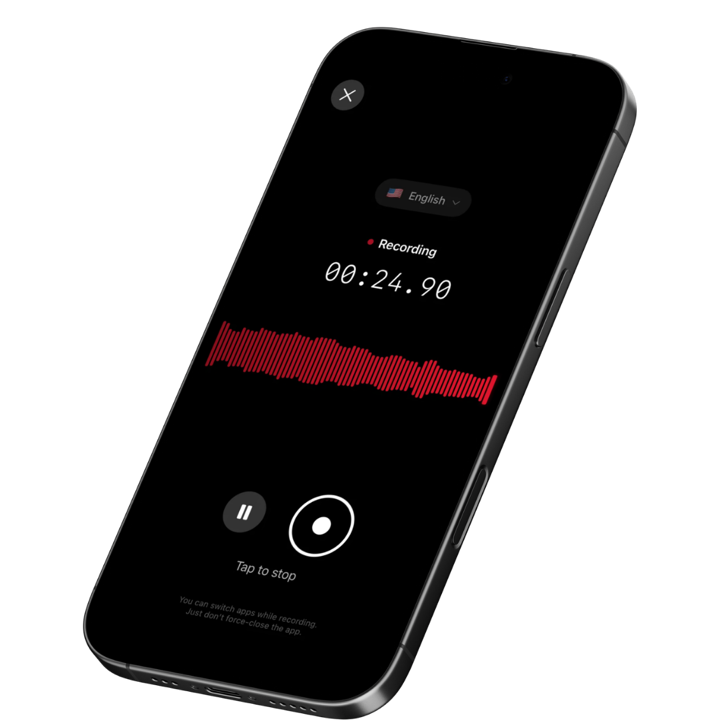
Speakwise turns your iPhone into an AI meeting assistant. One-tap or AirPods hands-free recording captures in-person conversations, then produces summaries, accurate transcripts in 100+ languages, and automatic action item extraction. When post-meeting open loops are closed immediately - decisions documented, action items captured, context preserved - the cognitive pressure to "remember to remember" is eliminated. As documented in our note-taking productivity statistics analysis, reducing post-meeting cognitive load has measurable downstream effects on concentration and anxiety.
Download Speakwise on the App Store and close the cognitive loops that keep work on your mind after hours.
4.9-star App Store rating with thousands of installs.
Download Speakwise on the App Store

🎯 4.9★ App Store Rating | 📱 Built for iOS
