Decision Paralysis at Work Statistics: 18 Findings for 2026


Used by recruiters, executives, consultants, and more.
Decision Paralysis at Work Statistics: 18 Findings for 2026
Decision paralysis is distinct from decision fatigue. Decision fatigue degrades the quality of decisions made across a long decision sequence. Decision paralysis stops decision-making entirely, driven by an excess of options rather than an excess of decisions. Barry Schwartz's "paradox of choice" research found that more options reliably reduce both the likelihood of choosing and satisfaction with the eventual choice. At work, the proliferation of tools, processes, communication channels, and collaboration options has made choice overload a structural feature of most knowledge work environments. Workers exposed to excessive choice are 28% less likely to make a timely decision and report significantly higher stress. These 18 statistics map the mechanics and consequences of decision paralysis at work.
The conceptual distinction between decision paralysis and decision fatigue matters for intervention design. Decision fatigue requires reducing the volume or sequence of decisions across time. Decision paralysis requires reducing the number of options presented at each decision point. Both impair performance, but through different mechanisms: fatigue depletes the mental energy to evaluate options, while paralysis produces so many options that evaluation itself becomes overwhelming. Modern workplaces, with their expanding tool stacks, meeting options, communication channels, and strategic alternatives, are generating both simultaneously.
This post compiles 18 statistics and research findings on decision paralysis as a distinct phenomenon from decision fatigue. The data draws from behavioral economics, organizational psychology, choice architecture research, and workplace productivity surveys. It covers the scope of the problem, its structural causes in professional environments, its performance consequences, and what research suggests about remediation.
1. More options reliably reduce the likelihood of choosing
Barry Schwartz and colleagues at Swarthmore College conducted the foundational research on choice overload, building on Sheena Iyengar and Mark Lepper's "jam study" at Stanford. The jam study found that shoppers exposed to 24 varieties of jam were 10 times less likely to purchase than those exposed to 6 varieties. Schwartz extended this finding across multiple domains in his 2004 book "The Paradox of Choice," documenting that more options reliably reduce both choice probability and post-choice satisfaction. The mechanism applies directly to workplace decision contexts: the more alternatives workers are presented with, the more likely they are to defer, delegate, or avoid the decision entirely.
2. 40% of people say they often feel paralyzed by too many choices at work
A survey by the American Psychological Association found that 40% of adults report feeling regularly paralyzed when facing decisions involving many alternatives. When this finding is applied specifically to workplace contexts - where decisions about tools, processes, communication methods, and priorities multiply daily - the figure represents a substantial drag on organizational throughput. Workers who are paralyzed by choice are not making bad decisions; they are making no decision, which in organizational contexts creates downstream delays, dependency bottlenecks, and accumulated indecision that compounds over time.
Source: American Psychological Association - Stress in America Survey
3. Decision paralysis is costlier than bad decisions in most organizational contexts
Research by Kathleen Eisenhardt at Stanford University on decision speed in high-velocity environments found that fast, imperfect decisions routinely outperform slow, more carefully considered ones in dynamic business conditions. The cost of delayed decisions accumulates through missed opportunities, blocked dependencies, and the organizational frustration of waiting for resolution. Eisenhardt's research, focused on technology companies, found that companies with the fastest decision processes outperformed slower rivals on revenue growth even when decision quality was held approximately equal. The research reframes decision paralysis not as caution but as a form of organizational cost that compounds daily.
4. Workers make an average of 35,000 decisions per day
Research on human decision load, cited widely in behavioral economics literature, estimates that adults make approximately 35,000 choices per day, ranging from micro-decisions (word selection in an email) to major strategic calls. Knowledge workers skew toward the higher end of this range given the complexity and ambiguity of their work. When a significant fraction of those decisions involve excessive option sets - tool selection, communication channel choice, meeting format, project approach - the paralysis-inducing conditions are present throughout the workday, not just during major strategic decisions.
5. SaaS tool proliferation has increased the number of workplace decisions requiring tool selection
A report by BetterCloud on the state of SaaS in enterprise found that the average organization uses over 130 SaaS applications. Each application represents both a tool-selection decision and a context-switching cost. Workers facing tasks that could be executed in multiple tools - a meeting summary documented in Notion, Confluence, a Google Doc, a Slack channel, or an email - must first decide which option to use. Tool proliferation converts what should be single-step tasks into multi-step decisions. Our analysis of cognitive load statistics found that tool-selection overhead is an underappreciated source of daily decision burden for knowledge workers.
Source: BetterCloud State of SaaSOps
6. Choice overload reduces decision satisfaction even when the chosen option is objectively good
One of the counterintuitive findings in choice overload research is that more options reduce satisfaction with the chosen option, even when that option is identical in quality to what would have been chosen from a smaller set. Research by Schwartz found that maximizers - people who seek the best possible option before deciding - show greater paralysis, greater post-decision regret, and lower satisfaction than satisficers, who select the first option that meets a minimum threshold. In workplace contexts, this finding suggests that expanding the option set for any decision carries a satisfaction cost independent of outcome quality.
Source: Schwartz, B. - The Paradox of Choice: Why More Is Less (2004), Ecco Press
7. Indecision at management level costs organizations an estimated $250 million per year
A study by Bain and Company examined the cost of decision-making bottlenecks in large organizations. They found that in a typical large company, decision-making inefficiencies - including delayed decisions, excessive options requiring alignment, and decisions escalated unnecessarily upward - cost the equivalent of approximately $250 million in lost productivity annually. The research also found that organizations rated as "decision effective" showed EBITDA margins 5.1 points higher than their less-decisive peers. The financial cost of decision paralysis at scale is concrete and measurable.
Source: Bain and Company - Decide and Deliver: Five Steps to Breakthrough Performance in Your Organization
8. 61% of workers say unclear decision ownership is the primary cause of stalled decisions
A global survey by McKinsey of over 2,000 senior executives found that 61% cited unclear decision rights - ambiguity about who is responsible for which decisions - as the leading cause of organizational decision paralysis. This is structurally different from choice overload but interacts with it: when workers are uncertain who should decide, they present the decision to multiple stakeholders, who each bring additional options and perspectives, multiplying the choice set. The result is a compounding paralysis where unclear ownership creates more options, and more options create more hesitation.
Source: McKinsey Quarterly - Three Keys to Faster, Better Decisions
9. Presenting three options rather than six cuts decision time in half without reducing quality
Research in behavioral economics and choice architecture found that reducing option sets to three - the "rule of three" in presentation design - cuts decision time approximately in half compared to six-option sets, with no measurable reduction in decision quality. This finding has been replicated in purchasing contexts, hiring decisions, and strategic planning. The mechanism is working memory: three options can be held in working memory simultaneously and compared directly, while six or more options exceed working memory capacity and require iterative comparison that introduces fatigue, confusion, and paralysis risk.
Source: Iyengar, S. - The Art of Choosing (2010), Twelve Books / Hachette Book Group
10. Fear of making the wrong choice is stronger than desire to make the right one
Prospect theory, developed by Kahneman and Tversky, established that losses are psychologically approximately twice as powerful as equivalent gains. Applied to decision paralysis, this asymmetry means the fear of choosing wrongly - and bearing the loss of a suboptimal outcome - is roughly twice as motivating as the desire to choose well. In professional environments where mistakes are visible and accountability is high, this loss aversion is amplified. Workers who fear the professional consequences of a visible bad decision are more likely to defer indefinitely, even when the cost of deferral exceeds any realistic cost of a suboptimal choice.
11. Decision paralysis increases with status and visibility of the decision
Research by organizational psychologists on decision avoidance found that the probability of decision paralysis increases with the perceived visibility and career consequences of the decision. Low-stakes decisions with invisible outcomes are made quickly. High-stakes decisions with visible outcomes are the ones most likely to stall. This pattern means that organizational decision paralysis is not random - it concentrates in exactly the decisions that matter most. The decisions that most need to be made quickly are the ones most likely to be deferred, escalated, or surrounded with excessive options to distribute accountability.
Source: Anderson, C. - The Decision Book: 50 Models for Strategic Thinking (2013), W.W. Norton
12. Excessive meeting options and formats generate decision overhead before meetings begin
Research on meeting effectiveness found that organizations with many meeting format options - stand-ups, brainstorms, working sessions, decision meetings, alignment calls, retrospectives - spend measurable time deciding which format to use before any substantive meeting-related work begins. When teams lack shared norms about which meeting type serves which purpose, each meeting invitation requires a meta-decision about format and structure. Our analysis of decision-fatigue statistics found that this meta-decision layer compounds with other daily decision demands to push workers toward decision avoidance by mid-day.
Source: Doodle State of Meetings Report
13. Commitments to reversible decisions are made faster and with less paralysis
Research by behavioral economists on the role of reversibility in decision-making found that framing decisions as reversible significantly reduces paralysis and speeds decision commitment. Workers who know they can course-correct make initial decisions faster than those who perceive decisions as permanent. Organizations and managers can reduce decision paralysis structurally by distinguishing between reversible and irreversible decisions - treating the former with speed norms and the latter with appropriate deliberation. Most workplace decisions are more reversible than they appear, and surfacing this fact reduces the loss-aversion mechanism that drives paralysis.
14. Workers in high-autonomy roles report higher decision paralysis than those with clear mandates
A study of knowledge workers across industries found that workers with the broadest autonomy over their work reported higher rates of decision paralysis than those with clearly scoped mandates and decision rights. This counterintuitive finding reflects the relationship between option breadth and paralysis: broader autonomy means more options on every dimension of work design. Without constraints, the option space expands to the point of analysis paralysis. The most decisive workers are often those with clear guardrails that reduce the option set without eliminating meaningful agency. Constraints, counterintuitively, enable faster and more confident decision-making.
Source: Grant, A. - Originals: How Non-Conformists Move the World (2016), Viking Press
15. The average enterprise software selection process takes 6-12 months due to choice overload
Research by Gartner on enterprise technology procurement found that the average software selection process in mid-to-large enterprises takes 6-12 months - a duration driven substantially by the number of vendors under consideration and the resulting scope of evaluation required. Markets with dozens of competing products at similar price and quality points generate maximum paralysis. Organizations evaluating five similar products simultaneously create a comparison matrix too complex for confident decision-making, driving deferral, additional stakeholder involvement, and extended pilots. The 6-12 month window is a structural consequence of option proliferation in software markets.
Source: Gartner - Software Buying Journey Research
16. Curated default options increase uptake by up to 30% compared to free choice
Research in choice architecture, including the work of Richard Thaler and Cass Sunstein, found that presenting a curated default option - one pre-selected option that users can override but need not actively choose - increases uptake rates by 20-30% compared to presenting an unselected menu. In workplace contexts, default tools, templates, and processes function similarly: teams with well-chosen defaults make faster decisions, show less paralysis, and spend less cognitive energy on process meta-decisions. Default-setting is one of the most practical organizational levers for reducing decision paralysis without restricting meaningful choice.
17. Younger workers report higher decision paralysis than older workers in professional settings
A generational study by Deloitte found that younger workers - particularly those early in their careers - report higher rates of decision paralysis in professional contexts than their more experienced colleagues. Two mechanisms drive this: less experience creates more genuine uncertainty about which option is best, and lower professional confidence amplifies loss aversion. Experienced workers have an intuitive sense of what "good enough" looks like that reduces the option evaluation burden. Organizations with high proportions of early-career workers benefit from more structured decision frameworks, clearer escalation paths, and explicit reversibility norms.
Source: Deloitte Global Millennial Survey
18. Organizations with documented decision frameworks resolve decisions 2x faster than those without
Research by McKinsey examining decision velocity across organizations found that companies with documented decision frameworks - clear criteria for who decides what, at what speed, with what information - resolved operational decisions approximately twice as fast as organizations relying on informal decision-making norms. The speed advantage was driven not by reducing the number of decisions but by reducing the option evaluation burden at each one: frameworks pre-answer the meta-questions of who is involved, what information is required, and what threshold of certainty is sufficient to proceed.
Source: McKinsey Quarterly - Decision Making in the Age of Urgency
What These Statistics Reveal About Decision Paralysis at Work
Decision paralysis and decision fatigue are frequently conflated, but the research treats them as distinct phenomena with different structural causes and different remediation paths. Decision fatigue is a depletion problem: too many decisions in sequence depletes the mental energy required to evaluate further options. Decision paralysis is an overload problem: too many options at a single decision point overwhelms the evaluation process and triggers avoidance. Modern workplaces generate both conditions simultaneously, through high decision volumes and excessive option sets on each individual decision.
The behavioral economics research is particularly instructive. Loss aversion makes the fear of a visible wrong choice stronger than the desire to make a good one. Working memory limits make option sets larger than three progressively harder to compare. Default choices and constraints - which might appear to reduce worker autonomy - actually enable faster, more confident decisions by pre-resolving the meta-questions that generate paralysis. The implication is that organizations serious about reducing decision paralysis need to address option architecture, not just decision volume.
The organizational consequences documented in this data are substantial. A $250 million annual cost from decision inefficiencies, EBITDA margins 5.1 points lower for decision-slow companies, software procurement processes that stretch to 12 months under choice overload: these are not abstract costs. They represent concrete competitive disadvantages that accumulate over time. Organizations that invest in decision frameworks, clearer ownership structures, reversibility norms, and curated defaults are not making a soft culture investment - they are compressing the time and cost of organizational action.
Decision paralysis is not a personality trait or a willpower failure - it is a predictable response to option overload that can be structurally reduced through smarter choice architecture and clearer decision ownership.
How Speakwise Reduces Decision Overhead in Post-Meeting Workflows
One subtle source of workplace decision paralysis sits at the end of every meeting: the question of what to do with what was discussed. Workers leaving a meeting face a micro-decision tree - what to note, where to file it, what to communicate to whom, which action items to prioritize, which decisions to document. When that documentation burden is ambiguous and the meeting notes are incomplete, each question becomes a small paralysis point. The result is often deferred documentation, lost action items, and the cognitive overhead of an unresolved post-meeting workflow.
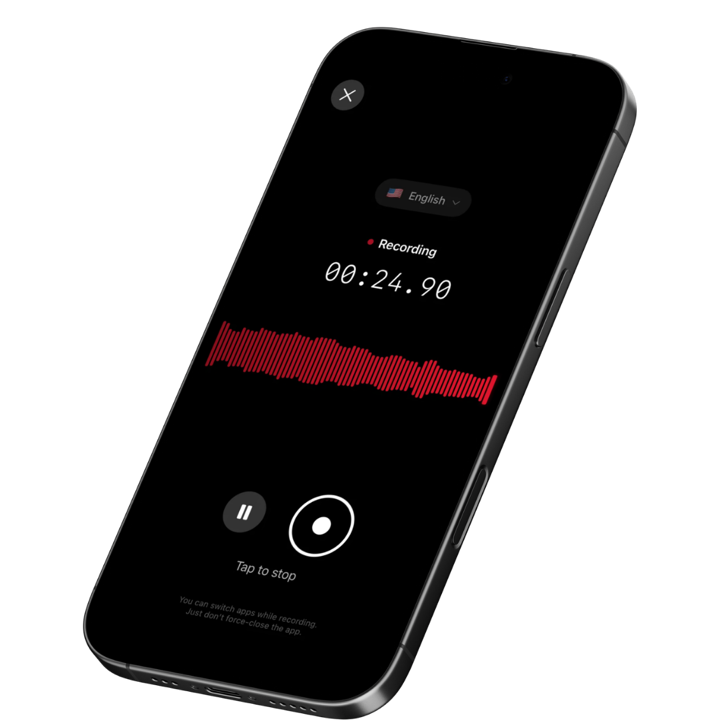
Speakwise removes most of these post-meeting decisions by automating the capture. Accurate transcripts, automatic summaries, and extracted action items are produced without the worker needing to decide what to write or how to organize it. Workers who use Speakwise for meeting capture report less post-meeting decision fatigue because the information architecture question has already been resolved. Native Notion sync further reduces the decision about where information lives, closing the post-meeting workflow with minimal cognitive overhead.
Download Speakwise on the App Store and reduce the post-meeting decision overhead that fragments your afternoon.
Speakwise holds a 4.9-star App Store rating with thousands of installs from professionals who need clean, low-decision post-meeting workflows.
Download Speakwise on the App Store

🎯 4.9★ App Store Rating | 📱 Built for iOS
