Inbox Zero Statistics: 18 Email Management Insights for 2027
TL;DR
Inbox zero statistics for 2027 show email eats a share of the workweek. McKinsey found email takes up about 28% of a knowledge worker's week (McKinsey Global Institute). Speakwise sends an iPhone meeting summary and action items to Notion, with a 7-day free trial.
 Speakwise - AI Note Taker
Never miss a key detail
- Smart summaries and action items.
- Speaker diarization labels who said what.
- Unlimited premium transcription.
- Auto-sync to Notion.
- Record offline, even with no signal.



Used by recruiters, executives, consultants, and more.
Inbox Zero Statistics: 18 Email Management Insights for 2027
Inbox zero statistics for 2026 show how much of the workweek disappears into email, long before anyone reaches a true inbox zero. McKinsey found email consumes about 28% of a knowledge worker's week, and global email volume keeps climbing every year. This post gathers 16 statistics on email volume, time cost, and stress, and what the evidence says actually helps.
1. Email consumes 28% of the average knowledge worker's week
McKinsey Global Institute research found that email consumes approximately 28% of the knowledge worker's workweek - roughly 11.2 hours per week for a standard 40-hour schedule. This makes email the single largest category of time consumption in knowledge work, ahead of role-specific tasks in many roles. The 28% figure has been widely replicated by subsequent research and represents a baseline rather than a worst-case: workers in sales, client services, and management roles routinely report higher email time fractions. At 11+ hours weekly, email is effectively a part-time job layered on top of whatever work the email is nominally about - an overhead burden that does not appear in job descriptions or workload calculations.
Source: McKinsey Global Institute - Social Economy Report, cited in Threadly
2. Global email volume reached 361.6 billion messages per day in 2024
The Radicati Group's Email Statistics Report 2024-2028 documented global email volume at 361.6 billion messages per day in 2024, rising to an estimated 376.4 billion in 2025 and projected to exceed 392 billion by 2026. Business email constitutes more than half of all email traffic. The growth trajectory shows no signs of reversal despite the proliferation of messaging platforms: email volumes have increased alongside, not instead of, Slack, Teams, and other tools. This accumulation creates a "tool stack overload" in which workers must monitor multiple high-volume channels simultaneously, a pattern that compounds the attention fragmentation costs associated with any single channel.
Source: Radicati Group - Email Statistics Report 2024-2028
3. The average office worker receives 121 emails per day
Microsoft Work Trend Index data and independent research converge on a figure of 117-121 emails received per day by the average office worker, with approximately 40 sent in return. Role stratification is significant: executives receive 150-200+ emails daily, sales professionals 100-150, and individual contributors 50-100. This daily volume makes Inbox Zero - in its strict "empty inbox by end of day" interpretation - a significant time investment. For a worker receiving 121 emails, even a 2-minute average processing time per email represents over 4 hours of email work daily. The math makes clear why most workers' inboxes accumulate rather than clear: the volume-plus-processing-time equation does not fit into the fraction of available time that most workers can rationally allocate to email.
Source: Threadly - Email Management in 2025: 17 Statistics
4. 70% of professionals identify email as their top workplace stress source
A 2025 survey found that 70% of professionals identify email as their number-one source of workplace stress, ranking above meetings, Slack and Teams notifications, and workload volume. 58% of workers now report feeling anxious when opening their inbox. This stress response is not irrational: unprocessed email represents a known-unknown category of obligation. Workers who have not cleared their inbox know that somewhere in the backlog are commitments they have implicitly missed, questions they have not answered, and decisions that have been waiting. The inbox functions as a visible, persistent reminder of incompletion - a psychological trigger that maintains low-grade stress independently of actual workload.
Source: Mailbird - 2025 Survey: Email Overload's Impact
5. Batch-checking email three times daily reduces stress by 38%
A University of British Columbia study found that limiting email checking to three scheduled times per day reduces stress by 38% with no corresponding loss of productivity. Participants who were randomized to batch-check reported significantly lower stress than those who checked continuously, despite completing the same amount of work. The mechanism is well-established: constant email monitoring creates a state of "alert readiness" that prevents deep focus, maintaining cognitive arousal at levels inconsistent with recovery or sustained concentration. Reducing check frequency breaks this alert cycle, allowing the nervous system to move between focused work and genuine rest rather than sustaining a continuous monitoring state.
Source: CloudHQ - Workplace Email Statistics 2025 (citing UBC study)
6. Only 10% of work emails are genuinely business-critical
Research on email content analysis found that on average only about 10% of work emails are truly business-critical, with the remainder being bulk notifications, CC'd correspondence that requires no action, newsletter content, and outright spam. This 10% figure means that workers who process all email with equal attention are spending approximately 90% of their email time on low-value content. The Inbox Zero methodology addresses this directly by advocating for aggressive filtering, unsubscription, and decision-routing rules that move non-critical mail out of the main inbox before it competes for attention with messages that require action. The premise is that inbox structure should reflect priority hierarchy, not arrival sequence.
Source: Readless - 15 Email Overload Statistics Every Knowledge Worker Should Know
7. 73% of workers say their email volume has increased over the past year
A Mailbird survey of 250+ professionals found that 73% of respondents indicate their email volume has grown over the past 12 months. The average knowledge worker in this sample received between 50 and 100 emails per day, with some reporting 150+. This growth trajectory is consistent with Radicati's global volume data and confirms that individual workers are not imagining the problem: email load has been increasing structurally, not merely feeling heavier due to other stressors. Organizations that adopted messaging platforms like Slack or Teams in the expectation of reducing email load have largely found instead that email volume held constant while total communication volume grew through platform addition.
Source: Mailbird - 2025 Survey: Email Overload's Impact
8. 61% of workers believe their personal email management methods are inadequate
Mailbird's survey found that 61% of respondents believe their personal email management methods are inadequate, yet only 20% believe dedicated email applications or tools are the solution. This gap is significant: workers are aware their current approach does not work but are skeptical that technology alone resolves the problem. The research and practitioner consensus supports this skepticism - Inbox Zero practitioners consistently emphasize that the method requires behavioral change (defined processing times, explicit decision rules, commitment to action on first read) rather than app features. Technology can support the method but cannot substitute for the underlying decision discipline it requires.
Source: Mailbird - 2025 Survey: Email Overload's Impact
9. 35% of professionals spend two to five hours daily on email
A third of professionals spend two to five hours every day reading and responding to email, with another 35% spending less than an hour. A further one-third reports spending three to five hours per week managing their inboxes specifically - distinct from reading and replying. The two-to-five-hour cohort is particularly significant: for workers in 8-hour workdays, email at this level consumes 25-62% of available work time, leaving dramatically compressed windows for the focused, high-cognitive-demand work that most professional roles require. This time displacement is the primary mechanism through which email overload reduces output quality: it is not that email is done badly but that the depth work it crowds out is done less, or not at all.
Source: getinboxzero.com - How Much Time Are You Spending on Email? (2026)
10. Workers are interrupted roughly every two minutes by communications
High-ping knowledge workers face an interruption roughly every two minutes from meetings, emails, or notifications, according to research cited in email productivity analyses. Each interruption carries an attention recovery cost: research on context switching shows it takes an average of 23 minutes to fully return to a complex task after an interruption. A worker receiving 121 emails throughout the day who responds to each notification as it arrives is effectively rendering sustained focus impossible. The Inbox Zero methodology's core operational recommendation - turning off email notifications entirely and substituting scheduled processing windows - directly addresses this interruption-recovery cost, even before any sorting or filtering strategy is applied.
Source: Readless - Inbox Zero Statistics in 2026: 17 Data-Backed Insights
11. Organizations implementing email management strategies see 30-40% productivity loss reduction
Research on organizational email management interventions found that organizations implementing systematic approaches - email-free time blocks, clear etiquette guidelines, alternative tool adoption, standardized templates, and employee training - reported a 30-40% reduction in email-related productivity loss and improved employee satisfaction scores. This finding is significant because it shifts the locus of Inbox Zero implementation from individual practice to organizational policy. Individual workers adopting batch-checking in organizations without corresponding culture change face social friction - delayed responses may generate anxiety from senders expecting immediate replies, and the methodology's benefits are partially offset by managing expectations. Organization-wide adoption removes this friction.
Source: Mailbird - 2025 Survey: Email Overload's Impact
12. 19% of workers open their email app more than 20 times per day
Research on email-checking behavior found that 19% of respondents - labeled "true email geeks" - open their email application more than 20 times daily. The majority check five or fewer times per day. The 20-times cohort represents the extreme end of continuous monitoring, a pattern associated with the highest stress levels and lowest focused work output in the behavioral research. For this population, the gap between current behavior and the evidence-based three-times-daily recommendation is largest, suggesting the greatest potential productivity and stress benefit from behavior change. The irony documented in multiple studies is that this group also tends to report the most anxiety about email - the monitoring behavior that is supposed to reduce missed-message anxiety actually amplifies it.
Source: Slack - Inbox zero and other productivity myths
13. 48% of employees describe their work as feeling chaotic and fragmented
Research on workplace communication overload found that 48% of employees and 52% of leaders report their work feels chaotic and fragmented. Multi-channel communication - email, Slack, Teams, text, and video - has created an environment in which attention is permanently divided across platforms, none of which is reliably processed in full. Inbox Zero was designed for a single-channel world; its application to multi-channel environments requires adaptation. As our email overload statistics document, the total communication burden is not the sum of individual channel volumes but their combined interruption and context-switching cost, which grows faster than the sum of parts.
Source: Readless - Inbox Zero Statistics in 2026: 17 Data-Backed Insights
14. Email volume is projected to reach 408 billion messages per day by 2027
Radicati Group projections show global email volume crossing 408 billion messages per day by 2027, a trajectory that makes the challenge of inbox management structurally more severe each year without behavioral or organizational intervention. Business email's share of this total is expected to remain above 50%. The growth is driven by increasing numbers of email accounts globally, expanding adoption in emerging markets, and the persistence of email as the default formal communication channel for external correspondence. No messaging platform has successfully displaced email for cross-organization communication, ensuring that business email volume will continue growing alongside internal messaging tool adoption.
Source: Radicati Group - Email Statistics Report 2023-2027
15. Knowledge workers average 11.7 hours weekly processing emails
A 2025 workplace survey cited in CloudHQ's workplace email statistics found that the average knowledge worker spends 11.7 hours per week processing emails - slightly above the McKinsey 11.2-hour estimate and consistent with the pattern of growing volume. At 11.7 hours per week, email processing consumes more time than any other single activity category in knowledge work, including most types of focused project work. The 11.7-hour figure also implies a second-order cost: the focus interruption generated by email monitoring throughout the day reduces the quality and depth of the hours nominally spent on non-email work. Total email's true time cost is therefore higher than 11.7 hours once recovery time from interruptions is included.
Source: CloudHQ - Workplace Email Statistics 2025
16. Workers using Inbox Zero report reduced stress and improved focus
Research and practitioner evidence consistently finds that workers who adopt Inbox Zero-style systematic processing report reduced stress and improved focus compared to their pre-adoption baseline. The key mechanism is the replacement of open-ended monitoring with closed, time-bounded processing: rather than a persistent background awareness of an unknown inbox state, workers have defined processing windows after which the inbox is genuinely clear. This predictability is the primary psychological benefit, separate from any efficiency gain. Our cognitive load statistics describe how open tasks and unresolved commitments generate ongoing working memory burden - the mechanism through which an uncleared inbox produces the anxiety that 58% of workers report feeling when opening their email.
Source: Asana - Inbox Zero Method: 5 Steps to Manage Your Email
What These Numbers Tell Us About Inbox Zero in 2027
The data on email volume, time costs, and stress tell a consistent story: the default inbox is a design failure. Treating email as a queue to be monitored continuously, with every incoming message competing for immediate attention, is incompatible with the focused, high-quality work that most professional roles require. The 28% workweek consumption figure is not a function of bad habits in individual workers - it reflects what happens when organizations build communication norms around tools that make no distinction between urgent and routine, between action-required and FYI.
The evidence on batch-checking is particularly actionable because it is controlled rather than observational: the UBC study randomly assigned workers to checking protocols and measured outcomes, ruling out the possibility that calmer workers simply check email less. Three scheduled windows reduced stress by 38% with no productivity loss. This is among the cleaner findings in the email research literature and has a straightforward implementation path.
The organizational dimension of the statistics matters as much as the individual one. The 30-40% productivity improvement from organization-wide email management policies, compared with the more modest individual benefits of personal Inbox Zero practice, suggests that the most effective interventions change communication culture at the system level. Email norms - when responses are expected, how CC chains are managed, which communications belong in messaging tools - are collective agreements, not individual preferences, and they respond best to collective change.
The Inbox Zero methodology's core insight is durable: email should be a decision system, not a holding tank, and the data show that the cost of treating it otherwise is measurably large.
How Speakwise Reduces Reliance on Email for Meeting Follow-Up
One of the largest categories of email that knowledge workers generate and receive is meeting follow-up: summary emails, action item lists, decision logs, and clarification threads. This category is a direct output of imprecise or undocumented meetings - when participants leave a conversation without a shared record, email becomes the reconstruction tool.
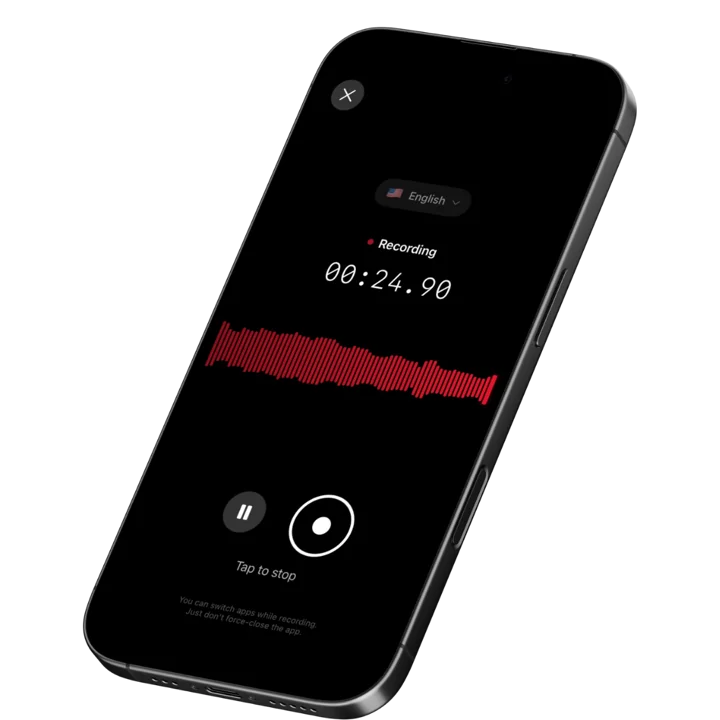
Speakwise removes this category of follow-up email at the source. One-tap or AirPods hands-free recording on your iPhone captures the full meeting. Speakwise produces accurate transcripts in 100+ languages, AI summaries, and extracted action items automatically. Participants leave with a shared record rather than conflicting recollections, reducing both the volume of clarification email and the time spent writing summary messages.
For teams with heavy meeting schedules, the reduction in follow-up email can be significant. Native Notion sync means that records land where teams already work, without an additional step. The $59.99/year Premium plan includes full access with a free trial.
Download Speakwise on the App Store and cut one of the largest categories of follow-up email from your inbox.
Speakwise holds a 4.9-star App Store rating with thousands of installs.
Download Speakwise on the App Store
🎯 4.9★ App Store Rating | 📱 Built for iOS
