Mental Fatigue Statistics: 20 Findings for 2026
Used by recruiters, executives, consultants, and more.
Mental Fatigue Statistics: 20 Findings for 2026
Mental fatigue is not the same as physical tiredness - and the distinction matters for how organizations measure and respond to it. A landmark 2022 study published in Current Biology found that prolonged cognitive work causes a measurable accumulation of glutamate in the brain's lateral prefrontal cortex, impairing the capacity for continued cognitive control and shifting decision-making toward lower-effort, immediate-reward choices. The WHO estimates that 12 billion working days are lost globally every year to depression and anxiety - conditions that share a biological pathway with chronic mental fatigue. In the United States alone, presenteeism from mental exhaustion costs an estimated $150 billion annually in lost productivity. Mental fatigue is distinct from burnout, distinct from stress, and increasingly recognized as one of the primary limits on professional performance.
Mental fatigue is formally defined as a psychobiological state caused by sustained cognitive activity, characterized by a declining willingness to exert effort, impaired attention, slowed reaction times, and degraded decision quality - even when the person experiencing it feels subjectively motivated to continue. Unlike physical fatigue, which has clear sensory signals, mental fatigue can accumulate without obvious markers until performance has already deteriorated significantly.
This post covers 20 statistics on mental fatigue at work, drawing on neuroscience research, occupational health studies, large-scale workforce surveys, and clinical data to document the scale and mechanisms of this often-underestimated challenge.
1. A day of hard cognitive work causes measurable glutamate accumulation in the prefrontal cortex
A 2022 study published in Current Biology used magnetic resonance spectroscopy to monitor brain metabolites in two groups - one performing high-demand cognitive control tasks and one performing low-demand tasks - throughout an approximate workday. The high-demand group showed significantly higher glutamate concentration in the lateral prefrontal cortex. This glutamate accumulation appears to trigger a regulatory mechanism that makes further activation of the prefrontal cortex more costly, explaining why cognitive control is harder to mobilize after a mentally strenuous day. Participants in the high-demand group also shifted toward lower-effort, lower-delay choices in subsequent decision tasks, consistent with the behavioral experience of mental fatigue. Glutamate is cleared during sleep, which is why rest - not willpower - is the primary recovery mechanism.
Source: Current Biology - Fatigue: Tough days at work change your prefrontal metabolites
2. The WHO estimates 12 billion working days are lost annually to depression and anxiety
The World Health Organization's mental health at work data estimates that depression and anxiety - both of which share a neurobiological pathway with chronic mental fatigue - account for approximately 12 billion lost working days globally every year. The associated economic cost is $1 trillion annually in lost productivity. These figures include both absenteeism (workers absent from work) and presenteeism (workers present but cognitively impaired). The WHO notes that workplace conditions including excessive cognitive demands, insufficient autonomy, and lack of support are among the leading contributors to this burden. Mental fatigue that is left unaddressed progresses predictably toward the anxiety and depressive states that produce these absenteeism figures.
Source: World Health Organization - Mental Health at Work
3. 59% of U.S. employees reported burnout in 2024 - with exhaustion as the primary symptom
Gallup and multiple 2024 workforce surveys converge on burnout prevalence in the range of 52% to 59% of U.S. employees. Mental fatigue and exhaustion consistently rank as the primary reported symptoms of burnout, surpassing cynicism and reduced efficacy in frequency and intensity. A 2024 study of over 1,700 Portuguese employees found that 49.9% reported at least one burnout symptom, with exhaustion being the most intense and most frequent. Mental fatigue is not a consequence of burnout that occurs after other symptoms - it is typically the first symptom, the one that precedes cynicism and disengagement and that, if addressed early, can prevent full burnout from developing.
Source: Gallup - Employee Burnout: Causes and Cures
4. Mental fatigue became the leading indicator of burnout in 2025 - surpassing workload volume
Deloitte's 2025 Workforce Intelligence Report identified a significant shift in burnout drivers: mental fatigue, cognitive strain, and decision friction became the leading indicators of burnout in the data, surpassing raw workload volume for the first time. This shift reflects the changing nature of professional work. The problem for modern knowledge workers is not primarily the number of hours worked but the cognitive density of those hours - the number of context switches, the volume of decisions, the fragmentation of attention, and the absence of recovery time within the workday. A four-hour day of high-interruption, cognitively fragmented work produces more mental fatigue than a longer day of sustained, focused effort.
Source: Deloitte - Workforce Intelligence Report 2025
5. Sustained cognitive work for 7 hours impairs neural network activity even with regular breaks
A controlled laboratory study found that engaging in seven hours of simulated office cognitive work - with 10-minute breaks every 50 minutes - still resulted in suppressed brain neural network activity, decreased cognitive efficiency, and measurable mental fatigue by the end of the session. The breaks were not sufficient to restore baseline performance or neural function. This finding challenges the assumption that standard workplace break policies provide adequate cognitive recovery. The brain's prefrontal cortex, which coordinates planning, working memory, and cognitive control, requires longer recovery windows than typical short breaks provide. Workers who begin each day without adequate prior-night sleep start with a prefrontal cortex already operating below peak capacity.
6. 94% of USAF pilots report performance-degrading effects of mental fatigue
A study of United States Air Force pilots and navigators found that 94% reported experiencing performance-degrading effects from fatigue. Among the specific cognitive consequences: decreased situational awareness (73%), slowed reaction time (67%), increased distractibility (43%), forgetfulness (41%), and apathy (33%). In professional aviation, where the consequences of cognitive impairment are immediately visible, mental fatigue has been systematically studied and regulated. The same cognitive mechanisms apply in every knowledge profession - but without the feedback loops and regulatory structure that make aviation fatigue visible, it accumulates undetected in offices, meeting rooms, and remote work setups around the world.
7. Digital fatigue accounts for 39% of the variance in employee exhaustion
A scoping literature review on digital fatigue and employee productivity, published in 2025, found that digital fatigue - the exhaustion produced by sustained engagement with screens, communication tools, and digital systems - accounts for 39% of the variance in employee exhaustion and 17% of the variance in negative mental health outcomes. This is a large effect size for a single environmental variable. The mechanisms are multiple: screen-mediated communication requires greater cognitive processing for the same information exchange, notification streams prevent recovery between tasks, and the blurring of work and non-work contexts through always-available devices eliminates the spatial and temporal recovery cues that historically signaled when to stop.
8. 69% of workers face a risk of digital burnout from an always-on culture
A 2025 report found that 69% of workers are at risk of digital burnout as a consequence of always-on work culture - the expectation that employees remain reachable and responsive outside their official working hours. This expectation extends the cognitive workday into evenings, weekends, and vacations, eliminating the recovery time the brain requires to clear the metabolic byproducts of sustained cognitive effort identified in the Current Biology glutamate research. Workers who check messages in the evening cannot fully disengage their prefrontal function, meaning the glutamate accumulation from the day persists into recovery time and compounds the following day's starting deficit.
Source: IOSH Magazine - Always on, always tired: why digital fatigue is an emerging OSH risk
9. Mental fatigue impairs sustained attention, working memory, and decision quality simultaneously
A systematic review on cognitive fatigue in teams, published in Human Factors in 2024, found that mental fatigue consistently impairs performance across three critical cognitive domains simultaneously: sustained attention (the ability to maintain focus over time), working memory (the capacity to hold and manipulate information), and decision quality (the ability to select appropriate options under uncertainty). These are not independent capacities - they are the foundational cognitive functions that all complex professional work requires. When all three are simultaneously degraded, the result is not just slower work but qualitatively different work: more reactive, less strategic, more error-prone, and less capable of incorporating context that was established earlier in the task.
Source: SAGE Journals - A Systematic Review on the Effect of Cognitive Fatigue in Teams
10. Presenteeism from mental exhaustion costs U.S. employers an estimated $150 billion annually
Research on workplace presenteeism - the practice of attending work while cognitively impaired and unable to perform effectively - estimates that mentally exhausted workers cost U.S. employers approximately $150 billion annually in lost productive output. This figure is larger than the cost of absenteeism from the same causes because presenteeism is invisible: the worker is counted as present and productive even when their cognitive capacity is severely diminished. Our digital fatigue statistics show that presenteeism is increasing as remote work makes it harder for workers to enforce boundaries between work and recovery, keeping them technically available but cognitively unavailable for sustained periods.
Source: Wellhub - Employee Burnout Statistics
11. Fatigued workers have error rates up to 3.3 times higher than non-fatigued colleagues
Research on occupational fatigue and performance found that employees with high emotional exhaustion and mental fatigue had significantly elevated absenteeism rates - up to 3.3 times higher than less fatigued colleagues - and presenteeism rates 4.7 times higher. Studies on field performance, including a study of train operating company staff published in Frontiers in Psychology, found that high fatigue was associated with impaired performance on both visual search and logical reasoning tasks, the two cognitive functions most commonly required for safety-critical decision-making. In cognitive work, the equivalent performance gap shows up as more decision errors, more overlooked details, and more time needed to complete tasks that would be straightforward under conditions of adequate cognitive recovery.
Source: PMC - Occupational Burnout and Productivity Loss
12. 45% of workers feel emotionally drained from work; 51% feel "used up" at day's end
A 2024 Headspace State of Mind survey of 2,000 U.S. employees found that 45% describe themselves as emotionally drained from their work, and 51% report feeling "used up" at the end of a typical workday. Both measures are established components of the burnout construct and reflect the exhaustion dimension of mental fatigue specifically. Workers who feel used up at the end of the day are less able to recover fully before the next workday begins - particularly if they also check messages in the evening. Cumulative cognitive fatigue, in which each day ends without complete recovery, produces the trajectory from manageable fatigue to clinical burnout over weeks or months.
Source: Headspace - The Workforce State of Mind in 2024
13. Mental fatigue shifts decision-making toward low-effort, immediate-reward options
The same 2022 Current Biology study that documented glutamate accumulation also measured behavioral changes in fatigued participants. Workers in the high-demand group showed a significant preference shift toward short-delay and low-effort options in subsequent decision tasks. This is not motivational failure - it is the predictable consequence of a prefrontal cortex operating under elevated glutamate load. The prefrontal cortex is responsible for long-term planning, impulse control, and the evaluation of complex trade-offs. When it is compromised by mental fatigue, workers default to simpler, faster, more immediate choices. This explains the well-documented end-of-day pattern of poorer decision quality, increased risk tolerance, and reduced strategic thinking.
14. Workers' prior-day workload measurably impairs next-day cognitive performance
A study published in Current Psychology examined the relationship between whole-day workload and next-day cognitive performance across a sample of office workers. Workers who experienced high cognitive demand the previous day showed measurably impaired performance on next-day cognitive tasks, including working memory tasks and sustained attention measures. The effect was significant and not fully explained by sleep quality alone, suggesting that the recovery from mental fatigue requires more than a night of sleep when prior-day cognitive load is very high. This finding has direct implications for workload scheduling: consecutive days of high cognitive demand, without protected recovery time, produce compounding performance deficits that cannot be recovered during standard rest periods.
Source: Springer - Workers' whole day workload and next day cognitive performance
15. Video meetings generate greater cognitive processing demands than in-person equivalents
Research from Stanford University's Virtual Human Interaction Lab, studying brain activity and physiological markers during video meetings, found that video meetings require greater cognitive processing power than in-person equivalents. Participants must expend additional mental energy monitoring their own appearance on camera, interpreting non-verbal cues that are harder to read through a screen, and compensating for the slight audio and video delays that make conversational timing cognitively demanding. Beta-wave activity - a physiological marker of cognitive stress - rose consistently over two hours of back-to-back video meetings, and returned to lower levels only when participants took breaks including brief meditation. The cognitive fatigue generated by a day of video calls is real, measurable, and additive.
Source: PMC - Zoom Fatigue and How to Prevent It
16. 11% of all workplace leaves of absence were due to mental health reasons in early 2024 - up 22% year-over-year
Mental Health America's 2024 workplace wellness research found that 11% of all leaves of absence in early 2024 were attributed to mental health reasons - a 22% increase compared to the same period the previous year. This increase reflects both greater worker awareness of mental health as a legitimate reason for leave and the actual escalation of mental health impairment in the workforce. Mental fatigue is a primary pathway to the clinical conditions (anxiety disorders, depressive episodes, adjustment disorders) that generate medical leave. Workers who do not recognize or address accumulating mental fatigue may reach a clinical threshold that requires formal leave before any organizational intervention occurs.
Source: Mental Health America - 2024 Workplace Wellness Research
17. Cognitive fatigue is especially severe for teams in high-interruption environments
Research published in Nature Scientific Reports on the interplay between mental workload, occupational fatigue, and cognitive performance in office workers found that interruption frequency was one of the strongest predictors of fatigue severity. Workers in high-interruption environments showed faster rates of fatigue onset, higher peak fatigue levels, and slower recovery than workers performing equivalent total cognitive work in lower-interruption conditions. The reason is that each interruption forces a context switch - the mental equivalent of lifting and replacing a cognitive state - which is itself fatiguing. Our meeting fatigue statistics document how back-to-back meeting schedules create the most severe interruption environments in the modern workplace.
18. 66% of millennials report significant burnout - the highest of any generation
Workforce research finds that 66% of millennial workers report experiencing significant burnout, the highest rate of any generation in current workforce surveys. Millennials are disproportionately represented in knowledge work roles with the highest cognitive demand profiles: project management, software development, product design, consulting, and digital marketing. These roles combine high decision frequency, high context-switching rates, and the always-on communication expectations of collaborative tools - creating the conditions for accelerated mental fatigue. Millennials also report the lowest rates of psychological detachment from work in the evenings, a critical recovery behavior, which compounds their fatigue accumulation relative to older generations.
Source: Gallup - Employee Burnout: Causes and Cures
19. Burned-out employees have presenteeism rates 4.7 times higher than engaged peers
Research on the productivity consequences of burnout, which is preceded by and driven by chronic mental fatigue, found that burned-out employees show presenteeism rates 4.7 times higher than their non-burned-out peers - meaning they are physically present at work but cognitively absent at nearly five times the rate. They also have absenteeism rates 3.3 times higher and are 2.6 times more likely to be actively seeking employment elsewhere. The economic cost of a burned-out employee is therefore not just the output they fail to produce; it is also the management time, recruitment cost, and institutional knowledge loss associated with their eventual departure. Mental fatigue, addressed before it reaches clinical burnout, is significantly cheaper to treat than burnout itself.
Source: Wellhub - Employee Burnout in the US
20. Sleep is the primary biological recovery mechanism for mental fatigue - not willpower or breaks
The Current Biology research on glutamate accumulation in the prefrontal cortex directly addresses the biology of mental fatigue recovery. The researchers found good evidence that glutamate - the metabolic marker of cognitive fatigue - is cleared from synaptic connections during sleep. Short breaks during the day do not adequately reverse the accumulation. Willpower and motivation cannot override the physiological constraint. This finding reframes the common organizational response to mental fatigue - "push through it" or "take a short break" - as biologically inadequate. Workers who report mental fatigue are not demonstrating weakness; they are reporting a real metabolic state that requires sleep to resolve. Organizations that expect cognitive performance on inadequate sleep are expecting output the biology cannot support.
Source: BrainFacts - ICYMI: Glutamate Buildup in Prefrontal Cortex May Indicate Mental Fatigue
What These Numbers Tell Us
The research on mental fatigue converges on a picture that most working professionals will recognize but rarely name: the state of being cognitively depleted before the workday ends, making decisions with a brain that is operating below capacity, and arriving at the next day without having fully recovered. The neuroscience behind this experience is now well-documented. The glutamate accumulation findings from Current Biology give mental fatigue a biological substrate, not just a psychological description. The cognitive control systems that underpin planning, prioritization, and quality decision-making are genuinely compromised after sustained cognitive effort.
The data also reveals a structural problem that individual-level interventions cannot solve. Workers cannot will their prefrontal cortex to clear glutamate faster. They cannot take a 10-minute break and fully restore the attention resources consumed by a morning of high-demand cognitive work. Organizational responses that treat mental fatigue as a motivation problem - through incentives, team building, or wellness programs - are addressing the wrong layer of the system. The leverage points are structural: reducing unnecessary cognitive load, protecting recovery time, and building systems that reduce the working memory burden of tracking and follow-up.
The trajectory is concerning. Burnout rates are climbing, digital fatigue is intensifying, and the blurring of work and non-work contexts is eliminating the recovery periods that historically protected cognitive function. Without structural intervention, the compounding effects of accumulated mental fatigue will continue to drive both the burnout statistics and the productivity losses they produce.
Mental fatigue is the brain's honest signal that cognitive demand has exceeded recovery capacity - and no amount of willpower changes the underlying biology.
How Speakwise Reduces Meeting-Driven Mental Fatigue
Back-to-back meetings are among the most reliable generators of mental fatigue at work. Each meeting requires active listening, processing, and tracking of decisions and action items - all while remaining engaged with the current speaker. When meetings are back-to-back, there is no cognitive recovery window between them, and the tracking load accumulates across the day.
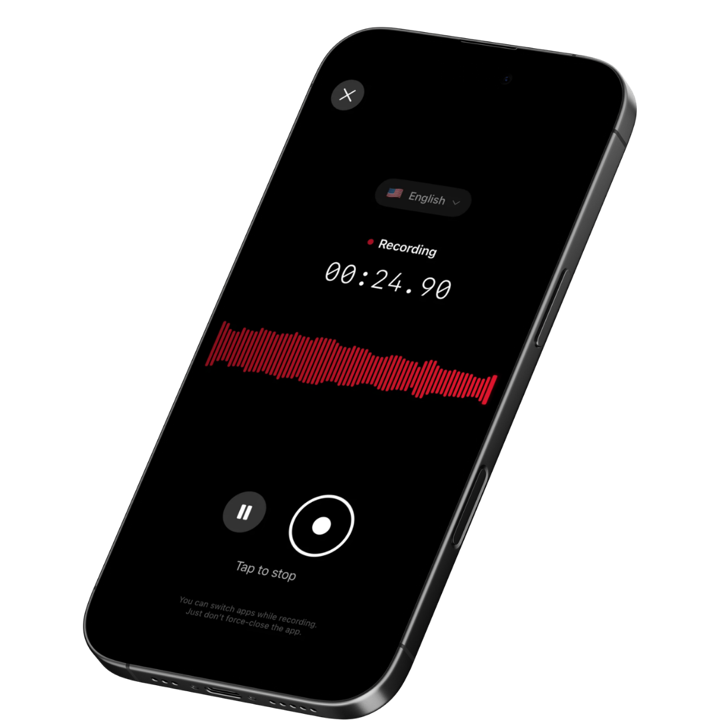
Speakwise turns your iPhone into an AI meeting assistant. One-tap or AirPods hands-free recording captures in-person conversations and produces summaries, accurate transcripts in 100+ languages, and automatic action item extraction. When you know Speakwise is capturing everything, you can be mentally present in the conversation without simultaneously managing the cognitive overhead of remembering what was said. Native Notion sync means follow-up tracking is handled automatically. The cognitive load of post-meeting reconstruction - one of the most fatiguing tasks of the knowledge workday - drops to near zero.
Download Speakwise on the App Store and reduce the mental fatigue that meeting tracking produces every day.
Speakwise holds a 4.9-star App Store rating with thousands of installs.
Download Speakwise on the App Store

🎯 4.9★ App Store Rating | 📱 Built for iOS
