Mental Load at Work Statistics: 19 Insights for 2026
Used by recruiters, executives, consultants, and more.
Mental Load at Work Statistics: 19 Insights for 2026
Mental load - the invisible cognitive work of remembering, planning, organizing, and monitoring - is draining workers at every level. A 2024 University of Bath study found mothers handle 71% of all household mental load tasks, a burden that spills directly into workplace performance. Female manager engagement dropped seven percentage points in a single year, according to Gallup. Women who carry disproportionate cognitive labor at home show measurably higher turnover intentions at work. And McKinsey found that for every 100 men promoted to manager, only 81 women make that jump - with one in three surveyed women saying they had considered leaving the workforce entirely. The invisible work is producing very visible consequences.
Mental load is not a productivity hack or a self-help concept. Sociologist Allison Daminger, whose landmark research in the American Sociological Review mapped cognitive labor across household domains, defined it as a four-step cycle running continuously: anticipating needs, identifying options, making decisions, and monitoring progress. Unlike physical chores, this cycle has no clear off switch. It runs during meetings, during sleep, during commutes.
This post covers 19 statistics on mental load at work - from its neurological basis in working memory constraints to its documented effects on retention, engagement, and career advancement. The data spans peer-reviewed research, large-scale workforce surveys, and clinical psychology studies.
1. Mothers handle 71% of all household mental load tasks - 60% more than fathers
A December 2024 study from the University of Bath, analyzing responses from 3,000 US parents, found that mothers take on 71% of all tasks requiring mental effort at home, while fathers manage around 45% - with significant overlap meaning duplication of effort rather than shared coverage. Mothers perform 79% of daily tasks like cleaning and childcare, more than twice the 37% rate for fathers. Fathers lead on episodic tasks like home repairs and finances (65%), but mothers still take on 53% of those same areas. Dr. Ana Catalano Weeks, who led the study, noted that this unseen work leads to stress, burnout, and measurable career impact. Critically, fathers overestimate their contribution more than mothers do, and fathers are more likely to perceive the division as equal when mothers do not.
Source: University of Bath - Mothers bear the brunt of the 'mental load,' managing 7 in 10 household tasks
2. Cognitive labor is unequally distributed in 26 of 32 couples studied
Sociologist Allison Daminger's foundational research, published in the American Sociological Review, used 70 in-depth interviews with 35 couples to map cognitive labor across nine life domains: food, childcare, logistics and scheduling, cleaning, finances, social relationships, shopping, home maintenance, and travel. Women did more cognitive labor than men in 26 of the 32 heterosexual couples. On average, women led in 4.6 of nine domains; men led in 1.6. The one area of rough parity was decision-making itself - the most power-linked component - while anticipation and monitoring were disproportionately female. Daminger noted that because cognitive labor is invisible to both the person doing it and their partner, it becomes a persistent source of conflict. The study established the conceptual framework that now underpins most mental load research.
Source: American Sociological Review - The Cognitive Dimension of Household Labor
3. Female manager engagement dropped 7 points in a single year - the steepest decline Gallup has ever recorded
Gallup's 2024 State of the Global Workplace report found that female manager engagement fell seven percentage points in one year - a decline described by Gallup researchers as historically unprecedented for any demographic group in a single measurement period. Women managers reported feeling less supported, less recognized, and more burned out than in any prior survey wave. This drop matters because managers drive team engagement: when managers are disengaged, their direct reports follow. The report connects this decline directly to the dual cognitive burden many women carry - managing teams at work while carrying disproportionate mental load at home. Gallup analysts flagged this as one of the most significant early warning signals for talent attrition in corporate pipelines.
Source: Gallup - State of the Global Workplace 2024
4. For every 100 men promoted to manager, only 81 women make that jump
McKinsey and LeanIn.Org's Women in the Workplace report found that the earliest career stage - the promotion from individual contributor to manager - already shows a significant gap: for every 100 men promoted, only 81 women advance. This gap compounds at every subsequent level. One in three women surveyed said they had considered downshifting their careers or leaving the workforce entirely in the prior year. Researchers point to mental load as one contributor: the cognitive energy required to manage household logistics, track family schedules, and monitor others' needs reduces the bandwidth available for the visibility-seeking behaviors that typically drive promotion. Women who feel their performance is invisible at work are less likely to advocate for themselves - and cognitive exhaustion from unpaid cognitive labor at home accelerates that invisibility.
Source: McKinsey - Women in the Workplace 2023
5. Working memory holds only 4 items at once - mental load exceeds this limit constantly
Updated research on working memory capacity, synthesizing decades of experimental psychology, places the reliable limit at approximately four discrete chunks of information - not the seven items cited in George Miller's 1956 paper, which later experiments revised downward. A 2010 paper by Nelson Cowan in Current Directions in Psychological Science established this four-item limit as the most replicated estimate in working memory research. Mental load, by definition, involves tracking far more than four active concerns simultaneously: a pending school form, a colleague's deliverable deadline, a rescheduled appointment, a grocery need, an unanswered email, a child's medical follow-up. When the load exceeds capacity, items are dropped, misremembered, or displaced by more urgent inputs - which is why mental load produces such distinct anxiety around forgetting.
Source: PMC - The Magical Mystery Four: How is Working Memory Capacity Limited, and Why?
6. High cognitive labor at home increases women's family-work conflict but not men's
A study published in the European Sociological Review, examining data from European countries with varying gender norms, found that a high share of cognitive household labor significantly increased family-to-work conflict for women but produced no equivalent effect for men. The mechanism: women are more likely to mentally rehearse household management tasks during paid work hours - planning, tracking, anticipating - while men in the same households do not. The study also found that employed women report thinking about household logistics during work time at significantly higher rates than their male partners. This creates a dual-attention problem: cognitive resources committed to household tracking cannot simultaneously support the focused attention that complex work tasks require. Concentration suffers, mistakes increase, and the quality of both domains declines.
7. 42% of women report frequent or near-constant burnout - up from 32% the prior year
According to LeanIn.Org and McKinsey's workplace research, 42% of women report experiencing burnout frequently or almost always - a ten-percentage-point increase from 32% in the prior year's survey. The same data shows that women managers report burnout at a higher rate than men at the same level. Researchers connect this escalation to the "emotional tax" carried by women in professional settings alongside their disproportionate cognitive domestic load. Women also report higher rates of exhaustion from managing others' emotions, tracking team dynamics, and absorbing organizational uncertainty - all forms of cognitive and emotional labor that remain largely uncompensated and unmeasured. The burnout gap between women and men widened across every seniority level between 2021 and 2024.
Source: McKinsey - Women in the Workplace 2023
8. 34% of employees say their productivity suffered because of mental health in 2024
The 2024 Mind the Workplace survey from Mental Health America found that 34% of employed respondents reported their productivity had suffered in the prior year as a result of mental health challenges. This includes difficulty concentrating, completing tasks, and maintaining consistent output. The report connects this to the cognitive exhaustion that accumulates when workers carry heavy mental loads - at home and at work - without adequate support or recovery time. Mental health challenges that originate in cognitive overload tend to affect the prefrontal functions most relevant to knowledge work: planning, prioritization, sustained attention, and working memory. A worker managing high mental load who also lacks sleep, autonomy, or psychological safety faces compounding deficits that a wellness app cannot address.
Source: Mental Health America - 2024 Workplace Wellness Research
9. 48% of U.S. employees have left a job for reasons tied to their mental health
Research from Mind Share Partners' 2021 Mental Health at Work Report found that 48% of U.S. employees have voluntarily left a job for reasons related to their mental health - and two-thirds of those departures were voluntary. The 2025 update found ongoing elevated attrition connected to unmanaged cognitive and emotional load. Workers who leave rarely cite mental health explicitly in exit interviews; they describe the decision as seeking better work-life balance, a culture of support, or reduced pressure. But the underlying driver is cognitive exhaustion - the sustained burden of tracking too many demands without adequate recovery. Mental load is a key contributor because it creates a form of cognitive debt: energy is spent outside work hours that is never repaid before the next workday begins.
Source: Mind Share Partners - 2025 Mental Health at Work Report
10. Workers spend 1.8 hours per day searching for and gathering information
A McKinsey Global Institute analysis found that knowledge workers spend an average of 1.8 hours every day - 9.3 hours per week - searching for and gathering information. This is a form of organizational mental load: the cognitive burden of tracking where information lives, who has it, and how to retrieve it when needed. When organizational memory is fragmented across tools, inboxes, chat threads, and meeting notes, workers must carry the retrieval map in their heads. This is extraneous cognitive labor - work that does not advance the actual task but is required to access the input for the task. Our attention span breakdown shows that this kind of background tracking is precisely the kind of cognitive activity that fragments focus and prevents sustained deep work.
11. Mental load disrupts sleep for 45% of workers who report feeling emotionally drained
A 2024 Headspace State of Mind report, surveying 2,000 U.S. employees, found that 45% of workers describe feeling emotionally drained from their work, with a significant share reporting that work-related cognitive concerns disrupt sleep. Mental load is a known driver of sleep disruption: when working memory capacity is exceeded during the day, the brain uses nighttime processing to sort and consolidate pending concerns. Pre-sleep rumination - mentally reviewing undone tasks, uncertain outcomes, and anticipated demands - is a documented behavioral response to high cognitive load. Sleep disruption then impairs the next day's working memory and executive function, creating a feedback loop in which high mental load produces poor sleep, which increases errors and reduces cognitive efficiency, which creates more mental load.
Source: Headspace - The Workforce State of Mind in 2024
12. Women's cognitive household labor impairs concentration in paid work - men's does not
Research published in PMC examining the invisible third shift found that employed women are significantly more likely to report that household mental load tasks intrude on their paid work concentration. The study, which analyzed data from a large US sample of partnered heterosexual parents, found that women take on tasks that are more frequent, more complex, and over which they exercise less control - all factors that increase intrusive cognition during work hours. Men's cognitive household labor, when present, tends to involve episodic and time-bounded tasks with clear completion signals, which are less likely to generate ongoing background processing. Women's tasks - monitoring children's needs, managing social calendars, tracking household supplies - are open-ended and carry no completion point, keeping them active in working memory throughout the workday.
13. Post-meeting mental load: unresolved action items stay in working memory until externalised
Research on cognitive offloading and meeting design consistently shows that unresolved action items - the outputs of meetings without clear capture - remain active in working memory as open loops. A study from the Allone Health analysis of meetings as mental load found that closing gatherings without clear ownership statements forces every participant to internally track "who will do what by when" as a continuous background task. This post-meeting cognitive residue compounds across a day of back-to-back meetings. By the afternoon, workers who attended five meetings without structured follow-up capture may be internally tracking 20 to 30 unresolved commitments, all competing for limited working memory slots. Our context switching statistics document how each new meeting context adds to this residual load rather than replacing it.
Source: Allone Health - Meetings as Mental Load: How to Reduce Cognitive Burden at Work
14. 60% of knowledge workers' time goes to "work about work" rather than skilled output
Asana's Anatomy of Work Index, covering tens of thousands of knowledge workers globally, found that 60% of employee time is consumed by what Asana calls "work about work" - communicating about tasks, searching for status updates, switching between applications, and managing competing priorities. Only 40% of the workday is spent on the skilled, strategic, or creative work employees were hired to perform. This organizational coordination overhead is a form of structural mental load: it forces workers to continuously track the state of multiple projects, the expectations of multiple stakeholders, and the location of multiple inputs - all simultaneously. Unlike the intrinsic cognitive effort required to solve a hard problem, this coordination load is extraneous. It consumes cognitive capacity without producing proportionate value.
Source: Asana - Anatomy of Work Index
15. High cognitive household load increases women's turnover intentions and reduces career resilience
A 2024 study published in PMC examining cognitive household labor and work outcomes found that women who carry disproportionate cognitive labor at home experience measurably higher emotional exhaustion, which in turn increases their stated intentions to leave their current employer and reduces their self-reported career resilience. The pathway is direct: cognitive labor at home depletes emotional and attentional resources that are then unavailable for the relationship-building, advocacy, and strategic visibility that support career advancement. Women in this state are less likely to seek high-visibility assignments, less likely to negotiate promotions, and more likely to interpret normal workplace friction as confirmation that the environment is not supportive. Organizations that ignore this dynamic lose experienced women precisely when they are most capable.
Source: PMC - Cognitive household labor: gender disparities and work outcomes
16. 76% of employees experience burnout at least sometimes - 28% say always or very often
Gallup's most recent global burnout survey found that 76% of employees experience burnout at some point, with 28% reporting they feel burned out "very often" or "always" at work. Mental load is one of the primary drivers of this chronic burnout rather than episodic fatigue: it creates a form of cognitive debt in which the energy spent tracking and managing multiple domains is never fully recovered before the next cycle begins. Workers who carry high mental load at home and face heavy coordination demands at work have no recovery window. Burned-out employees are 63% more likely to take a sick day and 2.6 times as likely to be seeking a different job - making mental load not just a wellbeing issue but a direct retention and productivity cost.
Source: Gallup - Employee Burnout: Causes and Cures
17. Systematic review confirms mental load has cognitive, emotional, and temporal dimensions
A 2023 systematic literature review in PMC, covering decades of research on gendered mental labor, confirmed that mental load operates across three interacting dimensions: cognitive (anticipating, planning, remembering, monitoring), emotional (managing others' feelings, absorbing relational concerns), and temporal (the ongoing, never-complete nature of care-related tracking). The review found consistent evidence across multiple countries and cultural contexts that this three-dimensional load falls disproportionately on women, and that its impacts include higher rates of depression, anxiety, and psychological distress. The research also noted that mental load is both invisible and boundaryless - it can be carried anywhere, including into paid work hours, leisure time, and sleep.
18. 80% of workers say they lack enough time or energy to do their job well
Microsoft's 2025 Work Trend Index, surveying 31,000 knowledge workers across 31 markets, found that 80% of workers report not having enough time or energy to do their jobs effectively. This figure encompasses both the structural overload of too many meetings, messages, and competing priorities, and the attentional depletion caused by high mental load. Workers who arrive at their jobs already cognitively taxed from home-based tracking and planning begin their workday with reduced capacity. The report also found that 46% of workers are actively burned out and that 60% of meetings are now unscheduled, making cognitive load from meeting unpredictability an additional drain on top of the baseline mental load burden.
Source: Microsoft Work Trend Index 2025
19. Externalising commitments reduces cognitive load by offloading working memory demands
Research on cognitive offloading - the practice of moving information from internal working memory to external storage - confirms that written lists, calendars, and structured notes measurably reduce the cognitive burden of tracking. Studies published in Cognitive Psychology show that when people use external tools to store pending tasks, working memory resources are freed for the current task. This is the mechanism behind the well-documented productivity benefit of structured note-taking systems and meeting transcription. When post-meeting summaries are generated automatically, every attendee is released from the mental overhead of tracking who said what and who owns what. The cognitive bandwidth recovered is then available for the higher-order work that mental load had been crowding out.
What These Numbers Tell Us
The data on mental load at work points to a consistent and compounding problem: cognitive labor that originates outside official job descriptions is quietly draining the workers organizations most want to retain. The gender asymmetry is stark. Women carry roughly 71% of household mental load while also facing higher rates of workplace burnout, steeper disengagement, and a well-documented gap in promotion rates. These are not separate trends - they are the same trend, measured at different points in the same chain of depletion.
The research also reveals a structural blind spot. Mental load is largely invisible to the organizations bearing its cost. An employee who arrives at work already tracking 20 unresolved household concerns, post-meeting action items without capture, and open organizational questions from the previous day is operating at reduced capacity before they open their first document. Productivity metrics measure output, not the cognitive overhead that suppresses output. Attrition data records departures but rarely captures the quiet cognitive exhaustion that preceded them by months.
The trajectory, if current conditions hold, points toward continued widening of engagement and retention gaps, particularly for women in mid-career and managerial roles. The interventions with the clearest evidence behind them share one feature: they reduce the number of items that workers must track mentally by building reliable external capture systems. Structured meeting follow-ups, clear ownership documentation, and tools that automatically surface and store decision records all reduce working memory burden without requiring any individual to carry less.
The mental load crisis is a cognitive infrastructure problem: workers are asked to hold too much in their heads, and the organizations they work for have no system for reducing that burden.
How Speakwise Addresses Post-Meeting Mental Load
Post-meeting cognitive load is one of the most direct contributors to mental overload at work. When a meeting ends without structured capture, every participant carries the action items, decisions, and open questions as internal working memory tasks. This is cognitive overhead that compounds across a day of multiple meetings.
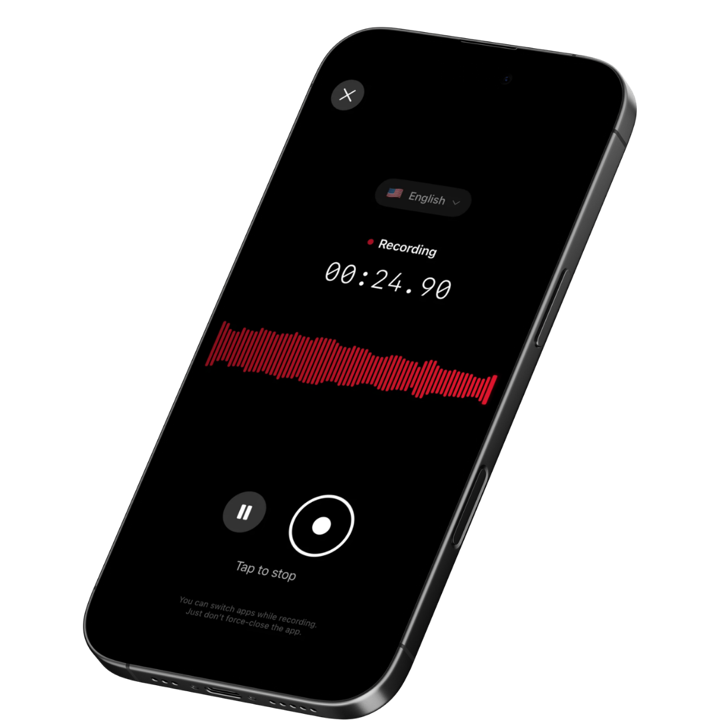
Speakwise turns your iPhone into an AI meeting assistant. One-tap or AirPods hands-free recording captures in-person conversations, then produces summaries, accurate transcripts in 100+ languages, and automatic action item extraction. Native Notion sync means everything captured in a meeting moves into the system where work actually happens - removing the burden of manual note-taking and the post-meeting task of reconstructing what was decided.
Download Speakwise on the App Store and offload the cognitive overhead of meeting tracking so your working memory is free for the work that actually requires it.
Speakwise holds a 4.9-star App Store rating with thousands of installs.
Download Speakwise on the App Store

🎯 4.9★ App Store Rating | 📱 Built for iOS
