Recurring Meetings Statistics: 19 Insights for 2027
TL;DR
Recurring meetings statistics show up to 50% are unnecessary or replaceable (Atlassian). Unproductive meetings cost US businesses about $37 billion a year (Harvard Business Review). Speakwise turns a recurring meeting into an AI summary with action items on iPhone, free to try for 7 days.

Used by recruiters, executives, consultants, and more.
Recurring Meetings Statistics: 19 Insights for 2027
Recurring meetings statistics show a familiar pattern: a calendar slot keeps filling up long after its original reason is gone. A standing cadence that once kept a team aligned can outlive the project, the decision, or the person who called it. This post walks through 19 data points on the cost of that waste, and what companies have gained by cutting meetings that no longer earn their place.
1. Up to 50% of Recurring Meetings Are Considered Unnecessary
Atlassian research found that up to 50% of recurring meetings are considered unnecessary or could be replaced by an alternative communication format such as a written update, async video, or a shared document. The figure captures a core structural problem: recurring meetings are created at a moment when they add value, but the review mechanism to assess whether they still add value is rarely built in. Meetings that outlive their purpose continue consuming calendar time and participant attention indefinitely. For organizations with dozens of standing meetings per team, the 50% figure implies that roughly half the recurring meeting calendar could be deleted without losing meaningful coordination.
Source: Atlassian - Workplace Woes: Meetings
2. Unproductive Meetings Cost U.S. Businesses $37 Billion Per Year
Harvard Business Review research found that unproductive meetings cost U.S. businesses approximately $37 billion annually. Separately, more recent global estimates put the cost at $399 billion in the U.S., $73 billion in Germany, $58 billion in the UK, and $33 billion in Switzerland. The gap between the $37 billion figure and more recent estimates reflects methodological differences and real cost growth as meeting hours per employee have increased. Regardless of which estimate is applied, the financial scale of unproductive meetings dwarfs most other workplace productivity interventions and makes meeting reform one of the highest-ROI organizational investments available.
Source: Harvard Business Review / Ambitionsaba - Time Wasted In Meetings: 36 Meeting Statistics
3. Shopify Deleted 322,000 Hours of Recurring Meetings in a Single Day in 2023
In January 2023, Shopify deployed an automated bot that cleared all recurring meetings involving more than two people from employee calendars, eliminating approximately 12,000 events and 322,000 hours of projected annual meeting time. Chief Operating Officer Kaz Nejatian described the freed hours as the equivalent of adding 150 new employees to the organization's productive capacity. Shopify also implemented Wednesday as a meeting-free day and restricted large all-hands meetings (50+ people) to a specific Thursday window. Employee response was strongly positive, with engineers reporting, for the first time in a long time, being able to do what they were hired to do: write code for extended periods without interruption.
Source: NPR / Fast Company - Shopify deleted 322,000 hours of meetings. Should the rest of us be jealous?
4. The Average Employee Spends 392 Hours Per Year in Meetings - More Than 16 Full Workdays
Meeting time data aggregated from workforce analytics platforms finds that the average employee spends 392 hours per year in meetings, equivalent to more than 16 full 8-hour workdays or nearly 10 full 40-hour workweeks of meeting time annually. Senior employees face a steeper burden: executives spend 23 hours per week in meetings, according to some estimates, and VP, director, and C-level roles average 17 meetings per week. For a role that primarily adds value through judgment and decision-making rather than administrative coordination, spending the majority of available hours in meetings represents a fundamental misalignment of time and contribution.
Source: My Hours - 30+ Meeting Statistics for 2025
5. 48% of Employees Say Their Most Recent Meeting Was Unnecessary
A workforce survey found that 48% of respondents said the most recent meeting they attended was unnecessary, 53% said it was a waste of time, and 61% said little or nothing was accomplished. These three figures, applied to the same meeting, reveal the gap between meeting presence and meeting value. Meetings that participants regard as unnecessary in real time continue to consume 60-90 minutes of participant attention, followed by the task-switching recovery cost as each attendee reloads the context of the work they paused to attend. The unnecessary meeting is not a neutral event; it imposes both a direct time cost and an indirect focus cost on everyone who attends.
Source: Pumble - Meeting Statistics You Should Know (2026)
6. 96% of Employees Have Missed a Meeting They Were Scheduled to Attend
Survey data finds that 96% of employees have at some point missed a scheduled meeting. No-shows are particularly damaging for recurring meetings because their standing nature means participants may not invest attention in confirming attendance for each occurrence - the meeting is simply on the calendar without active re-acceptance. Recurring meeting no-shows also cascade: if a decision-maker misses a standing meeting, either the decision is deferred (delaying action) or made without them (risking misalignment). Both outcomes impose coordination costs that the recurring meeting was created to prevent in the first place.
Source: Pumble - Meeting Statistics You Should Know (2026)
7. 37% of Meetings Start Late by an Average of Several Minutes
Research on meeting punctuality found that 37% of meetings start late, with participants admitting to arriving late approximately 5% of the time. At scale, late starts compound the time cost of meetings significantly: a 15-minute status meeting that starts 7 minutes late has effectively consumed 47% of its scheduled duration before the first agenda item is addressed. For recurring meetings that already struggle to justify their standing time, late starts reduce the value density of the meeting further while holding everyone hostage to the gap between scheduled and actual start. Our meeting overload statistics document how late starts and overrunning meetings contribute to the broader calendar compression problem.
Source: Archie - Work Meetings in Numbers: Latest Meeting Statistics 2025
8. Time Wasted in Unproductive Meetings Has Doubled Since 2019 to 5 Hours Per Week
Workforce data shows that the time wasted in unproductive meetings has doubled since 2019, reaching approximately 5 hours per week per employee. The doubling occurred in parallel with the shift to hybrid and remote work, which increased meeting frequency as organizations sought to maintain coordination through synchronous touchpoints that had previously occurred informally in offices. Five hours of wasted meeting time per week per employee translates to roughly 250 hours per year - or 6.25 working weeks of pure waste per person - before accounting for the task-switching costs on either side of each unproductive session.
Source: Runn - Unproductive Meetings Under the Microscope
9. 64% of Recurring Meetings Lack a Structured Agenda
Data on recurring meeting characteristics found that 64% of recurring meetings are conducted without a structured agenda. Meetings without agendas are more likely to run over time, produce fewer decisions, and fail to achieve their stated coordination purpose - all of which reduce value while maintaining cost. For recurring meetings specifically, the absence of an agenda is often a symptom of the broader problem: the meeting exists out of habit rather than a defined ongoing need, and the agenda is not prepared because the organizer is not sure what to cover. In these cases, the lack of agenda is diagnostic - it indicates a meeting that has outlived its original purpose.
Source: Flowtrace - Meeting Statistics for 2026: 100 Data Points
10. Eliminating One Weekly Recurring Meeting Frees Nearly 300 Hours Per Year for a Team
Harvard Business Review research found that eliminating a single recurring weekly meeting frees approximately 300 hours of collective time per year for the team that previously attended it. The figure accounts for all attendees, the meeting time itself, and the preparation and recovery time on either side. For a meeting attended by six people, 300 hours represents 50 hours of freed capacity per person per year - more than one full working week per individual. The asymmetry between the cost of scheduling a recurring meeting (minutes) and the cumulative cost of running it (hundreds of hours) makes recurring meeting audits among the highest-leverage calendar interventions available to managers.
Source: Harvard Business Review / Axios HQ - How orgs like Shopify are reducing meetings to save millions
11. Reducing Meeting Time by 40% Produced 71% Higher Productivity in a Controlled Study
A study by researcher Benjamin Laker, reported in Harvard Business Review, found that employees whose meeting time was cut by 40% experienced 71% higher productivity and 55% better engagement compared to a control group. The productivity gain from a 40% meeting reduction being 71% - larger than the reduction itself - reflects the non-linear benefits of focus recovery. Fewer meetings mean not just fewer lost meeting hours but also fewer task-switching events, shorter recovery periods, and more sustained cognitive engagement with primary work. The multiplier effect explains why meeting reduction consistently produces returns that exceed the simple arithmetic of time saved.
Source: Axios HQ - How orgs like Shopify are reducing meetings to save millions
12. 78% of Professionals Struggle to Complete Primary Work Despite Attending All Their Meetings
Survey data found that 78% of professionals find it challenging to finish their actual work despite attending all their scheduled meetings. The finding underscores the structural conflict between meeting calendars and knowledge work: the meetings consume the hours during which primary work must occur, without reducing the expectations for primary work output. The result is a chronic finish-line problem - workers attend meetings to maintain coordination but then lack the uninterrupted time needed to act on the decisions made in those meetings. Primary work is deferred to evenings, early mornings, and weekends.
Source: Atlassian / Notta - Meeting Statistics: Unproductive Meetings & Time Spent
13. A Bain Study Found 15% of Organizational Time Is Spent in Meetings, Half of Which Add No Value
A Bain & Company study found that 15% of an organization's collective time is consumed by meetings, and that 50% of those meetings were assessed as unnecessary by participants and organizers. The study also documented a specific case where a single weekly standing meeting of mid-level managers was costing one organization $15 million per year in lost productivity - calculated by multiplying the number of attendees, their hourly cost, and the ripple effect of downstream meetings the original meeting generated. The case study illustrates how recurring meetings compound: one standing meeting often generates a set of preparatory and follow-up meetings that multiply its total cost.
Source: Ambitionsaba - Time Wasted In Meetings: 36 Meeting Statistics
14. 3 in 4 Meetings Are Ineffective at Achieving Their Stated Purpose
An Atlassian report cited in Fortune found that meetings are ineffective at disseminating information, encouraging collaboration, and accomplishing tasks approximately 72% of the time - meaning that 3 in 4 meetings could, in principle, be replaced by an alternative format without losing the coordination value they were intended to provide. The finding does not argue that meetings are never valuable; it argues that their default form - a synchronous gathering of multiple people to share information verbally - is a poor fit for most of the tasks regularly assigned to it. Written updates, recorded video briefings, shared documents, and structured async decision tools can handle the majority of typical meeting purposes at lower time cost.
Source: Fortune / Atlassian - 3 in 4 meetings are ineffective, new study shows
15. Meeting-Free Days Reduce Overall Meeting Count by 40% and Boost Productivity and Autonomy
A MIT Sloan Management Review survey of 76 global companies found that implementing meeting-free days reduced total meeting count by approximately 40% in many participating firms, while producing measurable improvements in productivity, autonomy, communication quality, and employee satisfaction. Meeting-free days work partly through the direct mechanism of blocking calendar time from booking and partly through the cultural signal that uninterrupted focus is valued. The 40% meeting reduction from a single structural change compares favorably with top-down mandates and individual time-management guidance, which rarely achieve sustained reductions of more than 10 to 15%.
Source: Empwr.ai - Less Talk, More Impact: 5 Research-Backed Ways to Fix Recurring Meetings
16. Meeting Costs an Average of $29,000 Per Employee Per Year
Meeting time costs an average of $29,000 per employee per year when hours are translated to loaded labor cost. For an organization with 100 employees, the total meeting cost runs to approximately $2.9 million annually. Of that, the 50% of meetings assessed as unnecessary represents a direct, addressable waste of approximately $1.45 million. The $29,000 per-employee figure is not a rounding error in the context of most companies' cost structures - it is a line item large enough to fund meaningful investments in tooling, training, or headcount if recovered even partially through meeting reform.
Source: Notta - Meeting Statistics: Unproductive Meetings & Time Spent
17. Recurring Meetings Average 28 Minutes, Shorter Than One-Off Meetings at 41 Minutes
Data on meeting duration by type finds that recurring meetings average 28 minutes in length, compared to 41 minutes for one-off meetings. The shorter average for recurring meetings reflects the standing cadence format: status check-ins, weekly standups, and regular team syncs tend toward fixed, shorter windows by design. However, the lower per-session cost does not offset the cumulative cost of meetings that outlive their usefulness. A 28-minute weekly recurring meeting attended by 8 people that runs for 18 months after its purpose has been fulfilled consumes approximately 336 person-hours of calendar time, or the equivalent of more than 8 full working weeks across the team.
Source: Flowtrace - Meeting Statistics for 2026: 100 Data Points
18. 60.3% of Professionals Say Meetings Hamper Their Productivity
A 2025 Raconteur workplace survey found that 60.3% of professionals said meetings actively hamper their productivity, and that over 50% said meetings cause their other work to be rushed or left incomplete. These two figures together describe the meeting-primary-work tradeoff in practical terms: a majority of workers experience meetings as a constraint on their ability to do their actual jobs, and more than half cope by rushing or deferring the work that meetings were meant to support. The productive function of meetings - enabling coordination that improves downstream work - is being offset by the time cost that prevents the downstream work from being done.
Source: Runn - Unproductive Meetings Under the Microscope
19. TechSmith's Meeting-Free Month Experiment Produced a 15% Increase in Employees Feeling Productive
TechSmith Corporation ran a month-long experiment in which all meetings were eliminated and teams relied entirely on asynchronous communication. At the end of the experiment, the percentage of employees who strongly agreed they felt productive in their work increased by 15%. The result is notable because it demonstrates that the subjective experience of productivity (not just measured output) improves when meeting pressure is removed. Psychological safety around focus time - knowing that a block of calendar white space will not be interrupted by a meeting request - changes not only actual output but the experience of work itself. Our unnecessary meetings statistics cover related experiments and their outcomes in more detail.
Source: HR Dive - One company canceled all meetings for a month. Employees felt more productive.
What These Numbers Reveal About Recurring Meeting Culture
The data above forms a consistent indictment of current recurring meeting culture. Half of standing meetings are unnecessary. Three quarters of all meetings fail to achieve their stated purpose. Meeting time has doubled in wasted hours since 2019. Costs run to tens of billions of dollars annually for U.S. businesses alone. And when organizations systematically reduce meeting load - by 40%, by eliminating standing meetings, or by implementing meeting-free days - productivity gains are consistently large and fast.
The recurring meeting's unique problem is its persistence mechanism. A bad ad-hoc meeting ends when it ends. A bad recurring meeting ends when someone decides to cancel it - which requires social capital, organizational permission, and the overcoming of calendar inertia. Without a built-in review mechanism (a scheduled "does this meeting still serve its purpose?" checkpoint), the default is indefinite continuation regardless of ongoing value.
The forward picture for organizations willing to act is clear. Companies that instituted systematic recurring meeting reviews - Shopify, Asana, and others - recovered hundreds of thousands of hours of productive time and reported strong positive responses from employees. The playbook is available and the ROI is documented. The barrier is not knowledge; it is the cultural and organizational habit of treating calendar space as a coordination reflex rather than a scarce resource.
Recurring meetings are the most expensive default setting in most organizations, and the data on what happens when they are reset demonstrates that the cost of continuation far exceeds the cost of reform.
Capture Every Meeting Worth Keeping
Not every recurring meeting should be eliminated. Some genuinely add value: the weekly team sync where decisions are made, the client check-in that maintains the relationship, the one-on-one where progress is tracked. The goal is not to eliminate meetings but to ensure the ones that remain deliver their full value.
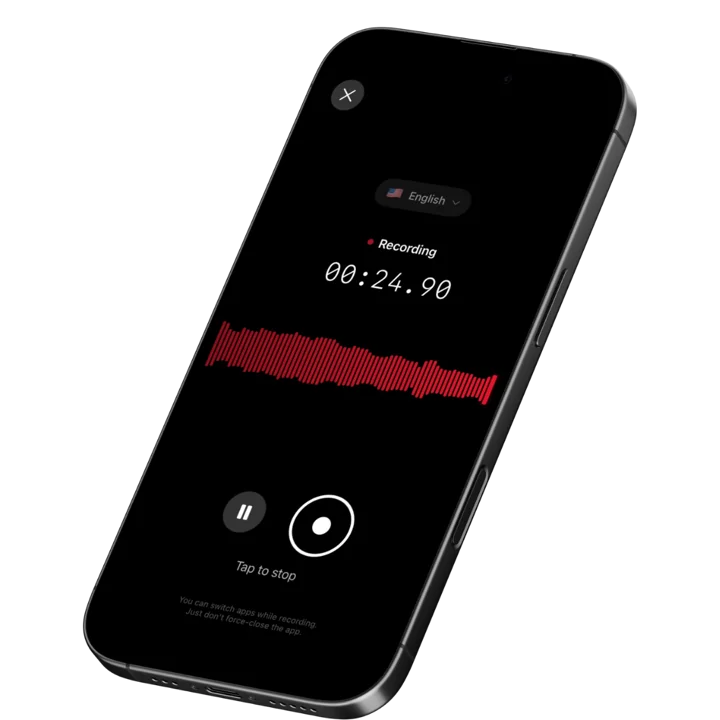
Speakwise turns your iPhone into an AI meeting assistant. One-tap or AirPods hands-free recording captures in-person conversations, then produces summaries, accurate transcripts in 100+ languages, and automatic action item extraction. For recurring meetings that justify their calendar space, having a searchable record of each session makes the standing cadence more effective: prior decisions are easy to retrieve, action items are captured automatically, and new participants can onboard through the archive rather than through repetitive briefings.
For consultants, freelancers, coaches, sales professionals, and product managers whose calendars include high-stakes recurring conversations, Speakwise ensures that the value created in those meetings is not lost to recall gaps and follow-up drift.
Download Speakwise on the App Store and make every recurring meeting that stays on your calendar worth the time it costs.
Speakwise holds a 4.9-star App Store rating with thousands of installs.
Download Speakwise on the App Store

🎯 4.9★ App Store Rating | 📱 Built for iOS
