Siri Statistics 2027: Usage, Requests and Devices
TL;DR
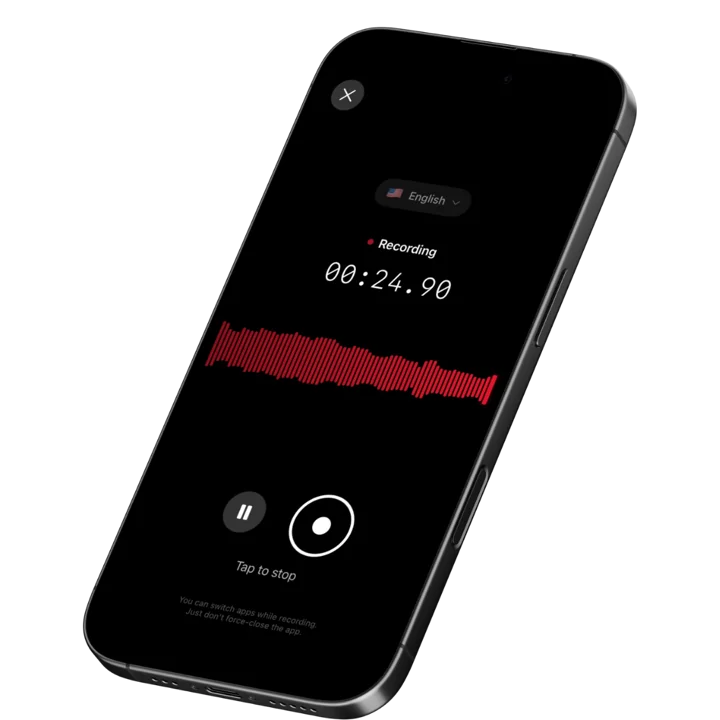
Siri statistics for 2027 start with one number Apple has confirmed: about 1.5 billion requests a day in 2024 (WSJ). Speakwise uses your iPhone and Apple Watch to turn spoken meetings and notes into an AI summary, free to try for 7 days.

Used by recruiters, executives, consultants, and more.
Siri Statistics 2027: Usage, Requests and Devices
Siri statistics are hard to pin down because Apple rarely discloses them, so most of what is public comes from a handful of executive statements and survey firms. That gap matters now that watchOS 27 gives Siri a more conversational voice on the wrist; see our best AI apps for Apple Watch roundup for how it compares there. This post gathers 11 sourced statistics on Siri and voice assistant use.
Key Siri Statistics (2027)
- Siri processed about 1.5 billion requests a day in 2024, according to Apple's Craig Federighi in an October 2024 interview (Business Today, citing the WSJ, 2024).
- Apple said Siri was actively used on more than 500 million devices as of January 2018 (Apple Newsroom, 2018).
- 46% of US adults used a digital voice assistant, and 42% used one through a smartphone specifically, in a 2017 survey (Pew Research Center, 2017).
- 52% of voice assistant users said they used voice technology several times a day or nearly every day, in a Spring 2020 survey taken after the COVID-19 outbreak began, up from 46% before it (NPR and Edison Research, 2020).
- Siri answered 83% of test questions correctly in Loup Ventures' 2019 Digital Assistant IQ Test, behind Google Assistant's 93% and ahead of Alexa's 80% (CNBC: Loup Ventures' 2019 Digital Assistant IQ Test, 2019).
- Between 2020 and 2024, Siri's US monthly usage grew 40%, trailing Google Assistant's 46% and ahead of Alexa's 26% (GWI Voice Search Report, 2025).
- 32% of global consumers used a voice assistant in the past week, and 21% used one weekly to find information (GWI Voice Search Report, 2025).
1. Siri processed about 1.5 billion requests a day in 2024
In October 2024, Apple software chief Craig Federighi told the Wall Street Journal's Joanna Stern that Siri processed about 1.5 billion requests a day. It is the latest on-the-record usage figure we found from Apple for Siri. For comparison, an Apple executive put the figure at 25 billion requests a month, roughly 833 million a day, back in June 2020, suggesting daily Siri usage nearly doubled over the following four years. The source does not say which devices the 1.5 billion figure counts, so it is not an Apple Watch specific number.
Source: Business Today, citing the Wall Street Journal
2. Siri was actively used on more than 500 million devices in 2018
Apple's own newsroom, announcing the HomePod's February 2018 launch, said Siri was "now actively used on over half a billion devices." It is one of the few device-count figures for Siri we found from Apple. We found no newer device count from Apple.
Source: Apple Newsroom
3. Siri handled 25 billion requests a month in 2020
Yael Garten, Apple's director of Siri data science and engineering, said in June 2020 that Siri was being used for 25 billion requests a month. Compared with the 1.5-billion-a-day figure from 2024, roughly 45 billion a month, Siri's monthly volume appears to have nearly doubled between 2020 and 2024, even as competition from newer AI chatbots increased.
Source: Voicebot.ai
4. In 2017, 46% of US adults used a digital voice assistant
Pew Research Center found in a spring 2017 survey that 46% of US adults used a digital voice assistant, with 42% using one through a smartphone, 14% through a computer or tablet, and 8% through a standalone speaker like an Amazon Echo. This is a dated figure, nearly a decade old, so treat it as a baseline, not a current number.
Source: Pew Research Center
5. In 2017, voice assistant use skewed younger: 55% of 18-49 year-olds versus 37% of 50+
The same 2017 Pew survey found a clear age gap: 55% of Americans ages 18 to 49 used a voice assistant, compared with 37% of those 50 and older, and 55% of users cited hands-free convenience as a major reason. While the underlying numbers are dated, GWI's 2025 data also shows younger adults leading, with 34% of millennials using a voice assistant every week.
Source: Pew Research Center
6. In spring 2020, after COVID-19 began, 52% of US voice assistant users used voice technology several times a day or nearly every day
NPR and Edison Research's Smart Audio Report, a Spring 2020 survey of US adults, found that 52% of voice assistant users said they used voice technology several times a day or nearly every day, up from 46% before the COVID-19 outbreak began. Like the Pew and GWI usage rates on this page, it is a broad "voice assistant user" number covering Siri, Google Assistant, and Alexa combined, not a Siri-only count.
Source: NPR and Edison Research: Smart Audio Report Spring 2020
7. In 2019, Siri answered 83% of test questions correctly
Loup Ventures, an investment research firm, ran its annual Digital Assistant IQ Test in 2019, asking Siri, Google Assistant and Alexa the same 800 questions about things like nearby places, directions and simple commands. Siri answered 83% of the questions correctly and misunderstood only two of them, ahead of Alexa's 80% but behind Google Assistant's 93%. Siri's score was up from 79% the year before. The test has not been repeated publicly since, so it describes Siri's comprehension in 2019, not how the more conversational Siri in watchOS 27 performs today.
Source: CNBC: Loup Ventures' 2019 Digital Assistant IQ Test
8. Siri's US monthly usage grew 40% between 2020 and 2024
A 2025 report from research firm GWI tracked platform-specific voice assistant usage growth in the US between 2020 and 2024 and found Google Assistant grew 46%, Siri grew 40%, and Alexa grew 26% over that period. Siri sits in the middle: ahead of Alexa's growth rate, but trailing Google Assistant's.
Source: GWI Voice Search Report
9. 32% of global consumers used a voice assistant in the past week
A 2025 GWI consumer panel survey found that 32% of consumers worldwide used a voice assistant in the past week, with 21% using one weekly to find information and 20% weekly to complete an action, like playing a song. The same research found voice assistant users are 33% more likely than the average consumer to have made an online purchase in the past week, and that 34% of millennials use a voice assistant every week.
Source: GWI Voice Search Report
10. In April to June 2020, 46% of smart speaker owners said they used voice assistants more often
Adobe's own survey data, published in September 2020, found that over a three-month stretch from April through June, 46% of smart speaker owners said they were using their voice assistant more often than before. It is a company survey, not an independent study, and it covers April to June 2020, when many people were staying home.
Source: Adobe Blog
11. In 2019, checking the weather was the most common smart speaker task
Forrester Analytics found that checking the weather is the most common task among US online adults who use smart speakers, at 65%, while ordering or reordering products is the least common, at just 5%. The figures come from Forrester's "The State Of Voice Assistants, 2019" research. These are simple, glanceable tasks, rather than long, open-ended conversations, which is the gap the more conversational Siri in watchOS 27 is meant to close.
Source: Forrester
What Siri's Numbers Actually Show
Put together, these numbers tell a consistent story: voice assistants are a mainstream habit, not a novelty, but Apple discloses very little about Siri specifically. The 1.5-billion-requests-a-day figure from 2024 is real and on the record, and it points to real growth from the 25-billion-a-month figure Apple gave in 2020. Beyond that, almost everything else about Siri's actual reach, active users, and share among voice assistants comes from third-party estimates or general survey data that lumps Siri in with Alexa and Google Assistant. For the wider Apple Watch adoption numbers behind some of this usage, see our Apple Watch statistics breakdown, and for how voice compares to typing generally, see our speech to text statistics.
That gap matters more now than it used to. Apple released watchOS 27 in September 2026, and Apple's release notes say a more capable and conversational version of Siri is rolling out to users. Whether that update moves the needle on Siri's own usage numbers, and whether Apple starts disclosing more, is one of the more interesting open questions for the rest of 2026.
Siri handled about 1.5 billion requests a day in late 2024, up from about 833 million a day in 2020, but most of what we know about who actually uses voice assistants, and how often, still comes from independent researchers rather than Apple itself.
Where Speakwise Fits
Siri is built for quick commands: set a timer, send a message, start a note. It is not built to sit through a 45-minute meeting or a full lecture and hand you back a transcript. That is a different job, and it is the one Speakwise does. Start a recording from your Apple Watch, and it syncs to your iPhone, where Speakwise transcribes it with speaker labels and writes an AI summary with action items. Speaker identification is not included in every plan. When you start your free trial, pick the plan that includes it.
Download Speakwise from the App Store and let AI handle the conversations Siri was never built to capture.
Sources
- Craig Federighi, quoted in Business Today, citing the Wall Street Journal (October 2024)
- Apple Newsroom, HomePod launch announcement (January 2018)
- Voicebot.ai (June 2020)
- Pew Research Center (December 2017)
- NPR and Edison Research, Smart Audio Report Spring 2020 (April 2020)
- CNBC: Loup Ventures' 2019 Digital Assistant IQ Test (August 2019)
- GWI Voice Search Report (April 2025)
- Adobe Blog (September 2020)
- Forrester (March 2020, citing 2019 data)

🎯 4.9★ App Store Rating | 📱 Built for iOS
