Workaholic Statistics: 21 Insights into Overwork in 2027
TL;DR
Workaholic statistics show overwork is a measurable health risk. A 2023 meta-analysis found that about 14.1% of workers worldwide meet workaholism criteria (PMC). Speakwise writes the AI summary after a long meeting, so catching up never means staying later, free to try for 7 days.
Used by recruiters, executives, consultants, and more.
Workaholic Statistics: 21 Insights into Overwork in 2027
Workaholic statistics sit where behavioral addiction meets occupational health, often rewarded rather than treated, especially in industries where long weeks signal commitment. Workers caught in it are often highly productive in the short term while quietly deteriorating in ways that surface years later, in heart disease, family strain, and psychiatric conditions. This post gathers 16 sourced statistics on how common workaholism is and what it costs.
1. 14.1% of workers globally meet workaholism criteria
A 2023 systematic review and meta-analysis published in PMC synthesized prevalence data across studies and found a pooled workaholism prevalence of 15.2%, adjusted to 14.1% (95% CI = 11.2-17.6%) after trim-and-fill correction for publication bias. This is a substantial share of any workforce. The review noted important methodological variations: studies using non-representative samples reported higher rates, and the choice of measurement instrument affected results - the Dutch Work Addiction Scale tended to produce higher estimates than the Bergen Work Addiction Scale. Even at the conservative 14.1% estimate, workaholism is far more prevalent than most addiction categories and represents a significant occupational health burden across industries.
Source: PMC - The prevalence of workaholism: a systematic review and meta-analysis
2. The Bergen Work Addiction Scale pegs prevalence at 8.3% in Norway
The most rigorous population-level estimate comes from the Bergen Work Addiction Scale (BWAS) study using a nationally representative sample of Norwegian employees. The BWAS, developed at the University of Bergen, is the first workaholism instrument based on core addiction criteria: salience, mood modification, tolerance, withdrawal, conflict, relapse, and problems. Using this framework, 8.3% of the Norwegian workforce met work addiction criteria - a figure the researchers described as medically significant and comparable to recognized behavioral addictions. The BWAS methodology's alignment with established addiction diagnostic frameworks gives this estimate particular scientific credibility relative to measures based solely on hours worked.
Source: ScienceDaily - Workaholism: 8.3 percent of the Norwegian work force is addicted to work
3. 32.7% of workaholics meet ADHD criteria versus 12.7% of non-workaholics
A large-scale cross-sectional study of 16,426 workers published in PLOS ONE found that 32.7% of those meeting workaholism criteria also met ADHD criteria, compared to 12.7% of non-workaholics - a rate more than 2.5 times higher. The workaholism prevalence in this sample was 7.8%. ADHD showed the strongest association with workaholism of any psychiatric condition measured, with a correlation coefficient of .36 (medium to large effect). The researchers proposed that ADHD-related traits - hyperfocus, difficulty stopping tasks, poor time awareness, and need for stimulation - may create vulnerability to overwork patterns. Whether ADHD causes workaholism, workaholism exacerbates ADHD symptoms, or shared underlying factors produce both remains an open research question.
Source: PLOS ONE - The Relationships between Workaholism and Symptoms of Psychiatric Disorders
4. 33.8% of workaholics meet anxiety disorder criteria
The same large-scale study found that 33.8% of workaholics met criteria for anxiety disorders, compared to 11.9% among non-workaholics - a rate nearly three times higher. Anxiety showed the second-strongest association with workaholism (coefficient .34, medium to large effect). The overlap is mechanistically plausible: anxiety about performance, deadlines, and being perceived as inadequate can drive compulsive overwork as a regulatory strategy, while the chronic stress and sleep disruption of workaholism independently worsen anxiety symptoms. The relationship appears bidirectional, creating feedback loops that can make both conditions progressively worse without intervention. Our workplace anxiety statistics show that anxiety is now the most common mental health condition reported by workers.
Source: PLOS ONE - The Relationships between Workaholism and Symptoms of Psychiatric Disorders
5. 745,000 people died from overwork-related causes in 2016
A landmark WHO and ILO joint analysis found that 745,194 deaths worldwide in 2016 were attributable to long working hours - specifically the elevated risk of heart disease and stroke associated with working more than 55 hours per week. This was 29% higher than estimates from 2000, indicating the problem was worsening over the first two decades of the century. The analysis found that 488 million people were exposed to long working hours in 2016, representing approximately 9% of the global population. Excessive work - generally defined as more than 35-40 hours weekly - accounted for roughly one-third of all work-related health problems, making it the single largest occupational health risk factor globally.
Source: PMC - Long working hours and health
6. Working 11 hours per day raises heart disease risk by 67%
Research found that working 11 hours per day compared to a standard 8-hour day raises the risk of developing heart disease by 67%. This finding quantifies the cardiovascular dose-response relationship with working hours - each hour beyond the standard workday adds incrementally to an already elevated baseline risk. The mechanism involves chronic stress hormone activation, reduced sleep time, displacement of physical activity, and increased sedentary behavior. Workers who maintain 11-hour days over years - a pattern common in law, finance, consulting, and senior management - are not just tired: they are systematically increasing their cardiovascular risk profile in ways that manifest as disease years later.
Source: University of Nevada, Reno - The Impact of Work Addiction on Well-being
7. South Korean workers average 1,915 hours annually, fifth highest in the OECD
South Korean workers average 1,915 hours per year, the fifth-highest figure among OECD member countries. A 2020 study in Frontiers in Psychology found that 39.7% of South Korean workers in that sample met workaholism criteria - a prevalence the researchers described as legitimizing characterization of South Korea as a workaholic society. The country attracted international attention in 2023 when the government proposed extending the maximum legal workweek from 52 to 69 hours, a proposal that drew significant pushback from younger workers who explicitly rejected the overwork culture. South Korean workers describe a culture where overtime is ubiquitous, after-work socializing with management is compulsory, and leaving before the boss is professionally taboo.
Source: Frontiers in Psychology - Workaholism in Korea: Prevalence and Socio-Demographic Differences
8. One in five Japanese workers faces karoshi risk
A Japanese government survey found that approximately one in ten Japanese workers puts in more than 80 hours of overtime per month, while one in five faces risk of karoshi - death from overwork through stroke, heart attack, or work-stress-induced suicide. Karoshi has been legally recognized in Japan since the 1970s, with compensated cases of work-death and work-suicide rising from 47 and 2 respectively in 1997 to 121 and 66 in 2011. Japan has since made legislative changes including a cap on overtime hours, but cultural change has lagged. The ILO has used Japan's karoshi experience as a case study in the systemic costs of normalizing extreme overwork hours as a professional standard.
Source: ILO - Case Study: Karoshi: Death from overwork
9. Younger workers show higher workaholism rates than older workers
The Bergen Work Addiction Scale research found that younger adults are affected by workaholism to a greater extent than older workers. This counterintuitive finding - since older workers often have longer hours histories - may reflect the early-career anxiety, performance proving, and economic precarity that drives younger workers to overcommit before they have established job security. Importantly, the research found that workaholism was essentially unrelated to gender, education level, or marital status, but that workers with caretaker responsibilities for children at home were more likely to be affected than those without. This finding challenges the stereotype of the childless workaholic and suggests that competing pressures from home may paradoxically intensify rather than moderate work addiction patterns.
Source: UiB - Workaholism: the addiction of this century
10. Americans work 1,791 hours annually, well above Germany's 1,349
OECD annual hours data shows Americans working 1,791 hours per year - 442 hours more than German workers (1,349 hours) and 301 hours more than French workers (1,490 hours). Japan averaged approximately 1,617 hours in 2024. These national-level differences reflect both legal frameworks - Germany and France have stronger working-time protections - and cultural expectations. The U.S. lacks a federal cap on working hours for salaried workers, no federally mandated paid vacation, and a professional culture in many sectors where long hours function as a visible commitment signal. The resulting hours gap is not an individual choice pattern but an institutional one.
Source: World Population Review - Most Overworked Countries 2026
11. Burnout is the most likely outcome of workaholism
A study on workaholism in the finance sector concluded that burnout was the most probable outcome of sustained work addiction. The pathway is well-documented: workaholism drives extended hours and reduced recovery time, which depletes psychological and physical resources, leading first to emotional exhaustion, then depersonalization, then loss of personal accomplishment - the three components of clinical burnout. Unlike exhaustion caused by a single demanding project, workaholism-driven burnout has no clear endpoint because the compulsive work pattern continues even as resources decline. The result is a deepening deficit that does not resolve during brief holidays or weekends, since workaholic workers typically cannot disengage during nominal recovery periods.
Source: Big Think - How work addiction negatively affects your mental and physical health
12. 25.6% of workaholics meet OCD criteria versus 8.7% of non-workaholics
The PLOS ONE study of 16,426 workers found that 25.6% of workaholics met criteria for obsessive-compulsive disorder (OCD) compared to 8.7% among non-workaholics, with a correlation coefficient of .26. OCD comorbidity connects to workaholism through perfectionism and ritual checking behaviors - traits that manifest in the workplace as compulsive email monitoring, repeated review of completed work, and inability to submit work as "done." These behaviors extend the effective working day beyond formal hours and create cognitive occupation of off-work time. The OCD association points to potential treatment pathways: cognitive-behavioral approaches effective for OCD have shown promise for compulsive overwork patterns. Our after-hours work statistics document how this cognitive occupation plays out in practice.
Source: PLOS ONE - The Relationships between Workaholism and Symptoms of Psychiatric Disorders
13. Workaholism impairs productivity despite longer hours worked
A consistent finding across the workaholism literature is that workaholics do not produce proportionally more output despite their extended hours. Work addiction consequences identified in research include decreased productivity, impaired judgment, emotional and nervous breakdowns, and chronic errors from fatigue. The productivity paradox of overwork is well-established: cognitive performance degrades significantly after 50 hours per week, and researchers at Stanford have estimated that workers at 70 hours produce little more than those at 55 hours. Workaholics therefore often generate the appearance of high output through visibility and long hours while experiencing internal performance decline - a pattern that is difficult for managers to detect until the degradation becomes severe.
Source: Clockify - Workaholism Facts and Statistics
14. Work addiction shows the same neural patterns as substance addiction
Research on the neuroscience of workaholism has found that compulsive overwork activates reward pathways in ways that parallel substance addiction. The dopaminergic system responds to work completion and task achievement, and in susceptible individuals, this reward signal can create tolerance - requiring more work to produce the same sense of accomplishment - and withdrawal - anxiety and restlessness when prevented from working. The Bergen Work Addiction Scale specifically includes tolerance and withdrawal as diagnostic criteria, aligning workaholism assessment with established addiction frameworks. This neurological framing has significant treatment implications: it suggests that willpower-based approaches to reducing overwork are insufficient without addressing the underlying reward system dynamics.
Source: UiB - Workaholism: the addiction of this century
15. Work-life conflict rate doubles for workers over 50 weekly hours
Research cited in the Emory Economics Review found that burnout risk increases significantly when employees exceed 50 hours per week and climbs even more sharply after 60 hours. A Resource Guru 2025 State of Overworking report found that 84% of desk workers work overtime, with 68% working weekends, and 47% of SME employees working 4+ unpaid overtime hours weekly. The frequency of work-life conflict doubles in populations working beyond 50 hours, with cascading effects on relationship quality, physical activity, sleep duration, and parenting engagement. These second-order costs are rarely included in analyses of the "cost of workaholism" that focus on medical expenses and productivity loss, but research on family systems suggests they are substantial.
Source: Resource Guru - The State of Overworking 2025
16. Situational triggers can produce temporary workaholism even in non-addicted workers
A 2026 study in Work and Stress examined situational triggers for state workaholism - temporary overwork patterns in workers who do not meet chronic workaholism criteria. The research found that organizational culture factors including visible leadership behavior, performance evaluation systems that reward hours over outcomes, and peer overwork norms could produce workaholism-like behaviors in susceptible workers even without pre-existing addictive tendencies. This finding has important organizational implications: workaholism is not solely a trait-level problem requiring individual treatment, but partly a systemic output of organizations that structurally incentivize overwork through their measurement and reward systems.
Source: Work and Stress - Situational triggers and chronic enhancers of state workaholism
What These Numbers Tell Us About Workaholism in 2027
The data on workaholism make two things clear. First, it is far more prevalent than most organizations acknowledge - affecting 8-15% of the workforce depending on the measurement framework, and associated with psychiatric comorbidities at rates 2-3 times higher than the general working population. Second, the harm it causes is not confined to the individual. The WHO-ILO data on 745,000 annual deaths from overwork-related cardiovascular disease frames this as a public health emergency of comparable scale to recognized occupational safety hazards.
The cross-cultural data add an important dimension. Workaholism is not uniform: it is higher in cultures with weaker working-time protections, stronger performance-visibility norms, and hierarchical organizational structures where overwork signals loyalty. Japan and South Korea have begun regulatory and cultural interventions at scale - caps on overtime, right-to-disconnect policies, active monitoring of hours - because their experience with karoshi made the population-level cost undeniable. Western workplaces with similar cultural patterns but without the karoshi recognition are, in effect, running the same experiment with different labeling.
The psychiatric comorbidity data demand a clinical response. Organizations with high workaholism prevalence are, by implication, running workplaces with elevated rates of ADHD, anxiety, and OCD - conditions that require professional support, not productivity tips. Managers trained only to recognize presenteeism or absenteeism will miss the workaholic pattern entirely, since it looks like exceptional commitment until it collapses.
Workaholism is the only addiction that gets you a promotion before it kills you - and the data now quantify exactly what that trade-off costs.
How Speakwise Supports Sustainable Work Patterns
One characteristic pattern in workaholism is the inability to stop thinking about work - mentally composing emails while commuting, reconstructing meeting details during dinner, and staying up to finish notes that "only take a few minutes." These cognitive occupation behaviors extend working time far beyond what formal hours tracking captures.
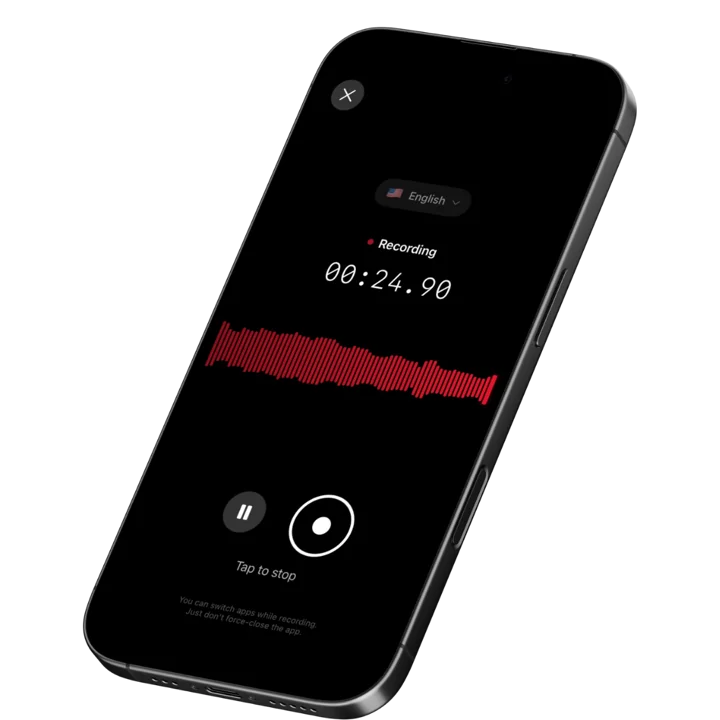
Speakwise tackles one specific version of this: post-meeting documentation. When Speakwise produces accurate transcripts, summaries, and action items automatically from one-tap iPhone recording, workers do not need to spend mental cycles on reconstruction tasks during nominal off-time. The meeting is done; the record is made. That removes one category of cognitive carry-over that extends effective working time invisibly.
Speakwise supports transcription in 100+ languages with dialect recognition, works offline and syncs back when online, and integrates natively with Notion. The $59.99/year Premium plan includes full access with a free trial.
Download Speakwise on the App Store and stop letting post-meeting reconstruction eat into recovery time.
Speakwise holds a 4.9-star App Store rating with thousands of installs.
Download Speakwise on the App Store

🎯 4.9★ App Store Rating | 📱 Built for iOS
