Workplace Overcommitment Statistics: 17 Findings for 2027
TL;DR
Workplace overcommitment statistics for 2027 show workers take on more than a day allows. About 84% of desk workers work overtime, and 68% work weekends (Resource Guru). Speakwise writes an iPhone meeting summary and action items, with a 7-day free trial, for an overcommitted afternoon.
 Speakwise - AI Note Taker
Never miss a key detail
- Smart summaries and action items.
- Speaker diarization labels who said what.
- Unlimited premium transcription.
- Auto-sync to Notion.
- Record offline, even with no signal.


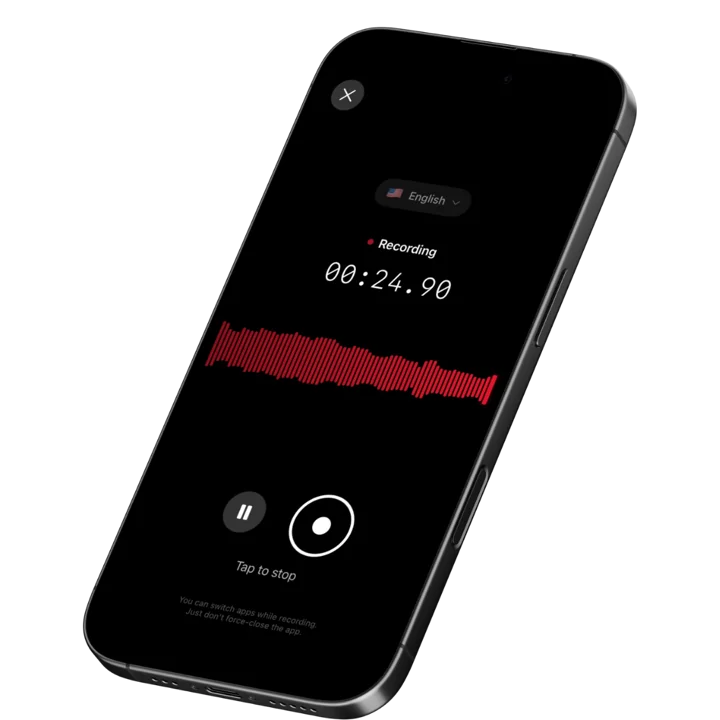

Used by recruiters, executives, consultants, and more.
Workplace Overcommitment Statistics: 17 Findings for 2027
Workplace overcommitment statistics look past busy schedules to a real health cost, not just a feeling of being stretched thin. Research ties high overcommitment to a greater risk of poor health, and about 84% of desk workers already work regular overtime on top of it. This post gathers 16 statistics on how big that overcommitment gap has grown, and what helps close it.
1. 84% of desk workers regularly work overtime
A 2025 State of Overworking study by Resource Guru found that more than four in five desk workers - 84% - work overtime, and over two-thirds (68%) work weekends. For the 47% of SME employees working four or more overtime hours weekly, more than half of those hours go unpaid. These figures are not confined to senior roles or high-pressure industries: they reflect a baseline condition of overcommitment across the knowledge economy. The gap between contracted hours and actual hours worked has become a structural feature of desk work, with overtime normalized to the point that workers who decline it report feeling professionally exposed. This gap between official capacity and actual load is the definitional core of workplace overcommitment.
Source: Resource Guru - The State of Overworking 2025
2. Overcommitment independently doubles risk of poor self-rated health
The Effort-Reward Imbalance (ERI) model's overcommitment hypothesis holds that high overcommitment - characterized by excessive work effort and an inability to psychologically detach from work obligations - independently increases the risk of poor health, even controlling for effort-reward balance. A prospective GAZEL cohort analysis found that ERI was a significant predictor of poor self-reported health for both men and women. A Swedish longitudinal study of public sector employees found that more than half (56%) of overcommitted workers reported dissatisfaction with their balance in everyday life, compared with substantially lower rates among low-overcommitment groups. The health risk is not limited to extreme cases: the relationship between overcommitment and poor health appears across the distribution.
Source: PubMed - Effort-reward imbalance model and self-reported health: GAZEL cohort
3. Presenteeism costs U.S. employers over $150 billion annually
The Journal of the American Medical Association calculated total presenteeism costs in the United States at more than $150 billion per year. Presenteeism - the state of being physically present but mentally depleted and underperforming - is the most direct organizational cost of overcommitment, because workers who accept more than they can execute well show up but function below capacity. Research finds presenteeism costs employers ten times more than absenteeism. A more granular analysis found that burnout costs $3,999 to $20,683 per employee per year, with 89% of that cost originating from presenteeism rather than absences. The implication is that the visible cost of overcommitment - people calling in sick - vastly understates the actual cost of people showing up unwell.
Source: Enhesa - Presenteeism: The Price of Productivity Loss
4. 72% of U.S. employees face moderate to very high work stress
Eagle Hill Consulting's Workforce Burnout Survey conducted in late 2025 found that 72% of U.S. employees face moderate to very high stress at work, with heavy workloads remaining the top driver - cited by 35% of respondents. Heavy workload as a stress driver is, functionally, a measure of overcommitment: the experience of having more to do than time or energy allows. The same survey found 55% of the U.S. workforce is experiencing burnout overall. These stress and burnout figures are not independent: research consistently shows that perceived workload overload - which is distinct from actual hours worked - predicts health and performance outcomes even after controlling for objective demands. The subjective experience of being over-capacity is itself the hazard.
Source: WorkTime - 40 employee burnout statistics and trends in the workplace
5. Effort-reward imbalance and overcommitment increase sick leave likelihood
Research drawing on the ERI model found that high effort-reward imbalance, high efforts, and low rewards at work are associated with increasing likelihood of sick leave. When overcommitment compounds this imbalance - workers investing beyond the already-imbalanced expectation - the risk increases further. A review of 45 empirical ERI studies found consistent evidence across study designs that the combination of extrinsic effort-reward imbalance and high overcommitment produces the highest poor health risk of any single factor in the model. Sick leave functions as a lagging indicator: it reflects health deterioration that has already accumulated over time from sustained overcommitment, not an acute event. Organizations that track sick leave rates are measuring the consequence rather than the cause.
Source: ScienceDirect - Reviewing the Effort-Reward Imbalance Model: 45 empirical studies
6. 56% of overcommitted workers are dissatisfied with work-life balance
A Swedish longitudinal study of public sector workers found that 56% of those surveyed were not satisfied with their balance in everyday life, while only 54% rated their work ability as good. High or medium overcommitment was present in 22% of the sample. The dissatisfaction with balance is particularly significant because balance is a self-regulatory resource: workers who perceive their life as imbalanced are less effective at recovery, less able to psychologically detach during off-hours, and more likely to engage in surface-level rather than genuine recovery behaviors. The longitudinal design of this study is valuable because it confirms that overcommitment's effects persist across time rather than resolving during short breaks.
7. The global productivity loss from disengagement reaches $8.8 trillion
Gallup's State of the Global Workplace report calculated that employees who are not engaged or are actively disengaged cost the world economy $8.8 trillion in lost productivity - equivalent to 9% of global GDP. A subsequent update found that global engagement fell from 23% to 21% between 2023 and 2024, the second decline in 12 years, costing an additional $438 billion in that year alone. Overcommitment contributes to this disengagement trajectory: workers who are spread too thin experience reduced autonomy over their work, reduced sense of impact, and the exhaustion-driven withdrawal that precedes full disengagement. The $8.8 trillion figure provides the macro-economic frame for what is also a frontline human experience.
Source: Gallup - Employee Engagement Strategies: Fixing the World's $8.8 Trillion Problem
8. Overcommitted workers show higher inflammation and worse sleep quality
Research examining the physiological markers of overcommitment found that high overcommitment (OC) is related to poor sleep quality, and that high OC combined with increased sleep latency is associated with elevated inflammatory markers. Chronic low-grade inflammation is a mediating pathway between psychological stress and cardiovascular disease, immune dysfunction, and metabolic conditions. This makes overcommitment not merely a performance issue but a physiological one. Sleep disruption specifically is a key mechanism: overcommitted workers report difficulty "switching off" at night, with work-related rumination extending the psychological working day beyond formal hours and reducing restorative sleep depth and duration.
Source: Wiley - The Effort-Reward Imbalance Model, The Handbook of Stress and Health
9. 40% of burned-out employees report presenteeism; 46% struggle to focus
A survey cited by SpringHealth found that 40% of burned-out employees report presenteeism, while 46% say it is harder to focus or stay productive. These figures illustrate the mechanism by which overcommitment converts from an input problem into an output problem: workers accept more tasks than capacity allows, generate stress that impairs cognitive function, and then show up unable to execute the tasks they committed to. The resulting feedback loop - taking on more to compensate for declining productivity, while declining productivity further limits actual output - is the overcommitment trap that behavioral researchers at Ohio State's Fisher College of Business have described as the "yes affliction." Our productivity loss statistics document the broader output cost of this cycle across industries.
Source: SpringHealth - 12 Employee Burnout Statistics That Explain Why Burnout is a Workforce Risk
10. Overcommitment is distinct from but overlaps with workaholism
Research published in PMC directly compared workaholism and overcommitment as constructs. The study found that while both involve excessive investment in work, they differ in their primary driver: workaholism is internally motivated by a compulsive need to work, while overcommitment reflects difficulty setting limits on external obligations even when the internal drive is not compulsive. Despite this difference, the two conditions share health consequences and often co-occur. The distinction has practical implications for intervention: overcommitment responds well to workload visibility tools, calendar management training, and organizational culture shifts around saying no, while workaholism requires behavioral and potentially therapeutic approaches targeting the internal compulsion.
Source: PMC - Unravelling Work Drive: A Comparison between Workaholism and Overcommitment
11. Heavy workload is the top driver of workplace stress for 35% of workers
Eagle Hill's survey found heavy workload cited as the primary stress driver by 35% of respondents, making it the single most common source of workplace stress. This finding is consistent across multiple survey instruments and years: workload overload has ranked as the top stressor in U.S. workplace surveys for more than a decade. The persistence of this ranking across economic cycles, sectors, and organizational types suggests that workload management is a structural failure rather than an episodic one. Organizations that treat high workload as a temporary sprint condition rather than a chronic capacity design problem will continue generating the stress and health costs that accompany it.
Source: WorkTime - 40 employee burnout statistics and trends in the workplace
12. Effort-reward imbalance affects cardiovascular outcomes through documented pathways
ERI research has extensively documented the cardiovascular pathway from chronic overcommitment to disease. Sustained high effort paired with inadequate reward (recognition, compensation, status, or control) triggers the "cost-gain" stress response, which activates the hypothalamic-pituitary-adrenal (HPA) axis and sympathetic nervous system. Repeated activation without adequate recovery produces allostatic load - cumulative physiological wear - that manifests as hypertension, elevated cortisol baselines, and elevated cardiovascular risk. The ERI model's 45-study review found the strongest cardiovascular evidence for male workers in physically demanding roles, but subsequent research has confirmed the pattern in knowledge work and service sector roles as well.
Source: ScienceDirect - Reviewing the Effort-Reward Imbalance Model: 45 empirical studies
13. Almost one in four employees reports spending too much time in meetings
A 2023 SHRM survey found that almost one-quarter of employees report spending too much time in meetings, a specific manifestation of overcommitment where calendar obligations leave insufficient time for the substantive work those meetings generate. Meeting overload compounds overcommitment in two ways: it consumes hours that would otherwise be available for task completion, and it generates action items, follow-ups, and decisions that add to the already-overloaded task list. Workers caught in this pattern frequently describe the experience as working "all day in meetings and then actually starting work at 6pm" - a pattern visible in the after-hours work data. Our time spent in meetings statistics document the scale of this specific capacity drain.
Source: SHRM - 2023 Workplace Survey, cited in Wellhub
14. Life satisfaction declines with sustained effort-reward imbalance in Germany
A longitudinal German panel study published in Social Science and Medicine found that high effort-reward imbalance and low income were associated with declining life satisfaction over time, with the effect sustained across years of follow-up. Critically, overcommitment moderated the relationship: workers with high overcommitment showed the steepest life satisfaction declines under effort-reward imbalance conditions. The longitudinal design rules out reverse causation explanations and confirms that the overcommitment dynamic causes downstream quality-of-life deterioration rather than simply correlating with it. The German study is particularly notable because it used panel data from a nationally representative sample, giving the findings generalizability beyond single organizational case studies.
15. Overcommitment syndrome creates "siege mentality" and reduced decision quality
Psychology Today research on overcommitment syndrome describes a workplace condition in which workers feel perpetually behind, perpetually under siege from incoming demands, and perpetually unable to say no to additional requests. This siege mentality has cognitive consequences: decision quality degrades when workers process decisions under conditions of resource depletion and time pressure. The result is that overcommitted workers frequently make commitment decisions - agreeing to additional tasks - in exactly the cognitive state in which they are least able to accurately assess their own capacity. This is the mechanism by which overcommitment self-perpetuates: each new commitment is accepted under the impaired judgment created by existing overcommitment.
Source: Psychology Today - Overcommitment Syndrome Leads to Siege Mentality at Work
16. ERI with overcommitment increases absenteeism in German cohort study
A cohort study of German employees published in Occupational Health Science found that the combination of effort-reward imbalance and high overcommitment significantly predicted absenteeism rates over follow-up, even after controlling for baseline health status and demographics. The ERI-overcommitment interaction produced higher absenteeism than either factor alone, confirming the interaction hypothesis in the original Siegrist model. This study is significant because absenteeism is one of the few outcomes employers directly track and can monetize, making the ERI-overcommitment interaction a quantifiable business risk rather than an abstract health concern. Workers whose environments create both the imbalance and the overcommitment dynamic are the highest-cost subset from both a health and an operational standpoint.
Source: Springer - The Causal Structure of the Effort-Reward Imbalance Model and Absenteeism
What These Numbers Tell Us About Overcommitment in 2027
The overcommitment data reveal a workplace system that is structurally over-allocated. The 84% overtime figure is not a rounding error or a bad-quarter artifact: it reflects a baseline condition in which desk work is designed to require more hours than are formally assigned. Organizations that set deliverable expectations against idealized productivity rates - rather than realistic, interruption-adjusted capacity - are systematically generating overcommitment before any individual worker says yes to an extra request.
The ERI model's three-decade evidence base confirms that overcommitment is not simply a time management failure. It is a health outcome generator with documented pathways to cardiovascular disease, depression, inflammation, absenteeism, and presenteeism. The interaction term - overcommitment amplifying the harm of effort-reward imbalance - is particularly important: organizations that underreward and overload workers create the highest-risk combination, and this combination is not rare. The German longitudinal and cohort data confirm it produces measurable harm over time.
The organizational versus individual driver question matters practically. Overcommitment that originates from cultural norms - saying no is risky, visibility requires overtime, meetings are mandatory social obligations - requires culture-level intervention, not individual coaching. Overcommitment from poor workload visibility requires tooling and process change. Only overcommitment that is purely individual - driven by people-pleasing or boundary difficulties - responds primarily to individual-level support.
The data confirm that overcommitment is largely a systems problem wearing an individual costume - and the $150 billion annual presenteeism price tag is what systems-level inaction costs.
How Speakwise Reduces One Source of Invisible Overload
Post-meeting documentation is a significant but often invisible source of overcommitment load. Every meeting that ends without a clear, distributed record creates a downstream task: someone must reconstruct what was said, agreed, and assigned. That task often falls informally to the most organized person in the room, who adds it to an already full list with no formal capacity allowance.
Speakwise automates this task. One-tap recording on your iPhone, or hands-free recording via AirPods, captures the conversation in full. Speakwise then produces accurate transcripts, summaries, and extracted action items automatically - in any of 100+ languages. The record is made; the action items are visible. The cognitive and time cost of post-meeting reconstruction is removed from the informal overcommitment pile.
For teams with heavy meeting loads - consultants, lawyers, product managers, coaches - this is a concrete reduction in the hidden work that extends the day beyond its official end.
Download Speakwise on the App Store and stop counting post-meeting write-ups as free time.
Speakwise holds a 4.9-star App Store rating with thousands of installs.
Download Speakwise on the App Store
🎯 4.9★ App Store Rating | 📱 Built for iOS
