Afternoon Slump Statistics 2027: The Post-Lunch Dip
TL;DR
Afternoon slump statistics for 2027 show focus drops after lunch for biological reasons. A 2010 survey found 60% of managers named 2 PM to 6 PM as the least productive stretch (Accountemps). Speakwise turns the meeting into an iPhone transcript, with a 7-day free trial.
 Speakwise - AI Note Taker
Never miss a key detail
- Smart summaries and action items.
- Speaker diarization labels who said what.
- Unlimited premium transcription.
- Auto-sync to Notion.
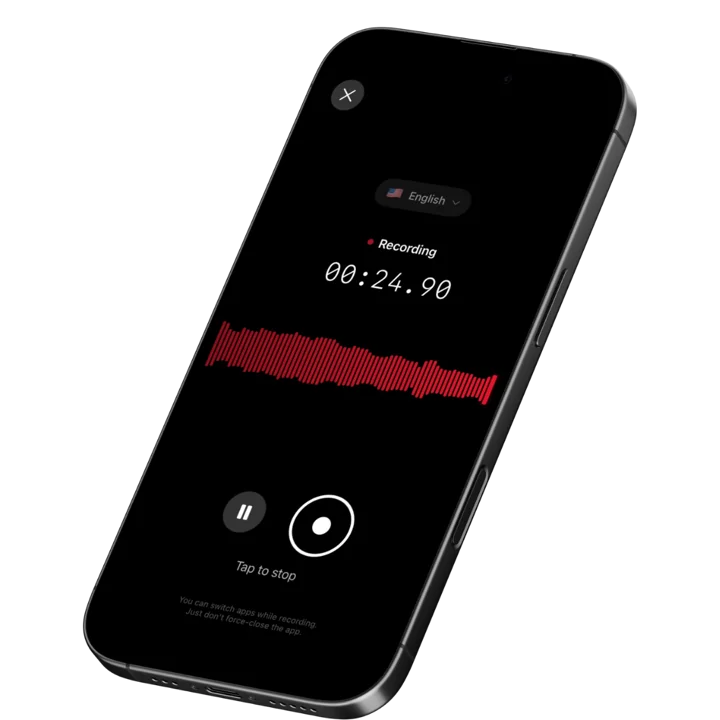
- Record offline, even with no signal.


Used by recruiters, executives, consultants, and more.
Afternoon Slump Statistics 2027: The Post-Lunch Dip
Afternoon slump statistics for 2026 show that focus and alertness can drop in the middle of the afternoon, and scientists link the dip to the body's clock, not just a heavy lunch. It even shows up in operating room records and highway crash data. This post gathers 16 statistics on when the slump hits and what helps, separate from how long your lunch break runs.
Key Afternoon Slump Statistics (2027)
- The afternoon slump is a real, biological dip in alertness, and it can happen even if you skip lunch entirely (Monk, Clinics in Sports Medicine).
- An Accountemps survey of 150 managers in Canada, reported in 2010, found 60% picked a time between 2 PM and 6 PM as the least productive part of the workday, with 32% picking 4 PM to 6 PM alone.
- 29% of 1,000 workers surveyed in the National Sleep Foundation's 2008 poll said they had fallen asleep or felt very sleepy on the job in the past month.
- At one hospital, the predicted chance of an anesthesia problem, often pain that was hard to control, rose from 1.0% for surgeries starting at 9 am to 4.2% for surgeries starting at 4 pm (Quality and Safety in Health Care, 2006, cases from 2000 to 2004).
- In a 2015 study of 4,157 caregivers in 35 hospitals, hand hygiene compliance fell an estimated 8.7 percentage points from the start to the end of a typical 12-hour shift (Journal of Applied Psychology).
- In a 1994 NASA study of 21 long-haul pilots, pilots with no planned rest reacted 10% to 16% slower in flight than pilots given a 40-minute rest, in which they slept 26 minutes on average (NASA Technical Memorandum 108839).
- In a 2006 study of 24 young adults on short sleep, a 10-minute nap at 3 PM was the most effective overall of the four nap lengths tested (Sleep journal).
1. The post-lunch dip is real even if you skip lunch
The post-lunch dip is a real drop in alertness in the middle of the afternoon, and it is not just about eating lunch. A 2005 review in Clinics in Sports Medicine found the dip can happen even when a person has had no lunch. The person does not even need to know what time it is. That means the dip does not depend on eating. The review says it is rooted in human biology and ties the dip to the 12-hour rhythm in the circadian system, the same system that drives the much bigger sleepiness peak at night. A heavy, high-carbohydrate lunch makes the dip worse, and people with an extreme morning chronotype seem to feel it more. Skipping lunch alone will not fix the slump, because the slump was never only about lunch.
Source: Monk: The Post-Lunch Dip in Performance, Clinics in Sports Medicine
2. In a 2008 poll, 29% of workers fell asleep or felt very sleepy on the job in the past month
29% of workers say they have fallen asleep, or become very sleepy, at work in the past month. That finding comes from the National Sleep Foundation's 2008 Sleep in America poll, which telephoned 1,000 Americans. The number is a self-report, not a sensor reading, so it likely undercounts how often people are drowsy without noticing or admitting it. Still, almost 3 in 10 workers fighting sleep during the day is a large share. Afternoon hours are the obvious place for that drowsiness to peak. The body's clock adds a second, smaller sleepy window on top of whatever sleep debt a person is already carrying from the night before. For a manager, a meeting at 3 PM is competing with real biology, not just a distracted team.
Source: National Sleep Foundation: Longer Work Days Leave Americans Nodding Off on the Job
3. In a 2010 survey, 60% of managers picked 2 PM to 6 PM as the least productive time of day
150 senior managers in Canada were asked to name the least productive time of the workday. In an Accountemps survey reported in 2010, managers were split across the afternoon: 26% said noon to 2 PM, 28% said 2 PM to 4 PM, and 32% said 4 PM to 6 PM. Only 12% named a morning window, and 2% said they did not know. This is a perception survey of managers, not a measurement of actual output, so it reflects what bosses notice more than what a stopwatch would show. Part of this lines up with the biology: researchers place the post-lunch dip in the early afternoon, about 2 PM to 4 PM. Scheduling the hardest tasks for right after lunch works against both perception and biology at once.
Source: Canadian HR Reporter: Employee Productivity Is Worst in the Late Afternoon (Accountemps survey)
4. Sleep-related crashes peak at 2 am, 6 am, and 4 pm
Falling asleep at the wheel follows a clear daily pattern. A 1995 UK study looked at 679 sleep-related vehicle accidents using police records and roadside interviews in two regions. Sleep-related crashes made up 16% of all accidents the police attended on major roads in southwest England, and more than 20% on Midlands motorways. Across the 24-hour day, crashes peaked at three points: around 2 am, 6 am, and 4 pm. The two overnight peaks are the biggest, but the 4 pm peak lands squarely inside the afternoon slump this post is about. About half the drivers in these crashes were men under 30, and the crashes clustered on monotonous roads like motorways.
Source: Horne and Reyner: Sleep Related Vehicle Accidents, BMJ
5. On Italian highways, the driver died in 11.4% of sleep-related crashes, about twice the 5.6% for all crashes
On Italian highways from 1993 to 1997, crashes that police blamed on sleep were far more likely to kill the driver than other crashes. The study counted 50,859 highway accidents and found that police linked 1,632 of them, or 3.2%, to sleep. The driver died in 11.4% of those sleep-related crashes, versus 5.6% of general accidents, more than double the death rate. Most of the drivers involved were under 35 (61.4%). The study found these crashes happened mostly at night. That fits the much larger overnight circadian low. The same body clock that drives that bigger nighttime dip also produces the smaller afternoon one described elsewhere in this post. A crash caused by a wandering, sleepy mind is simply more violent than one caused by a routine driving mistake.
Source: Garbarino et al.: Sleep Related Vehicle Accidents on Italian Highways
6. Drowsy driving was reported in 72,000 US police-reported crashes in 2009
Falling asleep, or just feeling drowsy, behind the wheel is not a rare event in the United States. NHTSA estimated that drowsy driving was reported in 72,000 of the 5.5 million police-reported crashes in 2009, about 1.3% of the total. The same year, drowsy driving was linked to 2.5% of US traffic deaths, or 832 lives. NHTSA itself says these numbers likely undercount the real total, since a driver who falls asleep for a second and crashes rarely gets to explain what happened. The share has stayed fairly steady for years, which suggests drowsy driving is a structural problem built into how people work and drive, not a one-time blip.
Source: NHTSA: Traffic Safety Facts, Drowsy Driving
7. At one hospital, the chance of an anesthesia problem rose from 1.0% at 9 am to 4.2% at 4 pm
A hospital's own safety data shows the afternoon dip reaching into the operating room. A 2006 study looked at 130,912 operating room cases at Duke University Medical Center. By start time, they tracked the predicted probability of an anesthesia problem that was not clearly an error or clear harm. For surgeries starting at 9 am, that probability was a low of 1.0%. For surgeries starting at 4 pm, it was a high of 4.2%. The two most common problems were pain management and postoperative nausea and vomiting. That is more than a fourfold jump in risk across a single workday, in a setting where a small lapse in attention can hurt a real patient. The researchers said the cause is unclear. Heavier case load, tired staff and hand-offs between care teams may play a part, but so may differences in the patients and in how often events were reported.
8. In 35 hospitals, hand hygiene compliance fell an estimated 8.7 percentage points over a 12-hour shift
Washing or sanitizing your hands sounds simple, but even trained hospital staff do it less as a shift goes on. A study tracked more than 4,157 caregivers across 35 hospitals through over 13.7 million hand hygiene opportunities. Compliance dropped by a regression-estimated 8.7 percentage points on average from the start to the end of a typical 12-hour shift. The drop was bigger on busier shifts. For a caregiver who clocks in at 7 am, some of that decline has likely already set in by early afternoon, with more still to come by the end of the shift. The researchers expected tiredness to explain the drop. They also found that a longer break between shifts raised compliance afterward.
9. In Germany, workplace accident risk rose sharply after the 9th hour at work
The risk of an on-the-job accident does not stay flat across a shift. A German study published in 1998 looked at more than 1.2 million workplace accidents from 1994. It found that accident risk rose exponentially beyond the 9th hour at work. There was also a strong statistical link between hours worked and the time of day. For someone who starts work at 8 am, the 9th hour lands around 5 pm. The researchers also found that risk depends on both the hour at work and the time of day the work starts. For later start times, risk climbed sharply after the 8th hour. How risk changed with time of day depended on the model used to estimate who was working at each hour.
Source: Hanecke et al.: Accident Risk as a Function of Hour at Work and Time of Day
10. Pilots slept in 93% of 40-minute cockpit rest breaks, for 26 minutes on average
NASA tested whether a short, planned rest period could help pilot alertness on long-haul flights. Twelve pilots were given a scheduled 40-minute rest in the cockpit during a low-workload part of the flight, while 9 pilots flew with no scheduled rest. On 93% of the rest opportunities, 42 of 45, the resting pilots were able to fall asleep. They took about 6 minutes to drop off, and slept for an average of 26 minutes. This was not an afternoon-specific study, since long-haul flights run at all hours. Even so, it is one of the clearest controlled tests of what a short nap does for real, safety-critical fatigue. The nap did not appear to hurt sleep on the pilots' later layover.
Source: Rosekind et al.: Crew Factors in Flight Operations IX, NASA Technical Memorandum 108839
11. In flight, pilots with no planned rest reacted 10% to 16% slower than pilots given a rest
The payoff from that NASA cockpit nap showed up in pilot performance. The 9 pilots who got no scheduled rest made a combined 124 attention lapses, pauses in response of half a second or more, during in-flight testing. The 12 pilots who got the planned rest period made 81 lapses on the same tests. The study was small, and its own test did not find this gap in lapse counts to be significant. Two of the no-rest pilots had very high counts, 45 and 33 lapses, so a few people lift the group total. The no-rest pilots also reacted 10% to 16% slower than the rested pilots during in-flight testing, which is the clearer, statistically significant result. The researchers also recorded at least one physiological microevent, a brief physical sign of drowsiness, in 78% of the no-rest pilots versus 50% of the rested pilots.
Source: Rosekind et al.: Crew Factors in Flight Operations IX, NASA Technical Memorandum 108839
12. A 10-minute nap was the most effective of four nap lengths tested
Not every nap works the same way. In a 2006 study, researchers at Flinders University restricted 24 young adults to about 5 hours of nocturnal sleep. Then they tested naps of 5, 10, 20 and 30 minutes, all taken at 3 PM. The 5-minute nap barely helped. The 10-minute nap produced immediate improvements in sleep latency, sleepiness, fatigue, vigor and performance, and some of those benefits lasted up to 155 minutes afterward. The 20-minute nap took 35 minutes to start helping but then lasted up to 125 minutes. Of all four lengths, the 10-minute afternoon nap was the most consistently effective, which matters for anyone who cannot spare a long break at 3 PM.
Source: Brooks and Lack: A Brief Afternoon Nap Following Nocturnal Sleep Restriction, Sleep
13. A 30-minute nap makes you groggy before it helps
Longer is not always the better choice for an afternoon nap. In the same 2006 Flinders University study, the 30-minute nap produced a period of impaired alertness and performance right after waking, a well-known effect called sleep inertia. Only after that grogginess passed did the benefits appear, lasting up to 155 minutes. That means someone who naps for 30 minutes on a lunch break and heads straight into a meeting may perform worse, not better, for the first few minutes. The 10-minute nap avoided this problem entirely. For anyone napping before something important, the research points to a short nap with time to fully wake up. A longer nap taken right up to the deadline is the riskier choice.
Source: Brooks and Lack: A Brief Afternoon Nap Following Nocturnal Sleep Restriction, Sleep
14. Caffeine erased the post-lunch dip in a vigilance test
Caffeine's reputation as an afternoon fix has real research behind it. In a 1990 study on sustained attention, researchers gave participants either caffeine or a decaffeinated control before and after lunch. They then tested them on a vigilance task called the Bakan task. The results showed that caffeine improved performance on the Bakan vigilance task and removed the post-lunch dip observed in the decaffeinated condition. A similar pattern showed up in part of a mental rotation task. Caffeine did not change mood or heart measures in a way tied to lunch timing. That suggests its benefit here was specific to attention, not just a general lift in how people felt.
15. In a 2013 trial, the benefit of a 50 mg caffeine drink had faded 2 hours after lunch
Caffeine helps the afternoon dip, but not for very long. In a 2013 trial, thirty healthy volunteers were tested on three separate days at a sleep clinic. Each time, they drank either an herbal beverage, 50 mg of caffeine, or a placebo after a standard lunch. Both the herbal drink and the caffeine beat the placebo on performance and vigilance tests 30 minutes after lunch. By 2 hours after lunch, performance in the caffeine group had already slipped back, while the herbal drink kept its edge. Caffeine also raised blood pressure and pulse by the 2-hour mark. The practical lesson is about timing: the 50 mg caffeine drink helped at 30 minutes, but by 2 hours performance had dropped back. The trial was paid for by the maker of the herbal drink.
16. In 17 students, bright light eased sleepiness and bad mood after a missed nap
For people who rely on a short nap after lunch, losing that nap has a real cost, and light can offset part of it. In a 2021 study, researchers studied 17 undergraduates who had a long-standing habit of napping after lunch, comparing a short nap, no nap, and no nap with bright, blue-enriched light. Skipping the nap increased sleepiness and negative mood and hurt performance on an attention test and a working memory test. Bright, blue-enriched light in the early afternoon significantly relieved the sleepiness, bad mood and working memory problems, but it did not help the attention test. The light was very bright, 1,000 lux and blue-enriched, far brighter than normal office lighting. Whether ordinary office light would work the same way is not known.
Source: Zhou et al.: Does Bright Light Counteract the Post-Lunch Dip, Frontiers in Public Health
What the Afternoon Slump Really Costs
These statistics point to one conclusion: the afternoon dip is not an excuse, it is a measurable biological event with measurable consequences. Late afternoon peaks show up in anesthesia problems at a Duke University hospital and in sleep-related crashes on British roads. Other studies in this post, from a NASA cockpit to German workplaces and hospital wards, show that long hours and rest also change alertness and safety. It is not just about how you feel at your desk. The body's clock does not know or care what job you have.
The practical problem is that organizations schedule the day as if the afternoon dip does not exist. Surgeries, shifts and meetings fill the exact hours when managers themselves say output is weakest, and when research shows errors and crashes climb. That mismatch is a scheduling choice, not a law of nature, so it can be changed.
The fixes are small and well tested. A short nap, timed caffeine and brighter light each blunt part of the dip, and none of them require a new policy or a budget line. The research suggests a 10-minute nap beats a 30-minute one, and that a small dose of caffeine after lunch may fade within 2 hours. This fits the wider pattern in our attention span statistics. Attention is a limited resource that rises and falls on a schedule. It is not a switch you can leave on all day.
The afternoon dip is real, it is measurable in accidents and errors, and short naps, timed caffeine and bright light all blunt it.
When Attention Dips, Let the Recording Remember
Many afternoon meetings happen right inside the slump these statistics describe. The afternoon slump is real, so a wandering mind in a 3 PM status meeting is not a personal failing. It is the same body clock at work.
Speakwise records the meeting with one tap and turns it into a transcript and an AI summary with action items, so you can go back to the details later. The transcript shows who said what, with speaker identification. Speaker identification is not included in every plan. When you start your free trial, pick the plan that includes it. You can search the transcript later, instead of trying to recall a conversation your attention only half caught. Speakwise works offline and keeps recording with the screen off. It reaches 95%+ accuracy in optimal audio conditions and 92%+ in noisy rooms with several speakers. The transcript and summary are there to read, even if your focus was not.
Start with a 7-day free trial ($0.00). After that, Speakwise costs from $69.99 per year, which is about $5.83 a month, billed yearly. Prices shown are for the US and can differ by country.Download Speakwise from the App Store and let the afternoon slump catch up to you, not your meeting notes.
Try Speakwise free for 7 days
Available on the App Store | iOS Optimized
🎯 4.9★ App Store Rating | 📱 Built for iOS
