Cognitive Overload at Work: 21 Statistics for 2026
Used by recruiters, executives, consultants, and more.
Cognitive Overload at Work: 21 Statistics for 2026
Cognitive overload - the state of receiving more information than the brain can process effectively - now affects 80% of global knowledge workers, up from 60% in 2020. The average employee receives 117 emails and 153 Teams messages per day, switches between applications 1,200 times daily, and works in an environment generating interruptions every two minutes. Teams experiencing high cognitive load show a 76% correlation with burnout and a 68% correlation with turnover intention, according to research by IT Revolution. The annual productivity cost of this overload exceeds $322 billion globally. Cognitive overload is no longer a fringe problem for overextended workers - it is the default condition of modern professional life.
Cognitive overload occurs when the volume and complexity of incoming information exceeds the brain's working memory capacity. Psychologist John Sweller's Cognitive Load Theory, developed in the late 1980s and now central to instructional design and human factors research, identifies three types of load: intrinsic (the inherent difficulty of the task), extraneous (unnecessary cognitive demands from poor design or irrelevant inputs), and germane (load that supports learning and problem-solving). Modern workplaces excel at generating extraneous load - meetings without agendas, fragmented tool ecosystems, and constant notifications - while offering little protection for germane load.
This post covers 21 statistics on cognitive overload at work, drawing on peer-reviewed research, major workforce surveys, and organizational data to document the scale and consequences of the problem.
1. 80% of global workers now experience information overload - up from 60% in 2020
OpenText surveys tracking information overload in the workplace found that 80% of global workers now report experiencing information overload, a significant jump from 60% just five years earlier. This 20-percentage-point rise in five years reflects the compounding effect of more communication channels, more tools, more data sources, and more meetings - all arriving simultaneously without adequate filtration mechanisms. The percentage of workers using eleven or more applications daily jumped from 15% to 27% in the same period. The result is a workforce that is cognitively overwhelmed by default, spending increasing proportions of their attention on navigation and processing rather than on the actual work the information is meant to support.
Source: BigDATAwire - Report: 80% of Global Workers Experience Information Overload
2. 83% of frontline workers feel overwhelmed by the information needed to do their jobs
A 2024 survey of 1,000 U.S. frontline workers in retail, food service, fitness, and hospitality, commissioned by Wisetail and conducted by Talker Research, found that 83% of respondents feel overwhelmed to some degree by the volume of information required to perform their roles properly. One in five of these workers said the information overload was severe enough to make them consider quitting. Among the specific pain points cited: difficulty distinguishing relevant from irrelevant information, inability to locate correct information when needed, and frustration with duplicate or contradictory instructions from multiple systems. This data reflects cognitive overload as a frontline worker experience, not just a knowledge worker problem - confirming the breadth of the challenge across industries.
Source: Study Finds - Information overload: 83% feel overwhelmed by too much workplace knowledge
3. The average employee receives 270 messages per day across email and chat platforms
Microsoft's 2025 Work Trend Index found that the average employee now receives approximately 117 emails and 153 Teams messages daily - roughly 270 combined messages across just two channels. Each message is a micro-demand on attention: it requires the receiver to assess priority, determine the appropriate response, and either act immediately or track it as a pending obligation. When 270 such demands arrive every workday, the cognitive cost of triaging, filtering, and responding consumes a substantial fraction of available working memory. Workers who spend their mornings clearing inboxes - a common coping strategy - do so at the direct cost of the focused, high-value work that requires the same cognitive resources.
Source: Microsoft Work Trend Index 2025 - Breaking Down the Infinite Workday
4. Knowledge workers switch between applications 1,200 times per day
Research cited by Harvard Business Review and multiple productivity studies found that the average knowledge worker toggles between applications or windows approximately 1,200 times per day. Each switch is a context change that requires the brain to discard one set of active goals and load another - a process that takes 9.5 minutes on average to complete fully, according to research from Qatalog and Cornell University. A simple calculation reveals the scale of this problem: if even a quarter of those 1,200 switches require meaningful reorientation, knowledge workers are spending hours every day in cognitive transit rather than in productive engagement. This is not inefficiency - it is a structural property of modern work environments optimized for connectivity rather than concentration.
Source: Asana - Context Switching Explained
5. Context switching consumes up to 40% of productive time
Research from the American Psychological Association, examining task-switching costs in controlled experiments, found that rapid switching between tasks can consume up to 40% of a person's productive capacity. What workers experience as multitasking is actually the brain switching rapidly between tasks, with each switch imposing a measurable "switch cost" - a brief but real period in which the brain disengages from the previous task's rules and loads the new task's context. For complex knowledge work, this switch cost is higher because the task context - the goals, constraints, and progress status - is more elaborate to maintain. A worker who switches contexts 300 times in a workday is not multitasking effectively; they are spending roughly one third of their day in cognitive setup rather than execution.
Source: American Psychological Association - Multitasking: Switching Costs
6. 76% of the global workforce say information overload causes them daily stress and anxiety
A global workforce survey found that 76% of employees report that information overload causes them daily stress and anxiety - not occasional frustration, but a persistent daily experience. This is a clinically significant finding. Chronic cognitive overload activates the same stress response systems as physical threats, elevating cortisol, impairing prefrontal function, and reducing the capacity for the kind of deliberate, focused thinking that knowledge work requires. Workers who experience this stress daily are operating in a state of sustained physiological arousal that degrades cognitive performance over time. The damage is cumulative: each day of overload leaves workers slightly less capable of managing the next day's load.
Source: The Employee App - Information Overloading in the Digital Age
7. High cognitive load correlates with burnout at 76% and turnover intention at 68%
Research published by IT Revolution on team cognitive load in technology organizations found that teams experiencing high cognitive load showed a 76% correlation with burnout rates and a 68% correlation with stated turnover intention. These are not small associations - they indicate that cognitive overload is one of the strongest organizational predictors of both burnout and attrition currently measured. The research defines team cognitive load as the total mental effort required of a team to accomplish its work, including the complexity of their systems, the volume of their communication demands, and the cognitive switching costs of their tool environments. Teams whose cognitive load exceeds their capacity consistently show degraded output, elevated error rates, and accelerating member departure.
Source: IT Revolution - Team Cognitive Load: The Hidden Crisis in Modern Tech Organizations
8. Workers lose nearly 10% of their annual working time to app-switching disorientation
Research on application switching found that knowledge workers who toggle between apps 1,200 times per day lose the equivalent of nearly 10% of their annual working time to the disorientation that follows each switch. At a standard workweek, this amounts to roughly four to five full weeks of productive capacity lost per year per worker - not to distraction or procrastination, but to the structural friction of navigating fragmented tool ecosystems. Large companies with more than 2,000 employees use an average of 211 applications, according to Okta research - each a potential context-switch destination. Workers in these environments are not being inefficient; they are adapting as best they can to a fundamentally overloaded cognitive environment.
Source: Lokalise - Too Many Tools, Too Little Time: How Context Switching Is Killing Team Flow
9. Cognitive overload costs the global economy $322 billion annually in lost productivity
A Gallup study, widely cited in cognitive overload research, estimates that the global cost of employee burnout - driven substantially by cognitive overload, mental fatigue, and information excess - reaches $322 billion annually in lost productivity alone. This figure excludes the downstream costs of turnover, healthcare, absenteeism, and reduced innovation. A separate estimate from economists at Rensselaer Polytechnic Institute placed the cost of information overload specifically at approximately $1 trillion globally. Both figures underscore the same reality: cognitive overload is not a soft people problem but a hard economic one, with costs that dwarf the investment required to reduce unnecessary information volume and communication fragmentation.
Source: Gallup - Employee Burnout: Causes and Cures
10. 45% of workers say toggling between apps makes them less productive
Asana's research on app-switching behavior found that 45% of workers explicitly say that toggling between too many applications makes them less productive, and 43% report that constant tool-switching is mentally exhausting. These are self-reported assessments from workers who are directly experiencing the cognitive cost of tool fragmentation. The impact is not hypothetical: workers who lose time to app-switching also report lower quality output, higher frustration, and reduced satisfaction with their work. Notably, this frustration does not improve with time - it tends to intensify as organizations add more tools without removing legacy systems, creating a growing list of destinations that workers must navigate to complete any given task.
Source: Asana - Anatomy of Work Index
11. 60% of knowledge workers' time is spent on coordination, not skilled work
Asana's Anatomy of Work Index found that 60% of knowledge worker time is consumed by what Asana terms "work about work": communicating about tasks, searching for information, switching between applications, attending status meetings, and managing competing priorities. Only 40% goes to the skilled, strategic, or creative work employees were actually hired to perform. This ratio has worsened steadily over the past decade as organizations added communication tools, project management systems, and asynchronous collaboration platforms - each of which generates its own cognitive overhead. Our information overload statistics document how this coordination tax compounds across organizations, reducing effective output despite rising headcount and tool budgets.
Source: Asana - Anatomy of Work Index
12. 20 minutes of repeated interruptions significantly raises stress, frustration, and cognitive load
A study from the University of California, Irvine, found that after only 20 minutes of repeated interruptions, participants reported significantly higher levels of stress, frustration, perceived workload, effort, and time pressure. This response occurs even when the interruptions are brief - a notification check, a chat message received, an email preview in a corner of the screen. The cognitive cost is not just the time spent on the interruption; it is the residual load of maintaining awareness that more interruptions may arrive, which itself consumes attentional resources. Workers in high-interruption environments develop what researchers call "hypervigilance to incoming signals" - a state of low-grade readiness that prevents the sustained attention that complex tasks require.
Source: UC Irvine - The Cost of Interrupted Work: More Speed and Stress
13. 52% of U.S. employees reported feeling burned out in 2024
Gallup's 2024 workplace data found that 52% of U.S. employees reported feeling burned out, with cognitive overload identified as a primary driver. A Deloitte 2025 Workforce Intelligence Report noted that mental fatigue, cognitive strain, and decision friction had become the leading indicators of burnout - surpassing raw workload volume for the first time. This shift matters: it means that adding headcount or reducing hours alone cannot address the burnout epidemic if the cognitive environment remains fragmented, high-interruption, and tool-saturated. The problem is the quality of cognitive demand, not just the quantity of hours worked. Workers can work moderate hours in a high-overload environment and burn out faster than workers who put in longer hours with cleaner cognitive conditions.
Source: Gallup - State of the Global Workplace 2024
14. Information overload causes 43% of employees to delay important decisions
A survey of knowledge workers found that 43% say information overload directly causes delays in important decisions, with respondents describing feeling unable to identify the right inputs from the flood of available data. This is the organizational version of analysis paralysis: the volume of information available does not improve decision quality, but it does slow decision velocity and increase the cognitive cost of reaching a conclusion. The same data found that teams using fragmented communication systems reported a 25% drop in decision-making confidence when drawing from multiple data sources - because reconciling contradictory or duplicated information requires additional cognitive effort that depletes the resources available for the decision itself.
Source: Coveo - How AI Can Mitigate Information Overload in the Workplace
15. Workers search for information 2.5 hours per day across fragmented systems
Multiple studies, including research compiled by Coveo and IDC, find that knowledge workers spend approximately 2.5 hours per day searching for information - locating documents, tracing conversation threads, finding the correct version of a file, or identifying who holds a needed piece of knowledge. This is pure extraneous cognitive load: not the work of thinking, but the work of navigating the systems that hold the material for thinking. In an eight-hour workday, 2.5 hours of search represents over 30% of available time spent on retrieval rather than application. The cognitive residue of repeated failed searches - the frustration, the backtracking, the context reconstruction - adds additional load beyond the time cost alone.
Source: LumApps - Managing Information Overload
16. Working memory holds only 4 items reliably - modern work routinely exceeds this by orders of magnitude
Updated working memory research, including the landmark 2010 paper by Nelson Cowan in Current Directions in Psychological Science, places the reliable limit of working memory at approximately four discrete chunks of information. A typical knowledge worker mid-morning may be simultaneously tracking: a pending email thread requiring a decision, the status of three active projects, the agenda for an upcoming meeting, outstanding questions from a morning call, and a slack thread awaiting response. That is already beyond the four-item limit, and the day has barely started. When working memory is full, additional incoming information is dropped, misprocessed, or stored unreliably. This is not a personal failing - it is the predictable neurological outcome of cognitive overload.
Source: PMC - The Magical Mystery Four: How is Working Memory Capacity Limited, and Why?
17. Multitasking can drop effective IQ by up to 10 points
Research on heavy multitasking, including a widely cited study at the Institute of Psychiatry at King's College London, found that chronic multitasking - particularly when combined with constant email monitoring - can temporarily reduce effective IQ by up to 10 points. This is a larger cognitive impairment than mild cannabis intoxication in the same research context. The mechanism is not mysterious: multitasking overloads working memory, forces rapid context switching, and prevents the sustained engagement with a single task that produces high-quality cognitive output. Workers who multitask habitually also develop attention fragmentation that persists even when they try to focus - making the recovery from overload environments slower and harder.
Source: Wellhub - Fix Digital Overload and Cognitive Fatigue at Work
18. 80% of workers do not have enough time or energy to do their jobs effectively
Microsoft's 2025 Work Trend Index found that 80% of workers report not having enough time or energy to perform their jobs well. This figure - four out of five workers - represents a systemic failure of the cognitive working environment, not a collection of individual capacity problems. The report also found that 68% of employees describe their work as "chaotic and fragmented," and that 60% of meetings are now unscheduled and ad hoc, meaning workers cannot reliably protect any part of their day for focused cognitive work. Our knowledge worker productivity statistics show how this fragmentation consistently reduces effective output to a fraction of available hours.
Source: Microsoft Work Trend Index 2025
19. Cognitive overload accelerates burnout in leaders: 72% report physical and mental health decline
A 2025 analysis of executive and leadership burnout found that 72% of leaders acknowledge experiencing increased physical and mental health problems they attribute to cognitive overload, and 70% report that burnout significantly impairs their decision-making capabilities. This is a compounding organizational problem: when the people responsible for reducing organizational complexity are themselves cognitively impaired by that complexity, the interventions never get made. Leaders in high cognitive-load environments make shorter-horizon decisions, avoid restructuring projects, and default to the current system even when they know it is dysfunctional - because the cognitive cost of designing a better system exceeds the diminished capacity they have available.
Source: 2040 Digital - The Mental Overload of Modern Leadership
20. 34% of workers feel frustrated and burned out when they lack the right tools to manage information
Coveo's 2024 Employee Experience Industry Report found that 34% of computer-using employees report feeling frustrated or burned out specifically because they lack adequate tools to find, filter, and manage the information required to do their jobs. This is a distinct dimension of cognitive overload: not just too much information, but too little infrastructure for processing it. When workers must manually triage, search, and reconstruct information that should be automatically surfaced or organized, they expend cognitive resources on tool friction rather than task execution. The frustration compounds the cognitive cost, creating an emotional overlay on top of the attentional drain that further reduces effective capacity.
Source: Coveo - 2024 Employee Experience Industry Report
21. Cognitive offloading to external tools reliably frees working memory for higher-order tasks
Research on cognitive offloading - published across cognitive psychology, human factors, and information science literature - consistently finds that externalizing tracking tasks to reliable systems frees working memory capacity for higher-order cognitive functions. The value of trusted external storage (a structured meeting summary, an automatically extracted action item list, a synced Notion page) is not just convenience: it is a measurable reduction in the cognitive overhead of remembering, cross-checking, and reconstructing information that would otherwise occupy working memory slots. When workers trust that commitments and decisions are captured reliably, they can release the mental hold on that information and redirect that capacity to the current task.
Source: ScienceDirect - Cognitive offloading is value-based decision making
What These Numbers Tell Us
The 21 statistics above describe a workplace that is structurally optimized for cognitive overload. More tools, more channels, more meetings, more information - all arriving simultaneously, with no corresponding investment in filtration, prioritization, or cognitive recovery. The result is measurable: 80% of workers overwhelmed, 40% of productive time lost to context switching, $322 billion in annual productivity erosion, and burnout rates exceeding 50% in the United States.
The data also reveals a paradox at the center of the modern productivity problem. Organizations add tools to improve performance but each additional tool creates another application-switching destination, another notification stream, and another information silo to track. The net effect is negative: more tools, less focused time. Research on information overload consistently shows that beyond a certain threshold, additional data availability degrades rather than improves decision quality. Organizations drowning in data are not better informed - they are less capable of acting on the information they already have.
The direction the research points is not toward individual resilience training or time management skills - those are responses to a symptom rather than a cause. The interventions with the strongest evidence are structural: reducing tool fragmentation, establishing protected focus periods, building reliable capture systems for meeting outputs, and creating organizational norms that treat cognitive load as a design variable rather than a personal management challenge.
Cognitive overload is an organizational design problem masquerading as an individual productivity problem - and until organizations treat it that way, the statistics will keep getting worse.
How Speakwise Reduces Meeting-Driven Cognitive Overload
Meetings are one of the highest-density sources of cognitive overload in the modern workplace. Information is exchanged rapidly, decisions are made without documentation, and action items are distributed verbally - leaving every participant to carry the output in working memory until it can be written down, if it ever is.
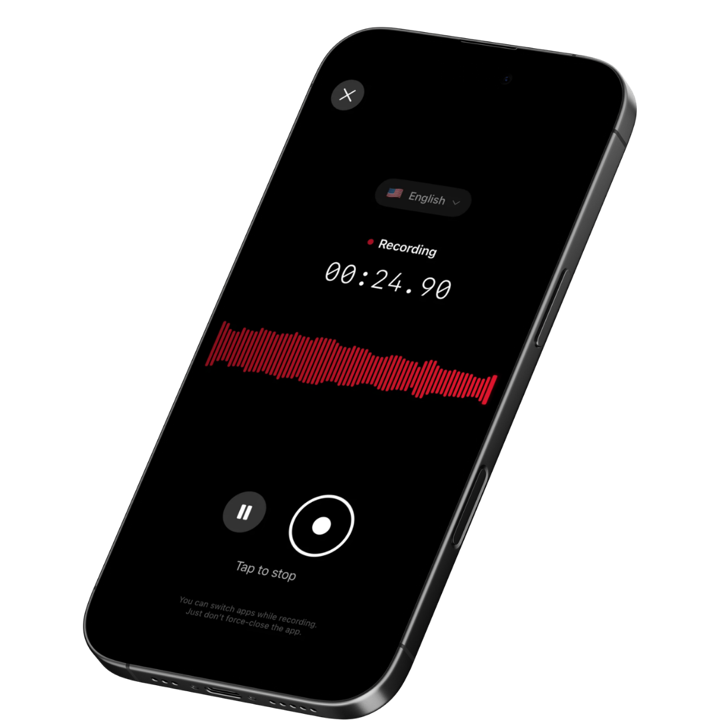
Speakwise turns your iPhone into an AI meeting assistant. One-tap or AirPods hands-free recording captures in-person conversations, then produces summaries, accurate transcripts in 100+ languages, and automatic action item extraction. Native Notion sync moves the output of every meeting into a structured, searchable record - removing the post-meeting cognitive burden of reconstruction, note transcription, and follow-up tracking.
Download Speakwise on the App Store and reclaim the working memory that meeting tracking has been consuming.
Speakwise holds a 4.9-star App Store rating with thousands of installs.
Download Speakwise on the App Store

🎯 4.9★ App Store Rating | 📱 Built for iOS
