Emotional Labor at Work Statistics: 20 Findings for 2027
TL;DR
Emotional labor at work statistics show a real cost: about one-third of US jobs require it (Hochschild). About 31% of customer-facing workers report verbal abuse (APA). Speakwise writes the AI summary and action items afterward, so follow-up takes less energy, with a 7-day free trial.


Used by recruiters, executives, consultants, and more.
Emotional Labor at Work Statistics: 20 Findings for 2027
Emotional labor at work statistics capture a cost that touches call centers, classrooms and hospitals alike: managing feelings to meet a job's requirements. Faking calm when a customer is hostile or a patient is scared takes a psychological toll, one research has recently started to measure. This post rounds up 16 findings on how common emotional labor is and what it costs workers.
1. One-third of all U.S. jobs require substantial emotional labor
Hochschild's landmark research found that approximately one-third of all occupations in the United States contain significant emotional labor requirements. The share rises even higher when broken down by gender: roughly one-third of men and one-half of women hold jobs calling for substantial emotional management. Roles spanning education, healthcare, social work, hospitality, law, aviation, and advocacy all fall into this category. The disproportionate burden on women reflects the concentration of female workers in service-oriented roles where emotional display rules are most explicit and enforced. These jobs typically require face-to-face or voice-to-voice contact with clients, patients, or customers, making the regulation of expressed emotion a formal part of the job rather than an informal courtesy.
Source: Arlie Hochschild - The Managed Heart, University of California Press
2. Surface acting correlates with depression at r=0.333
A 2025 systematic review and meta-analysis examining emotional labor across multiple occupational groups found that surface acting - displaying emotions not genuinely felt - correlates with depression at r=0.333 and with anxiety at r=0.278. Emotional dissonance, the gap between felt and displayed emotion, showed similarly significant associations: depression r=0.321. These correlation coefficients are statistically meaningful and indicate a consistent, replicated relationship across study samples. The review covered workers in healthcare, education, customer service, and other high-contact roles. Notably, deep acting - genuinely working to feel the emotion being displayed - did not show the same harmful correlations, suggesting that the strategy workers use matters as much as the emotional demands themselves.
3. 45% of workers feel emotionally drained from their work
The Society for Human Resource Management's Employee Mental Health in 2024 Research Series found that 45% of workers feel "emotionally drained" from their work, while 51% report feeling "used up" at the end of the typical workday. These figures are not limited to clinical burnout but rather reflect the broad population of workers across industries. The data suggest that emotional depletion is a majority-level experience in the modern workplace, not a fringe condition. Emotional drainage is particularly pronounced in customer-facing roles where workers must sustain positive affect for extended periods regardless of their internal state, but the data show it extends well beyond traditional "emotional labor" occupations into knowledge work and management roles.
Source: SHRM - Employee Mental Health in 2024 Research Series, via SpringHealth
4. 31% of customer-facing workers report verbal abuse
The American Psychological Association's 2023 Work in America Survey found that close to one-third - 31% - of those who perform customer, client, or patient service work report experiencing some form of verbal abuse. This compares with 23% of manual laborers and 22% of office workers. Verbal abuse is one of the most acute emotional demands workers face: it requires real-time suppression of defensive or distressed emotional responses while maintaining professional display. Repeated exposure without adequate organizational support is a known driver of emotional exhaustion. The 8-9 percentage-point gap between customer-facing and non-customer-facing roles underlines how the structural demand to remain composed under hostility is concentrated in service roles.
Source: APA - 2023 Work in America Survey
5. Surface acting mediates the link between emotional demands and burnout
A 2025 Frontiers in Organizational Psychology study with 1,506 participants - predominantly female workers in healthcare, care, and social services - found that surface acting acts as a significant mediator between emotional demands and burnout. Workers exposed to high emotional demands who relied on surface acting as their primary coping strategy showed substantially worse burnout outcomes than those who used genuine expression or deep acting. The sample's mean age was 46.4 years, reflecting career-stage professionals. The mediating role of surface acting means that the harm from emotional demands is not automatic: it depends heavily on the regulatory strategy workers adopt, which has direct implications for training and organizational design.
6. Women perform $683 billion in unpaid emotional and care labor annually
Research compiled by FastCompany drawing on multiple economic analyses found that women perform approximately $683 billion worth of unpaid care work annually in the United States alone. Mothers carry almost three-quarters of the mental load at home, meaning that women in customer-facing or high-emotional-demand jobs are often performing emotional labor in two domains simultaneously: at work under display rules, and at home as the default emotional managers of their households. This dual burden creates a compounding effect on psychological resources that single-domain analyses of workplace emotional labor routinely undercount. The gendered concentration of emotional labor is both an occupational health issue and an economic equity issue.
7. Deep acting protects against burnout; surface acting does not
Research consistently distinguishes between two emotional regulation strategies: surface acting, where workers modify outward expressions without changing inner feelings, and deep acting, where workers attempt to genuinely feel the required emotion. Meta-analyses confirm that surface acting negatively impacts burnout, job satisfaction, and job performance, while deep acting shows a positive or neutral effect. The regulatory cost of surface acting is far higher because it requires continuous active suppression of authentic feeling. Deep acting, by contrast, reduces the gap between felt and displayed emotion, lowering the psychological toll. This distinction is practically important: organizations that train workers only in display rules - "always smile" - without supporting genuine emotional reframing may inadvertently maximize surface acting and its costs.
Source: PMC - Emotional Labor and Burnout: A Review of the Literature
8. Nurses and teachers face the highest emotional labor intensity
Research consistently identifies nurses, doctors, social workers, and teachers as the professions with the highest emotional labor intensity. These roles require sustained empathy, management of others' distress, and maintenance of professional composure across workdays that regularly involve high-stakes emotional encounters. A 2025 systematic review on teachers confirmed that emotional labor significantly predicts burnout in educational settings. WebMD Health Services' 2024 Workplace and Employee Survey found the healthcare industry reported the lowest level of mental well-being relative to all other industries surveyed. The convergence of high emotional demands, understaffing, and limited recovery time in these sectors creates conditions where burnout risk is structurally elevated.
Source: PMC - Emotional Labor and Burnout among Teachers: A Systematic Review
9. Emotional labor is linked to hypertension and cardiovascular effects
Emotional labor is associated not only with psychological harm but also measurable physiological outcomes. Research published in PMC found that the managed suppression of emotional expression - particularly over years of sustained surface acting - is linked to hypertension, elevated cortisol, altered heart rate variability, and increased cardiovascular risk. A study tracking cortisol, oxytocin, and heart rate variability found that surface acting and posttraumatic work stressors predicted adverse changes in all three biomarkers. These physiological effects confirm that emotional suppression is not merely a psychological burden but a physical one, and that the health costs of sustained emotional labor accumulate in the body over time in ways that may not be immediately visible.
Source: PMC - The Managed or Damaged Heart? Emotional Labor, Gender, and Posttraumatic Stressors
10. Healthcare has the lowest employee mental well-being of any sector
WebMD Health Services' 2024 Workplace and Employee Survey ranked the healthcare industry last among all industries surveyed on employee mental well-being. This finding is especially significant given that healthcare workers are both the highest practitioners of emotional labor and the professionals responsible for patient recovery. A workforce managing the mental health crises of others while experiencing the worst sector-level mental well-being creates a structural paradox. The COVID-19 pandemic accelerated this trend: longer hours, higher patient volumes, and repeated exposure to death and suffering while maintaining professional composure produced lasting damage to healthcare worker psychological health that industry-level data now confirms.
Source: WebMD Health Services - Workplace Mental Health Statistics by Industry
11. 78% of healthcare and social assistance workers are women
Women constitute 78% of workers in the healthcare and social assistance industries, and 95% of child day care services workers are women, according to Bureau of Labor Statistics data cited in emotional labor research. This occupational concentration means that the heaviest emotional labor burdens in the formal economy fall disproportionately on women - the same group that also carries the majority of unpaid emotional labor at home. The combination creates a structural equity gap: emotional work that is central to economic function and human welfare remains systematically undervalued and undercompensated because of who performs it. Our workplace mental health breakdown covers the downstream effects of this dynamic on burnout rates by gender.
Source: EBSCO Research Starters - Emotional Labor
12. Emotional dissonance predicts depersonalization and job dissatisfaction
Emotional dissonance - the chronic mismatch between felt and required emotion - is the mechanism through which sustained emotional labor damages workers. Research finds that emotional dissonance predicts depersonalization, a key burnout component in which workers psychologically detach from their clients or patients as a self-protective response. It also predicts job dissatisfaction, memory disruption, and physical health complaints including hypertension. The progression is well-documented: display rules create dissonance, dissonance triggers resource depletion, depletion leads to depersonalization, and depersonalization marks the onset of clinical burnout. Breaking this chain requires organizational interventions, not just individual coping, since the display rules generating the dissonance are structurally imposed.
Source: PMC - Emotional Labor and Burnout: A Review of the Literature
13. Surface acting scores in healthcare average 22.01 out of a possible range
A 2025 study of healthcare workers in Turkey measured emotional labor using a validated scale and found mean surface acting scores of 22.01 (SD 6.30), with a mean item score of 3.14 out of 5. Deep acting scored 12.65 (SD 3.66) and genuine expression scored 10.00 (SD 2.66). The finding that surface acting scores are the highest of the three strategies in this sample suggests that healthcare workers are most likely to default to faking emotions rather than reframing them or expressing authentically. Job burnout in the same sample scored 28.76 (SD 9.12) on the Maslach Burnout Inventory subscale, consistent with the elevated surface acting levels found. This is directly relevant to organizations designing support for clinical teams.
14. Emotional labor has been linked to exacerbating cancer risk
Among the more striking findings in the emotional labor literature is research suggesting that chronic emotional suppression may exacerbate cancer outcomes. A review of the multi-occupational emotional labor literature noted that suppression of genuine affect over years has been linked not only to cardiovascular disease and psychiatric conditions but also to cancer progression through immune-system pathways. While causation in cancer research is notoriously difficult to establish, the proposed mechanism involves suppression of immune function through sustained cortisol elevation. This finding, if replicated, would move emotional labor from a productivity and wellness issue to a serious occupational safety concern deserving the same regulatory attention as physical hazards.
Source: PMC - Emotional Labor and Burnout: A Review of the Literature
15. Organizations that support emotional labor management reduce burnout risk
A 2025 mixed-methods study in Denmark examining human service workers found that practical organizational strategies can meaningfully reduce the burnout risk generated by high emotional demands. Strategies that proved most effective included structured peer supervision, regular team debriefs after difficult cases, managerial acknowledgment of emotional demands as real work, and training in deep acting reframing techniques. The research underlines that emotional labor-driven burnout is not primarily an individual resilience failure but a structural outcome of how organizations design and support emotionally demanding work. This finding is consistent with our employee burnout statistics overview, which documents the organizational rather than individual drivers of burnout at scale.
Source: PMC - Reducing the risk of burnout in human service professions: identifying practical strategies
16. Emotional labor research spans 40+ years since "The Managed Heart"
Hochschild published "The Managed Heart" in 1983, and the concept of emotional labor has generated over four decades of research. A 2025 Frontiers in Public Health study building on this body of literature continues to confirm the core findings: that regulated emotional expression extracts a cost from workers, that the cost scales with the intensity and duration of the demands, and that surface acting is consistently more harmful than deep acting or genuine expression. The durability of these findings across different occupational contexts, countries, and measurement instruments gives the emotional labor literature unusual robustness. What has changed since 1983 is the expansion of emotional demands beyond traditional service roles into knowledge work, remote communication, and digital customer interfaces.
Source: Frontiers in Public Health - Emotional labor and its outcomes (2025)
What These Numbers Tell Us About Emotional Labor in 2027
The statistics paint a consistent picture: emotional labor is pervasive, unevenly distributed, and measurably harmful when managed through suppression rather than reframing. The one-third-to-one-half prevalence estimates from Hochschild have been reinforced rather than revised by subsequent research - if anything, the expansion of customer-facing service work and always-on digital communication has spread emotional demands into roles not traditionally considered high-emotional-labor. The burden falls disproportionately on women, both in occupational terms and in the unpaid domestic sphere.
The practical implication of the surface-acting versus deep-acting distinction is significant for organizations. The problem is not that jobs require emotional management: it is that most workplaces enforce display rules through policy without providing tools to genuinely align internal experience with those rules. Training in empathy-based client interaction, structured debriefs, and psychological safety to name difficult emotional experiences all shift workers toward deep acting strategies that are less depleting. The data from the 2025 Danish study confirm this is achievable.
The downstream costs of getting this wrong are not abstract. Presenteeism, turnover, cardiovascular disease, and depression all carry quantifiable price tags that far exceed the cost of proactive support. As our workplace anxiety statistics document, the population of workers experiencing anxiety-level symptoms at work has grown steadily, and emotional labor intensity is a consistent predictor variable in that data.
The consistent finding across 40 years of research is that emotional labor only becomes toxic when organizations demand the performance without supporting the reality.
How Speakwise Helps Teams Reduce Cognitive Load After Emotionally Demanding Work
Customer-facing professionals, coaches, therapists, and account managers often face a compounding burden: after hours of managing emotions for others, they then need to reconstruct detailed notes about each interaction, action items, and follow-ups from memory. That recall task hits hardest exactly when psychological resources are most depleted.
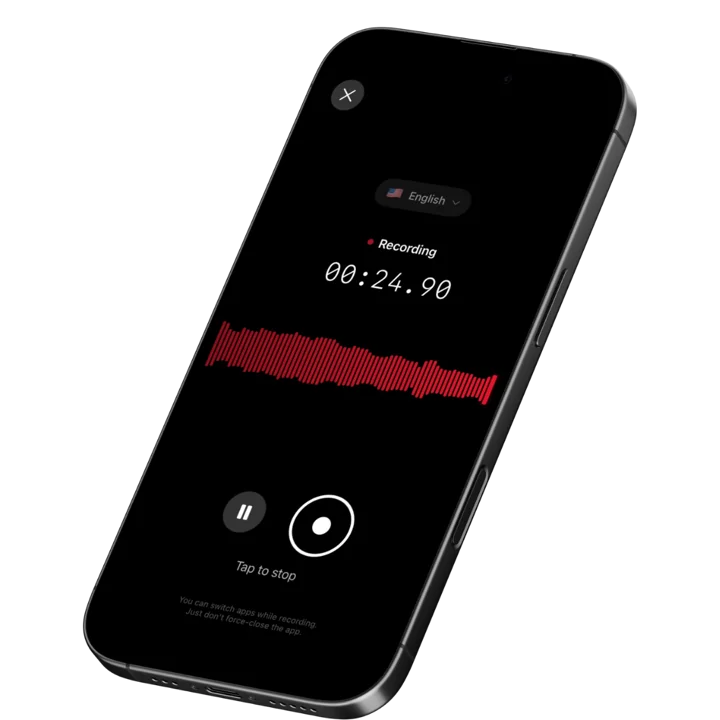
Speakwise turns your iPhone into an AI meeting assistant. One-tap or AirPods hands-free recording captures conversations during or immediately after interactions, then produces accurate transcripts in 100+ languages, summaries, and automatic action item extraction. When the emotional work is done, the cognitive work of documentation is already handled. That is one fewer thing pulling on depleted attention at the end of a high-contact day.
Download Speakwise on the App Store and free your post-meeting mental bandwidth for recovery, not reconstruction.
Speakwise holds a 4.9-star App Store rating with thousands of installs.
Download Speakwise on the App Store

🎯 4.9★ App Store Rating | 📱 Built for iOS
