Productivity Theater Statistics 2027: Looking Busy at Work
TL;DR
Productivity theater statistics for 2027 show many workers spend time looking busy. Microsoft found 87% of employees called themselves productive, but only 12% of leaders agreed (Microsoft Work Trend Index). Speakwise's iPhone app writes meeting notes and action items, with a 7-day free trial.
 Speakwise - AI Note Taker
Never miss a key detail
- Smart summaries and action items.
- Speaker diarization labels who said what.
- Unlimited premium transcription.
- Auto-sync to Notion.
- Record offline, even with no signal.

Used by recruiters, executives, consultants, and more.
Productivity Theater Statistics 2027: Looking Busy at Work
Productivity theater statistics for 2026 show that many employees spend real work time looking busy instead of doing the job, a gap Microsoft calls productivity paranoia. Hybrid schedules and return-to-office rules changed what a manager can see, so employees supply whatever proof of work is easiest, like fauxductivity or coffee badging. This post gathers 15 statistics on why people perform productivity, and what actually helps.
Key Productivity Theater Statistics (2027)
- Productivity theater statistics start with a trust gap: in 2022, 87% of employees said they were productive, but only 12% of leaders said they had full confidence that their team is productive (Microsoft Work Trend Index).
- 53% of desk workers feel pressure to answer messages fast, even after work hours, a 2023 Slack survey found (Slack: The State of Work in 2023).
- One in two knowledge workers feel pressure to show they are working and productive, a share that kept rising, Slack's Future Forum Pulse found in a report published in January 2022 (Future Forum by Slack).
- 72% of employees in a 2025 US survey engage in "fauxductivity," busyness that creates the illusion of productivity, Software Finder's own survey of 1,003 employed Americans found (Software Finder: The Fauxductivity Epidemic).
- 44% of US workers practice "coffee badging," badging into the office just to be seen before leaving, a July 2024 Owl Labs survey found (Owl Labs).
- 63% of US employees in a 2023 Owl Labs survey said they were concerned that managers see in-office colleagues as harder working and more trustworthy than remote colleagues (Owl Labs).
- 46% of US workers in a 2024 Owl Labs survey said their employer added or increased activity-monitoring software in the past year (Owl Labs).
1. Microsoft named this gap "productivity paranoia": 87% vs. 12%
87% of employees say they are productive at work, but only 12% of leaders say they have full confidence that their team is productive. Microsoft found this gap in its 2022 Work Trend Index, a survey of 20,006 workers across 11 countries, fielded in July and August 2022. Microsoft gave the gap a name in the same report: productivity paranoia. Leaders fear that output has dropped, even though hours, meetings and other activity measures have gone up, not down.
The mismatch matters because leaders who doubt output may ask for more proof of work, not more work itself. Most of the workforce already believes it is doing a good job. Demanding visible signs of effort on top of that work does not close a trust gap. It adds a second, unpaid job: looking productive.
Source: Microsoft WorkLab: Hybrid Work Is Just Work. Are We Doing It Wrong?
2. 85% of leaders say hybrid work made it harder to be confident in productivity, and hybrid managers struggle more to trust
85% of leaders say the shift to hybrid work has made it harder to feel confident that employees are being productive. The finding comes from the same 2022 Microsoft Work Trend Index. The strain falls hardest on managers who oversee hybrid teams. Hybrid managers are more likely than in-person managers to say they struggle to trust employees to do their best work: 49% compared with 36%.
That 13-point gap fits Microsoft's explanation that managers are missing cues they used to rely on, like walking past a desk or overhearing a call. Without those cues, some managers lean on weaker signals, like how fast someone replies. Our workplace trust statistics cover the wider trust gap between employees and leaders.
Source: Microsoft WorkLab: Hybrid Work Is Just Work. Are We Doing It Wrong?
3. 54% of hybrid managers say they have less visibility into their team's work, versus 38% of in-person managers
Hybrid managers report having less visibility into the work their employees do than managers who work mainly in person. The gap is 54% compared with 38%, Microsoft's 2022 Work Trend Index found. A related idea is proximity bias, the tendency to favor people you can see over people you cannot.
Lower visibility does not mean lower performance. It means the manager has fewer direct signals. For an employee, the rational response is to supply visible signals on purpose. Not because the real work changed, but because the manager's view of the work did.
Source: Microsoft WorkLab: Hybrid Work Is Just Work. Are We Doing It Wrong?
4. 53% of desk workers feel pressure to answer messages fast, even after hours
53% of desk workers feel pressure to answer messages quickly, even when those messages arrive after work hours. The figure comes from Slack's 2023 State of Work report, based on a survey Slack ran with the research firm Qualtrics among 18,149 desk workers and executives across nine countries in February and March 2023. A fast reply is one of the most visible things a worker can do. When confidence in productivity drops, answering fast is an easy way to look busy and available, even late at night.
Speed like this does not mean the work itself got done better or faster. It may be one way workers respond to the trust gap in statistic 1, though the two surveys did not test that link. A quick reply is proof a manager can see right away, in a way a finished task written up hours later is not.
Source: Slack: The State of Work in 2023
5. Double-booked meetings rose 46%, and 42% of people multitask during them
Overlapping, double-booked meetings rose 46% per person in a single year, and 42% of meeting participants multitask during meetings, Microsoft's 2022 Work Trend Index found. Double-booking may be its own kind of performance. Accepting two meetings at once signals heavy demand for your time, even if you can really only attend one.
Multitasking during meetings completes the picture. More than four in ten attendees send an email or ping during a meeting, yet the meeting still counts as time spent at work. A growing share of the workweek goes to attending rather than doing, while still looking occupied on the calendar.
Source: Microsoft WorkLab: Hybrid Work Is Just Work. Are We Doing It Wrong?
6. 82% of business decision makers call return-to-office a concern for the year ahead
82% of business decision makers say getting employees back to the office in person is a concern for the coming year. The finding comes from Microsoft's 2022 Work Trend Index. Office attendance is one of the clearest visible productivity signals a manager has. A filled seat is easy to count, even when it says nothing about what got done that day.
Return-to-office pressure and productivity paranoia may be linked. If leaders doubt output they cannot see, pushing people back into a space where they can be seen may feel like a direct fix. Our return-to-office statistics cover the wider mandate trend.
Source: Microsoft WorkLab: Hybrid Work Is Just Work. Are We Doing It Wrong?
7. 73% of employees want a better reason to go into the office than company expectations
73% of employees say they need a better reason to go into the office than just company expectations, the same 2022 Microsoft survey found. The same survey found that 78% of business decision makers say they need a better reason too, even though 82% of them list getting employees back to the office as a concern. Most employees are not refusing to come in. They are asking what showing up actually proves.
Without a clear answer, office attendance risks becoming its own kind of theater: a visible routine that satisfies a policy without changing how much real work happens. Employees comply with the mandate and still have to produce the work itself, now on top of a commute.
Source: Microsoft WorkLab: Hybrid Work Is Just Work. Are We Doing It Wrong?
8. One in two knowledge workers in six countries felt pressure to show they were working in late 2021, and the share had risen
One in two knowledge workers in six countries said they felt pressure to let colleagues or managers know they were at work and being productive. The share had increased from quarter to quarter, according to a Future Forum Pulse report Slack published in January 2022, based on a survey of 10,737 knowledge workers fielded in November 2021. This is one direct measure of productivity theater in this post: pressure to appear productive, separate from actually being productive.
Rising pressure from quarter to quarter points to a workplace norm that may be hardening. Visible activity has become its own kind of evidence, expected alongside, or sometimes instead of, finished work.
Source: Future Forum by Slack: Leveling the Playing Field in the Hybrid Workplace
9. 41% of executives call proximity bias their top concern, up from 33%
41% of executives named the potential for inequity between remote and in-office employees as their top concern. That is up from 33% the previous quarter, according to a Future Forum Pulse report Slack published in January 2022. Unlike the employee surveys in this post, this one comes from executives describing their own worry, not employees describing what they feel pressured to do.
That makes it a rare admission from the people with the power to change the pattern. Executives can see proximity bias forming in real time. Yet the pressure it creates for employees, to be seen rather than simply to perform, keeps building anyway.
Source: Future Forum by Slack: Leveling the Playing Field in the Hybrid Workplace
10. More executives than non-executives work in the office three or more days a week: 71% vs. 63%
71% of executives work from the office three or more days a week, compared with 63% of non-executives, according to the same Future Forum Pulse report Slack published in January 2022. Among executives working fully remotely, 75% say they would rather be in the office three or more days a week, versus 37% of non-executives.
The gap matters because leaders and employees often keep different office schedules. Leaders who are in the office most days may judge productivity by what they can see around them, and may apply that same standard to employees who are in the office less.
Source: Future Forum by Slack: Leveling the Playing Field in the Hybrid Workplace
11. 72% of employees engage in "fauxductivity" to look busy at work
Software Finder, a software review and comparison site, ran its own survey of 1,003 employed Americans in February 2025 and found that 72% of employees engage in "fauxductivity," meaning they act busy without doing work that adds real value. Gen Z workers do this most, at 83%. The same survey found that 59% of employees feel pressured to appear busy at work, a figure that climbs to 72% among Gen Z workers alone. Employees named frequent or excessive meetings (44%), unclear goals (38%) and leadership check-ins (38%) as the top factors driving this kind of performative work.
Looking busy and being busy are not the same thing, but from a manager's desk they can look identical. The pressure to appear busy pushes people to spend real time on the performance itself, time that does not go toward the work the performance is supposed to represent.
Source: Software Finder: The Fauxductivity Epidemic: How Performative Work Is Draining Businesses
12. 44% of workers practice "coffee badging," and 70% of them have been caught
44% of workers still practice "coffee badging." That means they badge into the office just long enough to be seen, then leave to work from home. The figure comes from Owl Labs' 2024 survey. The tactic exists specifically to satisfy in-office attendance rules without actually spending the day there.
It does not go unnoticed. 70% of workers who coffee badge say they have been caught by their employer, but for 59% of coffee badgers the employer did not mind. Only 11% say the employer was unhappy and now requires a full day in the office.
Source: Owl Labs: State of Hybrid Work 2024
13. 46% of workers say their employer added or increased monitoring software
46% of workers say their company added or increased its use of employee productivity or activity-monitoring software in the past year. The figure comes from Owl Labs' 2024 survey. 47% of workers separately listed having their work monitored among their top workplace concerns. 86% said employers should have to disclose when they use these tools.
Monitoring software is often installed to answer the same question productivity paranoia raises: is this person actually working? That gap may help explain tactics like fauxductivity, though none of these surveys tested a link to monitoring software. Our employee monitoring statistics cover what these tools track and how workers respond.
Source: Owl Labs: State of Hybrid Work 2024
14. 63% of employees think managers see in-office colleagues as harder working
63% of employees agree that managers view people who come into the office as harder working and more trustworthy than remote colleagues. The figure comes from Owl Labs' 2023 State of Hybrid Work survey of 2,000 full-time U.S. workers. Of that group, 26% strongly agree and 37% agree.
This is the employee side of proximity bias. Future Forum found that executives are concerned about it too (statistic 9). When most of a workforce believes managers see office presence as a sign of hard work and trustworthiness, showing up can become a rational strategy, even for someone whose best work happens elsewhere.
Source: Owl Labs: State of Hybrid Work 2023
15. Time spent on collaboration has ballooned by 50% or more in two decades
A 2016 Harvard Business Review article by Cross, Rebele and Grant reported that, in data the authors collected over two decades, the time managers and employees spend on collaborative activities had ballooned by 50% or more. The increase predates remote work, hybrid schedules and chat apps with a visible active status. The time spent collaborating was already growing long before any of today's specific tactics existed.
Each new layer, like email, then instant messaging, then video calls, added another channel where people could be seen responding. More channels do not divide the same amount of real work more efficiently. They multiply the number of places a person has to show up to prove they are part of it.
Source: Harvard Business Review: Collaborative Overload
Why Looking Busy Became a Job Requirement
These 15 statistics describe a loop, not a single problem. Leaders do not fully trust that hybrid and remote employees are productive: 12% full confidence, against 87% of employees who say they are. That doubt may show up as more oversight, like monitoring software and return-to-office pressure, plus a sharper eye on who is visible and who is not. Employees may respond with visible activity: faster replies, fauxductivity, a badge swipe at the office door. The surveys above document these pressures and tactics, though none of them tested whether one causes the other.
The loop does not resolve the original doubt. A manager who cannot see real output will not be reassured by a fuller calendar or a quicker chat reply. Those signals were never evidence of output. They are evidence of activity, and the gap between the two is what productivity paranoia measures. The time spent producing the signal, like the extra meeting or the badge-in trip, is time not spent on the work the signal was supposed to represent.
The way out is not more monitoring or more visible effort. It is better evidence of the work that already happened. A manager who can see what was actually said and decided in a meeting does not need to infer productivity from a calendar or a chat status. Until something gives leaders that more direct answer, the statistics above suggest organizations will keep adding oversight instead.
These statistics suggest productivity theater persists in part because looking productive is easier to measure than being productive.
Let the Meeting Notes Prove the Work
Productivity theater exists because real work is hard to see from the outside. A conversation happens, a decision gets made, and the only proof left over is whatever someone remembers to type up later. That gap is exactly where fake busyness creeps in. A fast reply or a full calendar is easier to show a manager than an hour of real thinking.
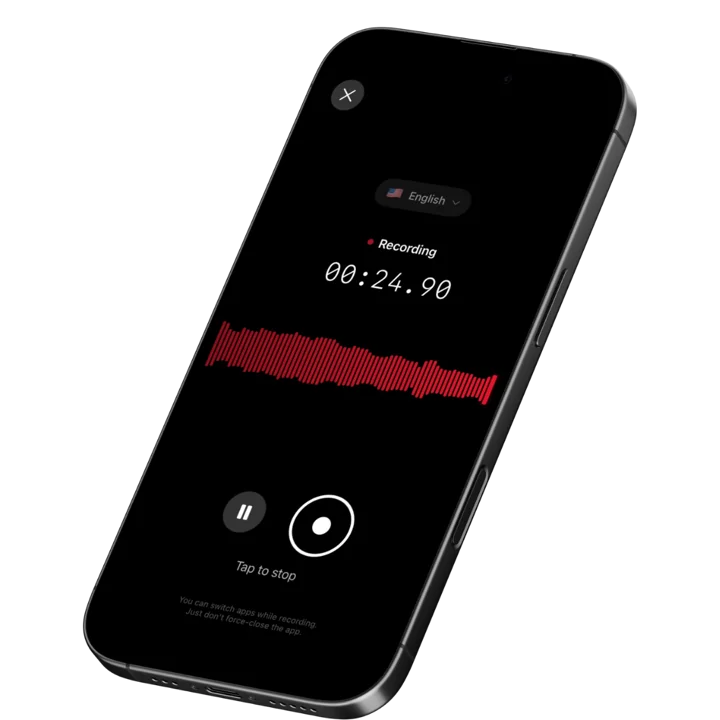
Speakwise gives you a written record of the conversation. It is an iPhone app that records in-person conversations, meetings, lectures and interviews with one tap, then writes a transcript, an AI summary and action items. A status update built this way comes from what was actually said, not from how available someone looked online. Speaker identification shows who said what in the transcript, so a meeting recap reflects the real discussion. Speaker identification is not included in every plan. When you start your free trial, pick the plan that includes it.
Speakwise users report saving about 73% of their post-meeting follow-up time (Speakwise user surveys).
Start with a 7-day free trial ($0.00). After that, Speakwise costs from $69.99 per year, which is about $5.83 a month, billed yearly. Prices shown are for the US and can differ by country.Download Speakwise from the App Store and let your meeting notes prove the work, not your online status.
Try Speakwise free for 7 days
Available on the App Store | iOS Optimized
🎯 4.9★ App Store Rating | 📱 Built for iOS
